One of the best things about having a long stay in a wonderful city like Lyon is that you can visit your favorite places more than once.
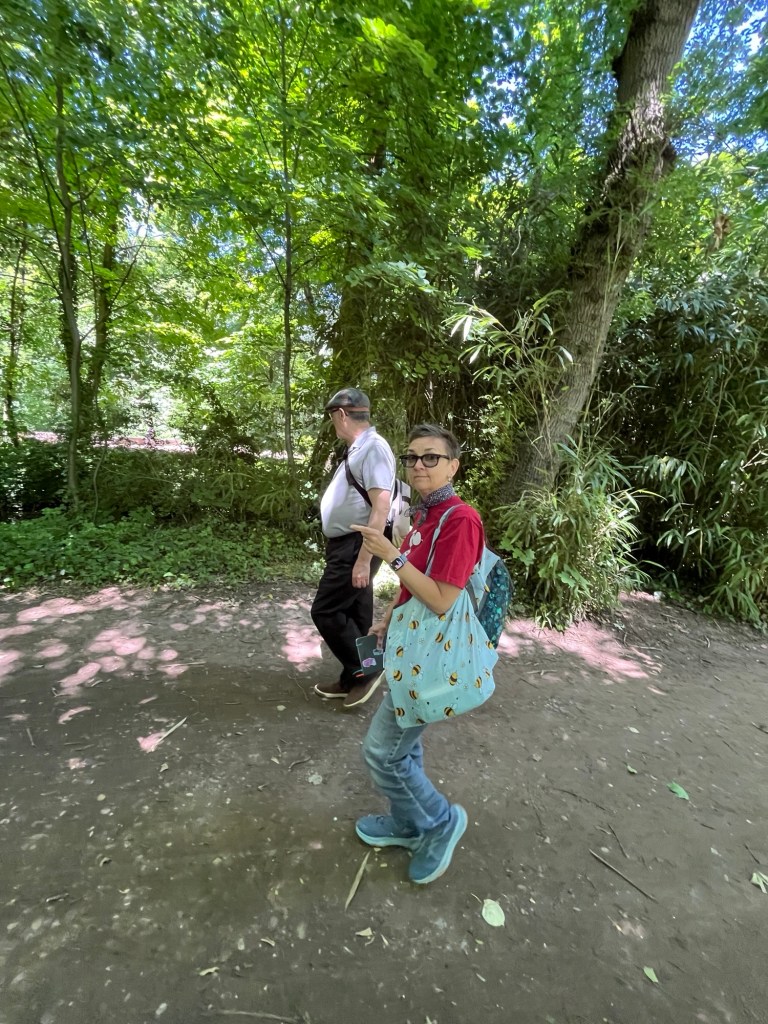
We have been back to the Parc de la Tête d’Or four times, and keep finding new things! Miniature golf. Free Range deer. Climby ropey things.
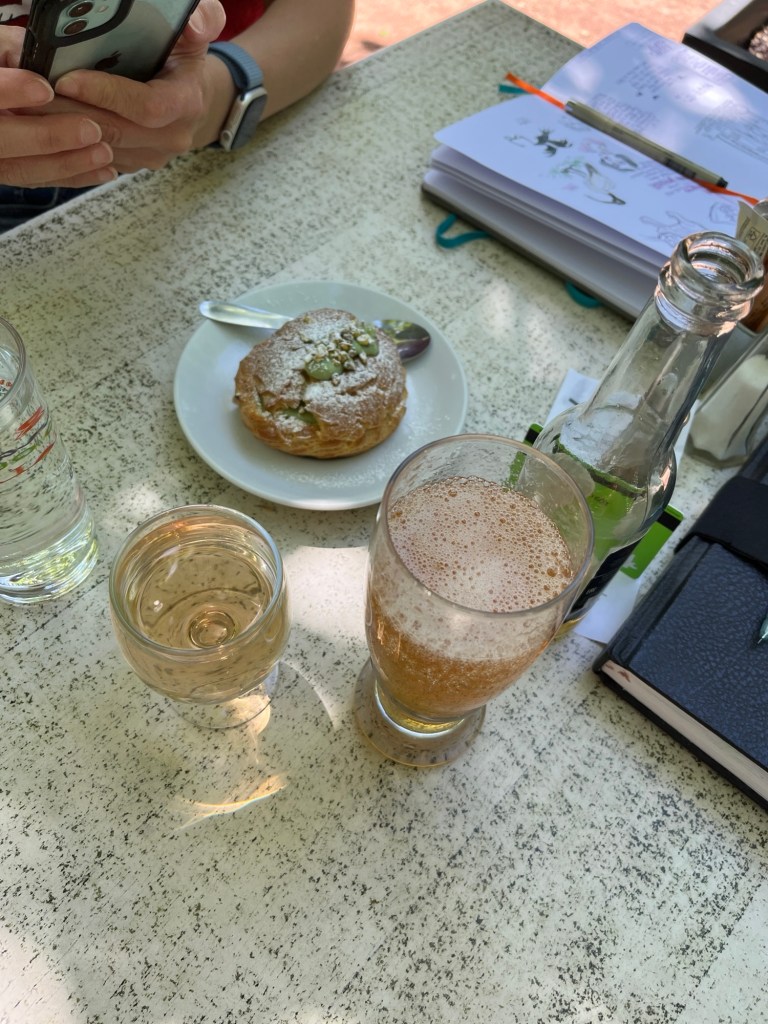
And today, we found the Buvette de l’Observitoire, where they serve all sorts of lunches, desserts, and drinks. Auntie Bridgett and I shared a ricotta chou sucré, where ricotta cheese and pistachio cream are blended together and put inside a sweet bun. SO good! I also enjoyed a cider and Grandpa Nelson had some rosé.
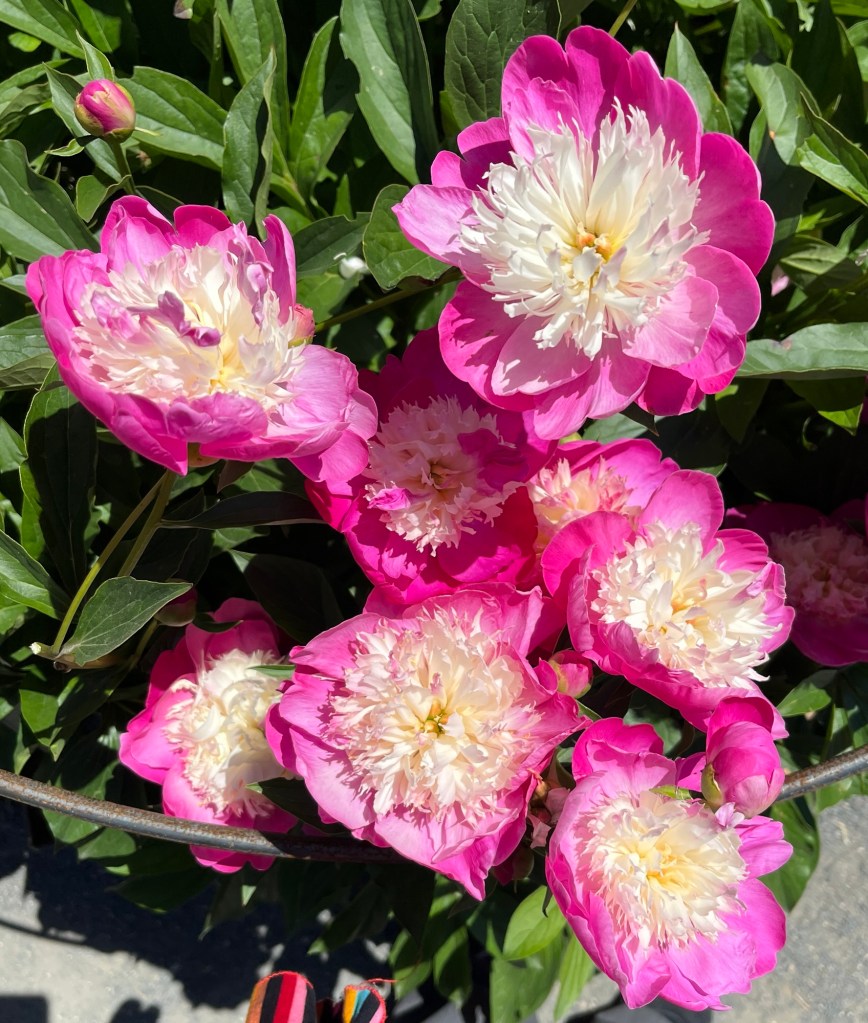
We also found several new ways to get lost on the way to the Orangerie, discovering a bunch of peony beds that are blooming like crazy.
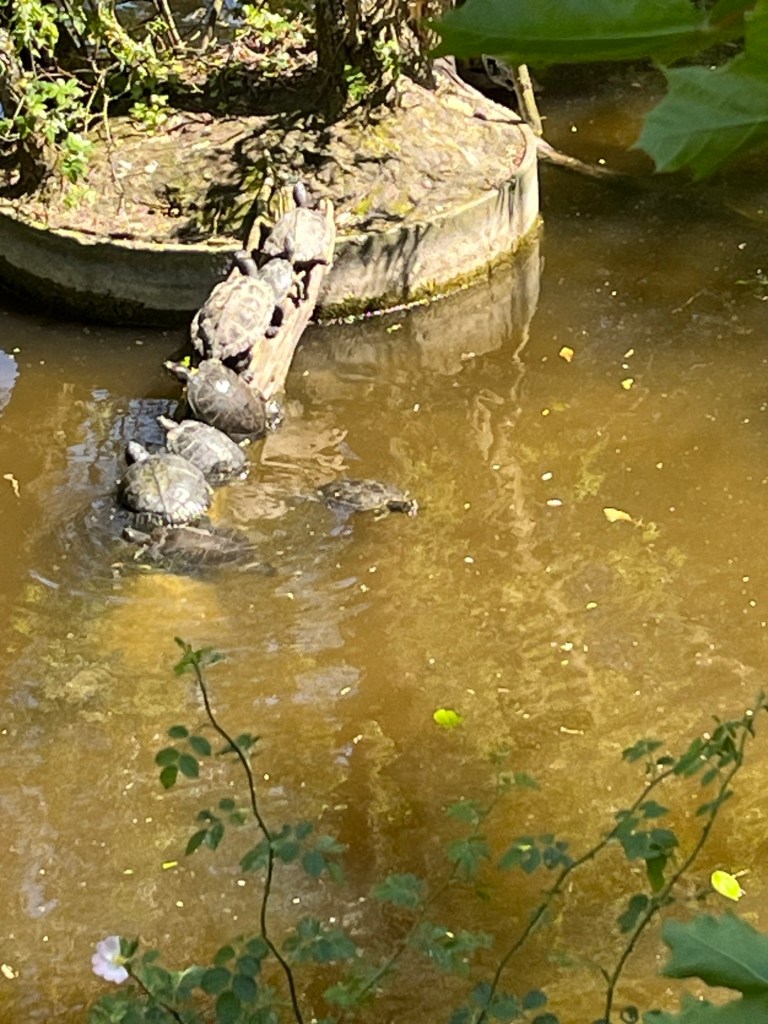
There was also some crazy turtle convention going on in one of the ponds.
By the time we got home, we had walked more than five miles…. And we do this A LOT. We could walk the park every day all summer and see something different every day.
Once they got settled in, the Roman Empire was in Lyon for a long time. For 368 years, from 43 AD to 411 AD, the Roman Empire built and ran Lyon, which was then called Lugdunum.
It’s no wonder, when the Empire fell and the Roman army left, that a lot of stuff was left laying around.
Great piles of that stuff has been collected by folks who came later, from Medieval farmers to modern archeologists, and put into this wonderful, modern Musée at Lyon.
The museum itself is a wonder. Built right into the back wall of the cliff that houses the amphitheater, it spirals down, leaving only the entrance and a few windows to give it away. Artifacts are arranged by era and type, so we can see the progression in ceramics, jewelry making, and glass work.
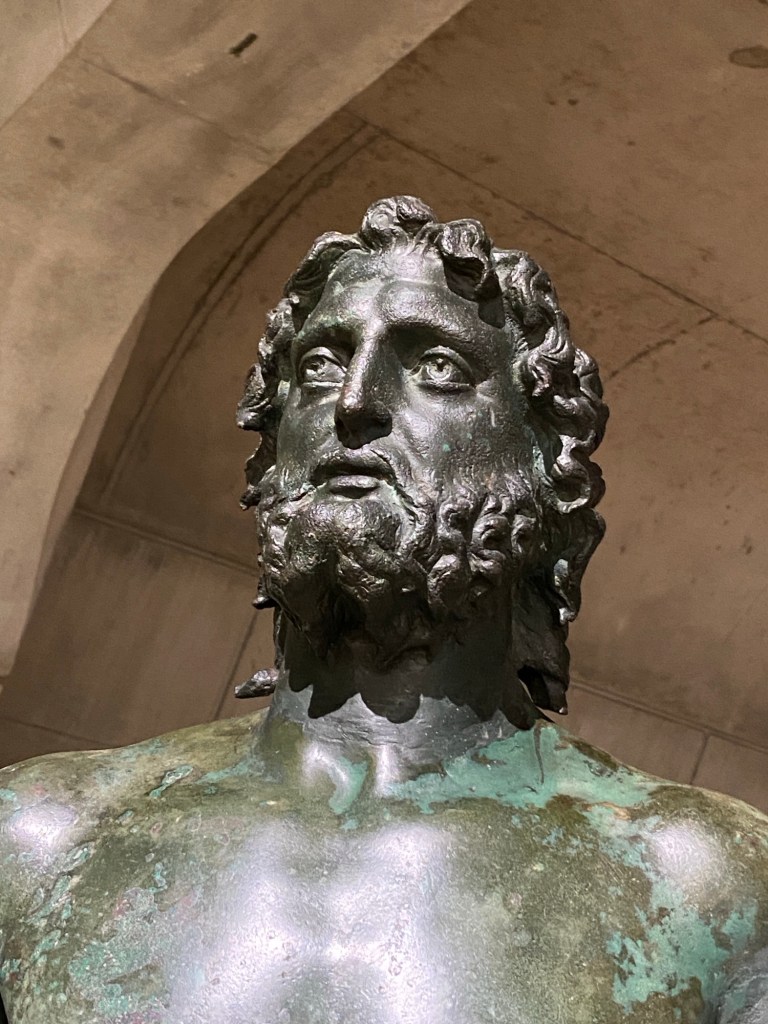
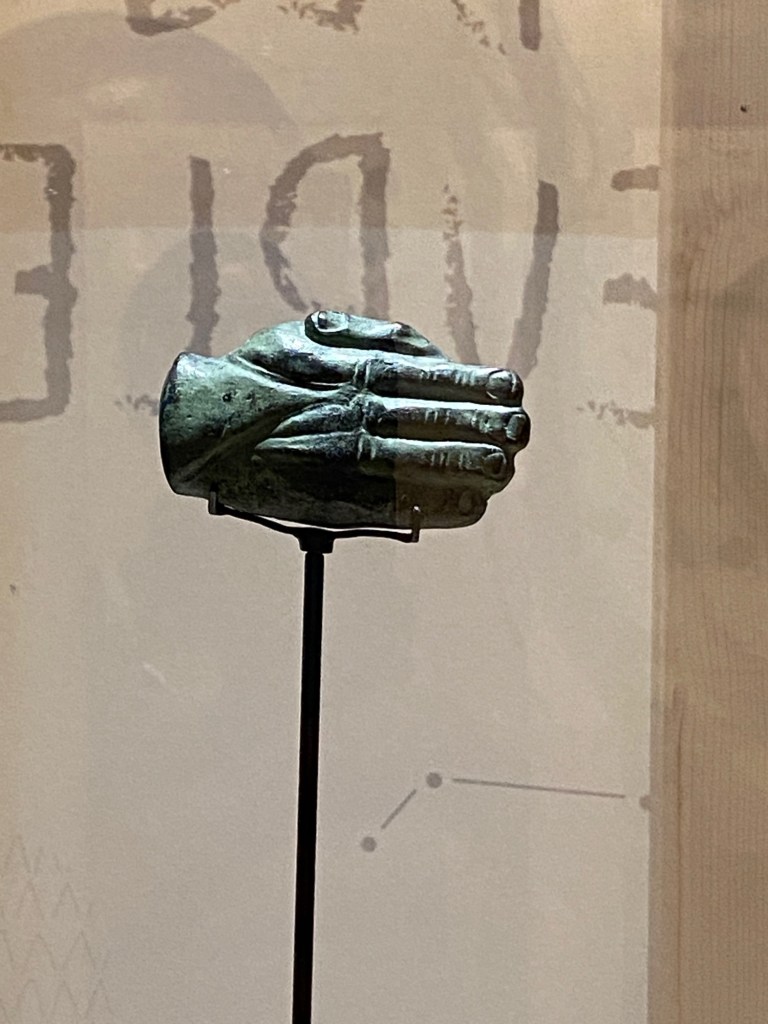
We get to see the variety of religious articles, from tiny pocket divinities to greater than life sized statues that Romans looked to for comfort and protection.
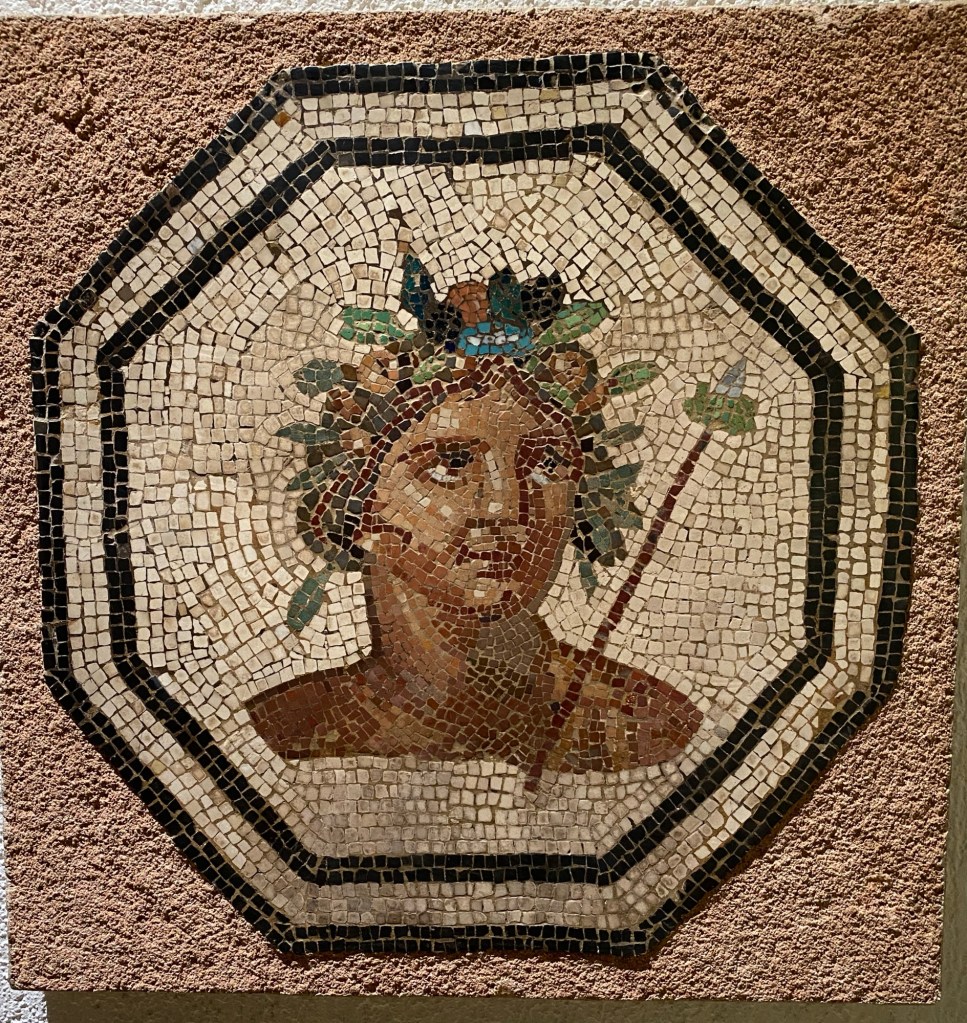
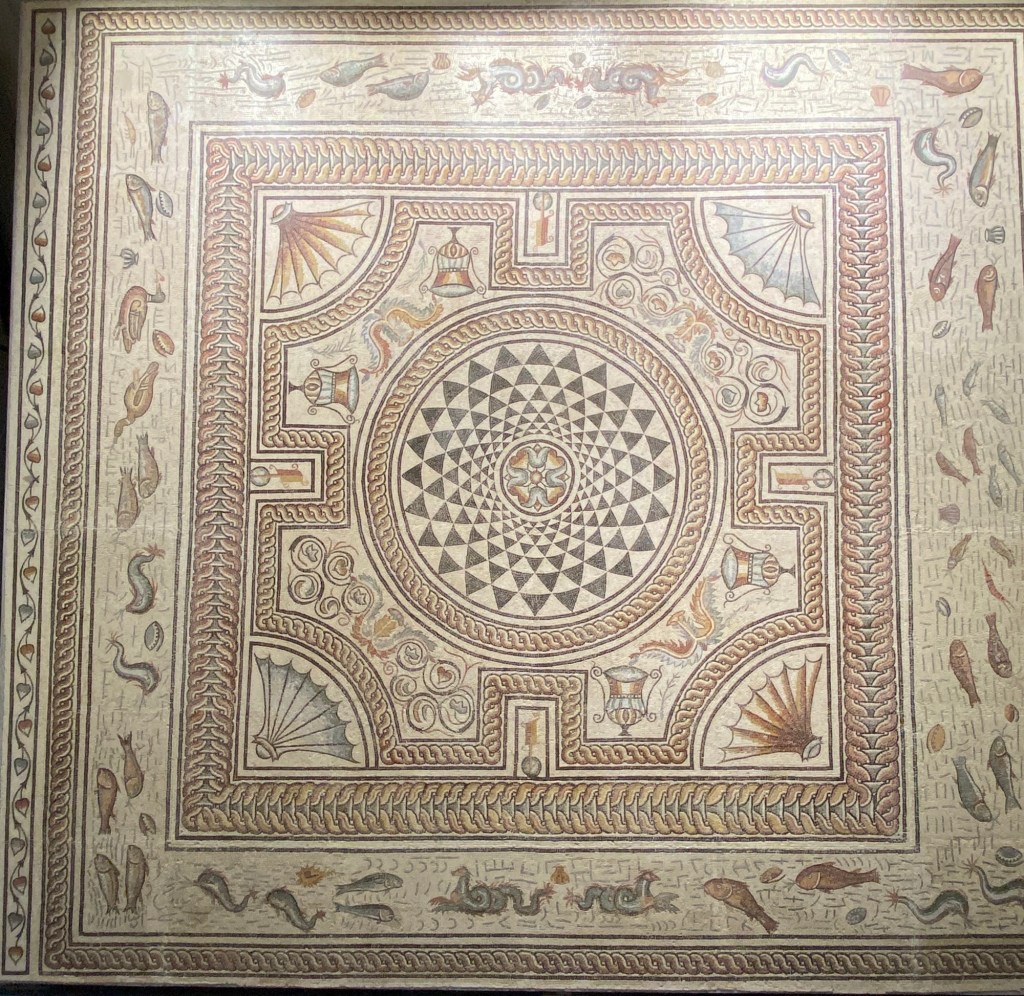
And the floors. I told you there would be floors, didn’t I? Many of the houses of Lyon, once they were properly excavated, were found to have these magnificent mosaic floors.
I actually got emotional, sitting right there, touching a floor that Roman moms played with their babies on, that dogs ran across, that people hugged and cried and celebrated on. These weren’t characters in a stone fresco. They were humans, making their way through life.
We kept spiraling our way down, learning about how people moved around the Empire, from Turkey and Spain, Germany and Iraq, to make the Empire diverse and powerful.
And when we reached the end, we were at the bottom of the Amphitheater, and just walked across the stage and down the road into town. From the ancient everyday world to the modern everyday world.
After we finished lunch at the cafe by Notre Dame de Fourviere, Bridgett and I walked about 10 minutes down the road and went even further back in history.
Because, you see, people have been building on this hill for many, many centuries. The Roman city of Lugdunum was built on this hill in 53 BC or so, a few years after Julius Caesar was assassinated. This city included a forum, temples, houses, baths, and amphitheaters, just like every other Roman city.
Most of the houses, which were built of stone, have been ‘recycled’ into churches and newer houses over the centuries between then and now.
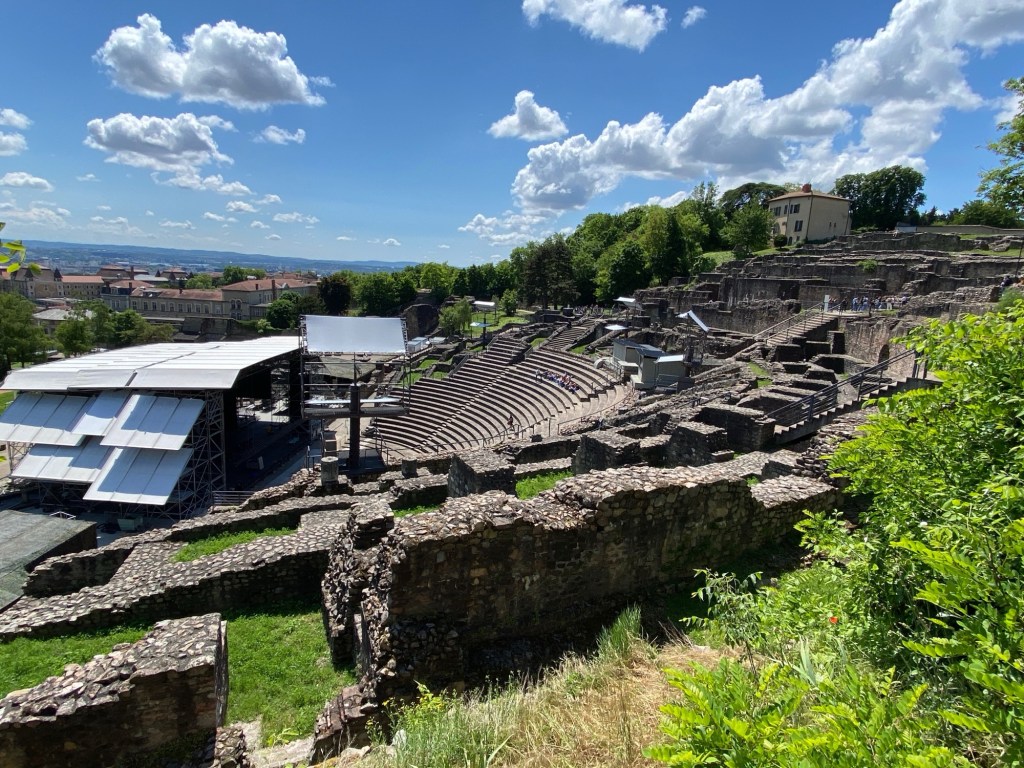
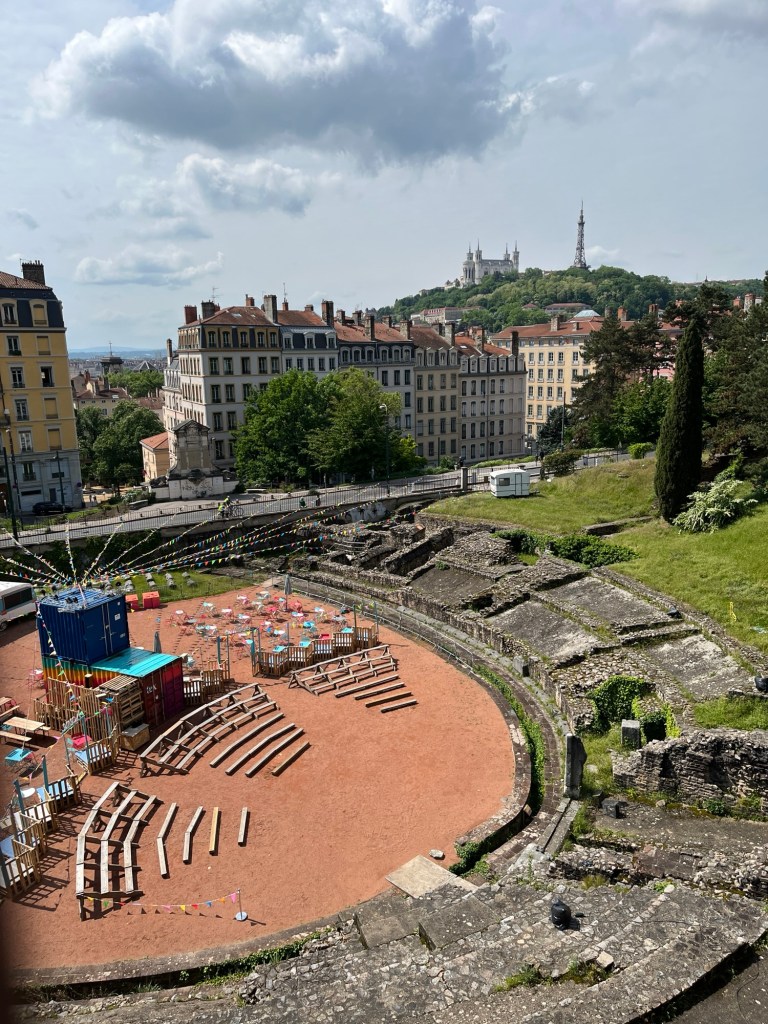
But much of the main amphitheater, which could seat 10,000 people, is still here. It had been buried by silt and overgrowth; protected, ironically, by ignorance and neglect. Unearthed and repaired in the 1940s, we can now climb, sit, visit, and wonder about the people who made this place.
With 10,000 people here for a performance of any sort, there would have been toilets (yes, with flowing water under the seats) and snacks (small shops behind the back rows). A grand villa stood just behind the theater, with proper Roman baths and mosaics on the floors. (They have been moved for protection… more on that later.)
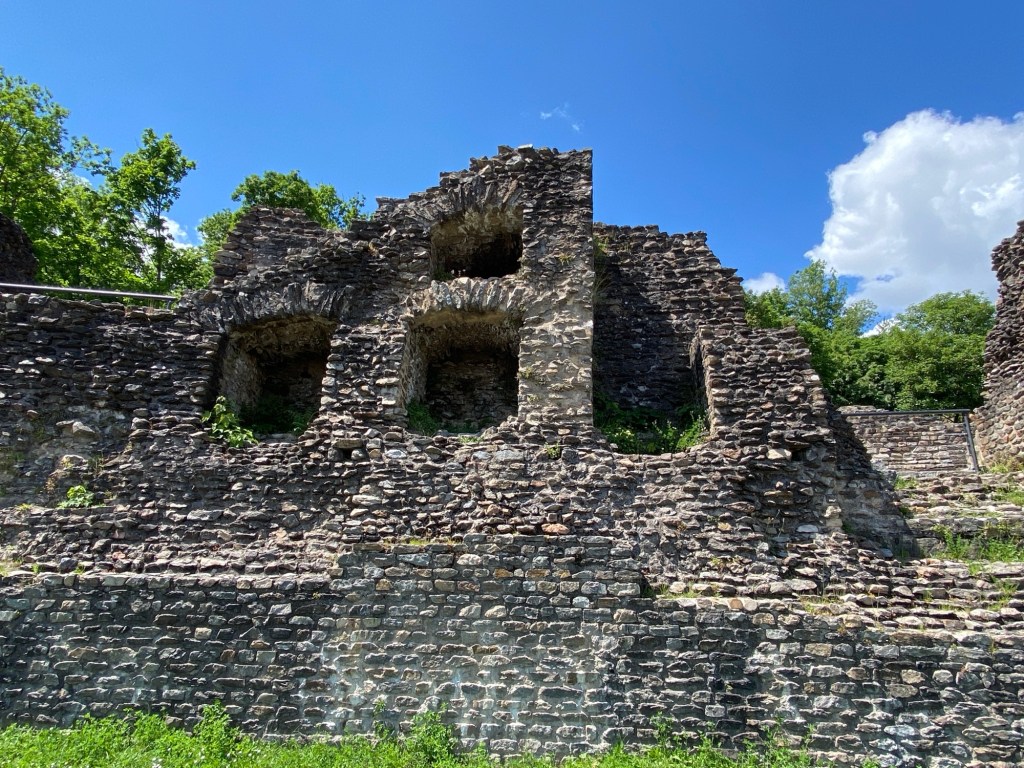
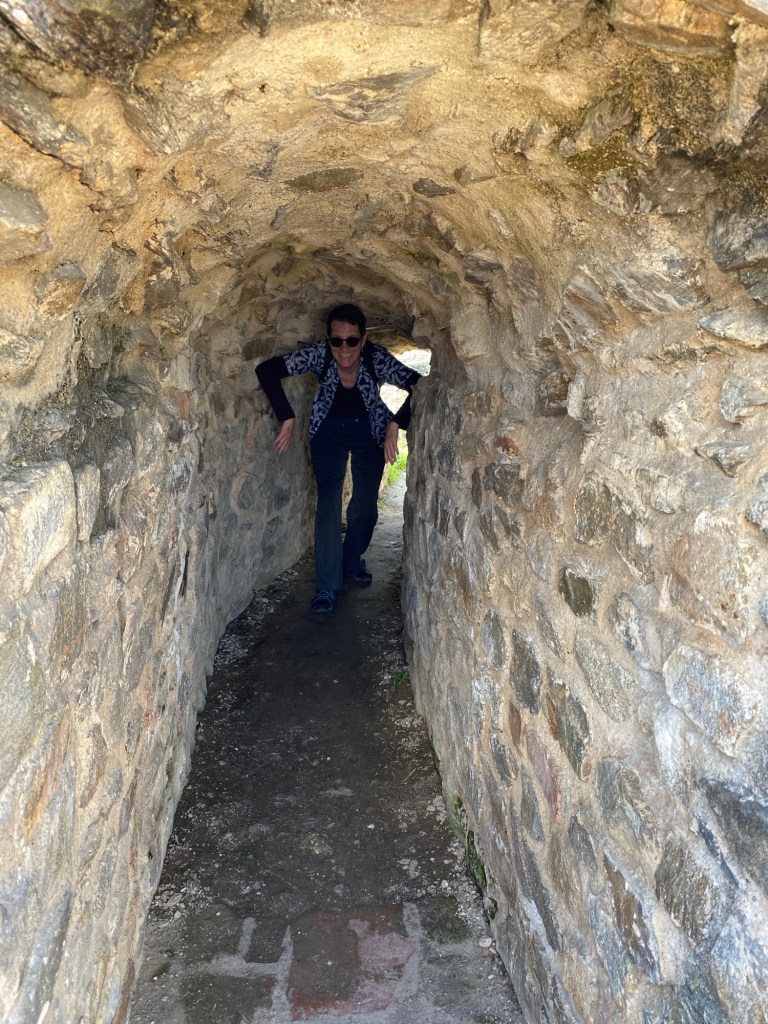
There were even some ancient hidey holes for me to shinny through! I think this conduit probably brought water up the hill. Romans were very clever with pumps and engineering.
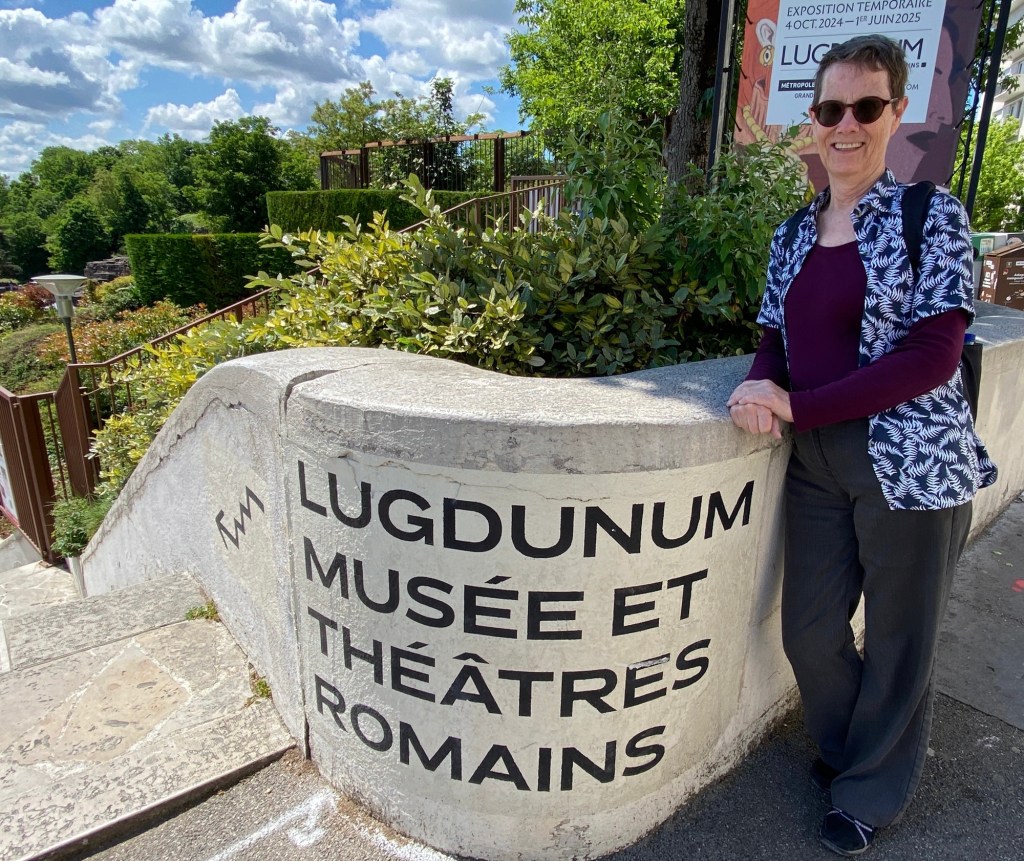
When we had walked and climbed and stared at the grandeur that was here, it was time to, as Bridgett said, “Go see what all this means”. So we went into the Musée.
We headed up, finally, to visit a place we have seen every day we have been in Lyon.
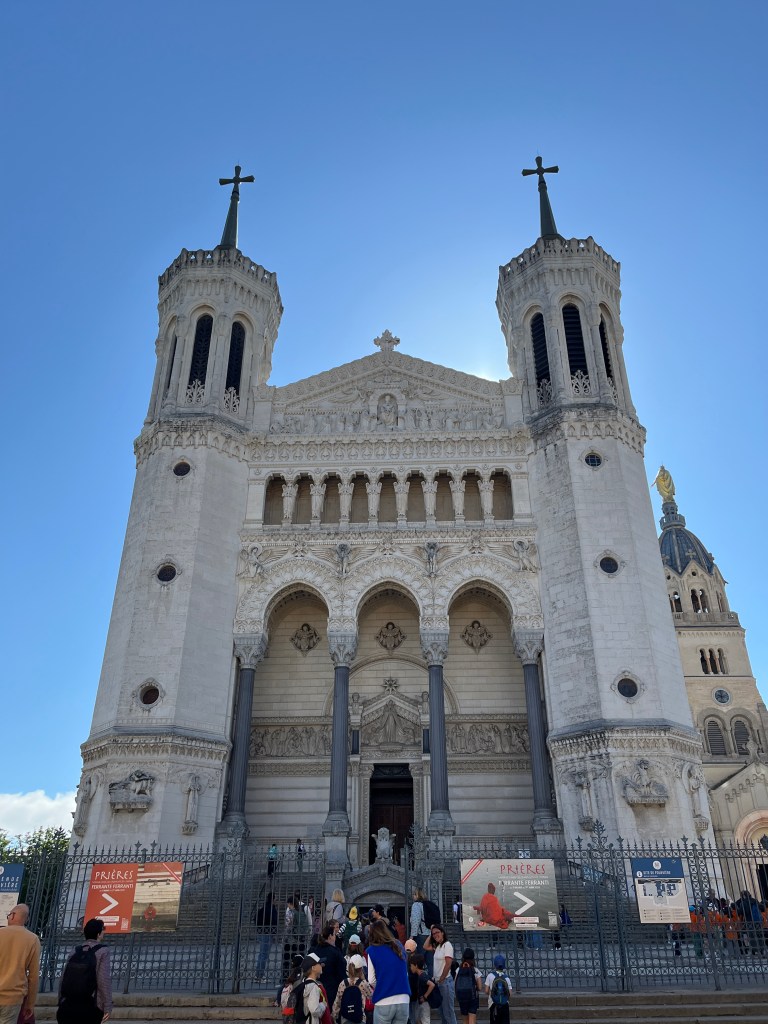
The Basilica of Notre Dame de Fourviere stands on the top of the hill west of Lyon, and is visible from most of the city. But to get there, we took the A line Metro, then walked across a bridge, then took a funicular train almost straight up to the top of the hill.
Since the funicular is part of the transit system, we just used our regular bus cards!
It was easy to find the church… it’s huge! Also, there was a pretty steady stream of tourist buses and school groups heading in that direction.
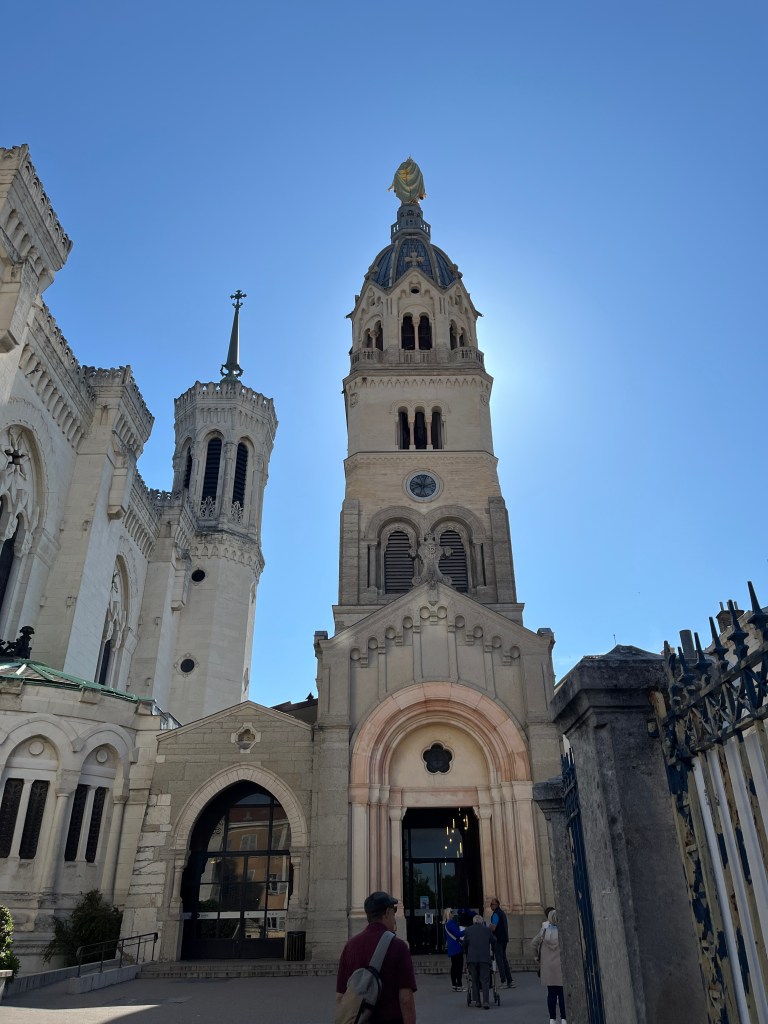
Before we went inside, we walked around to the bell tower, which is on top of the chapel that was built here originally, in the late 1700s.
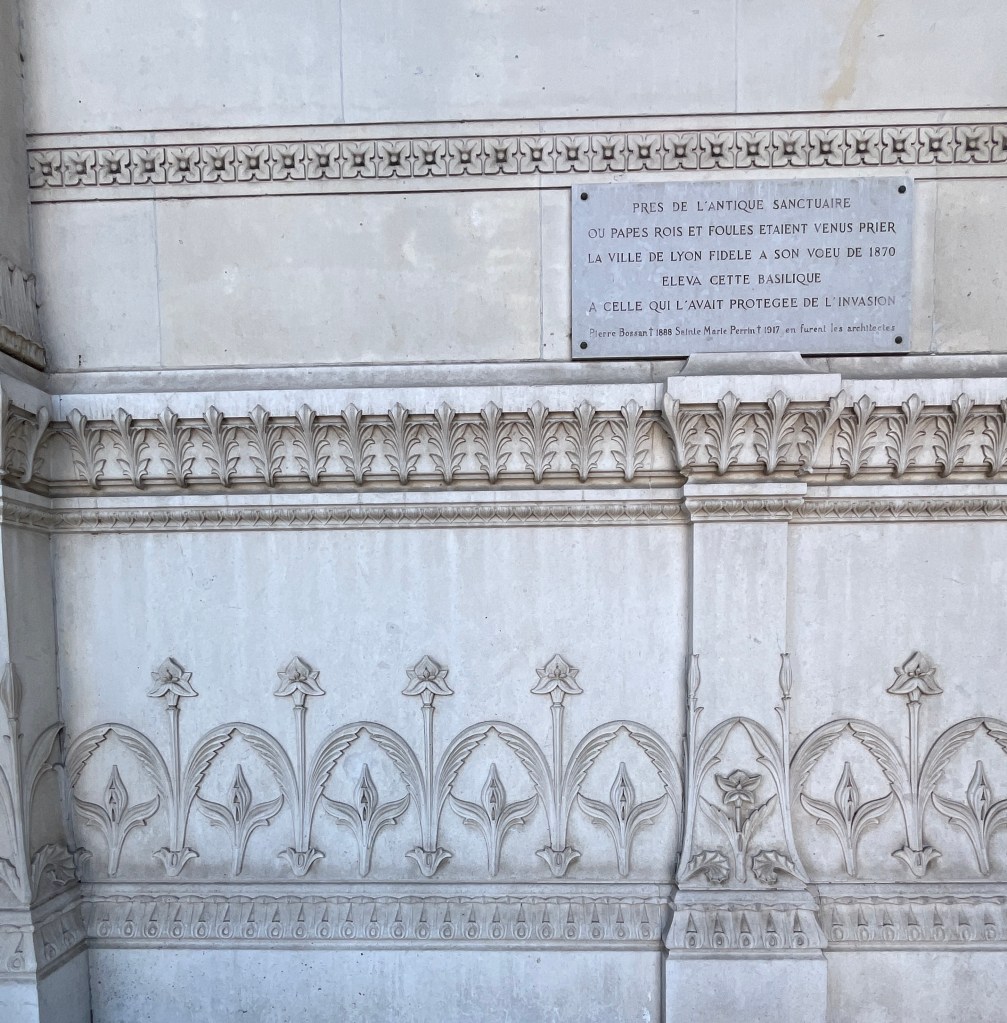
After a few years the sanctuary here became so popular, (having up to 12 masses a day to keep up) the diocese realized they needed a bigger church. The Basilica was finished in 1875, though it was designed to look much older.
The inside of the church is the most decorated, detailed, carved, painted and mosaic-ed place I have ever seen. As we sat on the wooden pews, hundreds more people filed in. Unfortunately, the buzz of the crowd, punctuated by the inevitable shrieks and giggles of school groups, made for a less-than-reverential experience.
We stepped out and walked around the courtyard, enjoying the views of the city from the overlook, and had lunch at the lovely cafe.
About this time Grandpa Nelson got worn out, and headed home. Auntie Bridgett and I decided to stick around for the second part of our adventure.
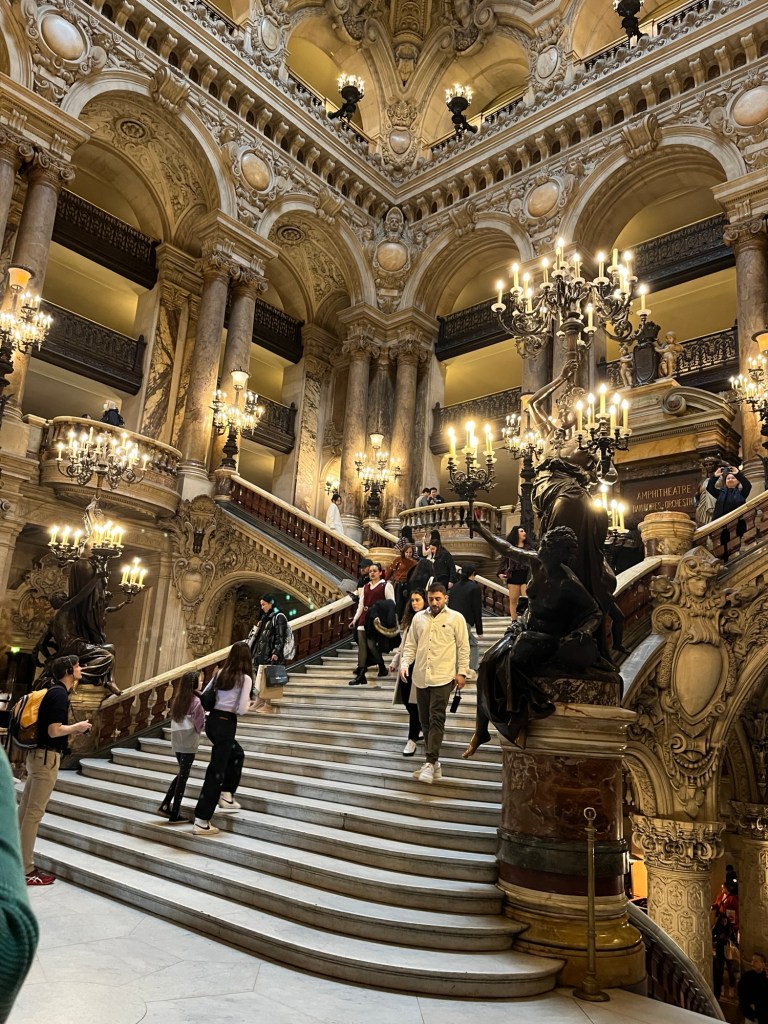
We’ve visited France a few times, and I’ve come to realize that France just loves stairs. These at the Opera Garnier in Paris are as fancy as the shows!
Maybe it’s that stairs make the buildings tall and graceful. These help get folks into the Louvre.
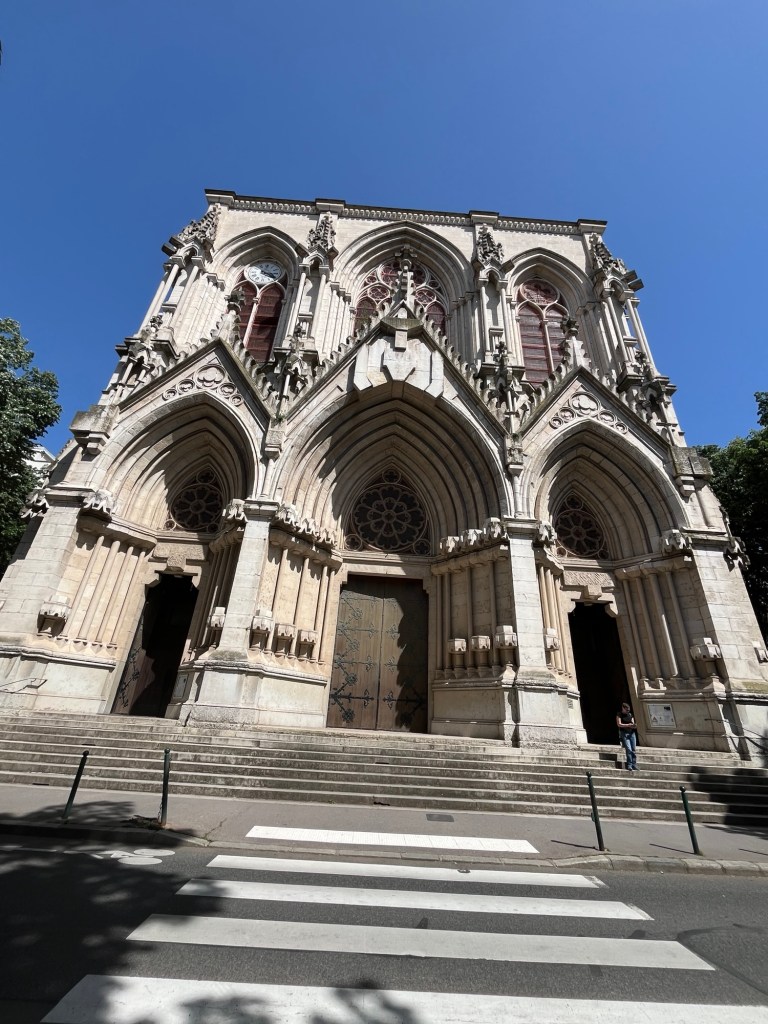
Certainly, Cathedrals without stairs wouldn’t be nearly as majestic.
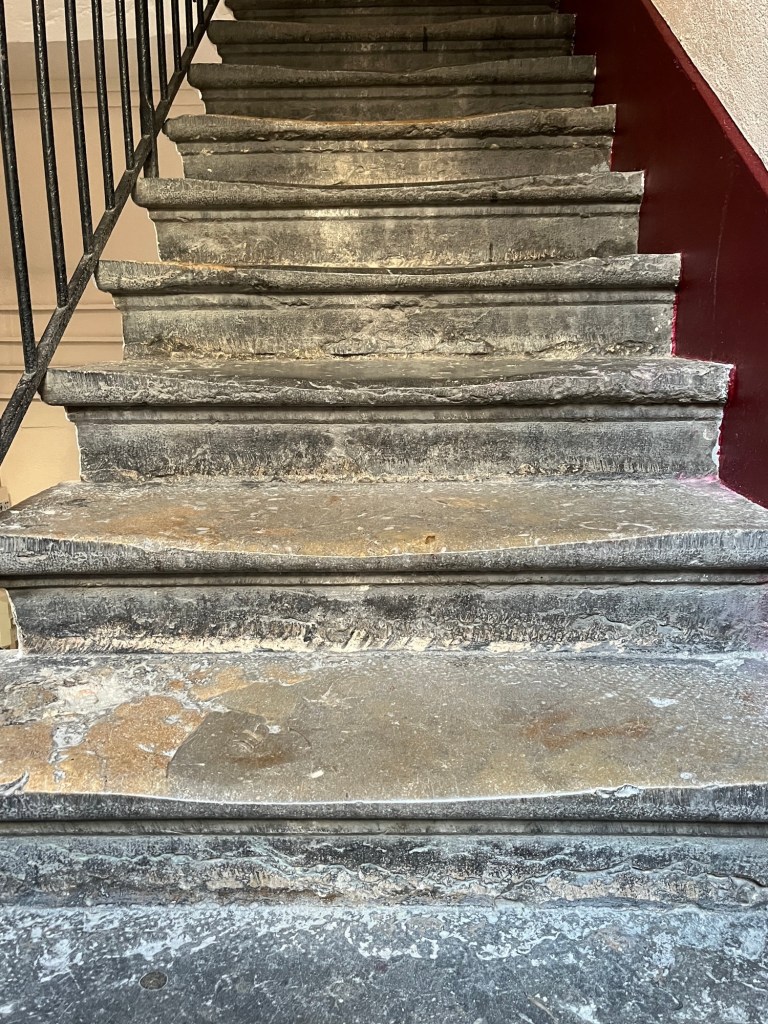
Or maybe it’s that stairs allow so many folks to live in a small space, so transportation is easier. Here are the stairs up to our apartment in Lyon. Forty-six in all, and we are only on the second floor. They are cut from stone. And yes, they really have that little dip in them, because they are hundreds of years old.
Some old buildings have retrofitted elevators, but they are not common, and often don’t work. Newer buildings might have elevators, but aren’t usually located in the central part of the city.
So, as well as counting steps and miles, we can start counting “flights of stairs” on the Apple Fit application. The other day, Bridgett got 18… but she’s a powerhouse.
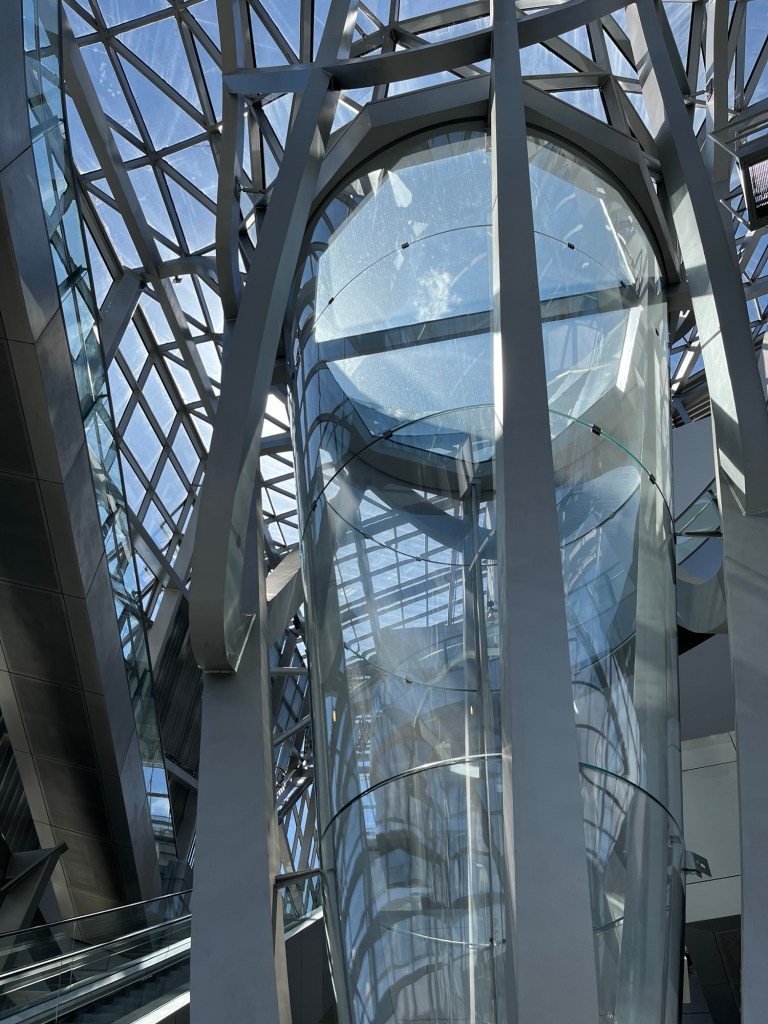
When two rivers flow together to become one, this is called a confluence. And when a museum is perfectly suited, both architecturally and metaphorically, to its location, this is called Le Musée des Confluences.
This unexpected building has no great facade and almost no right angles, and looks grandly alien against the bright blue sky. The building looks different from every angle, and there is no ‘front’ or ‘back’. It follows no architectural tradition.
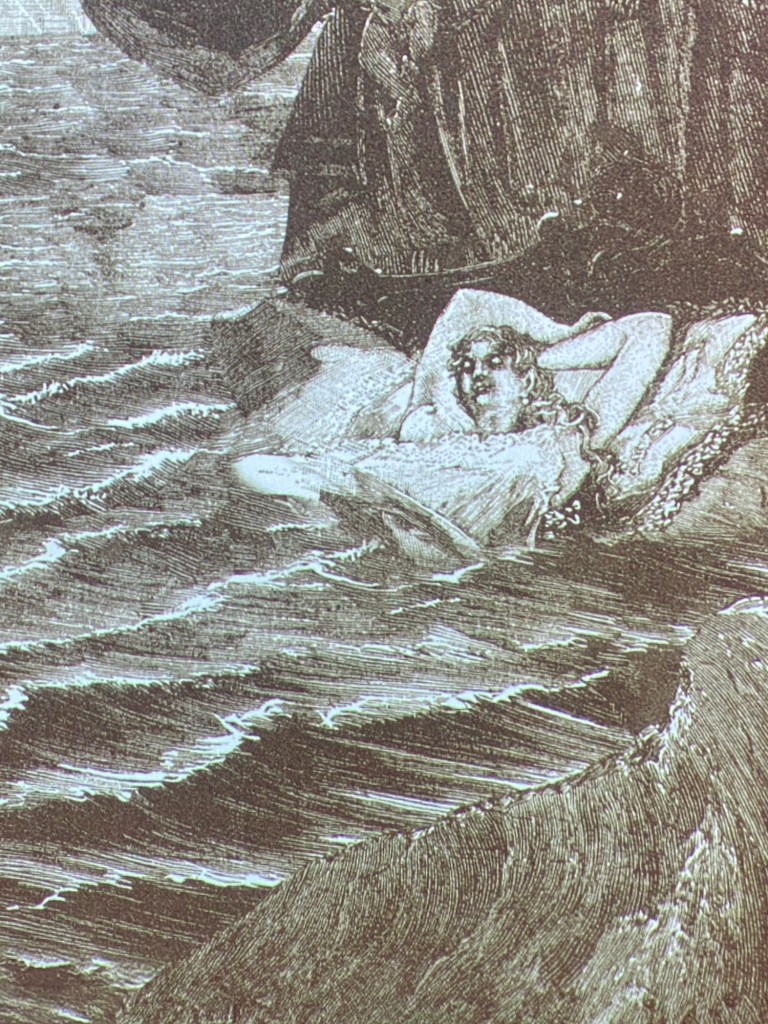
The exhibits inside are equally unexpected. The first one we saw was on Dreams, and how societies through time have used and interpreted them. Writings and stories from all over the world were represented in film, art, models, and recordings. Dreams about death, under fascist regimes, and religious visions were included, all considered equally.
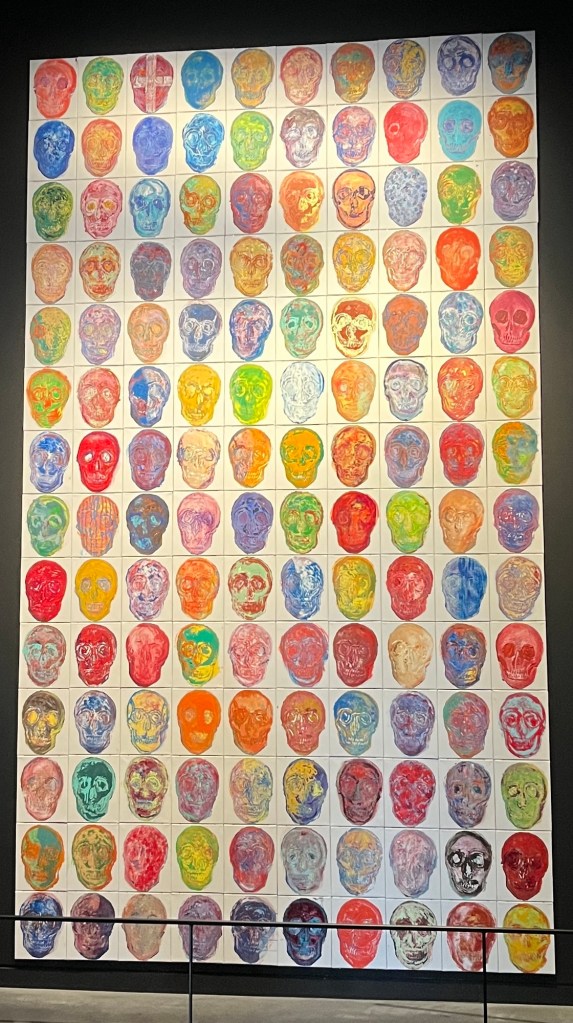
There were also a gallery titled “Death… and Then What?” about different societies’ views on whatever life there may be after death. It was fascinating, if a bit dark, but again, handled without the usual Western bias.
There was no “but science NOW knows…” stuck on the end to discredit the other world views.
The galleries, like the building, and like the location, were a confluence, a blending, an acceptance and equal exploration of all views.
This is included in the introduction to the museum, “guests are invited to view the world with curiosity and a sense of wonder.“ This museum sees itself not as a fountain of knowledge or a gatekeeper of information, but a lens through which to look at the world.
One of the things that has fascinated me about Lyon is its history… ancient history. There is evidence of folks living and celebrating here as early as the Iron Age, and when the Roman Empire expanded into this area in 43 BC, they named it Lugdunum.
I have seen some Roman foundations at the Cluny Museum in Paris, which is built on a ancient Roman bath. Still, I wanted to see some actual, outside, “sitting around for more than 2,000 years” ruins.
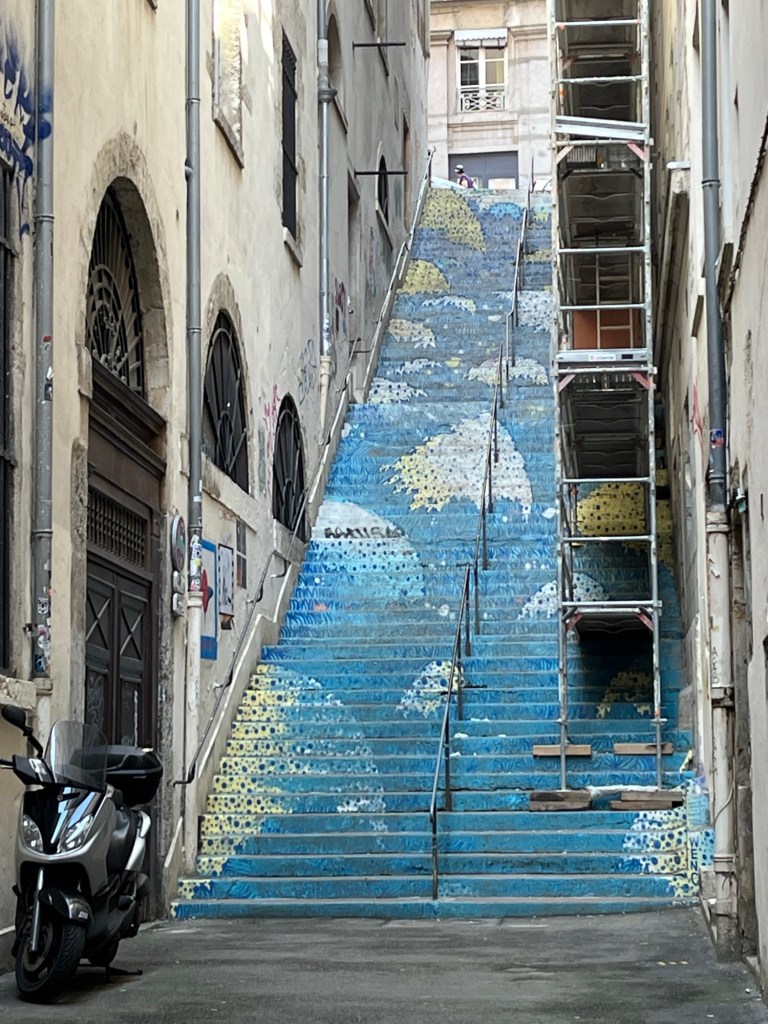
In Lyon, the Romans their city built high above the Sâone River for defense and sanitation. To get to the Amphitheater of the Three Gauls, we crossed the Rhône, and up some narrow, steep lanes. Slowly, we gained altitude, every now and then catching a glimpse of the city spreading out below us.
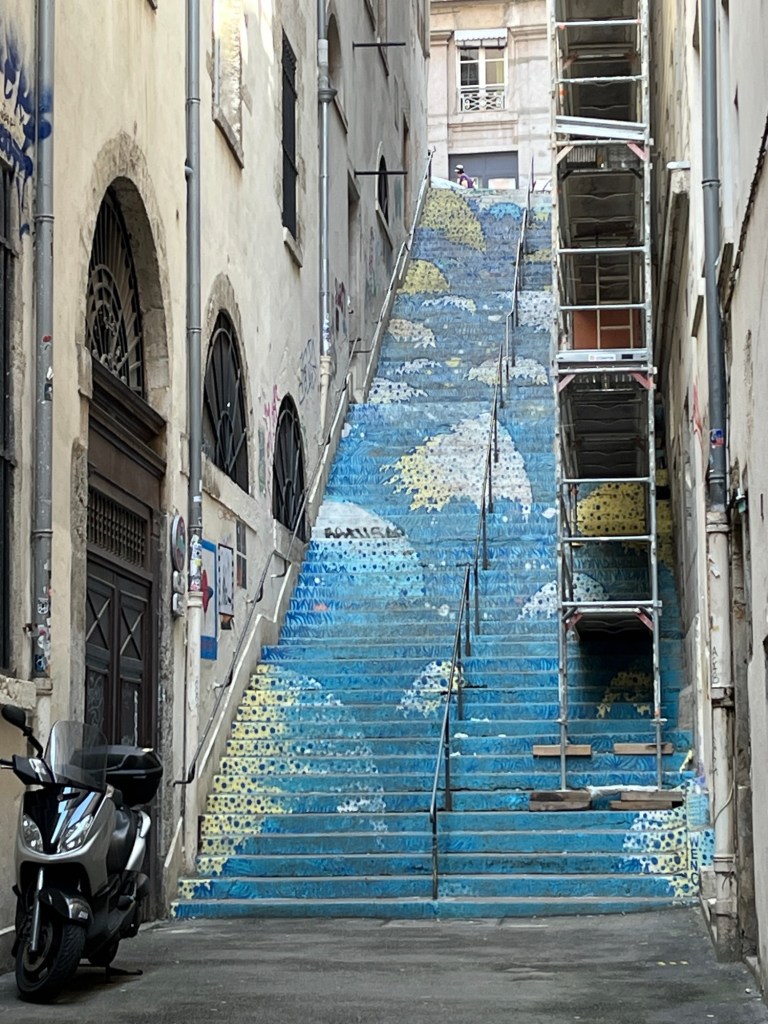
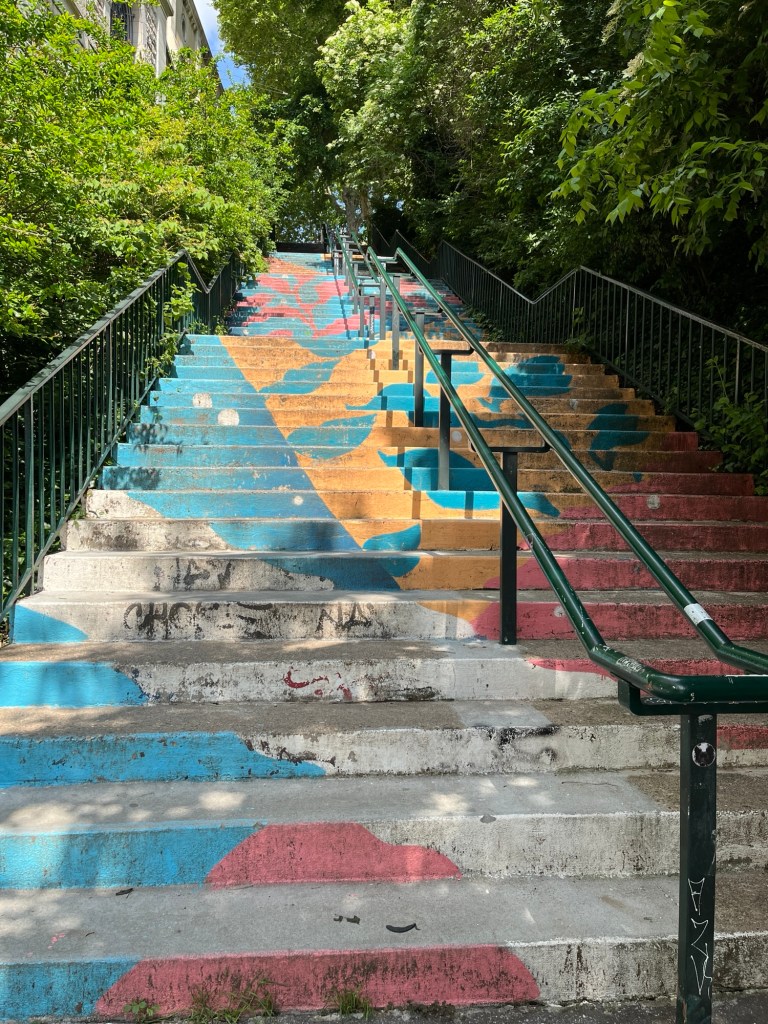
On the final push to the hilltop, we found about sixty of them, all painted and pretty, and all going straight up. Oh, my aching quads!
And then, right in the middle of a neighborhood, there it was. The ruins, sitting out in the sun and rain since the year 19 A.D., were there. But they were fenced off. The ancient arena is being used for some city celebration later this month. It was cool, in a way, that those ancient stones being sat on by modern folks.
But I didn’t get to be one of them. Sigh. But history teaches us perspective, right? I know there are OTHER Roman ruins in town, and I know how to get there. An adventure for another day.
Of course, there were stairs going down, too…. But I don’t mind them so much.
Sometimes, the adventure is all about the destination. And sometimes, it’s about the journey.
I was heading off for the Cinema and Miniature Museum, you see. Auntie Bridgett and I had ridden the metro to the Place Bellecour together, and then we parted ways. She was heading for a comics shop, I was heading to the museum.
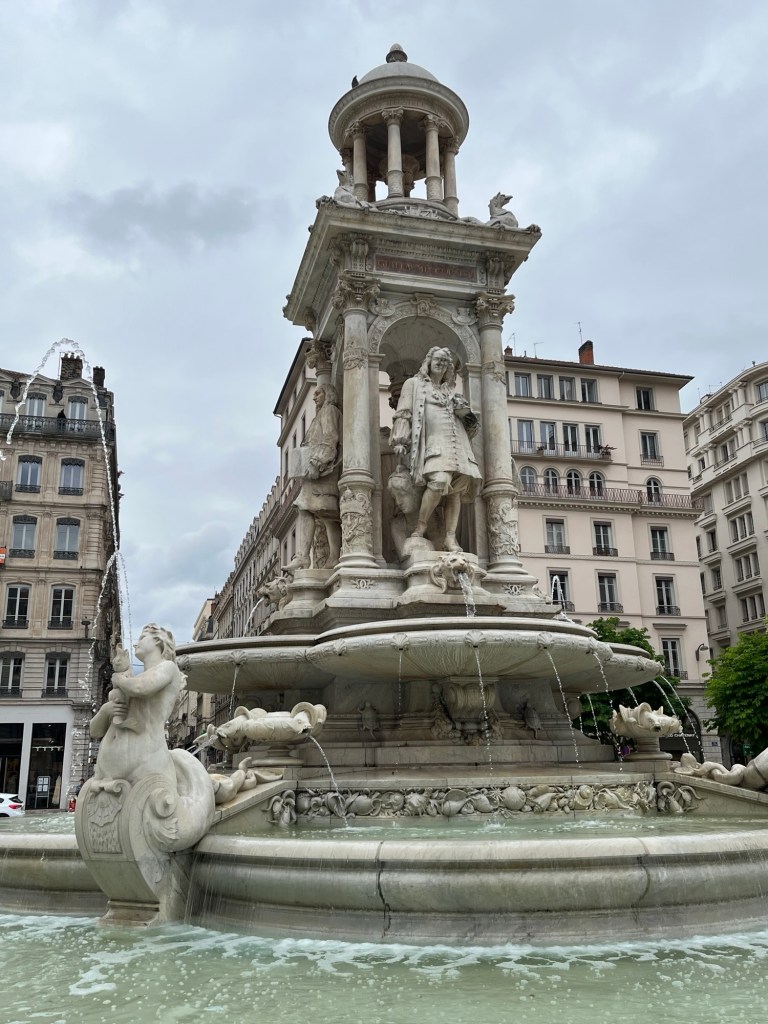
First, I got distracted and turned around, going north a bit instead of west. But I found the lovely Place des Jacobins, with old buildings and a fountain. So, all was well.
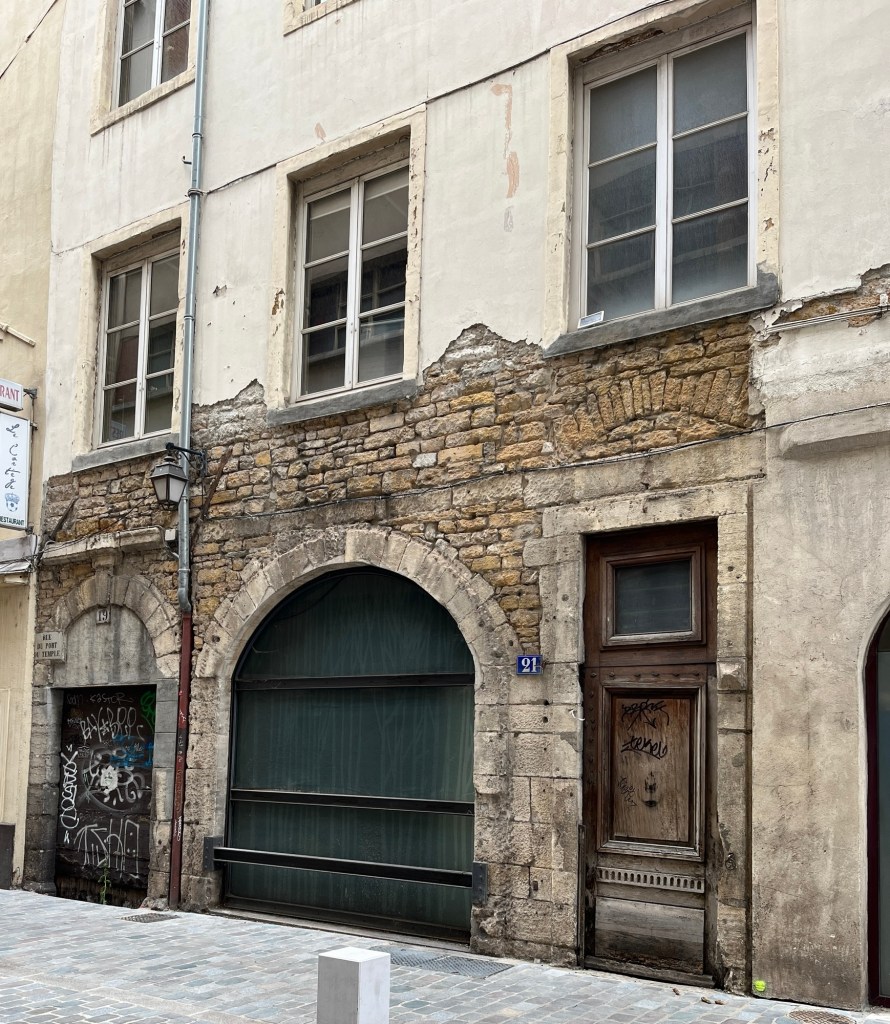
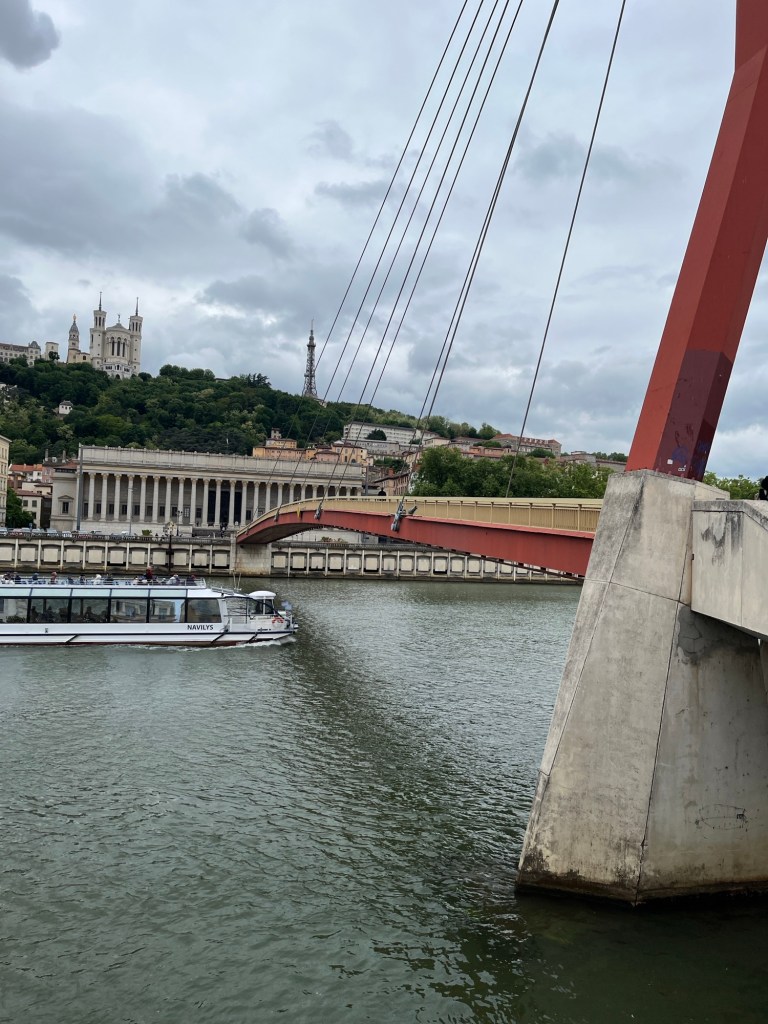
Getting straightened out, I followed Googlemaps …. Down the narrowest, creepiest, most ancient alley I’d ever seen. But I found a bridge across the Saône at the other end of it, so, good again.
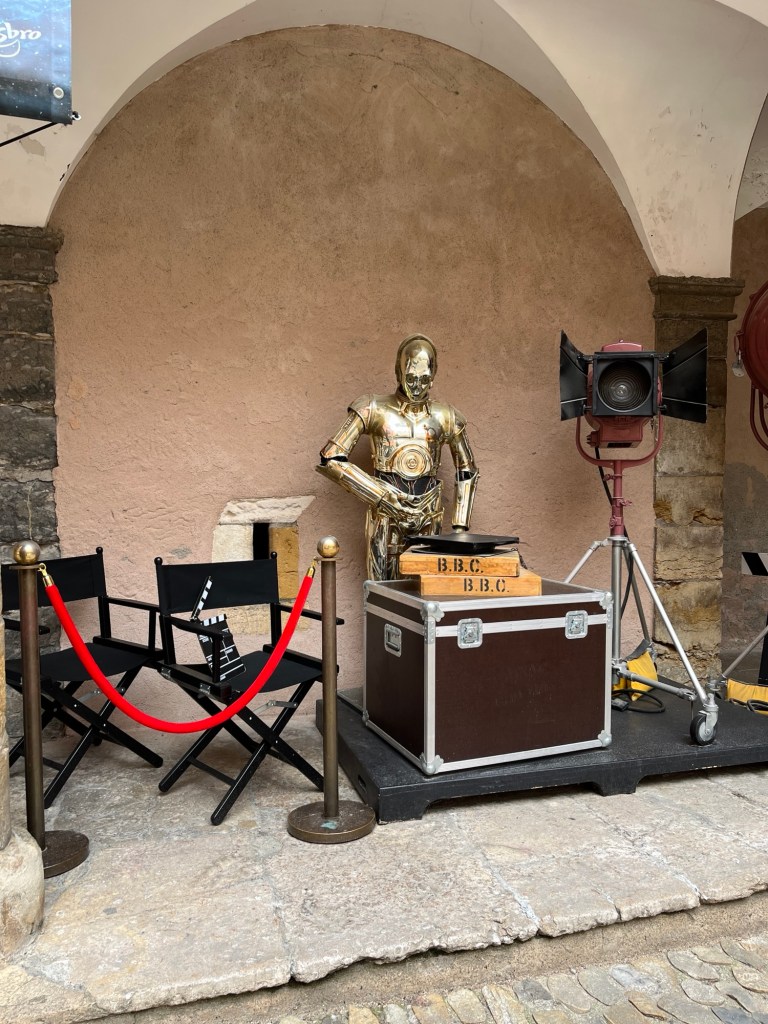
After more skinny streets (these were filled with tourists) I found the museum of Cinema and Miniature. It was a pretty impressive collection of sites, props, costumes, and miniatures for dozens of movies.
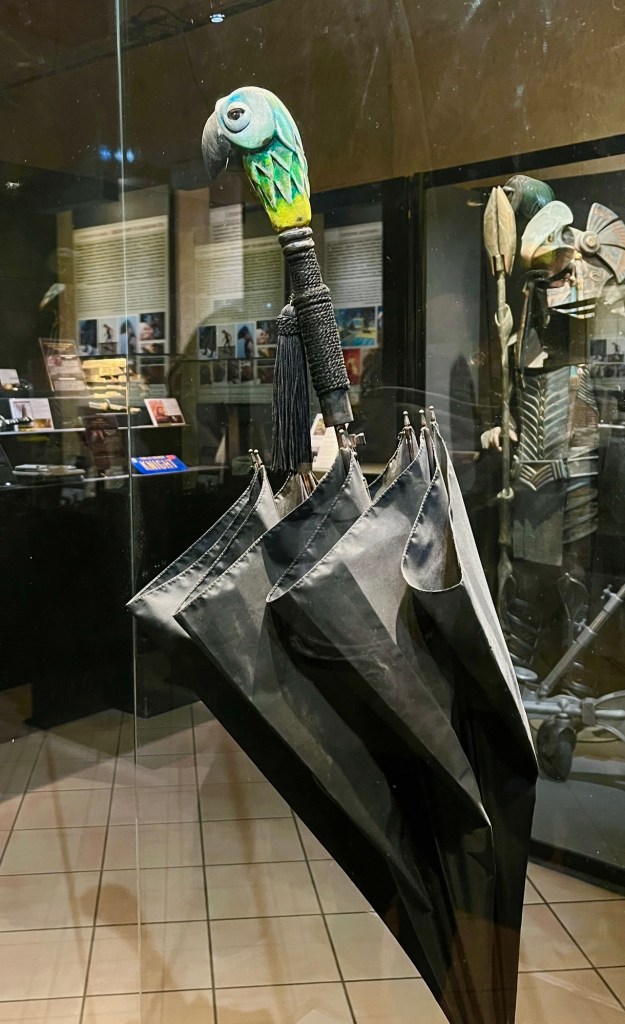
Ewok costumes from Star Wars, miniature sets from Ghostbusters, and even the Queen Mother from Alien. There were 10 rooms, on six floors, filled with nifty, nerdy movie stuff. Even the world’s most famous umbrella. It was fun, and I’m glad I went.
But there was more adventure to be had elsewhere. I texted Bridgett, who was done at the comics shop, and we met up for coffee.
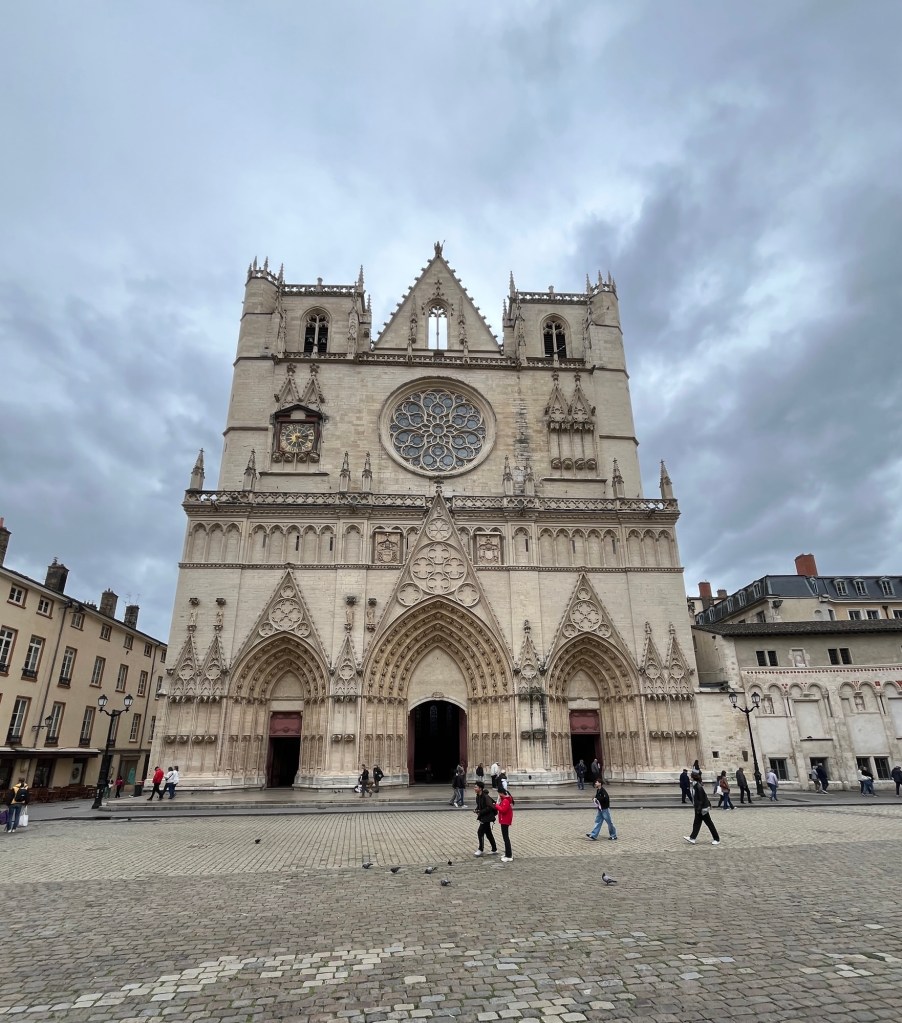
And the St. Jean Cathedral.
And discovering our first Traboule! (More on that later).
And finally, home for dinner.
So, the museum was tiny, but it was an adventurous day.
When we get to any city, of course we find the art museum. In France, these are called Les Musées des Beaux-Arts. So the other day, we set out for an arty adventure.
The Musée in Lyon is on the Presqu’île, the peninsula that is formed where the Rhône River and the Saône River both run south for a bit before converging. We crossed the Rhône on the Pont Morand and walked right into the middle of the city!
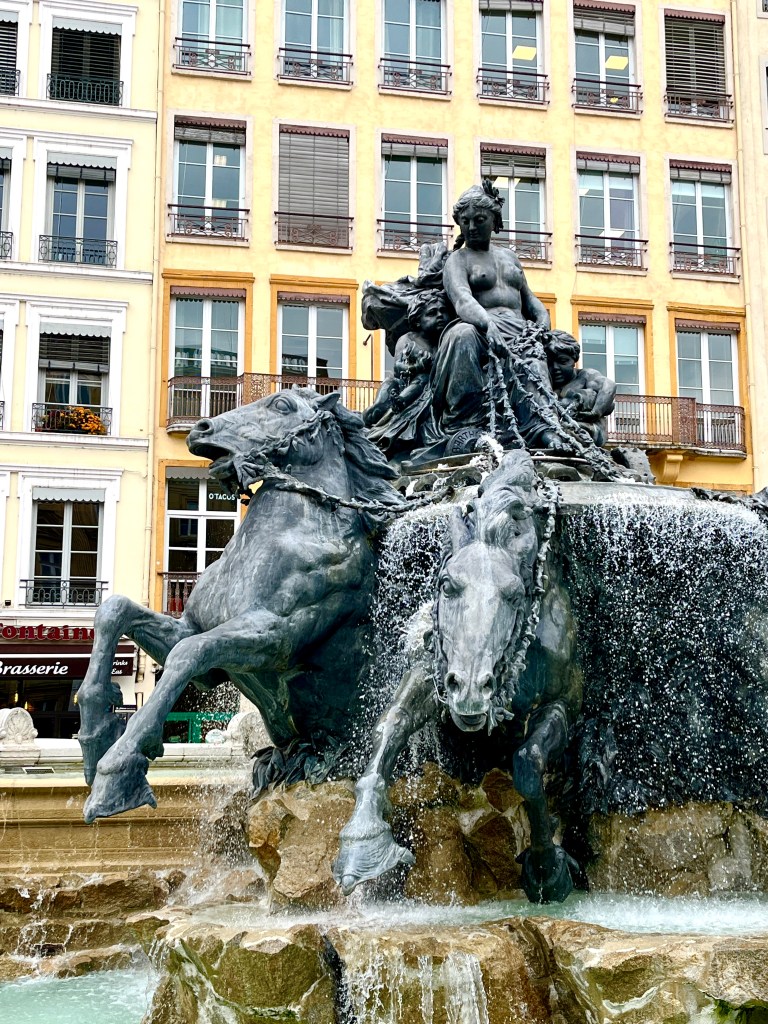
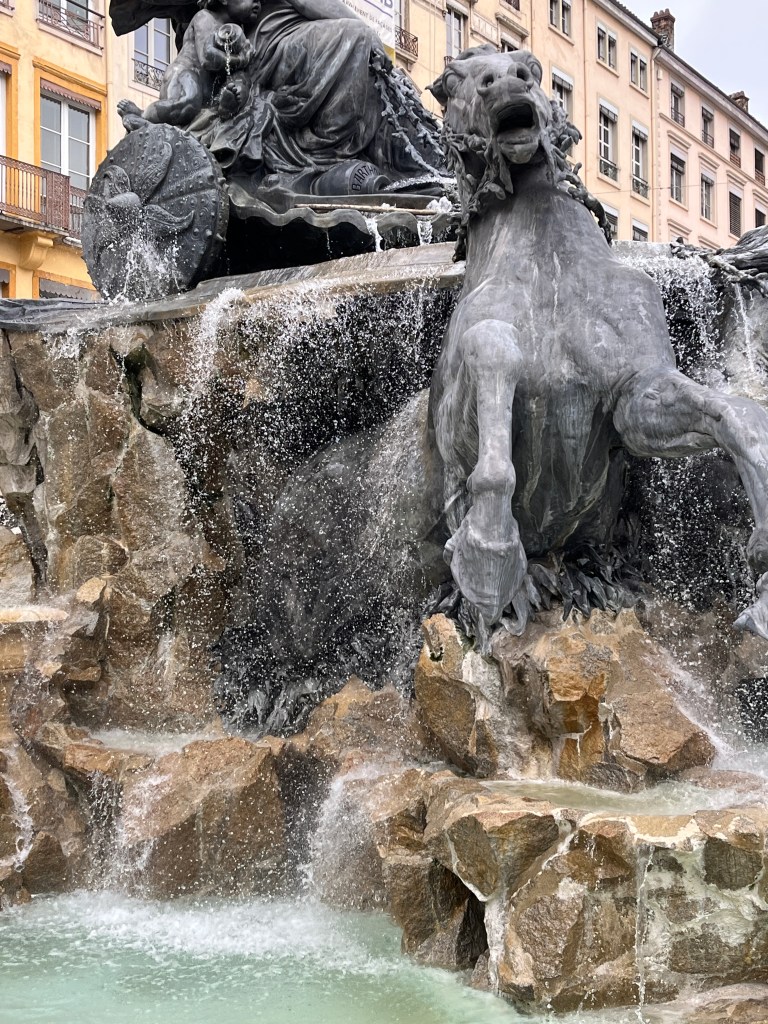
Le Musée is on a wide plaza called Le Place Terreaux, which also has the Hotel de Ville, or City Hall. The first thing that catches your eye is this magnificent, roaring, complicated fountain. Sculpted by August Bertholdi (who also did the Statue of Liberty), it shows France as a woman, riding a chariot pulled by four wild, energetic horses.
The horses represent the four great rivers of France, the Rhône, the Loire, Seine, and the Garrone, with France controlling them in a gushing, turbulent flood. We walked around and around, amazed at the details.
The building that houses the Musée is hundreds of years old and is as beautiful as the art inside. The first staircase is topped with statues that represent the Beatitudes ( “Blessed are they that …” verses from Luke in the New Testament), and were so interesting that it took us twenty minutes to get past them!
I won’t try and tell you about all the art, just let you know that their oldest item is from an early Egyptian dynasty thousands of years ago, and their newest is some crazy ceramics from the early 2000s.
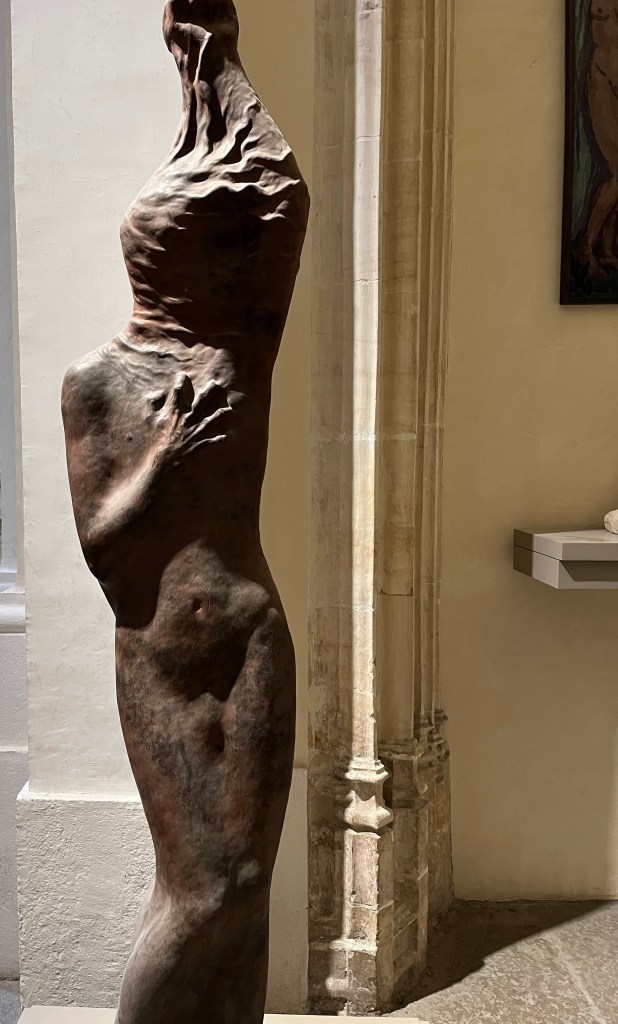
Of course, I loved the paintings, but the variety of sculpture really knocked me out. This tall fairy like person, called Abandoned Psyche, was beautiful, sad and sweet.
This wind-swept figure is called Power of the Will and shows how we all feel sometimes, just standing as straight as we can in the winds of circumstances.
And on our way out, I found the one sculpture I would take home if I could. This slightly larger than life sized dog, resting sweetly, waiting for whatever adventure comes next. I can imagine he would be very satisfying to pet, after a long crazy day.
As we settle into our life here in Lyon, we are having one good sized adventure early in the day, and one smaller walkabout in the afternoon.
Our afternoon adventure the other day led us to St. Pothin, the first church we have been able to go into. Until now, they have been either locked, or full of worshippers.
As we approached, we saw that the door was open and an odd, low growl was in the air. We entered and realized the organist was practicing her low notes at the organ by the altar.
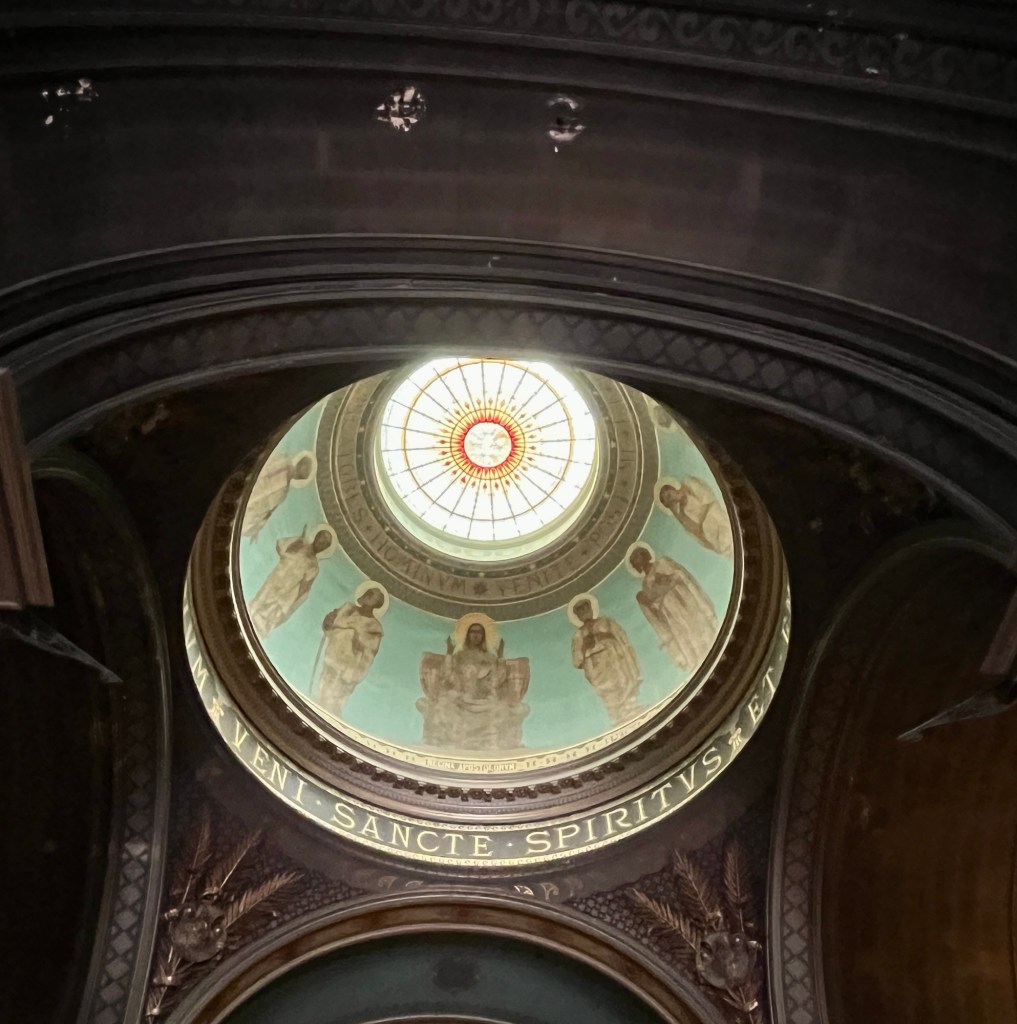
We walked slowly up the main aisle, appreciating the glowing stained glass windows and the perfect proportions of the dome. The organist’s playing got more animated and moved to a minor key, becoming slightly creepy.
As we went up some stairs, the music became more and more menacing, like the soundtrack of a movie just before the monster appears. I was freaking out a bit, to be honest.
We went back down the stairs and Bridgett continued her slow walk, enjoying the art. But all my cinema-trained instincts were telling me to Get.Out. Now. I beat a hasty (but dignified) retreat up the aisle, and waited for Bridgett on the porch.
Turns out, there was no monster, just some really good organ playing by a woman who knows how to evoke a mood. That was our first Lyonnaise church.















 Dear Liza