The Montpellier Zoo

June 8

Dear Liza,

It just keeps getting warmer here in Southern France, but we are determined to get out and see the sights. Grandpa Nelson invited me along on his “Gotta See the Zoo” transit outing, so I went.

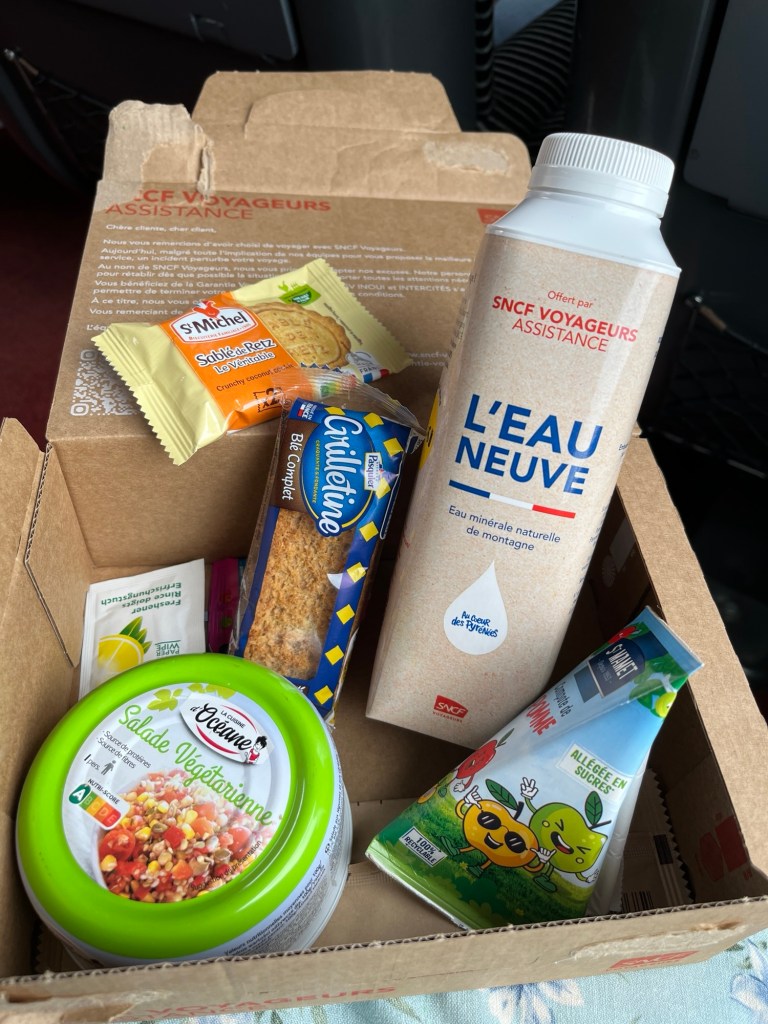
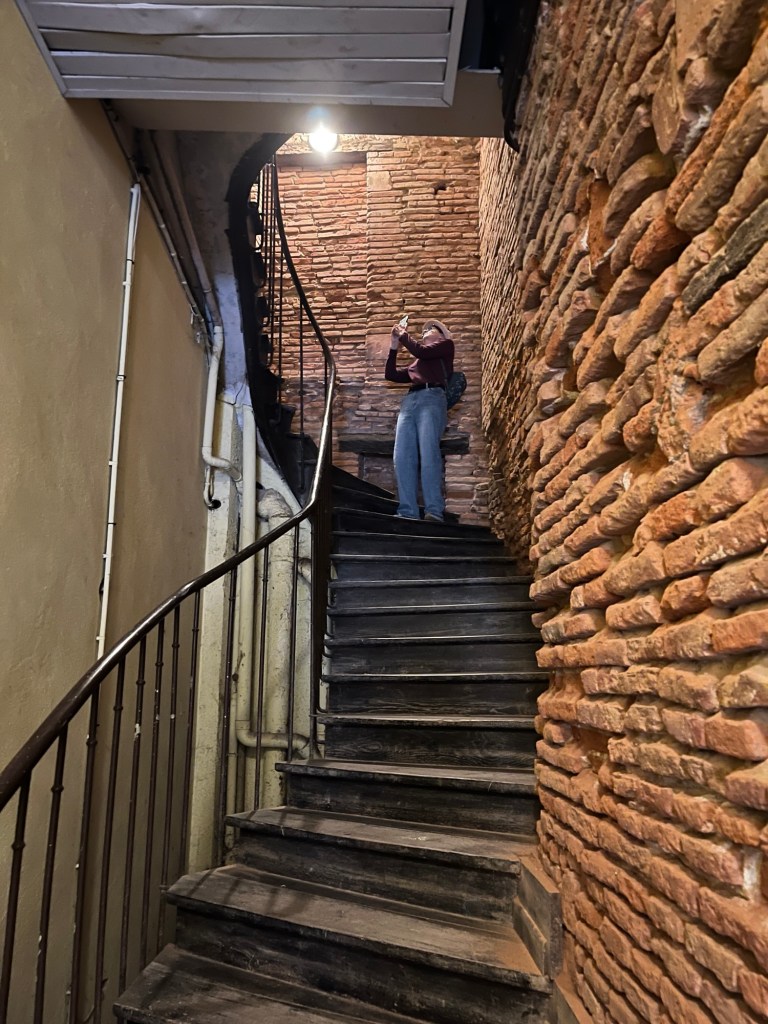
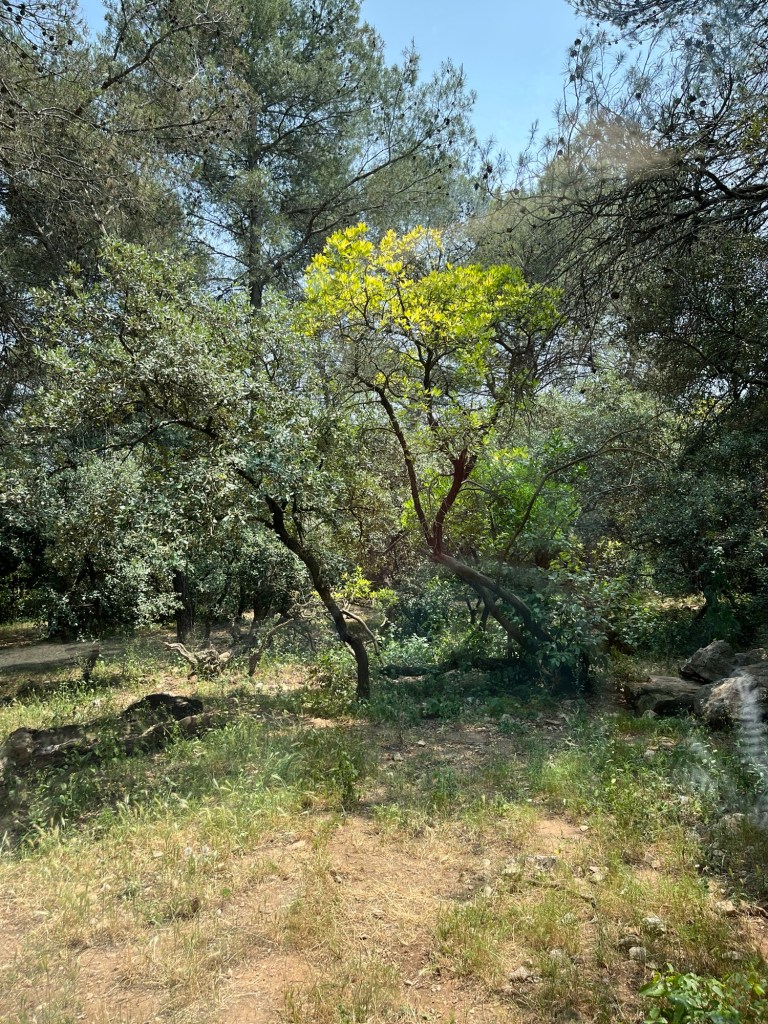
We made sure to take cold water and snacks, found the tram stop down by the triangular shaped Square Planchon, and headed off. The tram took us up to the University of Sciences and Letters, and from there we caught a bus up into the hills. The dry hills and low trees felt like Toro Park in Monterey, California.

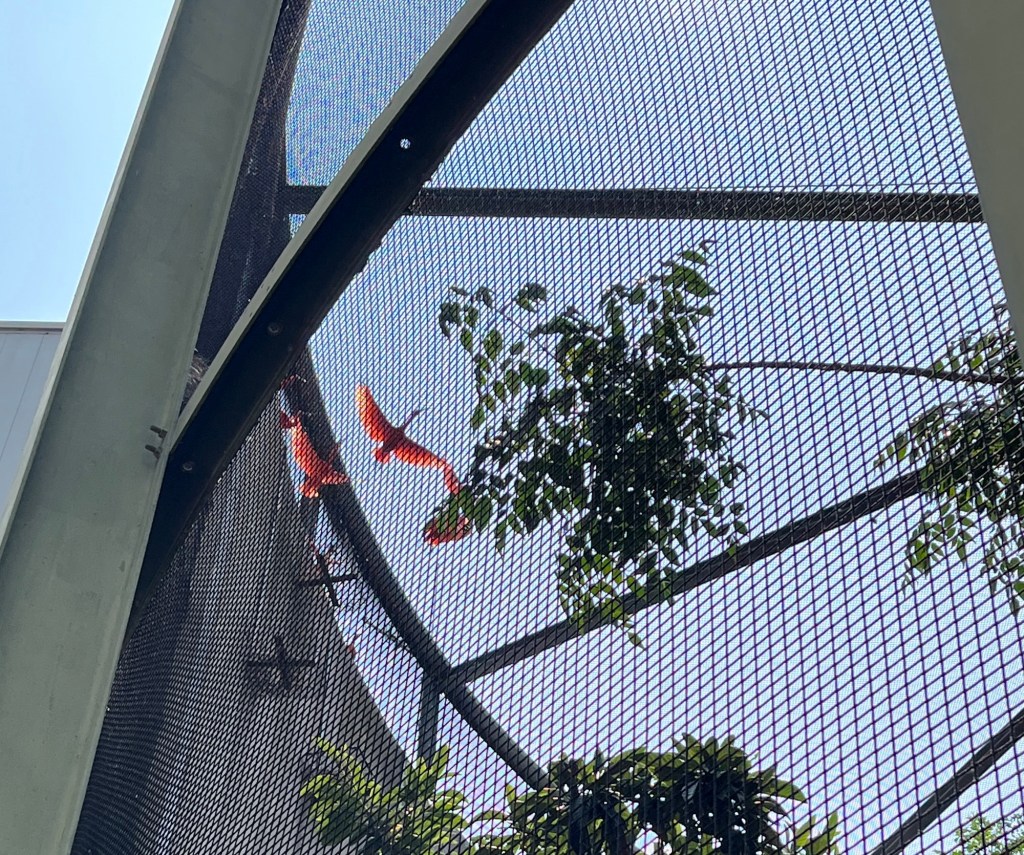
When we had left housing developments behind, we found the Zoo. The first enclosure is a generous aviary housing Red Ibis, South American birds that are the color plastic flamingoes only dream of being.

After that, though, the paths and the enclosures felt more like a rough draft of a zoo. The paths were unpaved roads and the signs were vague about distances and actual zoo animals along the way. The enclosures were full of trees and high grass, making it nearly impossible to see many of the critters. We passed cheetahs, emus and gazelles enclosures,, with nary an animal in sight.

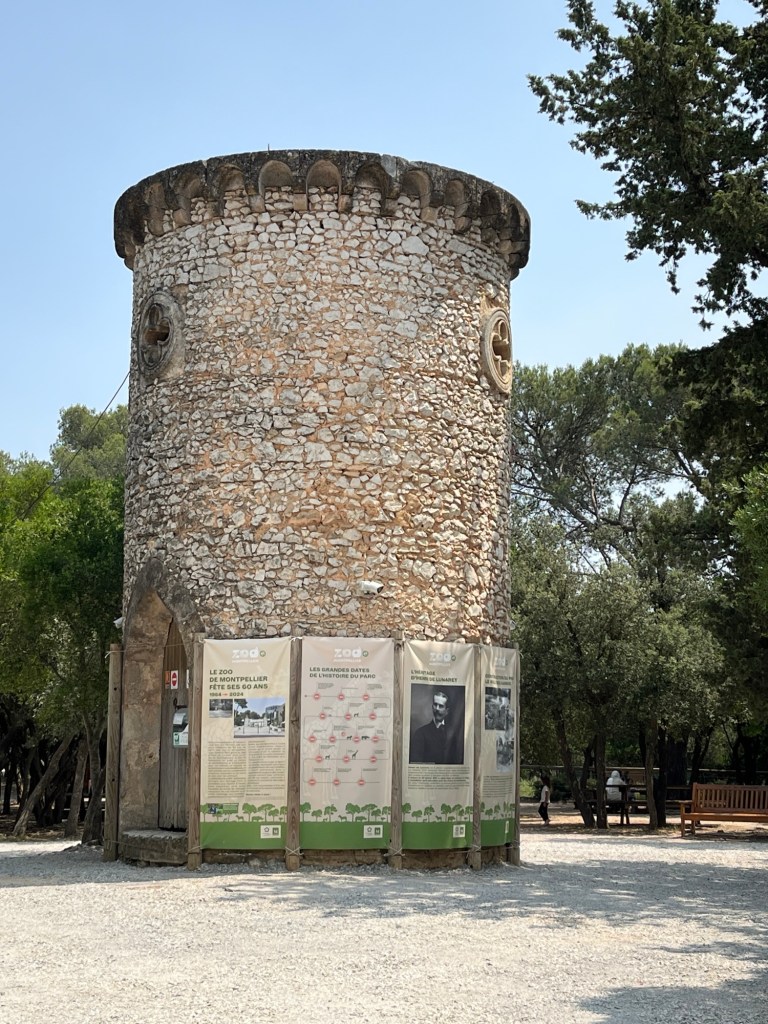
There were lots of families with small kids, and it was fun trying to eavesdrop on their conversations. By The Tower (which I can’t find any online info about), there was a cold water spigot and lots of shady benches and tables, which kept everyone rested and hydrated.

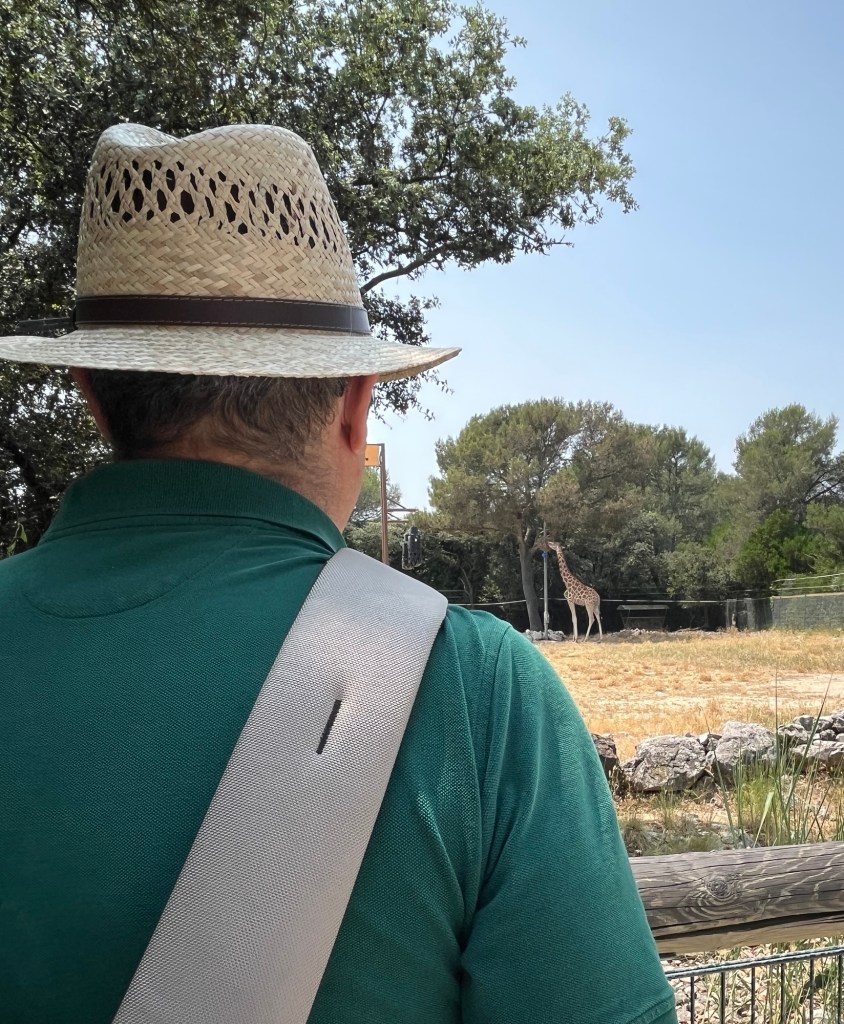
Luckily, there were Grandpa’s favorites, the giraffes. We visited with them and the rhinos for a bit, and then headed back out. Some cold Orangina and potato chips from the snack shop renewed our will to live, and we caught the bus, then tram, home.

It wasn’t the adventure we expected, but an adventure all the same.

Love,

Grandma Judy

To the Med!

June 7

Dear Liza,

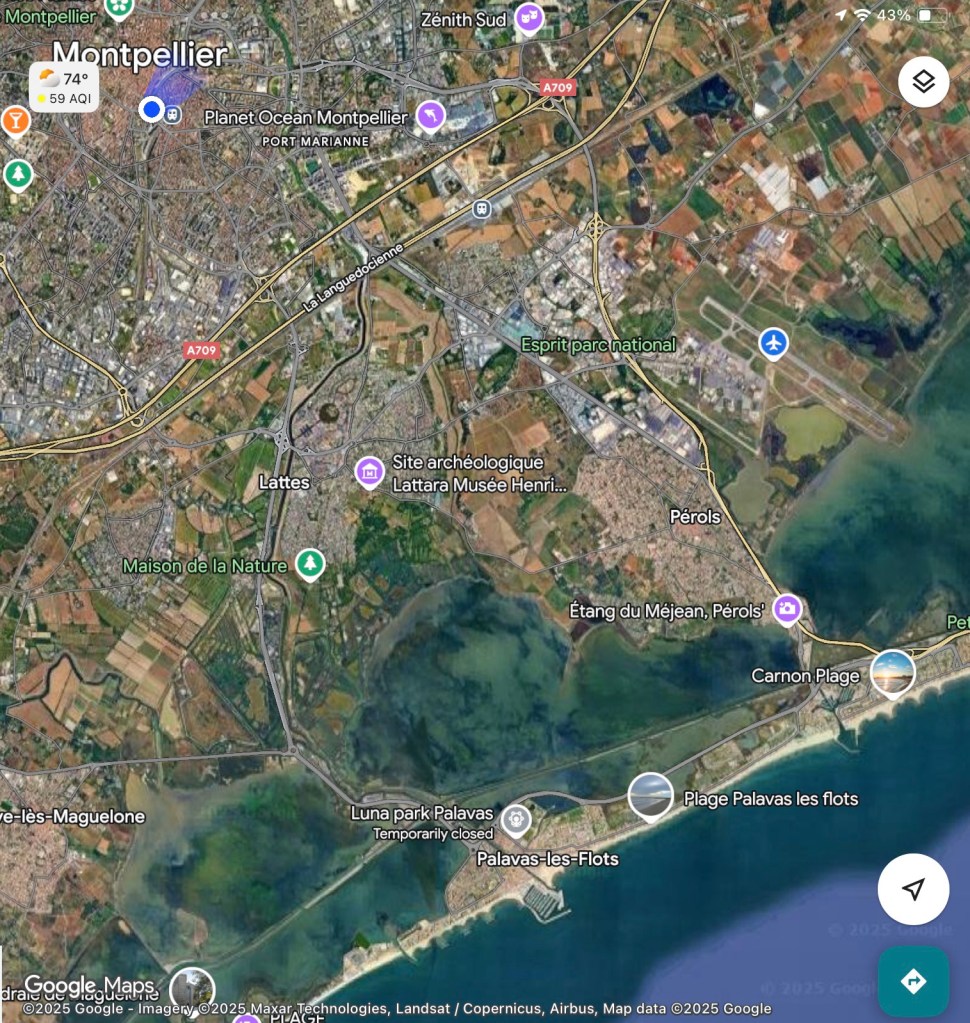
Montpellier is only about five miles from the Mediterranean Sea, and once Grandpa Nelson got the transit figured out, we had an adventure day.

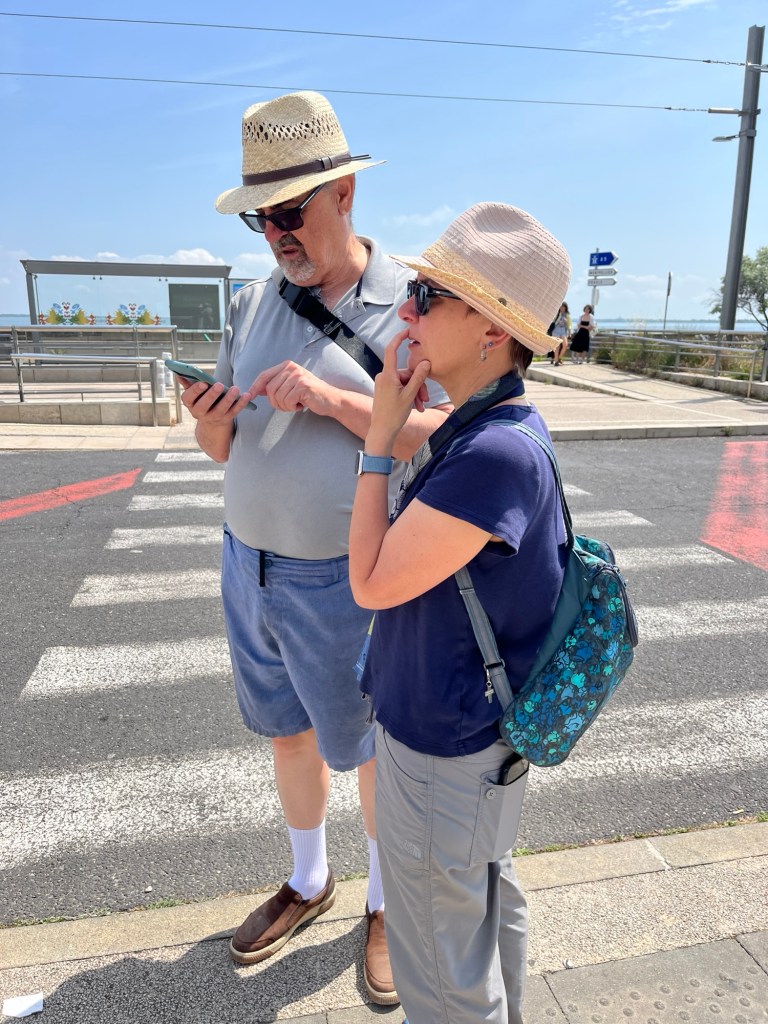
We caught the Number 3 tram south. Montpellier has pretty much the same ticket-buying machines as Lyon, and I was able to help this fellow with his purchase. Bright reflections play havoc with screens!

We enjoyed the views of the city as the tram wound through business areas out to the suburbs, which were filled with parking lots, fast traffic and big box stores with names like Flunch and But.

Yep. Flunch. But.

But, of course, things can’t go absolutely perfectly the first time, and we ended up on the wrong leg of the tram line, in a place called Latte Centre. After a loud, barely coherent conversation with a bus driver, we realized our mistake, backtracked, and got on the right leg to get us to Perols, by the Etaing de l’Or.

An Etaing is a lagoon, and this part of the coast has lots of them, formed by barrier islands. They are shallow, buggy wetlands between the mainland and the actual beach.

At the end of the tram line, we needed to catch a bus…. But which bus? There was a lot of thinking and looking at maps. Figuring things out together is something we do pretty well. The bus arrived, Grandpa’s E-ticket worked, and we got to Palavas Les Flots, a little seaside village.

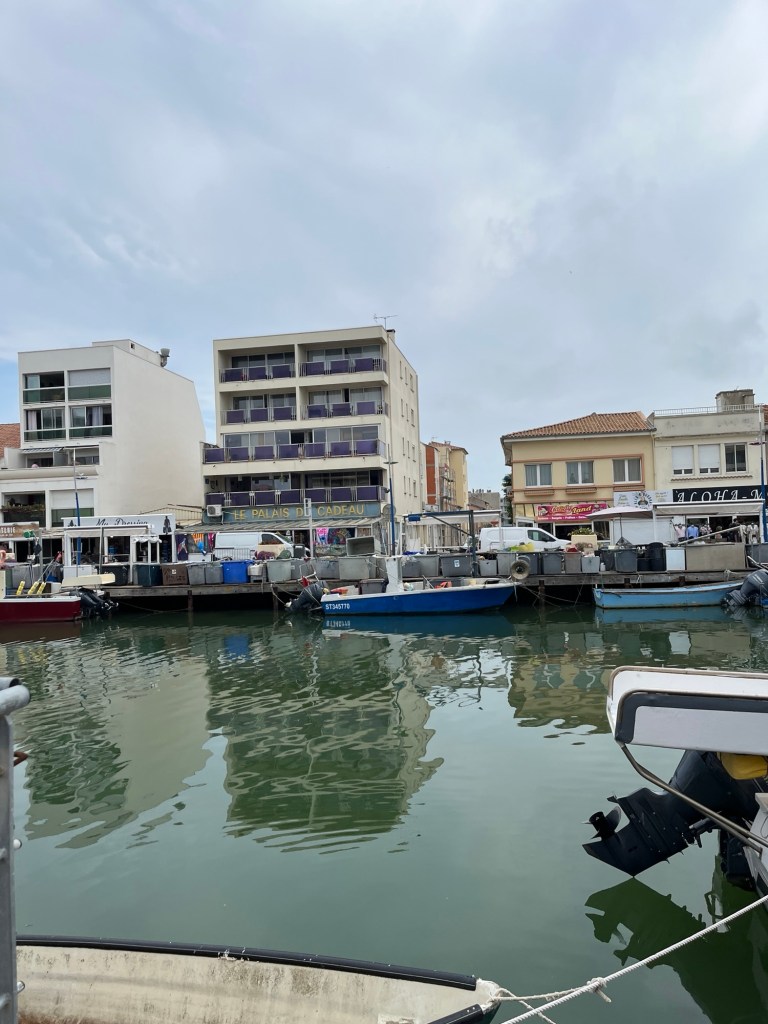
It felt a lot like Hermosa Beach, California, with small, square houses on tiny lots, all set along a narrow road running parallel to the beach. Towards the center of town, taller hotels and apartments march along by Cafés, restaurants and souvenir shops. Nearer the harbor, fishing boats tie up, waiting for the next days’ work.

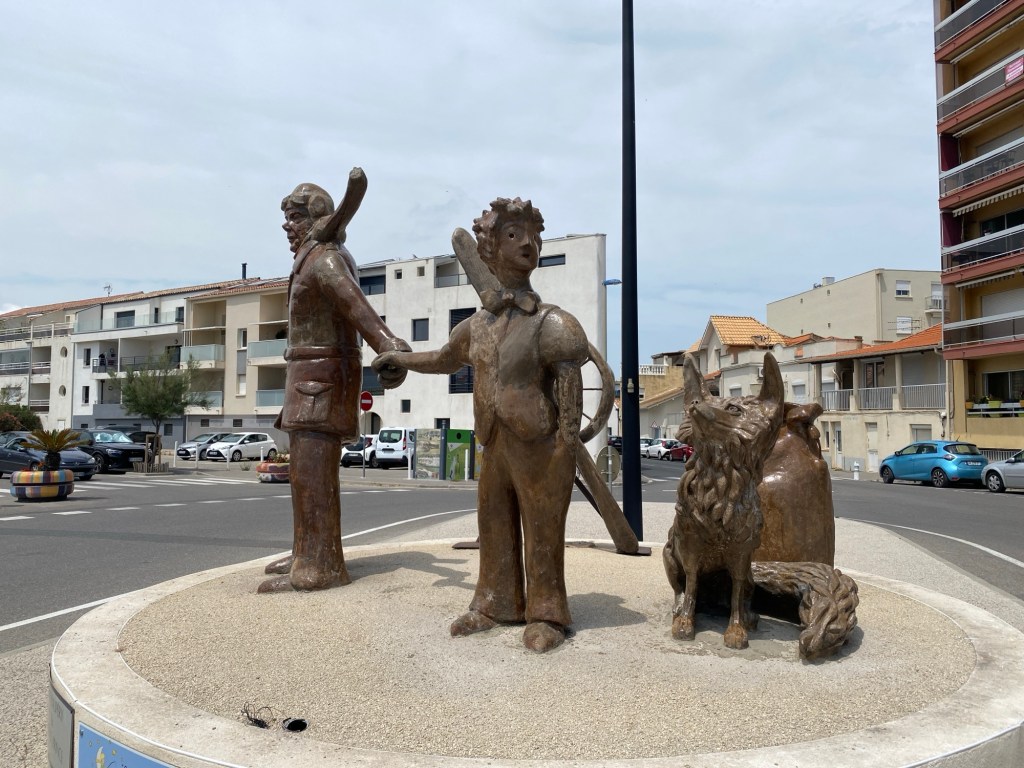
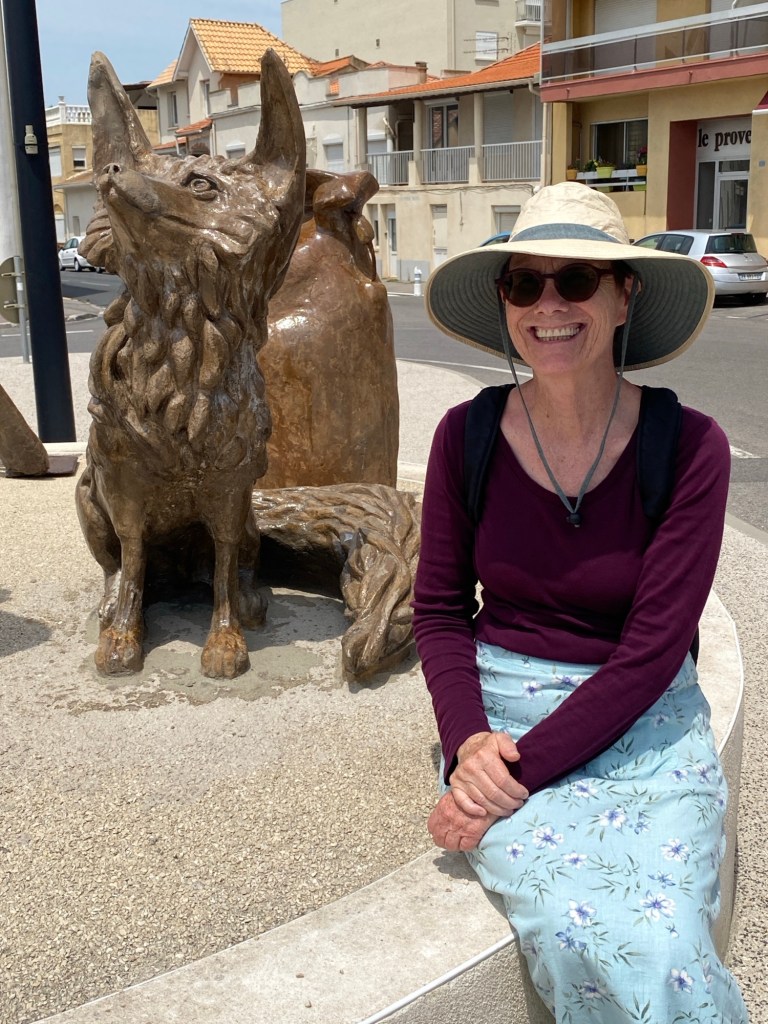
Among the delightful surprises of the day was this statue of aviator and author Antoine St. Exupery and his most beloved creation, The Little Prince. The level of artistry was a bit disappointing, but, as the Prince understood, “what is essential is invisible to the eyes.”

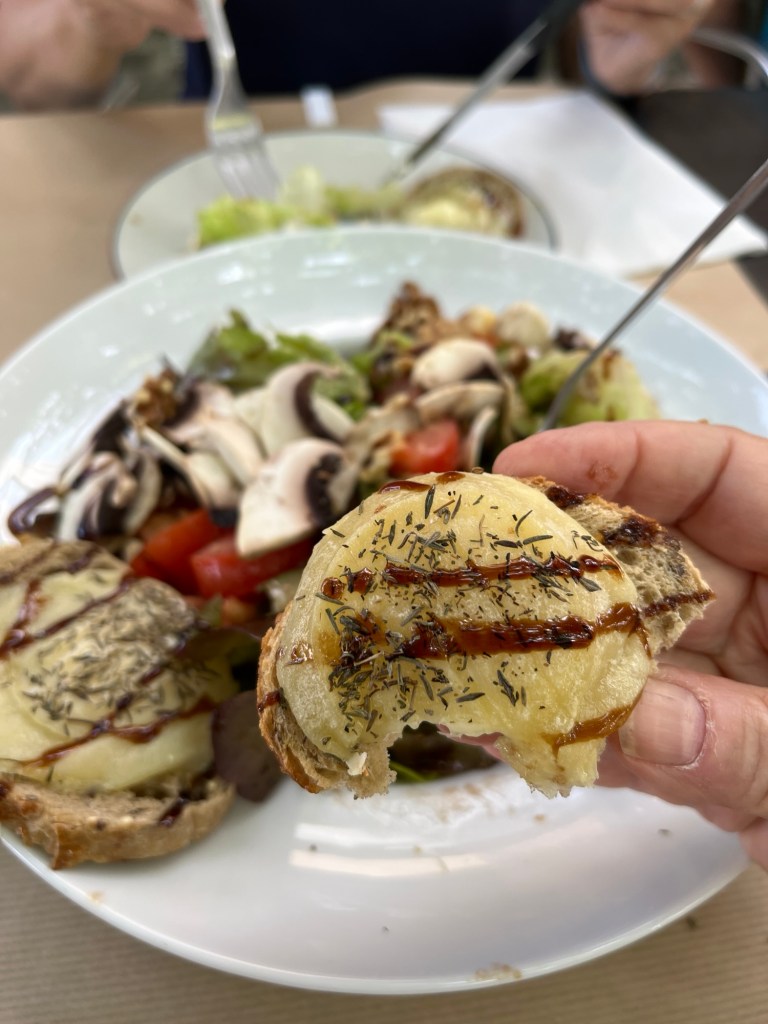
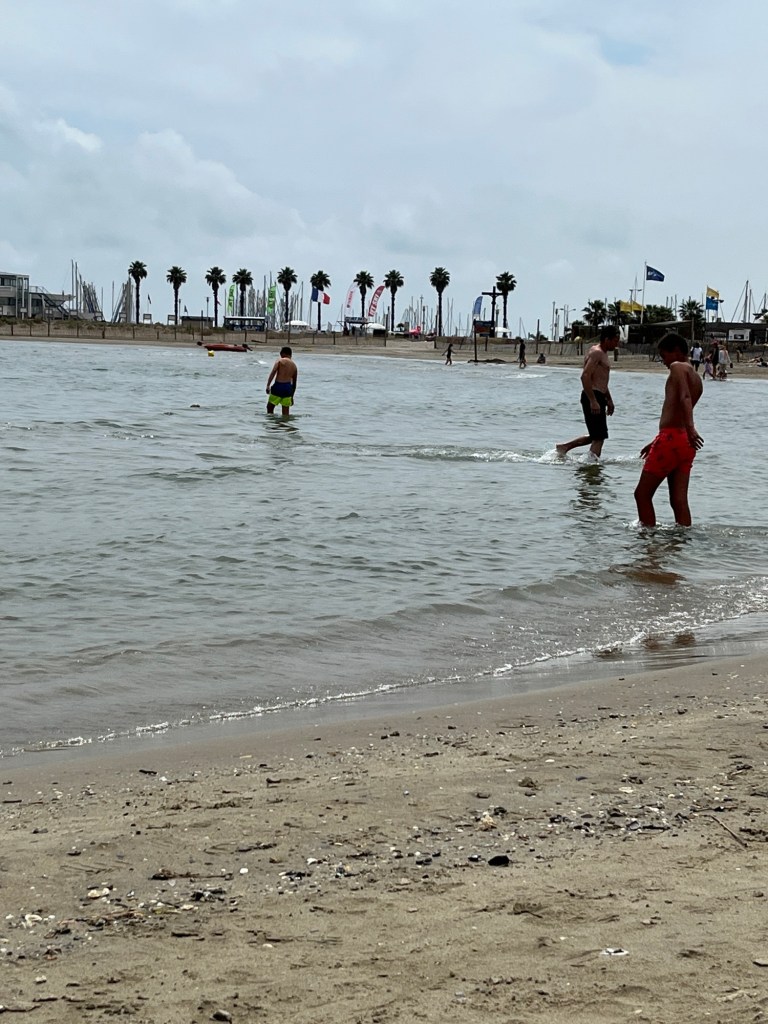
We found Restaurant Barisano and enjoyed a restful, tasty lunch, and then went to put our feet in the Sea!

Being on a warm beach reminded Grandpa and me of when we were dating, and it was lovely just to sit and watch seagulls, kids playing, and boats coming and going.

.

We walked, snacked, looked at shops and one odd little church, and eventually realized that we had all had too much sun and ought to head home. The bus and tram got us back to town, where Auntie Bridgett got dinner started and we all lived to tell the tale.

And that’s the Adventure report for today.

Love,

Grandma Judy

People and Patterns Part 2

June 6

Dear Liza,

Wandering through the Fabre Museum in Montpellier, the portraits were fun to look get to know on a personal basis. Their life stories, which I looked up if I could, were reflected in their eyes.

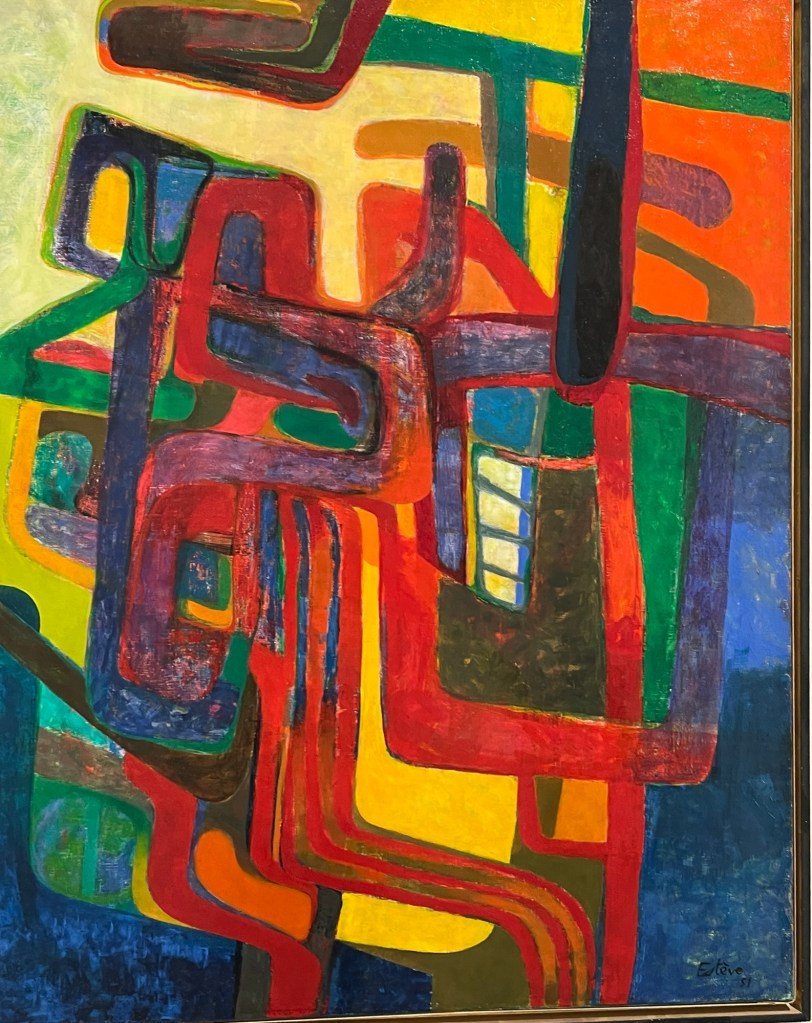
The other type of paintings I enjoyed were the modern pieces that focus on pattern. The problem is, I always forget to record the title and artist of these sort of paintings, so I can’t go look them up or find them again.

I like to try and find the balance that the artist was looking for, how the colors are related, and what I can learn from it. My quilts are much like these pieces, with blocks of different colors and textures working together to make an harmonious whole.

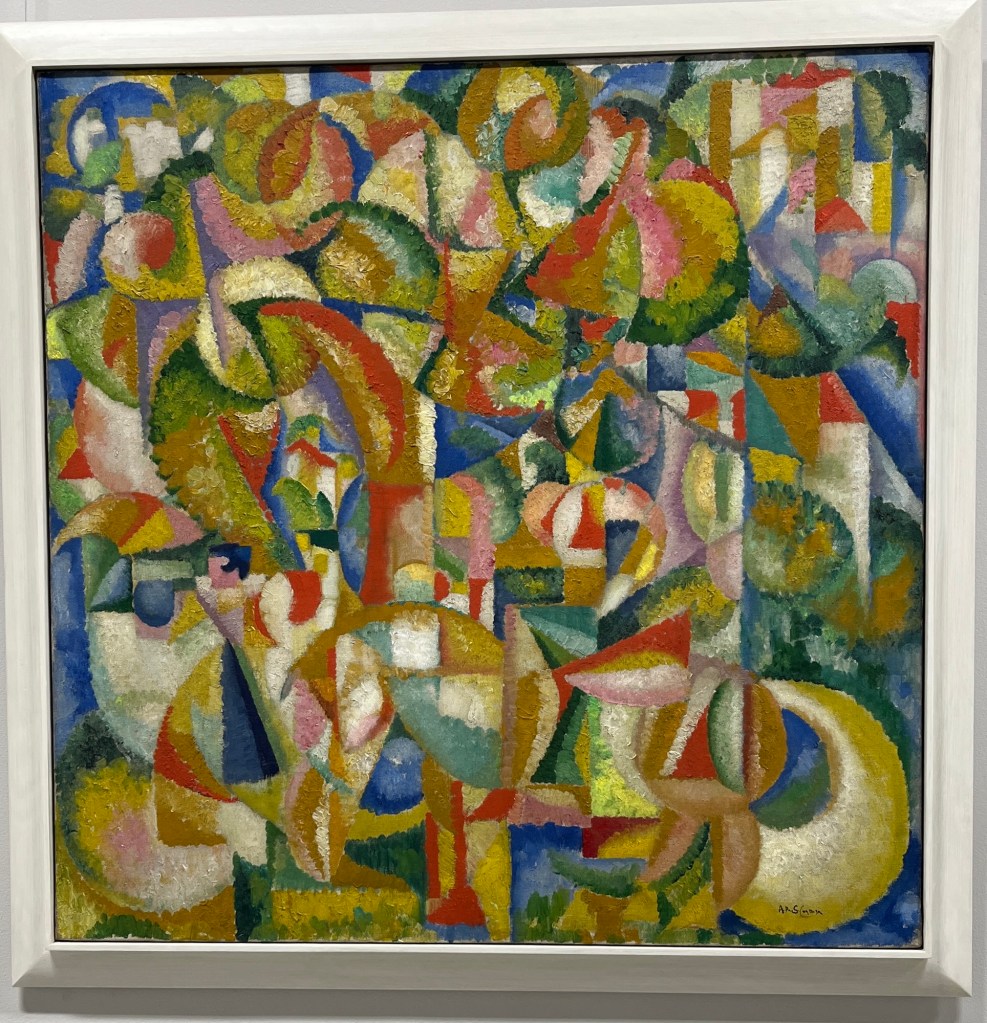
And then there is this piece, which is a very abstracted , but still representational. See the houses? The clouds? The boats?And the woman? This is a fun kind of painting… part riddle, part artwork.

Our day at the Fabre Museum was time well spent!

Love,

Grandma Judy
People and Patterns Part 1

June 5

Dear Liza,

Yesterday was predicted to be even hotter than usual, in the high 80s, so we chose to spend the day inside with art. Museums are always careful to protect their possessions, and we get the benefit!

The Fabre Museum here in Montpellier is housed in a combination of buildings from 1825, 1952, 1978, 2007 and 2019. Seeing all its galleries is a delightfully maze-like experience.

As we walked and stared and whispered, I tried to notice which kinds of art attracted me and which kinds I could give a glance and happily move away from.

Turns out, I like people. Portraits, formal or informal, whose eyes look right at you, catch my heart. I want to see into their eyes and get to know them. Elizabeth Denis, painted by her husband Maurice Denis, looks so happy and loved that she makes me glow.

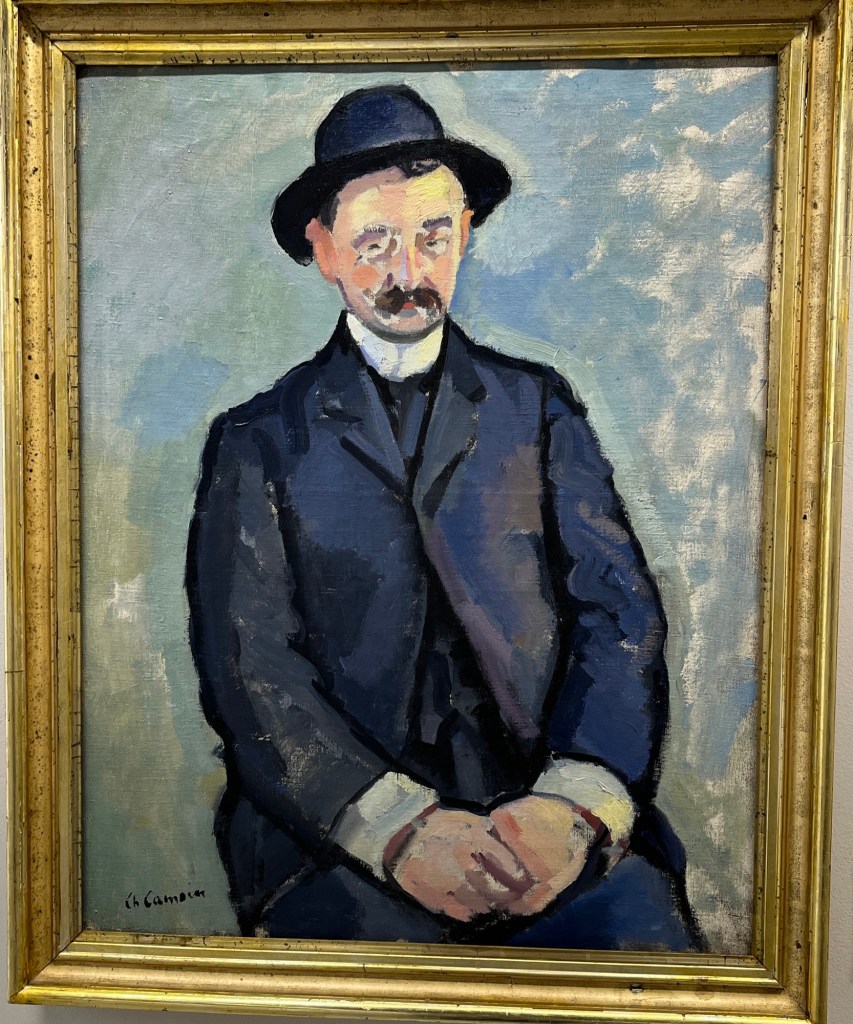
And this little fellow, Albert Marquet, painted in 1904 by Charles Camoin, look so unassuming and gentle that I want to buy him a cup of tea and hear about his day.

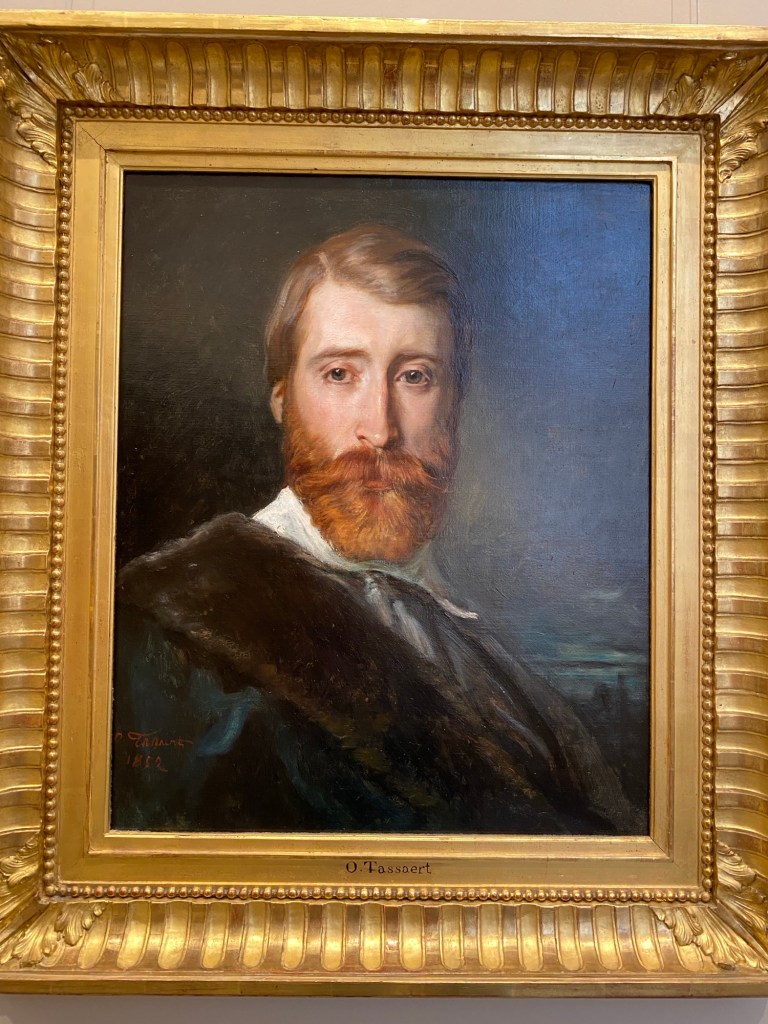
And then there is Alfred Bruyas, who seemed to be everywhere! Bridgett took four pictures of his portraits once she recognized him, and there were many more.

A handsome fellow, to be sure, but more than a dozen portraits? Who was this guy? Using my broken French, I asked a friendly and animated museum guard… “Qui était cet homme?” The guard was happy to explain that Alfred Bruyas was an aristocrat, with more money than he knew what to do with.

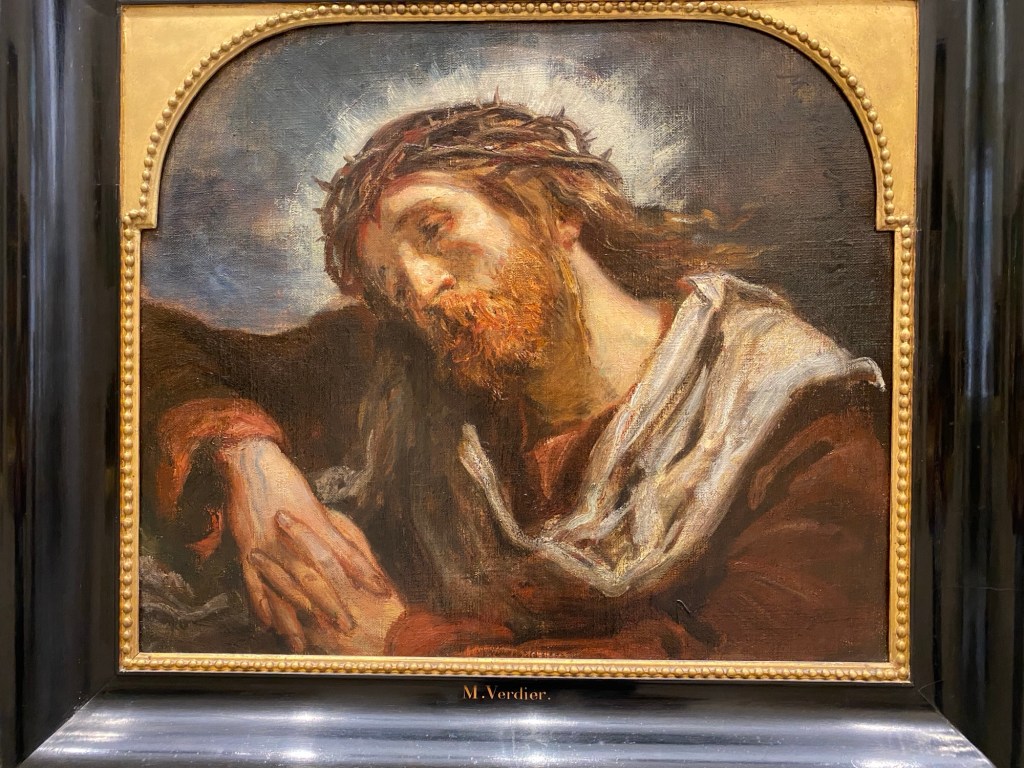
He had wanted to be an artist but didn’t have the talent, so he chose to support other artists by commissioning portraits from them. Lots and lots of portraits, including one of himself as Jesus. Apparently he saw himself as a martyr, sacrificing his wealth for art. Hmmmmm.

So, some portraits catch my heart more than others. I guess using one’s inherited wealth for self-agrandissement disguised as charity is not a new thing.

Anyway, I love where my mind wanders in Art Museums!

Love,

Grandma Judy
When in Rome….

Dear Liza,

As I learn more about Montpellier, I understand why it is laid out the way it is. Like many medieval cities, it had walls around it from A.D. 985 to 1628, for protection. Most medieval cities were also built along the rivers, for easy transport of goods and people. Think of Paris, London, and Moscow. Their rivers allowed them to grow and prosper.

But the river closest to Montpellier, the Lez, is notorious for flooding. This area gets most of its rain in just a few weeks in the late fall, and the river has flooded many times over the centuries.

In order to keep the city safe, engineers have figured out how to keep the river in its place, while still using the area when the weather is good.

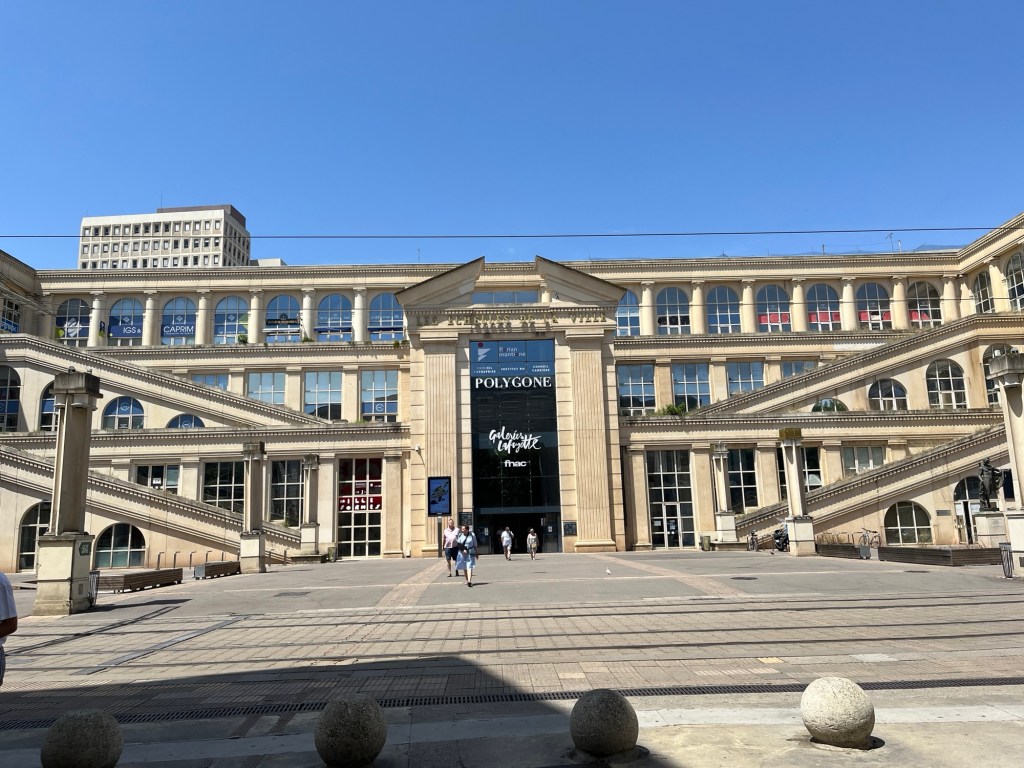
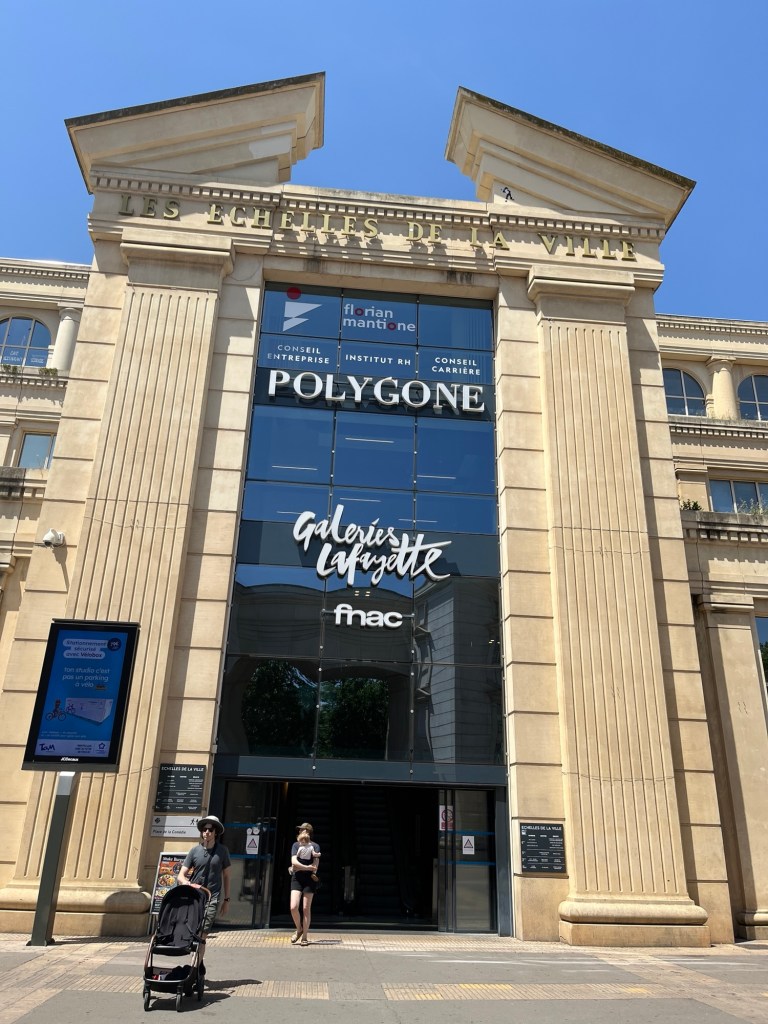
When visiting the shopping area called The Polygone, we accidentally discovered Montpellier’s beautiful solution to urban flooding. It’s called Les Echelles de la Ville, the Staircases of the city.

This is how it works. The Lez River, in the dry months of summer, is only a few feet deep and about ten to twenty feet wide. It is a narrow, flat canal passing between concrete walls.

Above the walls, reached by steep steps, are newly built cafēs and restaurants. More stairs up from there, the open, grassy Place d’Europe provides dog walking space.

Above that, about fifty feet above the river, is where the development starts. Offices, shopping malls, public pools, are all well above what might be dangerous flooding.

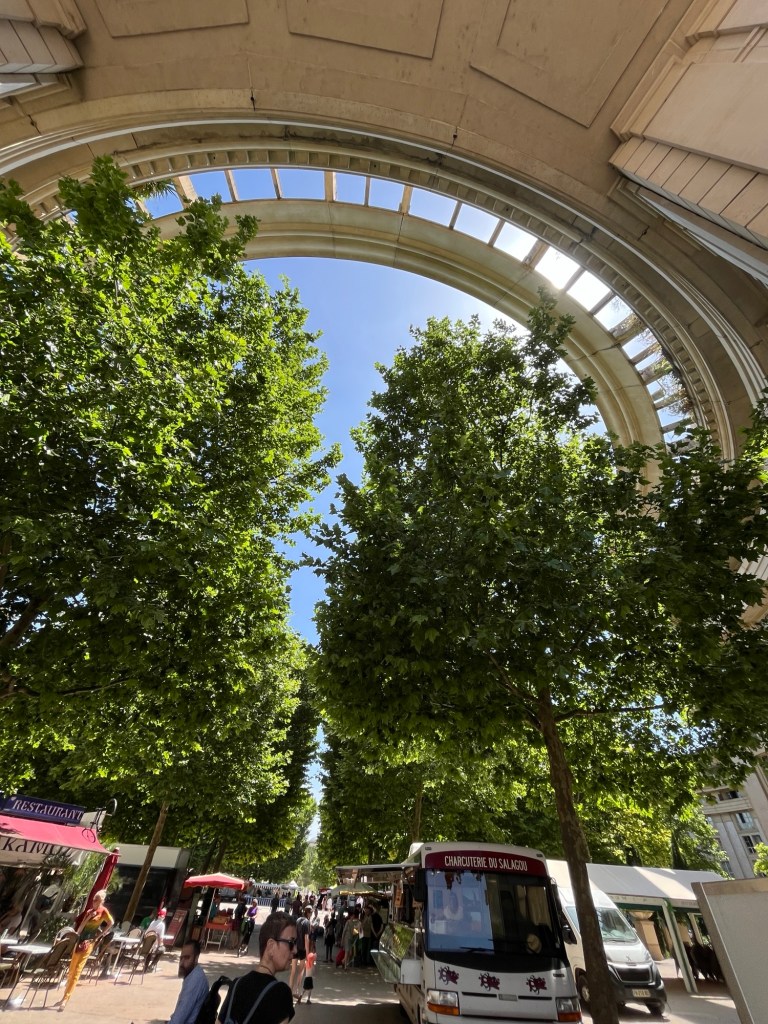
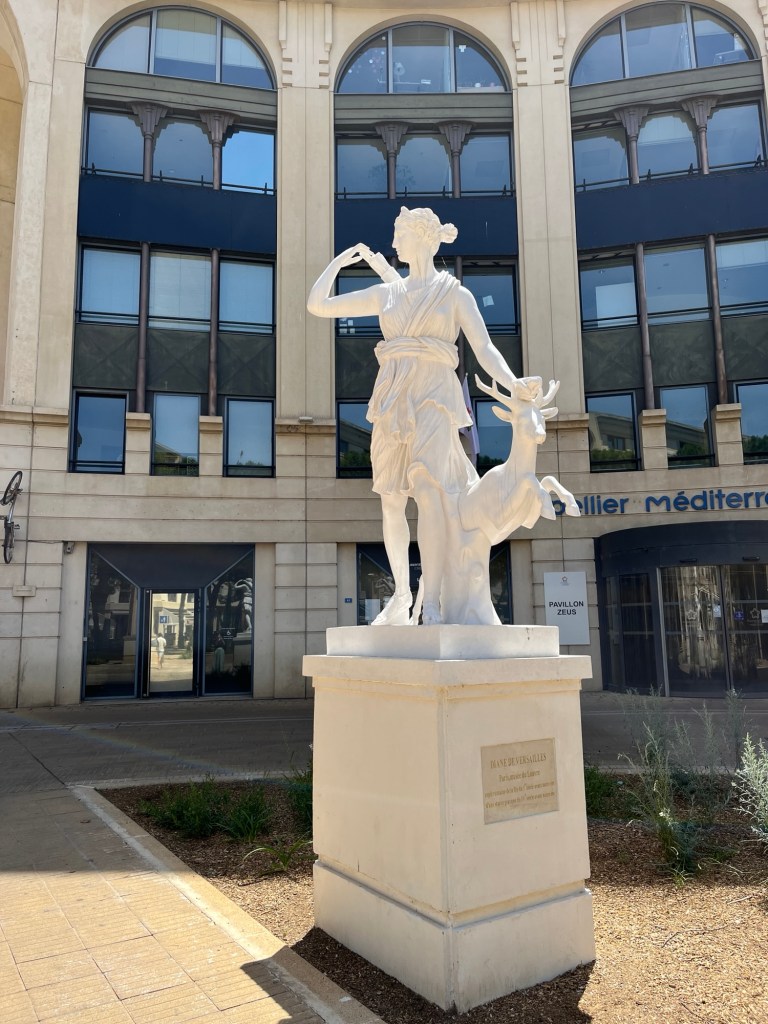
This development was completed in the 1980s but has all the earmarks of Ancient Rome. Arches, wide arcades, symmetrical open areas with lines of trees, and copies of Roman statues are all over. It feels almost Disneyland-ish in its dedication and exaggeration of the style (if Disneyland had a Roman Land).

As we walked through an air conditioned mall and took convenient, well designed escalators down to the river and then back up, I appreciated what a clever flood control solution this is. The liability of steep river banks had been turned into a comfortable series of stairs, creating long views and spaces for Framer’s Markets and sports activities.

So when the floods come, nothing is really damaged.

Clever people!

Love,

Grandma Judy
Exploring Montpellier

June 2

Dear Liza,

We are settling in to Montpellier pretty well. It is hotter than we are used to, so we try and get all our exploring done by 3:00 in the afternoon, then rest and do art during the hottest part of the day.

We started with the Travel Advisor list of “Things to do in Montpellier”, and found that most of them are right in our neighborhood!

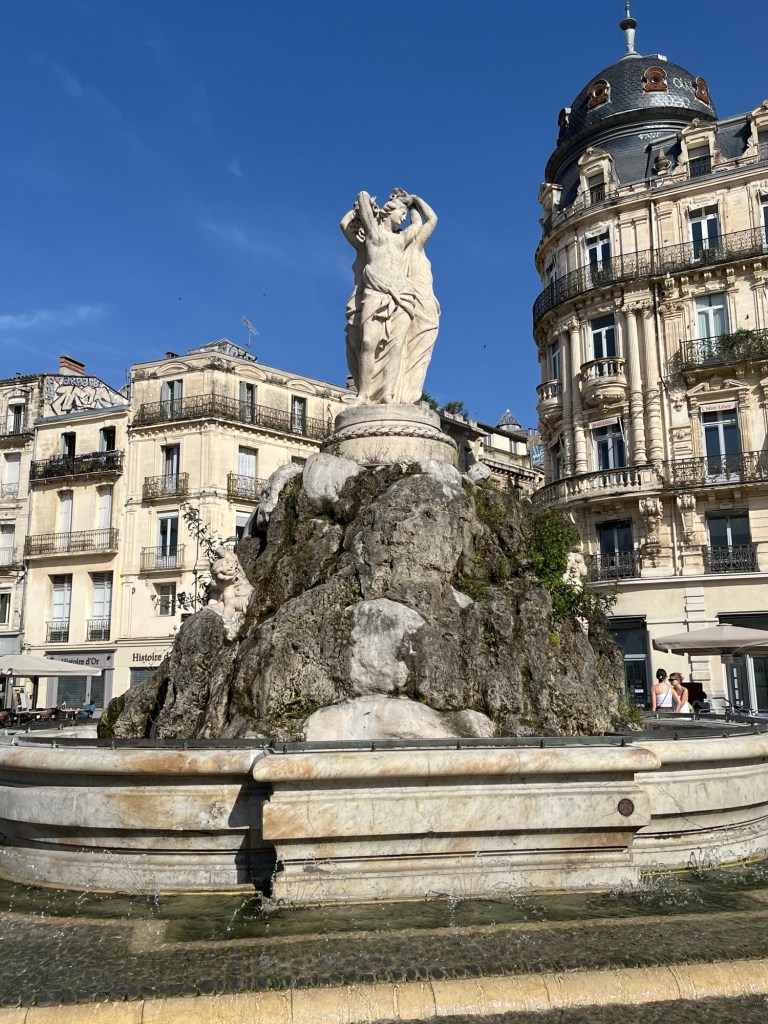
The Place du Comédie is a wide open public square, surrounded by shops and cafés and with a fountain in the middle. Called The Three Graces, it has three marble women dancing above a lumpy rock where some marble cherubs are hiding, which is above squirting fountains and a pool. As you can see from the picture, the buildings surrounding the square are classic French architecture and very pretty.

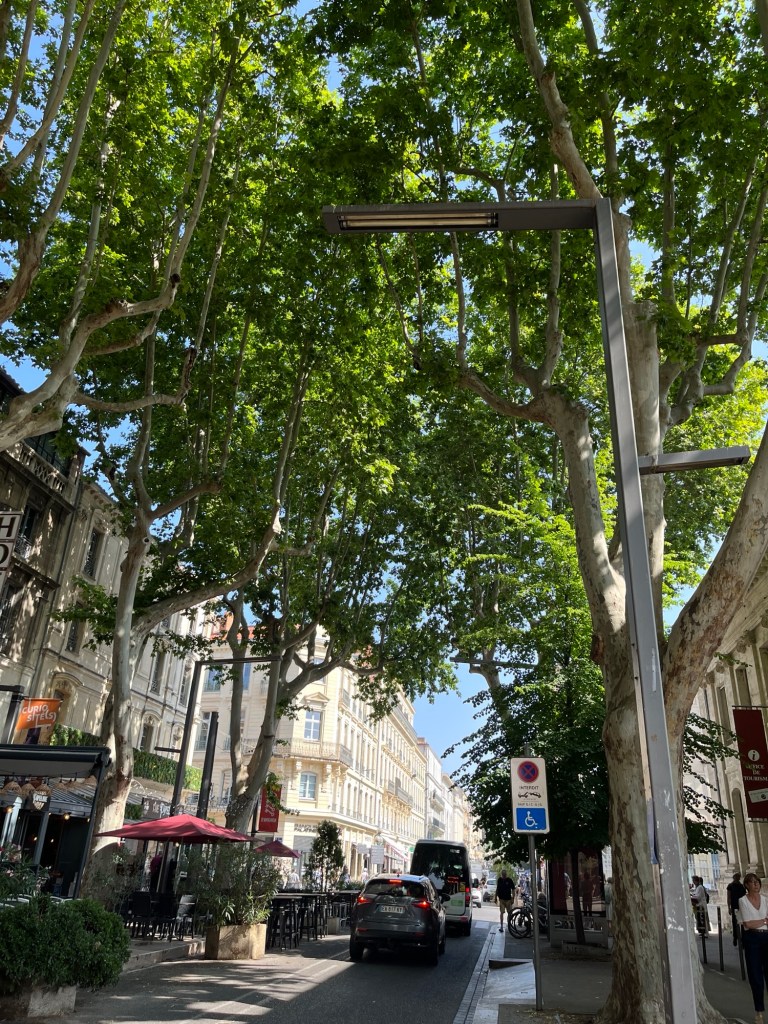
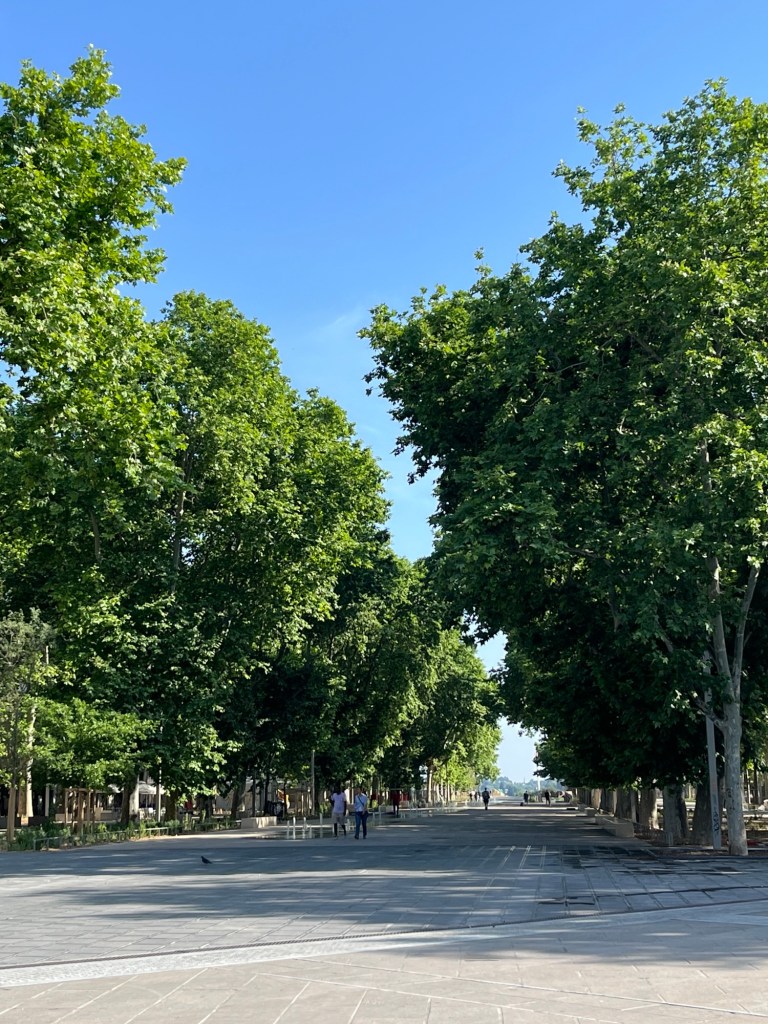
Following the public square around a corner, we found the Esplanade Charles de Gaulle, which is a wide pedestrian walkway, shaded by dozens of plane trees. Benches line the area and fun blurpy fountains squirt up out of the sidewalk. It is a fun place to hang out on a hot afternoon, staying cool and being with friends.

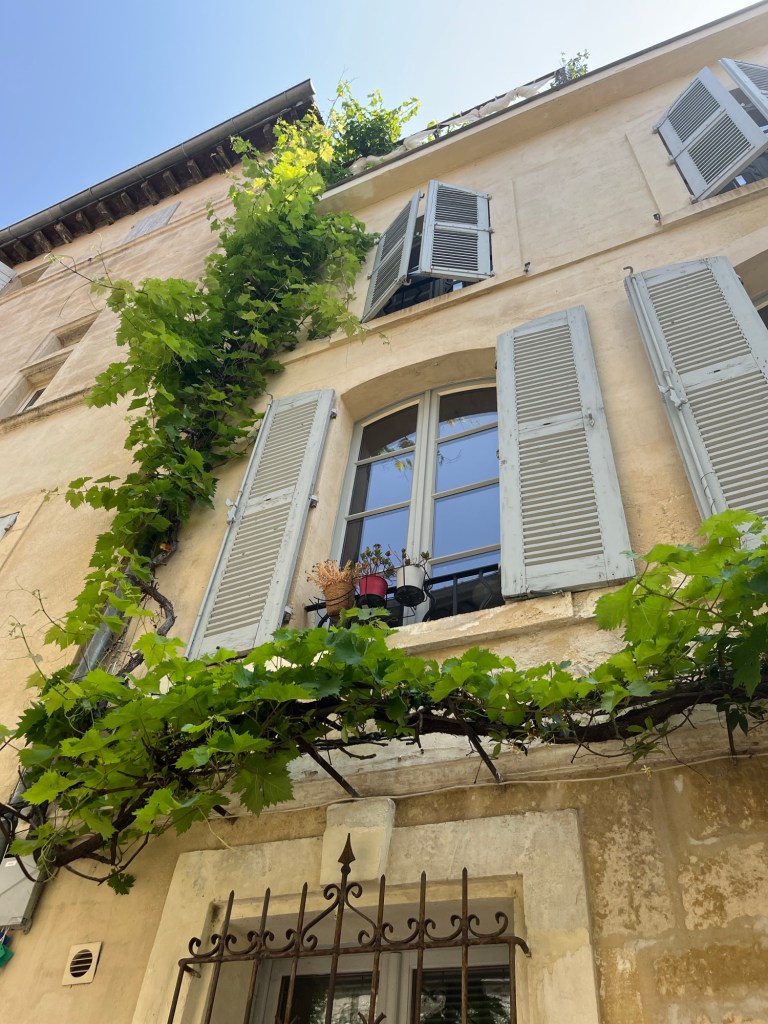
In the oldest part of the city, which was built in the 1400s, the streets are still laid out in their higgledy-piggledy curves, not a grid pattern like we usually do today. I think this is what Paris must have looked like before Baron Haussmann did his urban renewal in the 1800s, creating the wide boulevards.

We have seen lots of places we will got back to and explore this book and toy store looks intriguing….

And the fine arts museum.

We’re expecting thunderstorms and heavy rain tomorrow, which will make a nice break from all this heat! So we’ll be inside, doing art and writing instead of galavanting all over.

Love,

Grandma Judy

Hello, Montpellier!

June 1

Dear Liza,

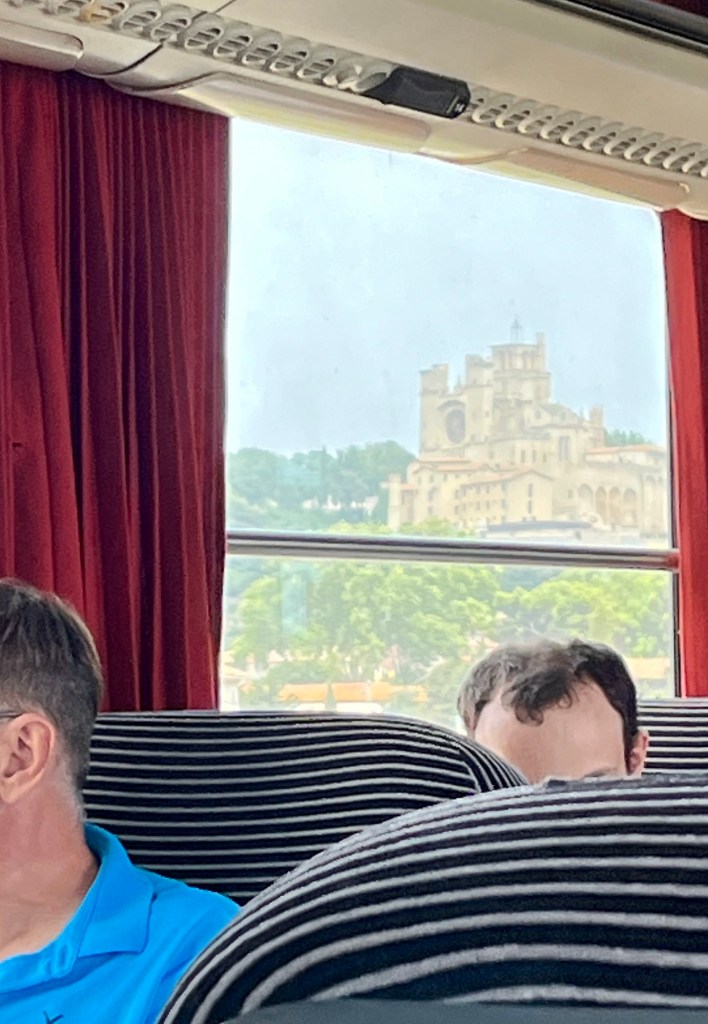
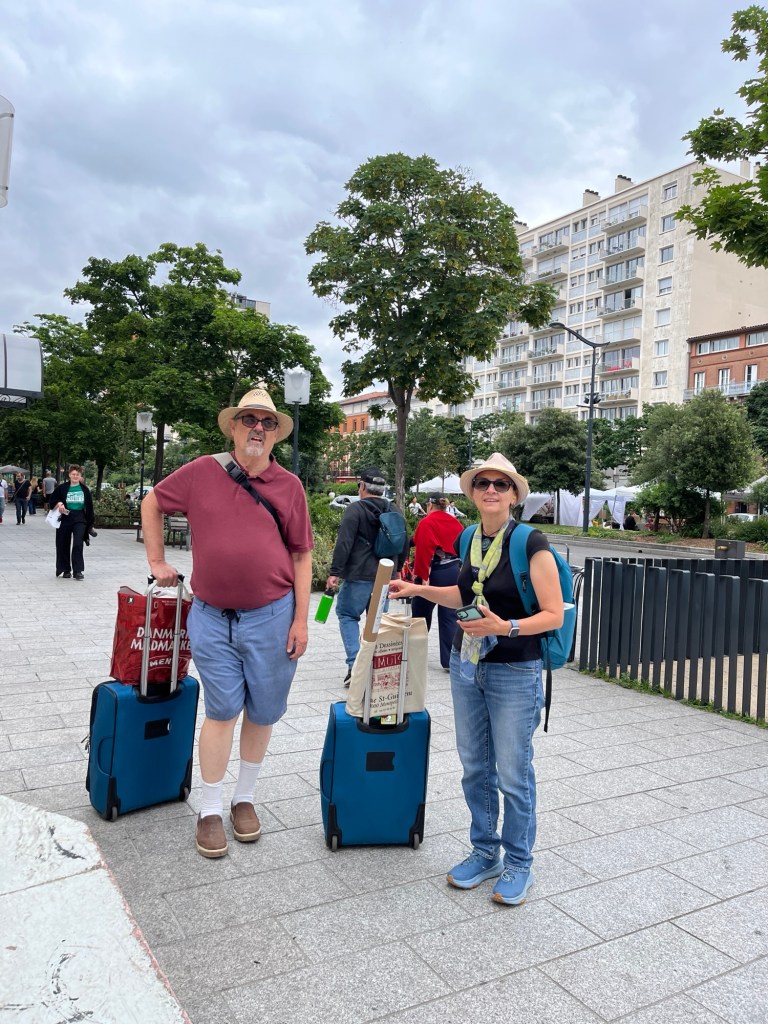
After a long day of towing our giant suitcases across Lyon, onto trains and boosting them into overhead shelves, a train ride that included meeting Bianco the traveling cat and his two dads, then lifting the bags down and hauling them a few blocks through sunny Montpellier, we are settling into our new city.

Montpellier has a very different feel from Lyon. Hotter and more humid, of course, but also more casual, less business-oriented. Almost nothing is open on Sunday, and Monday is about half-open. It’s a smaller city with slow-moving ground level trams instead of a zippy underground metro.

Walking around, I use the GPS on my phone a lot.

The twisty narrow streets get me turned around and I don’t know I’m lost until it dawns on me that I’ve seen that fountain before.

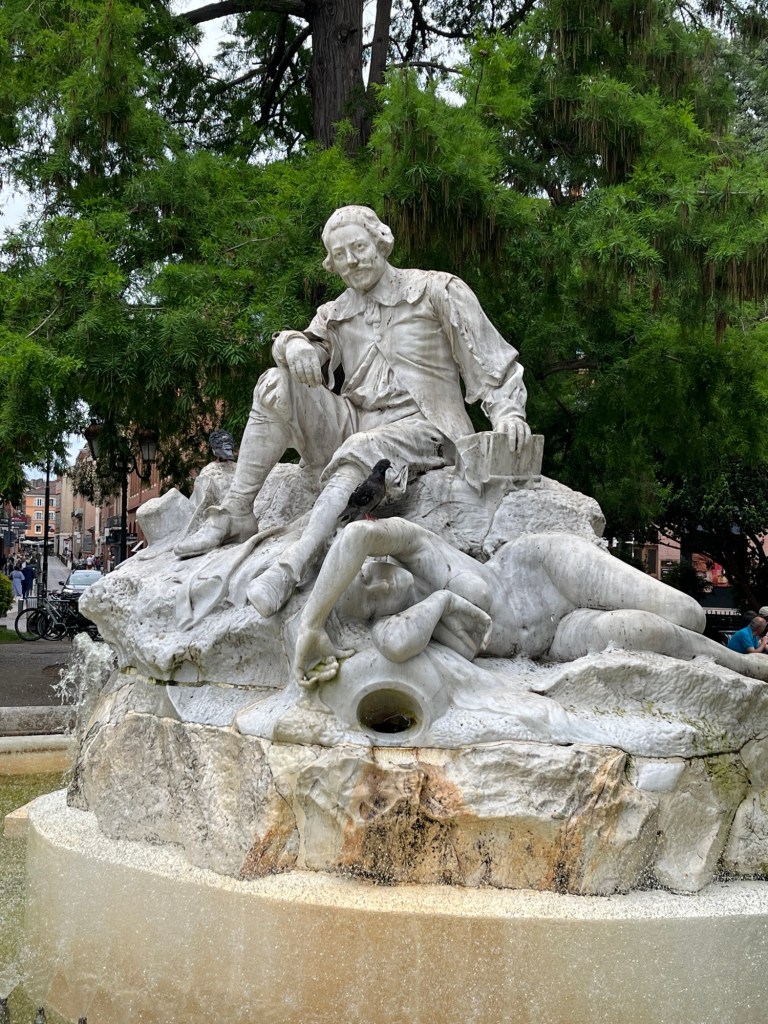
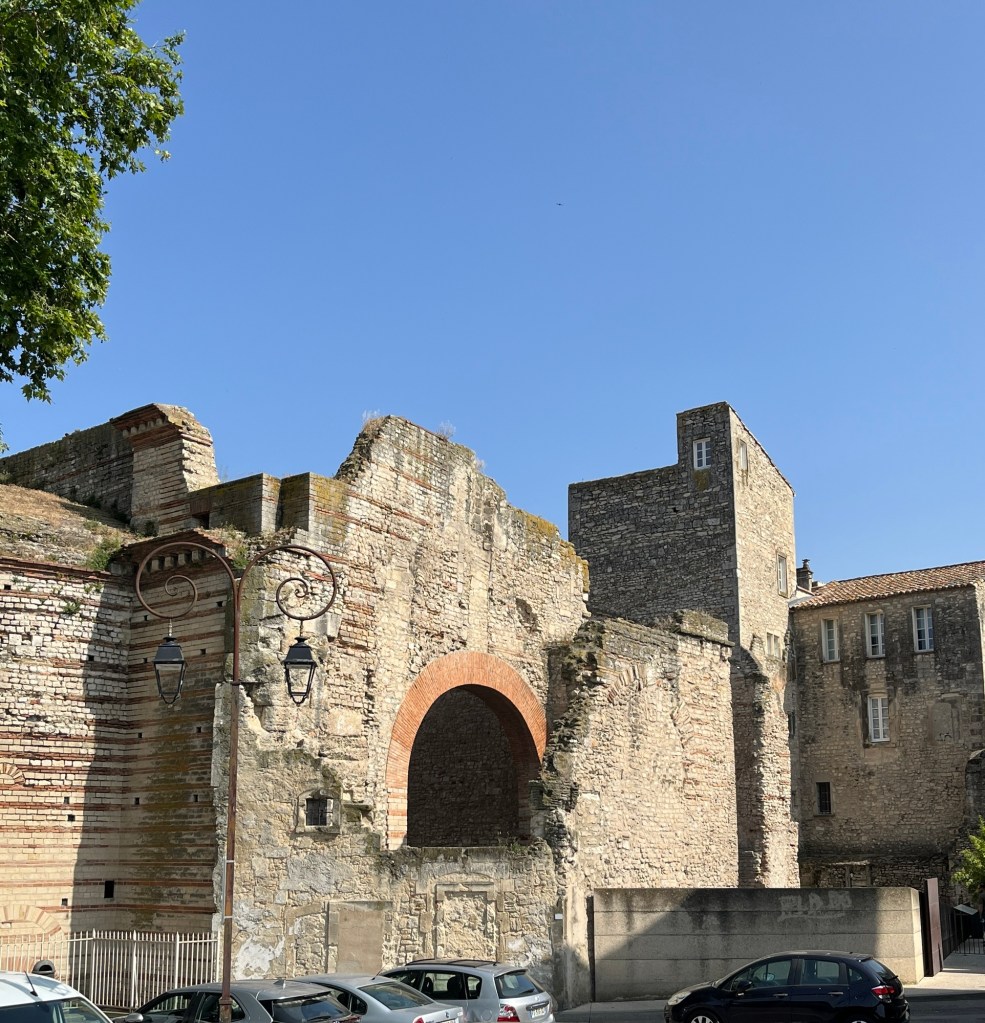
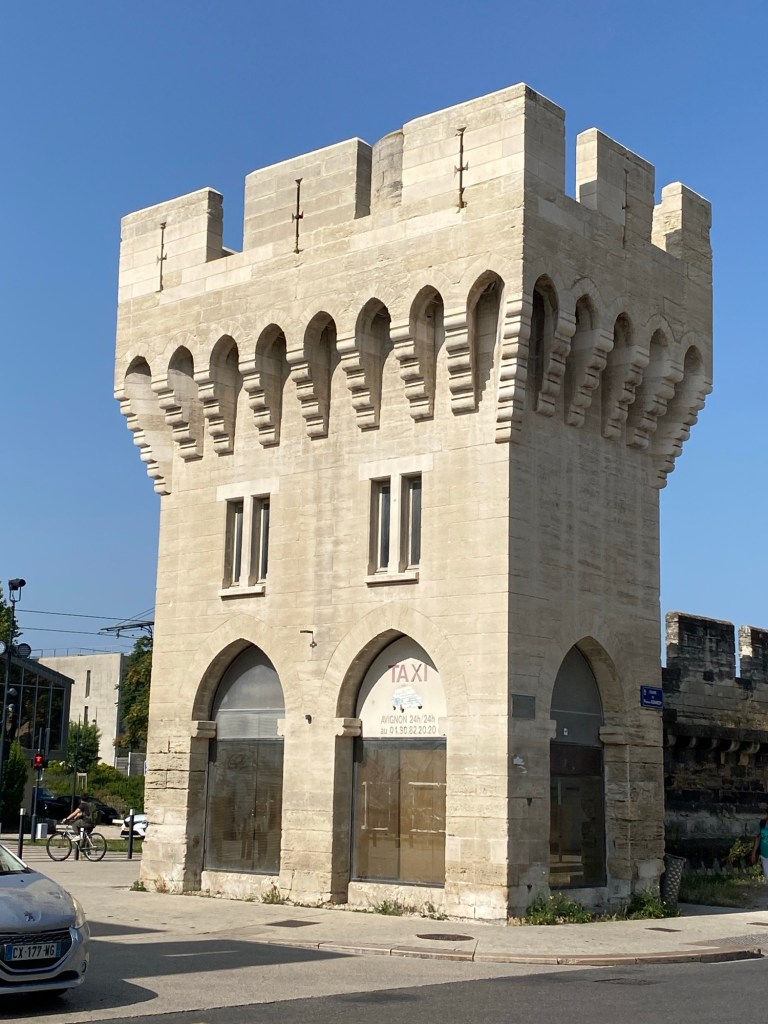
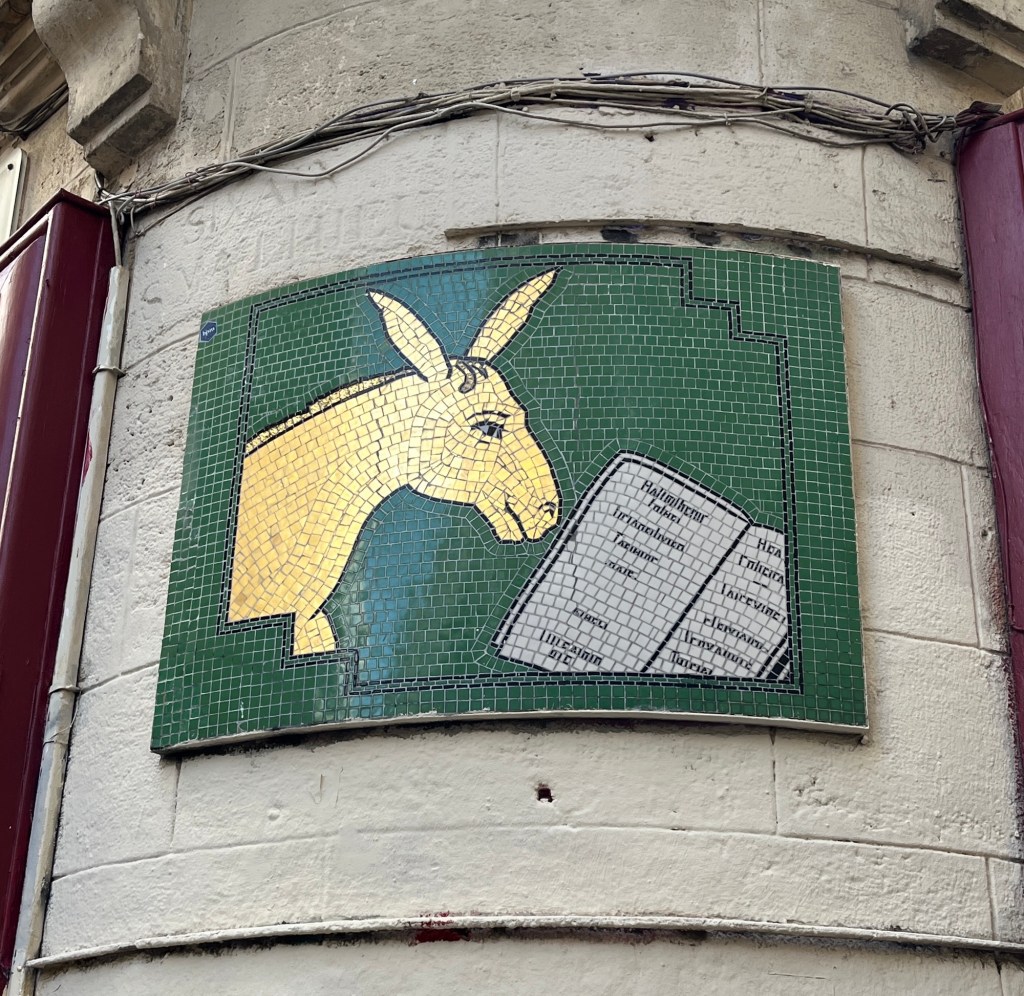
Close to our apartment, we have seen parts of the city walls built in the 1400s, statues erected in the 1700s, and contemporary Banksy murals, only slightly ‘defaced’.

Once I get my bearings and organize my thoughts, I’ll tell you about the history and life of this city.

Love,

Grandma Judy
Falling in Love with Lyon

May 28

Dear Liza,

I’m no spring chicken anymore, and I thought Summer romances were a thing of the past. But Lyon has pulled me in.

It didn’t happen all at once. There were jet-lagged misunderstandings, missed clues, and disappointments.

But once we got better at listening to each other, Lyon began to charm me.

“Do you like parks?” She asked. “Come see the Parc de la Tête d’Or. Come on May Day, when everyone is celebrating and out with their families.” So I did, and saw Lyon at play. Scooters, soccer balls, roller blades, bikes. Dads lifting toddlers up to touch tree leaves, Moms in earnest conversation with infants, brothers teaching brothers how to do wheelies.

Lakes, a zoo, cafes, wide open spaces, intimate woodsy grottos, two tiny trains, boats and cars for kids to drive, free range deer … It all just made me swoon.

“Do you like art?” She whispered. “Come to the Musée des Beaux Arts, or walk up to the Croix-Rouge neighborhood to see the giant murals. Stand and feel the power of Bertholdi’s fountain in the Place Terreaux, and enjoy the graffiti at the skate parks along the rivers.”

“Are you nervous about being new at French?” She asked, and showed me historical plaques in English and French, to help me learn. I met shop people who added their broken English to my broken French to make a whole conversation. I found that a nod, a smile and a “Bonjour” could make an elderly lady smile at the Parc. And I found I could give directions to someone even more clueless than me.

“Do you like food?” She asked, knowing the answer before I spoke, as my eyes gazed through every patisserie window. “Come to the markets on Wednesday and Saturday, and let Evie pick you out some strawberries that burst in your mouth. Come to Halles de Paul Bocuse and feast on the terrines, cheeses, and sausages. Come to Le Coq en Pâte and have the perfect two-hour lunch.”

“Do you like really good public transit?” She asked, taking a chance on a very non-romantic subject. “Explore the city, even the suburbs, on the Metro, trams, and funiculars. Do some honest walking and fall in love with your quads again.”

And I am hooked. Oh, I know she’s not perfect, what city is? Her streets get fouled by everyone’s dogs, her narrow streets can become sound-canyons when motorcycles or trucks rumble through. And way, way too many people smoke.

But, seriously, Lyon is wonderful. We leave tomorrow, but if she’ll wait for me, I promise I’ll be back.

Love,

Grandma Judy

Another Caffeinated Adventure

May 25

Dear Liza,

The other day, Bridgett and I set out on a simple quest. I wanted a new Journal to use when the one I am using fills up, which will be in a week or so.

Being a diligent art supply shopper, Bridgett had done the research and knew the closest shop to try. We walked across the Rhône just past the Lyon Opera House, to Géant. There we found an 8.5 by 11 inch, spiral bound, multi-media quality journal that will hold my next batch of memories, clippings, and art doodlings.

By then, it was after 10 a.m., and we needed snacks. Loutsa Coffee was just a few blocks away by the Saône, and they had carrot cake and espresso for me and blackberry cheesecake and café crème for Bridgett.

We decided NOT to have a big adventure that day, just a small walk across the Saône to St. Paul’s, the only church in the Old Town that we hadn’t been into yet. We wound through the medieval streets and found it, set low, where ‘ground level’ was in the year 549, when it was built. Yes, that three digit number is a year.

It is showing its age, but is mostly in good repair. It wasn’t open when we were there, but Mass schedules were posted, so it is still in use. The history here goes very deep.

We were disappointed at not getting to see the inside, but knew there would be other things to see. We figured we would walk to the next bridge, cross back over, and head for home.

That didn’t happen.

Because we looked up. Straight above us, built into the bedrock of the butte that forms The Hill that Prays, were Roman arches, bridges and walls.

“We’ve got to go up there!” I’m sure the caffeine and sugar from our yummy snack affected our judgement, but all that history was RIGHT THERE!

Of course there were stairs, and I stopped every now and then to breathe and to greet the running fanatics who were doing laps up and down. The shade and modern handrails set into the Roman wall were a godsend.

We kept seeing ancient walls and arches, either used as foundations, or quietly left in the undergrowth. For a modern-day kid from Southern California, this was special.

When we got to the top, we were pretty close to the place we had NOT been heading to, the Loyasse Cemetery. This wonderful old necropolis, kept secret by its inconvenient location and its ban on photography (I took this picture from outside the wall) was as lovely as the Père La Chaisse in Paris, and lot less messy and crowded. We spent an hour wandering in the perfect silence of the hilltop.

As usually happens at this point in an adventure, having reached the top, we realized how hungry we were and needed to head toward sustenance.

We followed staircases heading straight down and tiny roads that wound between steep walls.

We stopped at a tiny grocery for cheese, fruit, and an emergency back-up Snickers bar, and ate on a bench by the road, feeling pretty good about our adventure. Further down, we nearly tripped over another chunk of Rome, five burial monuments erected around 27 A.D.

Romans, all over the place! Leaving giant carved bits of their lives and culture. Amazing.

When we got home, Bridgett’s AppleWatch said we had walked 7.59 miles and gone up 27 flights of stairs. So far, that’s a record. Tomorrow, we rest a bit.

Love,

Grandma Judy
Jazz in Lyon

May 27
Dear Liza,

Your Grandpa Nelson is the best Idea Guy. And the other day, he came up with another doozy. Specifically, “How would you feel about going out to hear some Jazz?”

“Yes, please!”

“The Hot Club de Leon is just over on the Presqu’ile, if you like.”

There were logistics, of course. The show we wanted to see, the Jam Swing, was free, but only to people with l’adhésion annuelle. That means an Annual Pass. Could we get an Annual Pass? How much were they?

As we boarded the metro for the few stops to the right neighborhood, we practiced. “Bonsoir, madam. Nous voudrions une l’adhésion annuelle, mais nous habitons en les États Unis. C’est possible?”

When we felt ready, we headed into the still-empty hallway, down the ancient stone stairs and around several sharp turns to the Hot Club de Leon. Since we were way early, there was time to explain ourselves, and the folks were very accommodating to our broken French. We were pleased with the answer, “Bien sûr,” and the price. Six euros a piece for an evening of live jazz.

We got drinks and found some padded spots on the stair-step seating, next to wall because leaning is nice for older backs. We enjoyed people-watching as the musicians came in and got set up. Folks came in and greeted friends (some with two kisses, some with three).

When the music started and the crowd grew, the tiny dance floor became a standing room only crowd floor. Our view of the stage almost disappeared, but the music was so amazing we didn’t care. The joy of hearing really good musicians weave their jazz magic with saxophone, guitar, drums and stand up bass had us bouncing in our seats.

Young folks danced and bounced as well, clearly loving these old jazz standards that were written before their grandparents were born.

As the evening went along, regulars were called up from the crowd to join the Jam. Some came up joyfully, but one young man was so nervous he had trouble getting started! But once he heard the applause, he was confident and ran the set.

When our backs were tired and our ears were full, we headed up the stairs and walked back home through the streets of Lyon.

The lights on the river were magical, reminding us of all the beauty we have seen here.

Love,

Grandma Judy