We got back from really wet, cold Vancouver and Seattle to slightly drier but cooler Portland. We have had rain, thunder showers, and that wonderful dry, clear cold that people call “crisp”, I guess because breathing it is like biting into an apple.
The leaves are changing, too. The colors that have always meant “School’s Starting!” now mean “Time to get to the pumpkin patch!” and “What should I be for Halloween?”
It is also mushroom season. The owners of SideStreetArts building, Michael Pratt and his wife Rita Larsen brought the artists a whole bunch of Chanterelles that they hunted in the forest. I don’t hunt mushrooms because I haven’t been trained and might accidentally get a poison one. But Michael and Rita KNOW, and we enjoyed the bounty. Delicious roasted with veggies.
These are NOT the Chanterelles. These are growing unharvested in our neighborhood.
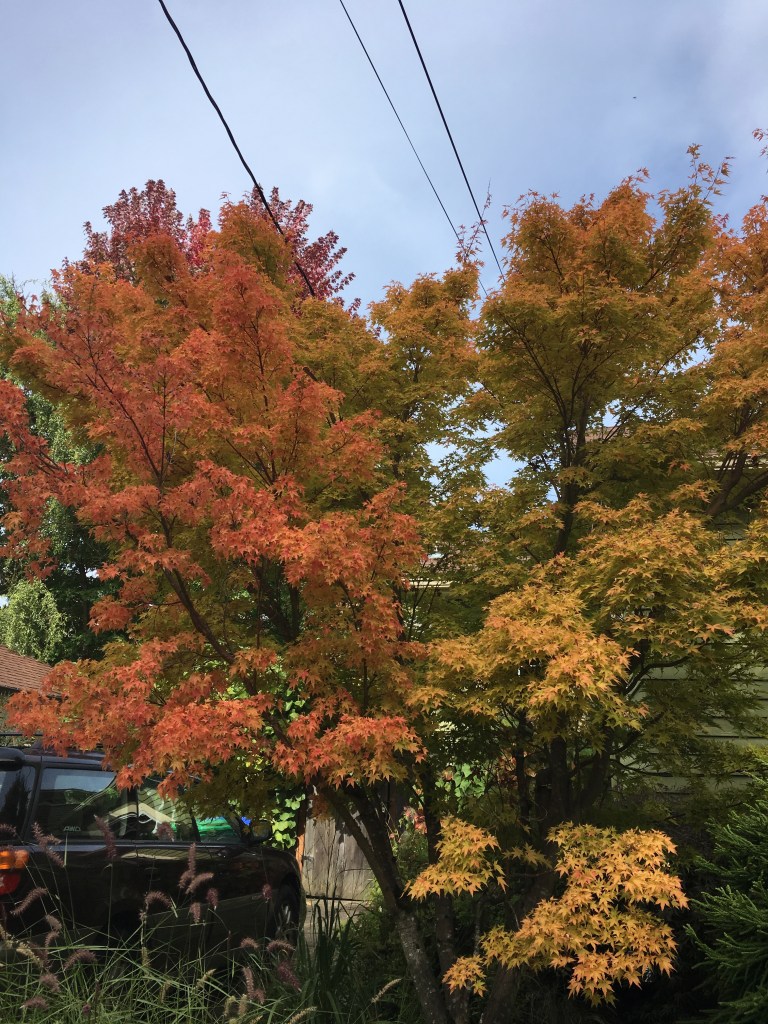
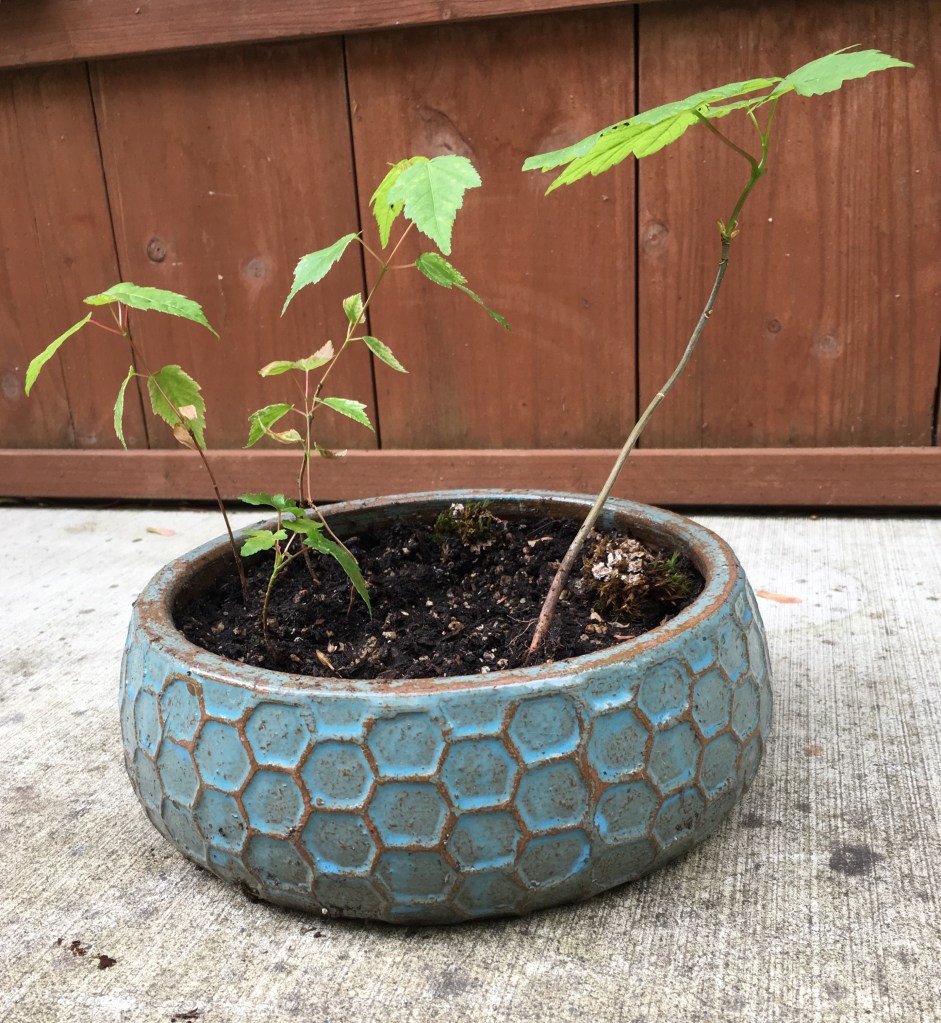
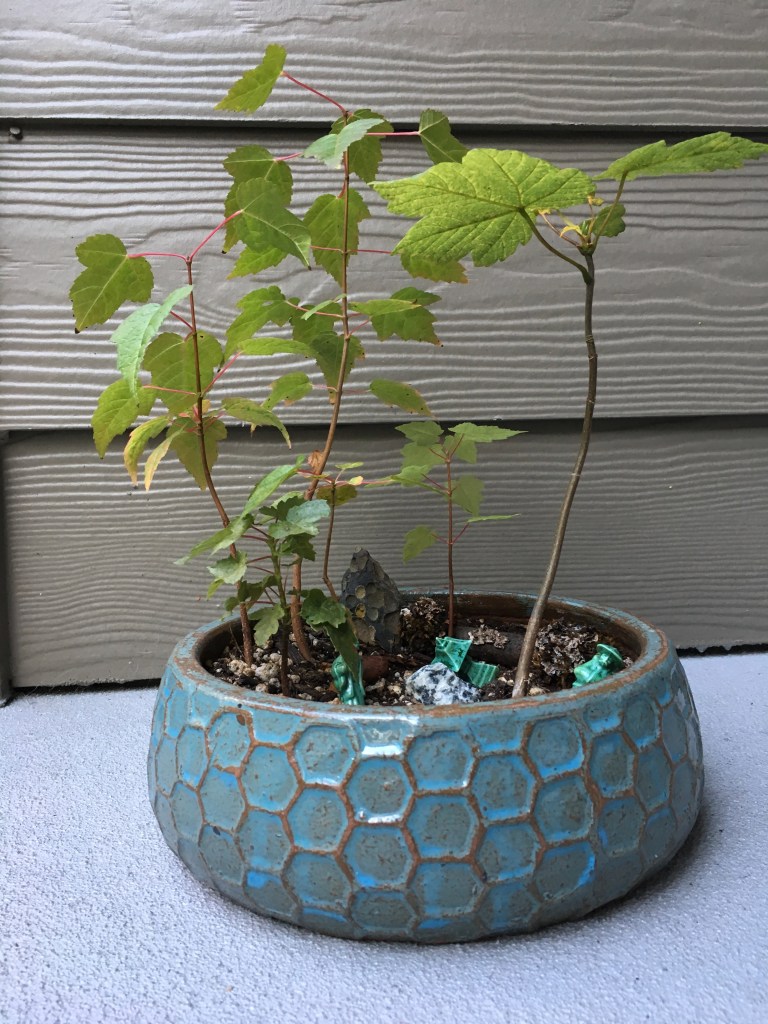
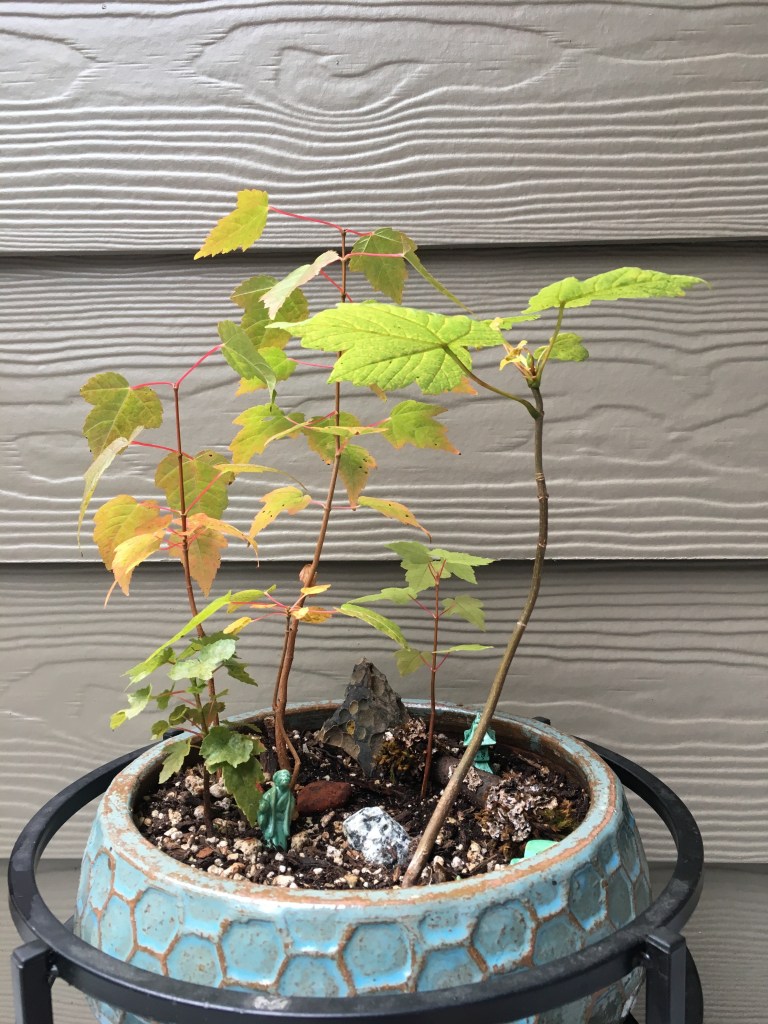
Of course, the prettiest part of Fall is the leaves changing colors. This year, I have my own private show! The Hundred Acre Wood, the trees I am growing as a bonsai forest, is changing like all the other trees.
The Hundred Acre Wood, when it was planted in May
The seeds I grew them from came from a tree only a few blocks away, so they feel like they are home.
The Hundred Acre Wood this August (tiny figures installed by you and Cousin Kestrel)
I look forward to seeing the whole cycle play out on my balcony. Life is sweet.
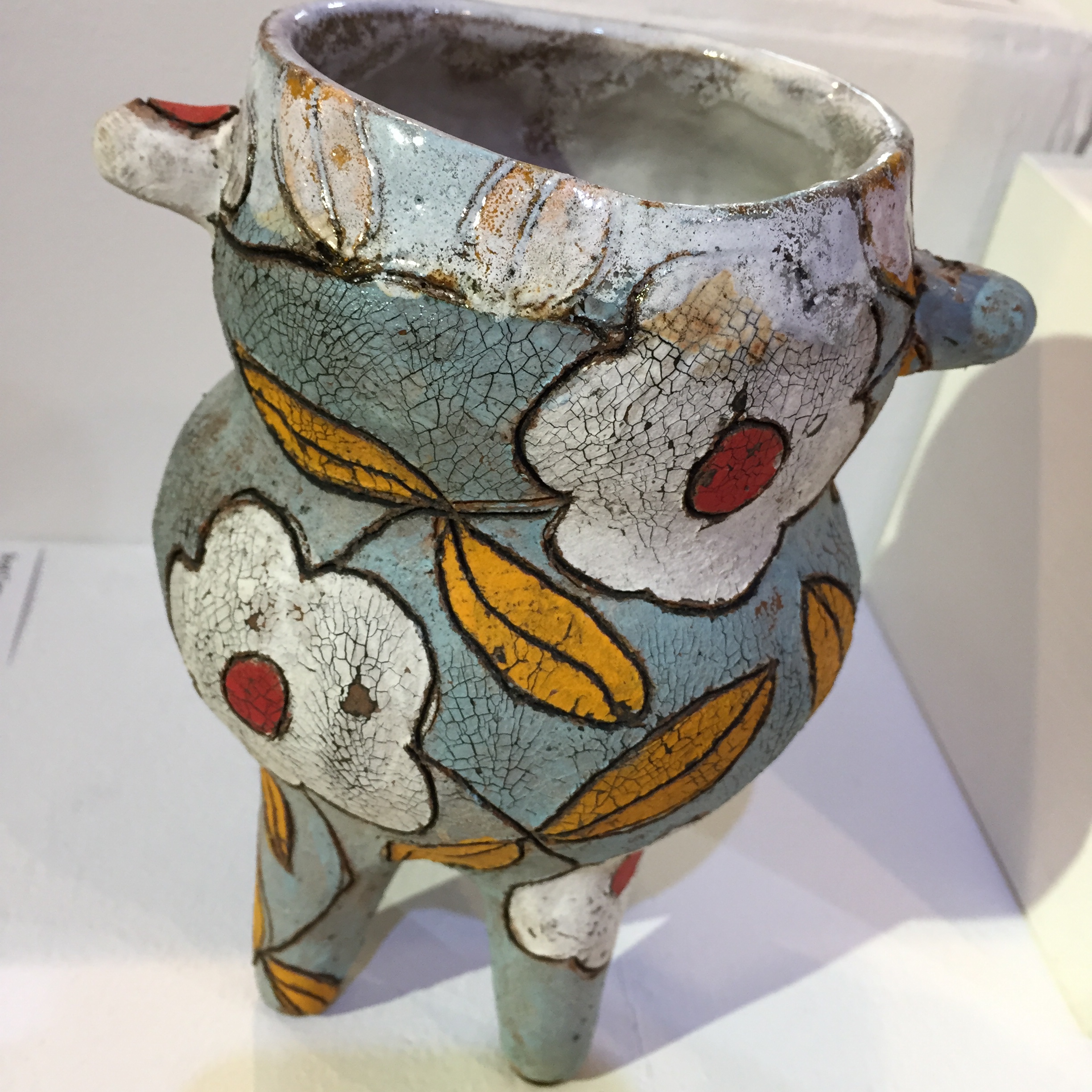
Tonight is First Friday at Auntie Bridgett’s Gallery, SideStreetArts. Since there are lots of flowers and dots in the paintings by Gary Hirsch and the ceramics by Scot Cameron-Bell, I wanted to make cookies of dots and flowers.
Scot Cameron-Bell’s work
But frosting makes cookies too messy to be around art…
Gary Hirsch’s workReady to chill
So I tried a different way.
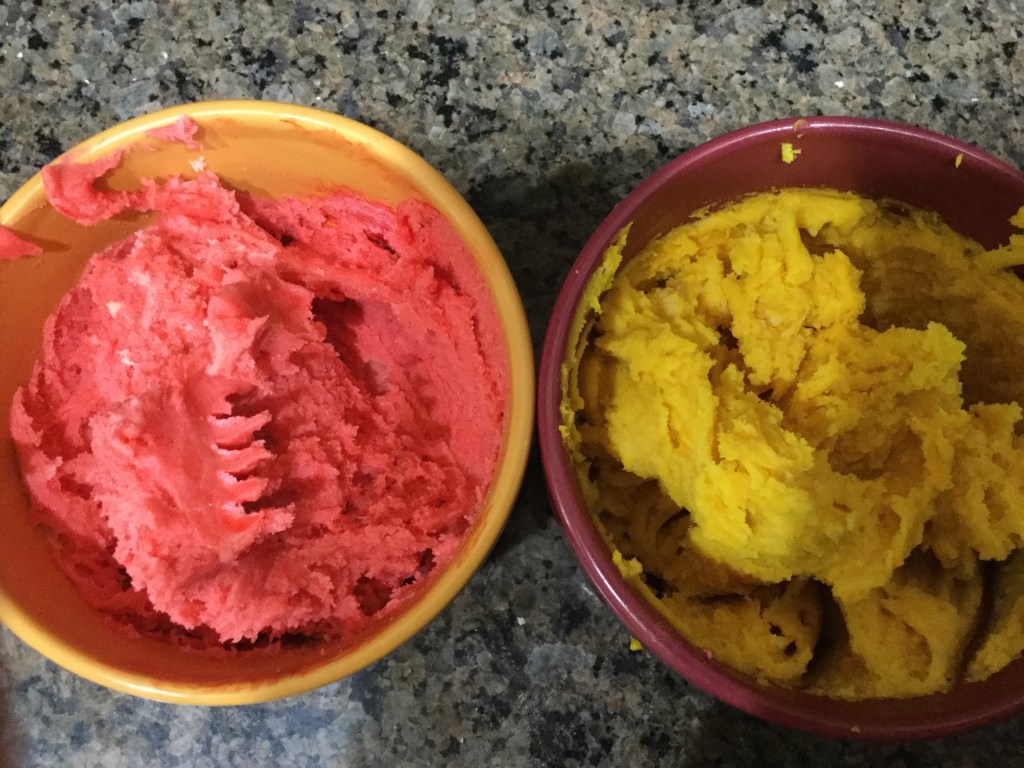
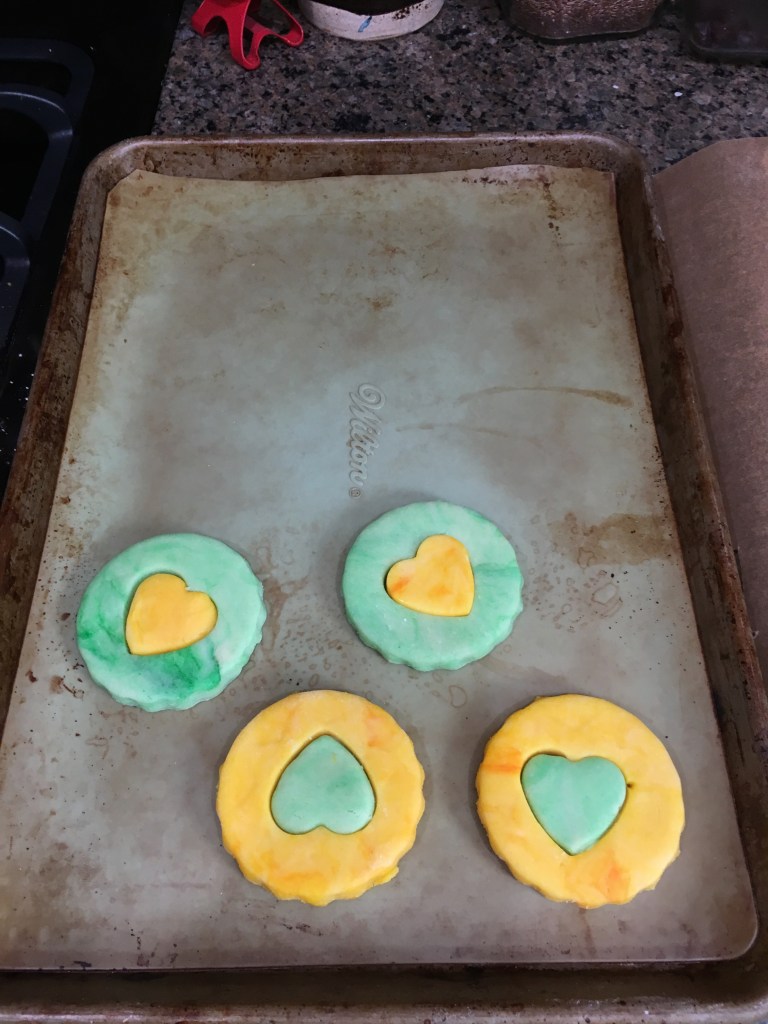
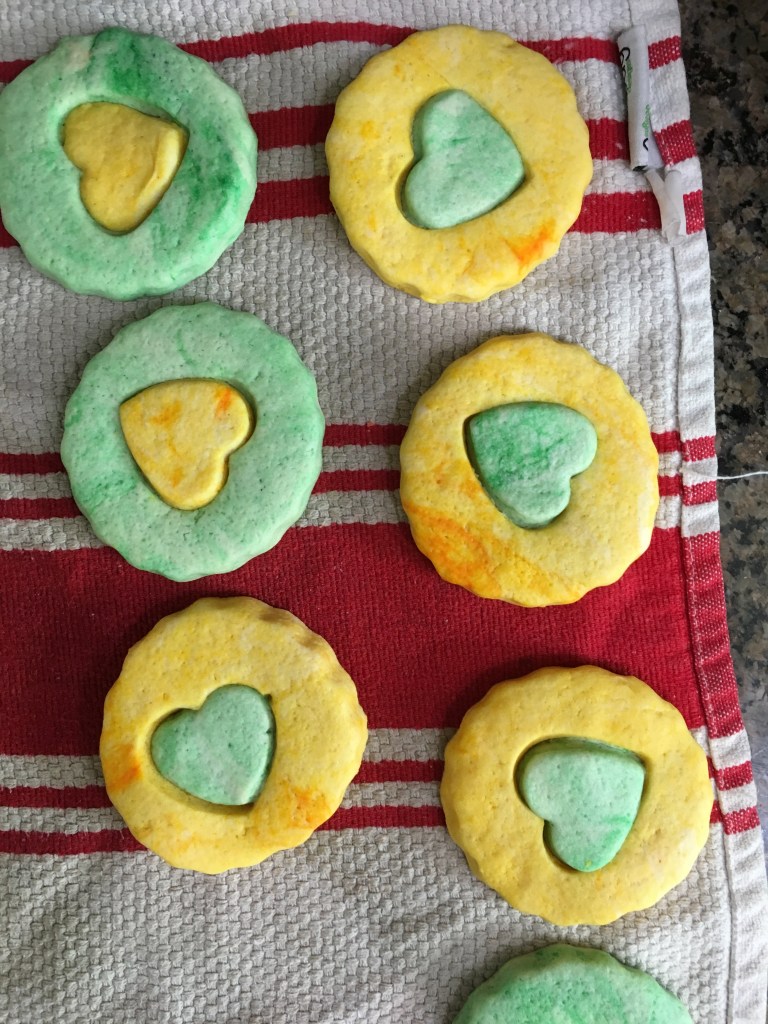
Instead of frosting the cookies, I made the cookies into the shapes. I used a new recipe with cornstarch, so the cookies keep their shape better and don’t turn into ‘globs’. This was important for the “shape inside a shape” cookie I had in mind.
I mixed the dough, divided it, and colored each part. I wrapped and chilled the parts, then started rolling out and cutting.
First batch…. close, but not quite right
The first batch was rolled too thin, looked like weird fried eggs, and took way too long.
The second batch, using more specific directions and learning from experience, was better. They are toothy, lemon-y and pretty. I like the marbled look better than flat color!
The cookies are just a tad too thick.
Second batch… so much better!
Now I just need to have another chance to make them, and they will be perfect!
Done and ready to be eaten!
Maybe we could make some when I see you later this month!
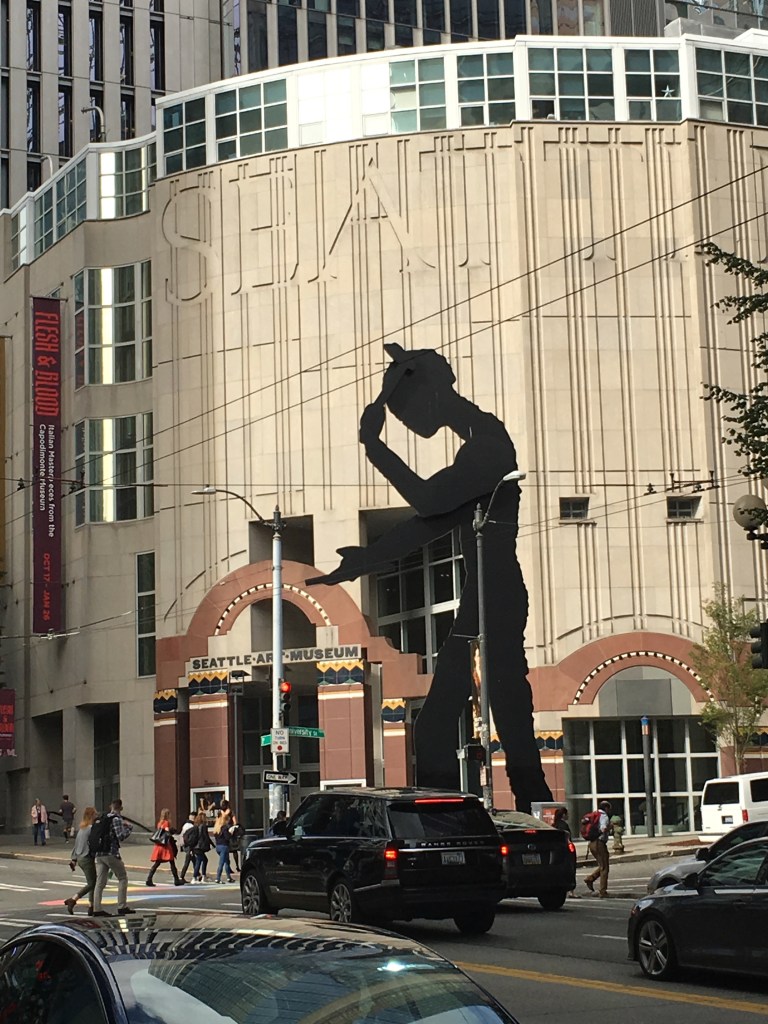
“Hammer Man”, a moving statue, outside the Seattle Art Museum
Of course we had to see the Seattle Art Museum! It had our attention as soon as we got into town, but we only had two non-rainy days to do “outside” stuff, so we put it off. It was worth the wait.
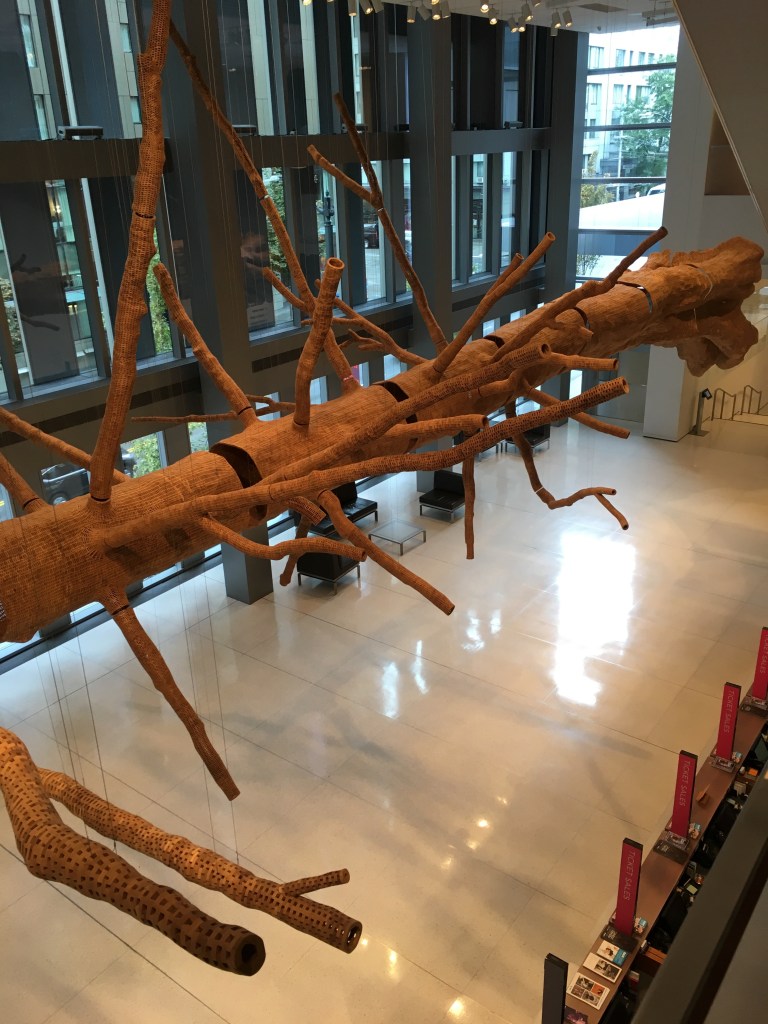
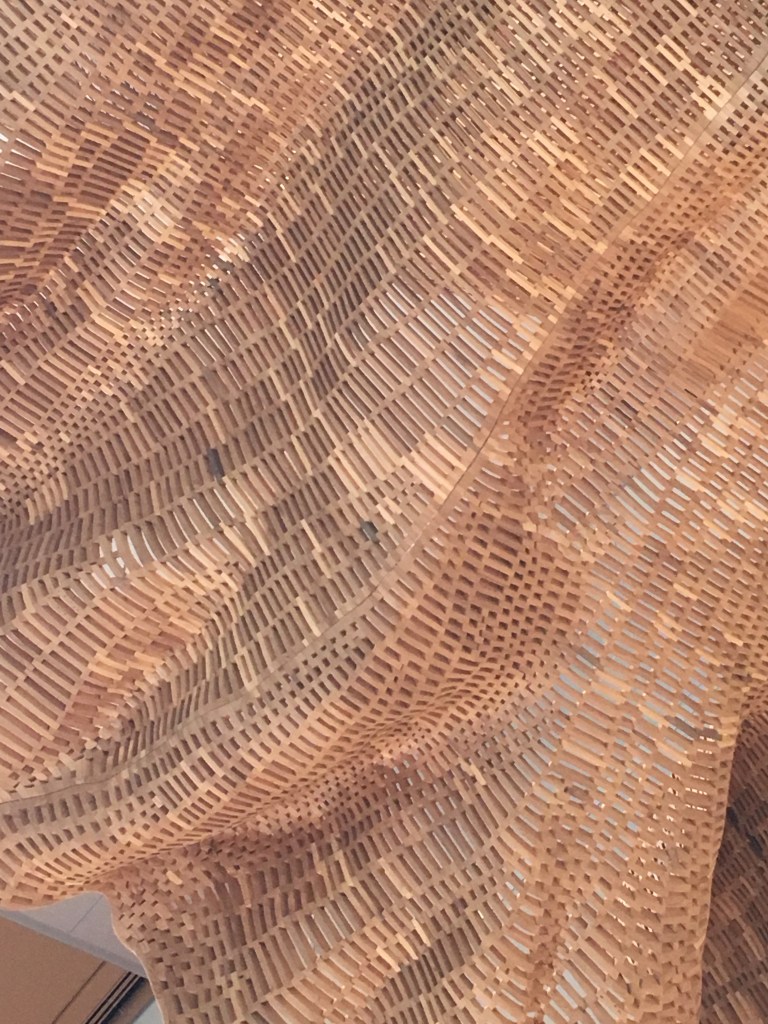
Inside we found innovative, thought-provoking art. “Middle Fork”, a sculpture by John Grade that hovers over the main lobby, is actually a re-creation of a 140 year old hemlock tree that is still standing in a forest east of Seattle. Mr. Grade and hundreds of volunteers built a frame and made a plaster cast of the standing tree, then shaped thousands of bits of re-purposed cedar to echo the interior and exterior contours.
“Middle Fork” hovers over the lobby
I was fascinated by both the work itself and the process. Once again, my father’s reverence for forests tickled in the back of my brain.
Entrancing close-up of “Middle Fork”
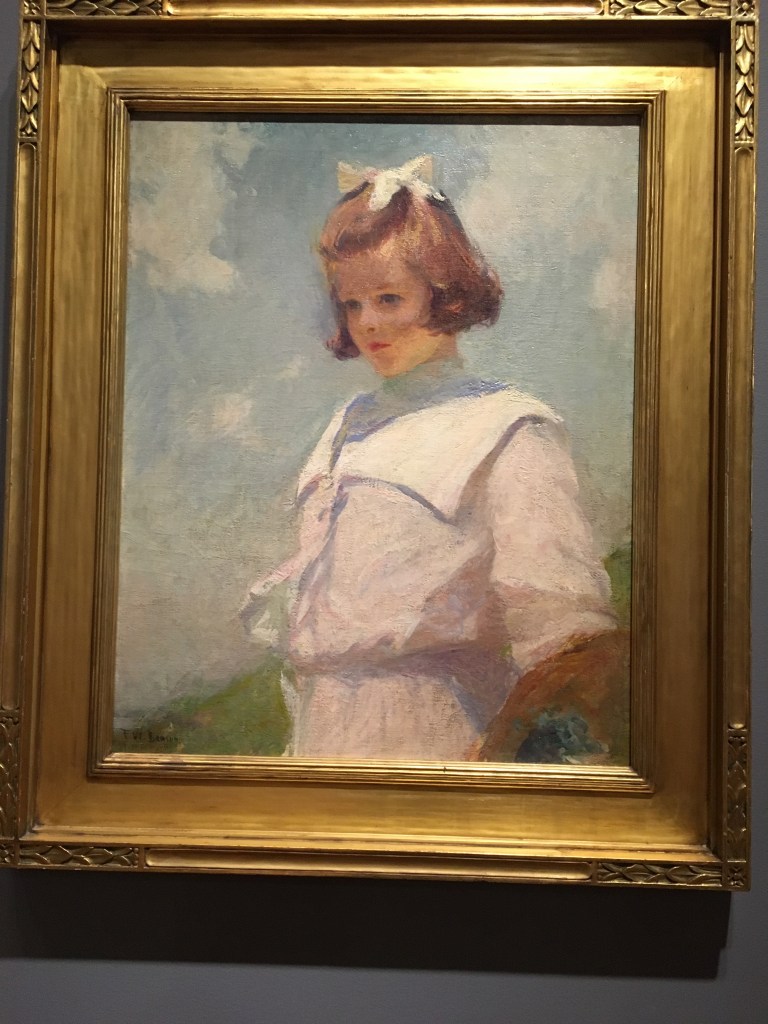
On the four floors of the museum was a lot of what I think of as “regular” art. Bronze statues, oil paintings of women and children, religious icons, these are traditional subjects treated in traditional ways. They are lovely and show great skill.
“Portrait of Elizabeth” by Frank Benson
The art that captured my brain and sent me spinning down rabbit holes, however, was unlike anything I had seen before.
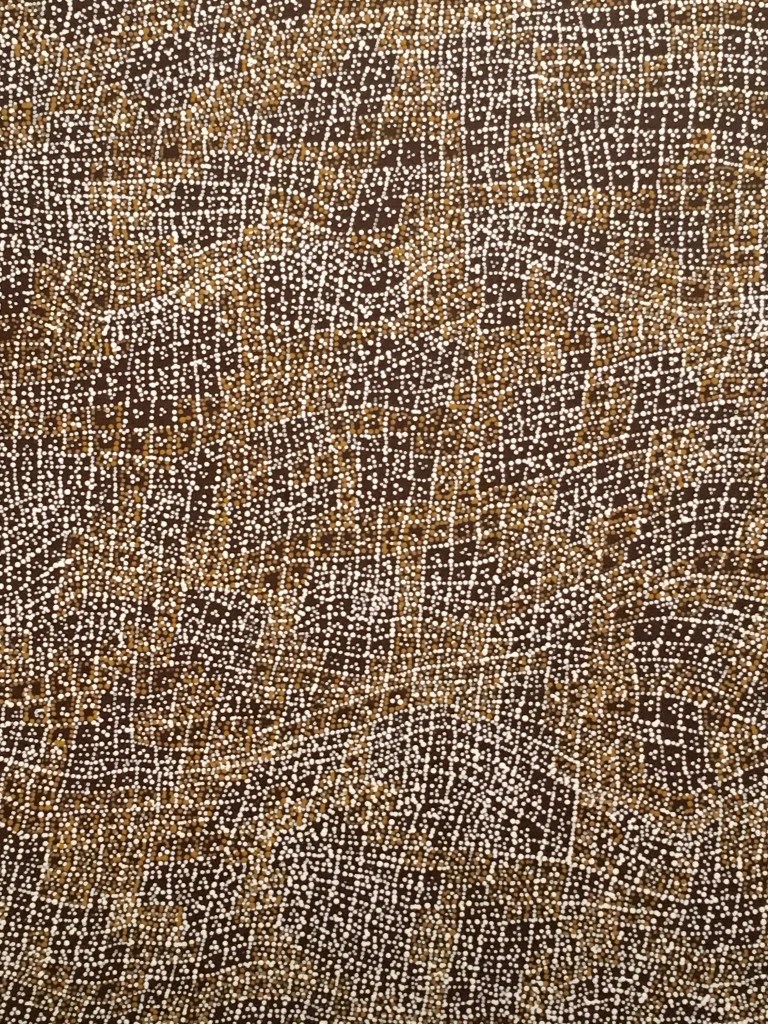
“Mina Mina”
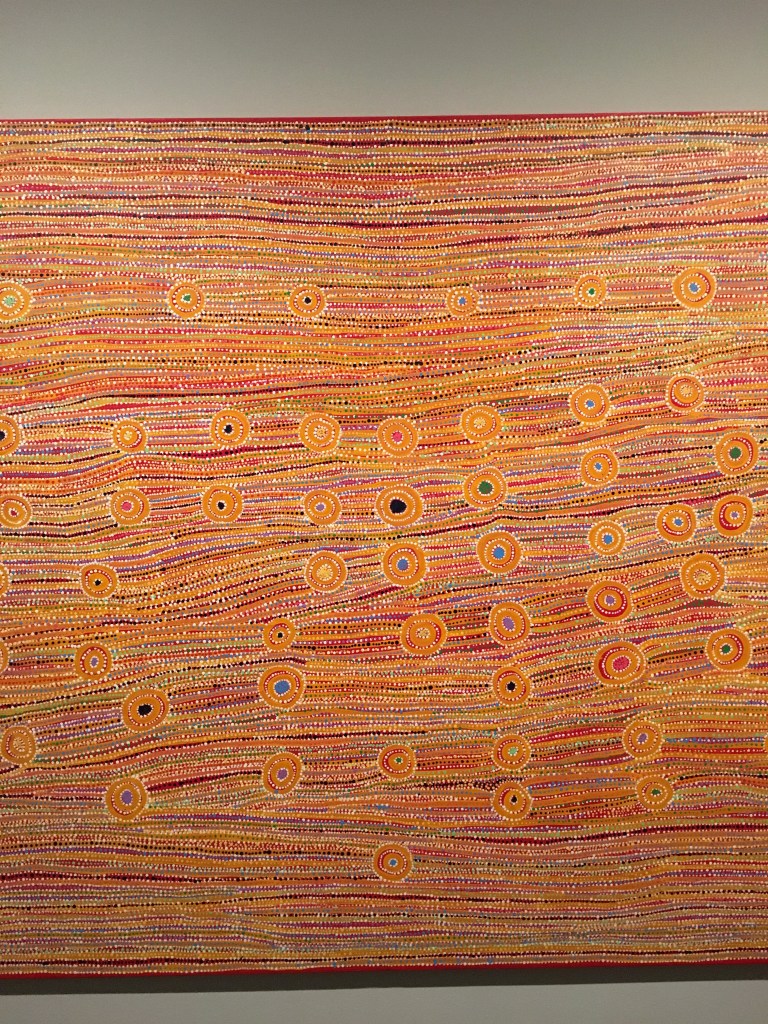
First there was a gallery devoted to Dorothy Napangardi, an Australian Aborigine. She was born the same year as I was and died six years ago, after creating dozens of large abstract works in the style of her people.
“Women’s Dreaming”
To me, they felt like aerial views of imaginary cities, or a bustling hive of thoughts jostling in someone’s mind. I stared and stared, until a distractingly loud group of students arrived.
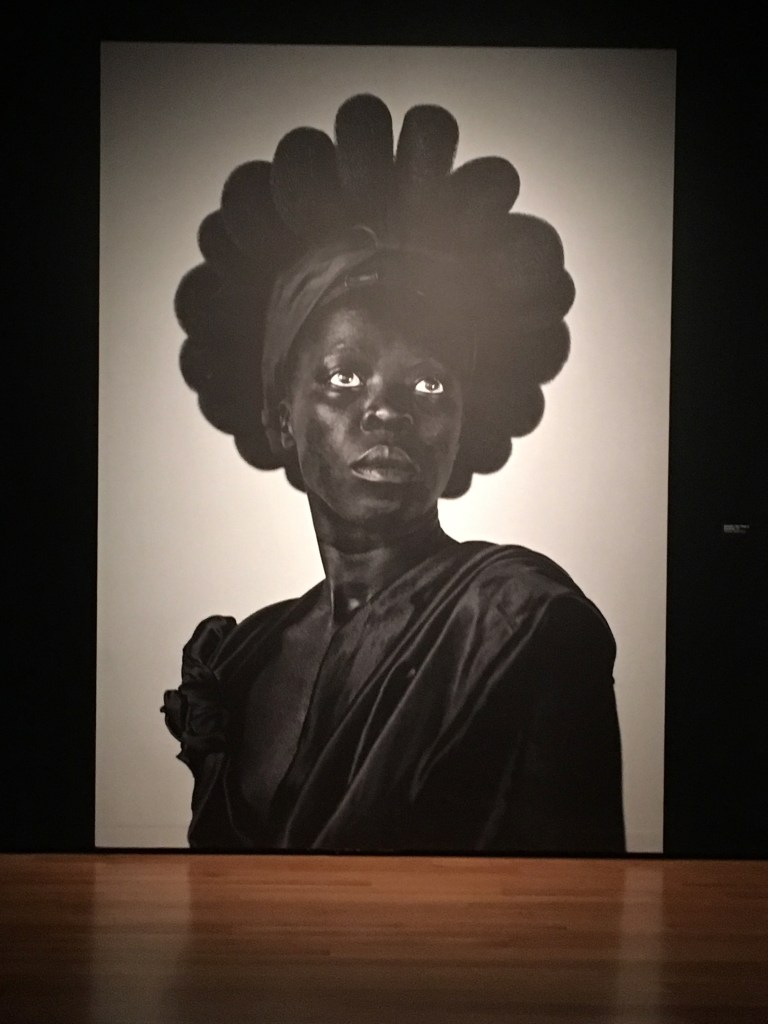
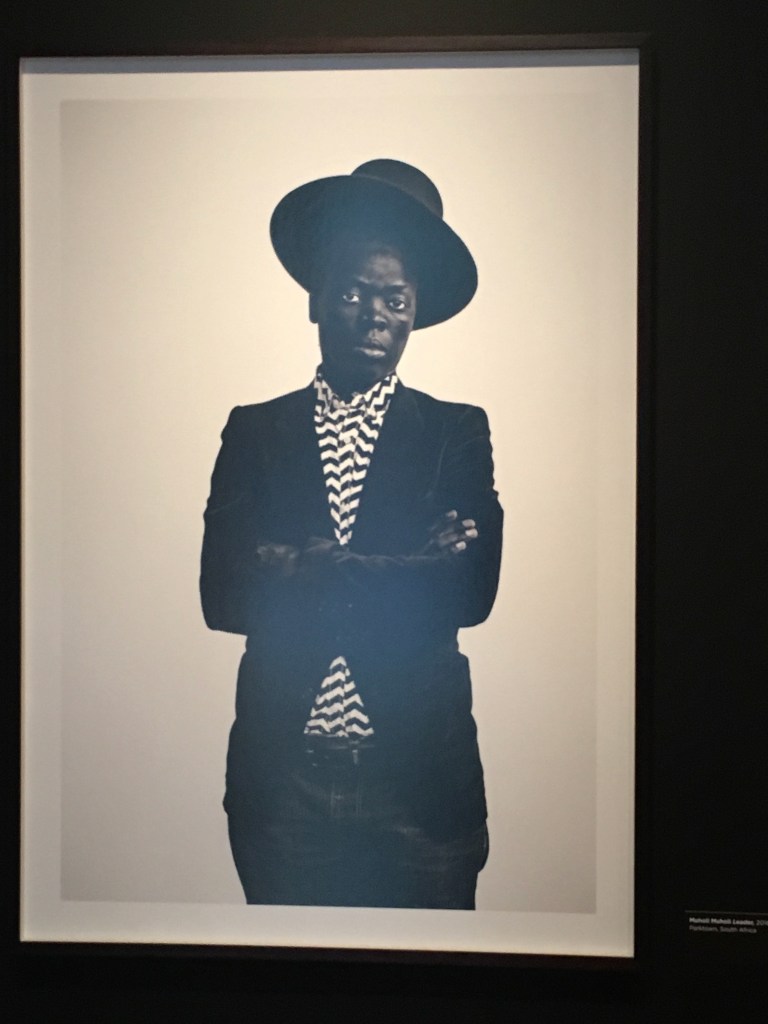
Further along was an exhibition of the photography of Zanele Muholi, who lives and works in Johannesburg, South Africa. Muholi goes by the pronouns “they/ their”, neither male nor female. Their pictures, all self-portraits, are meant to make us see trans people and our own concepts of beauty differently.
“Ntokakhe II or Own Things or Everything”
The works, all done in black and white and in very large format, pulled me in as I examined the lines where black met white and the traditional met extraordinary.
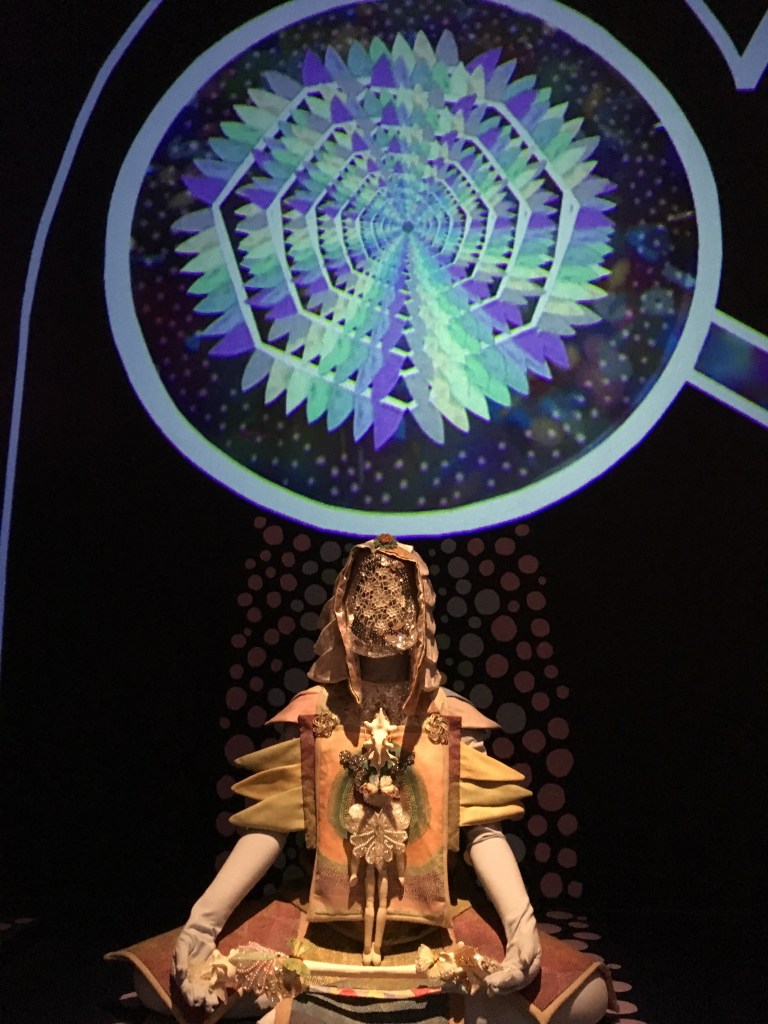
The last gallery of out-of-this-world art was “Lessons from the Institute of Empathy”. This was a multi-media presentation, including video, fabric sculptures, costumes, and written work.
Meditation mask from the “Institute of Empathy”
The statement on the wall says “Three Empathics have moved into the Seattle Art Museum and established a virtual space where you can step outside your normal, routine self and improve your ability to understand others.”
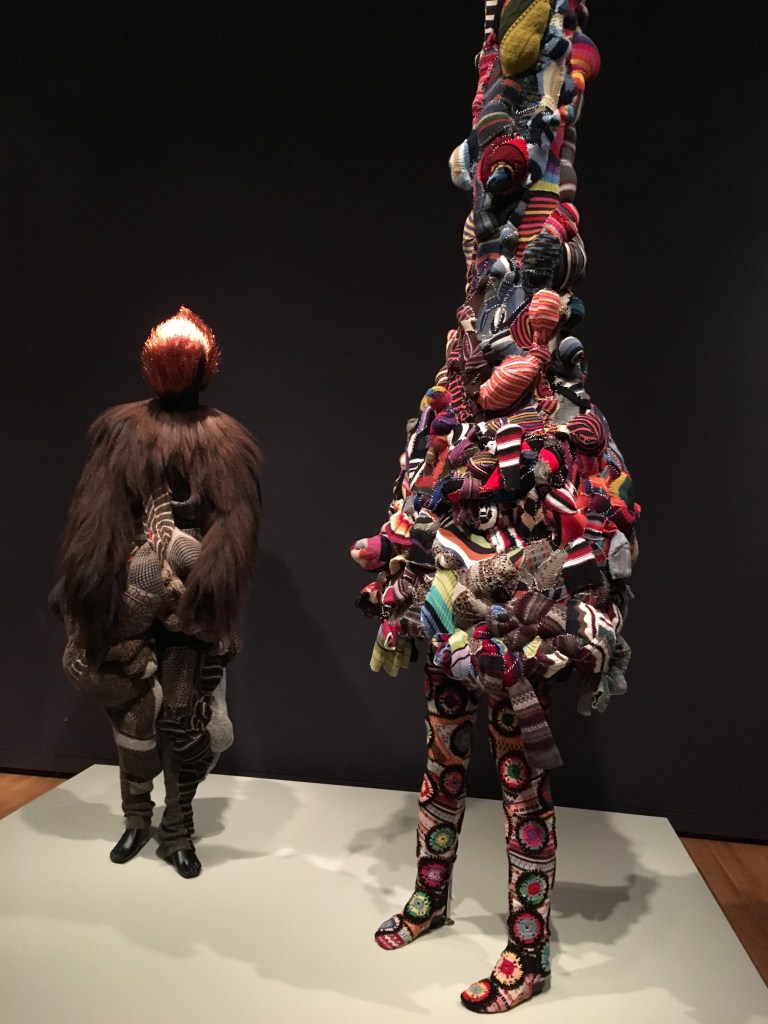
It goes onto explain that these works are here to help you feel what others feel, to increase your empathy. There were some silly bits about ingesting minerals and fungi in order to re-mix a person’s personality traits, but I appreciated to idea that these costumes and masks might get a person out of their rut about what is “us” or “them”.
Costumes to increase empathy
Since art is meant to allow you to see things differently, this was a successful exhibit.
Grandpa Nelson, Auntie Bridgett and I had all been wandering the museum on our own, but we got together for lunch downstairs. Our feet were sore but we weren’t ready to quit for the day just yet. We returned to the Library and found comfy seats to read, learn something new, and just enjoy the space.
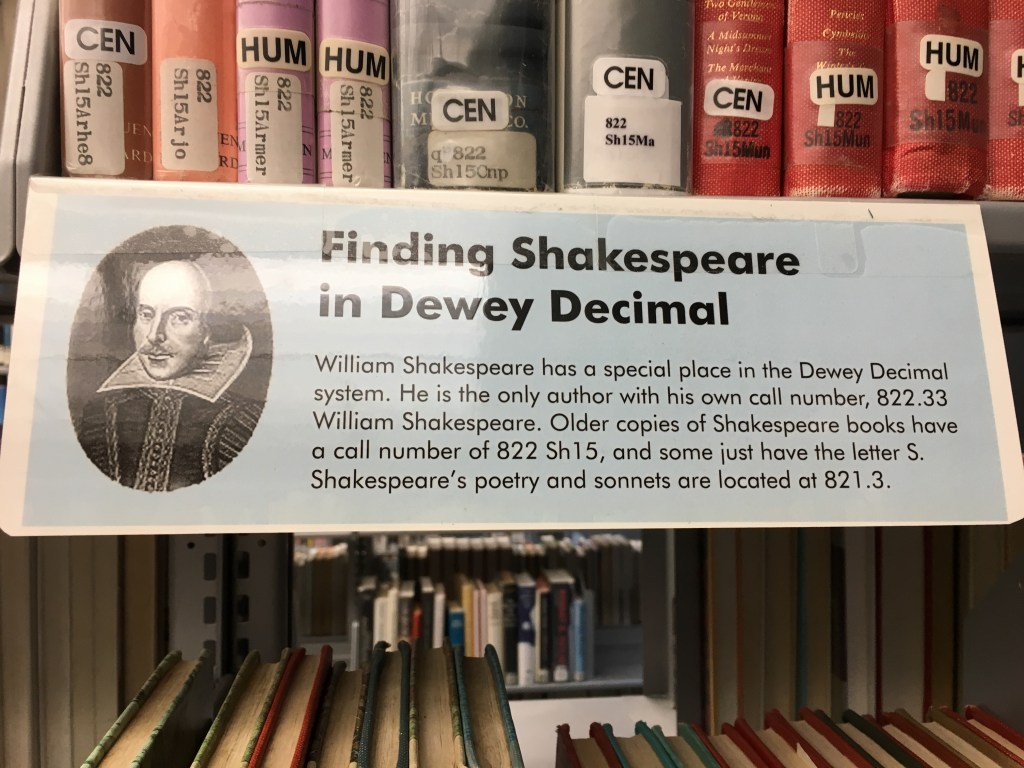
I didn’t know that!
I will tell you about out evening’s adventure tomorrow!
When we were finally able to pull ourselves away from the Seattle Library, we walked along Fifth Street until we found the Monorail station on the 4th floor of the Nordstrom department store.
The Monorail, as the name implies, is a train with only one rail. It was built for the 1962 World’s Fair to carry visitors from downtown to the Fairgrounds, and still runs today.
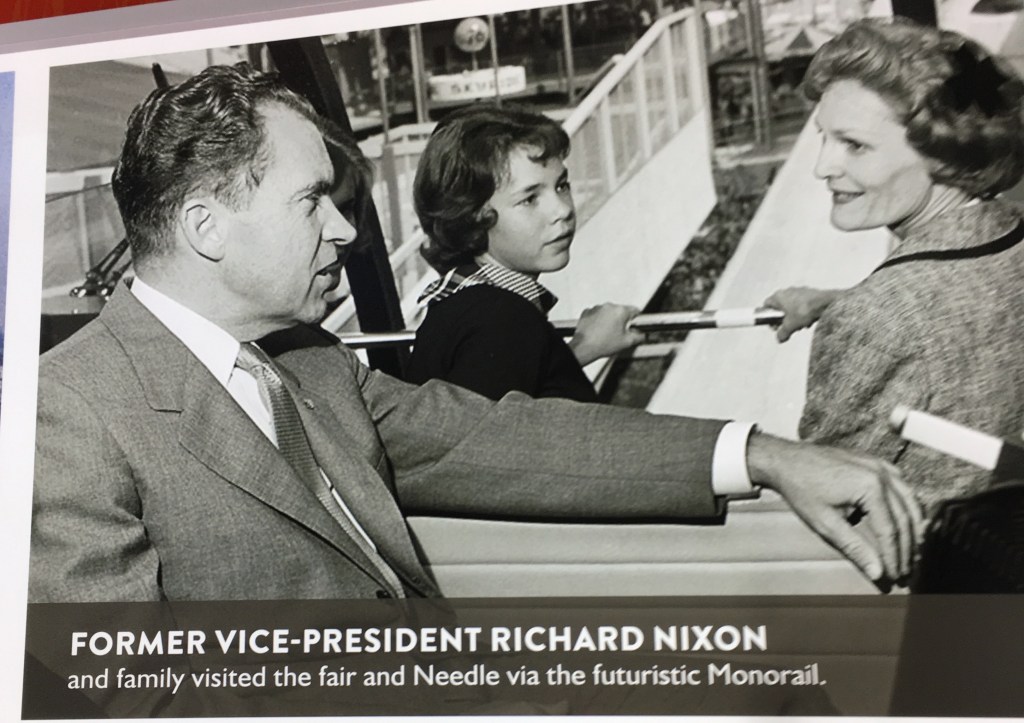
Later-disgraced Richard Nixon visits the Needle in the 1960s
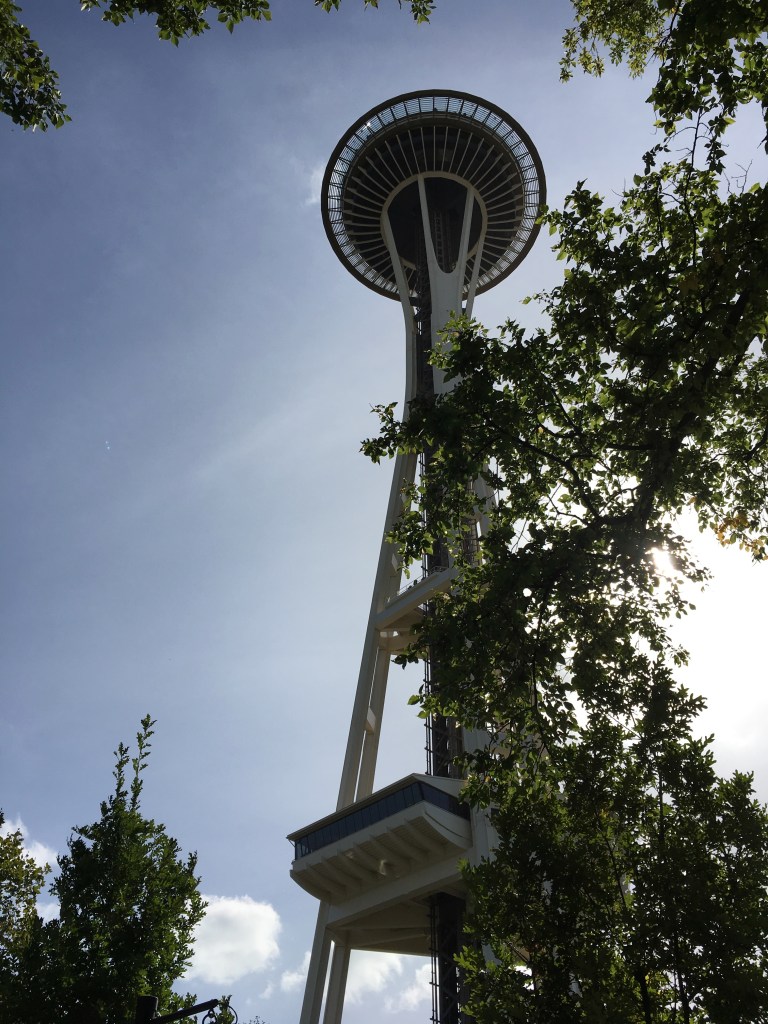
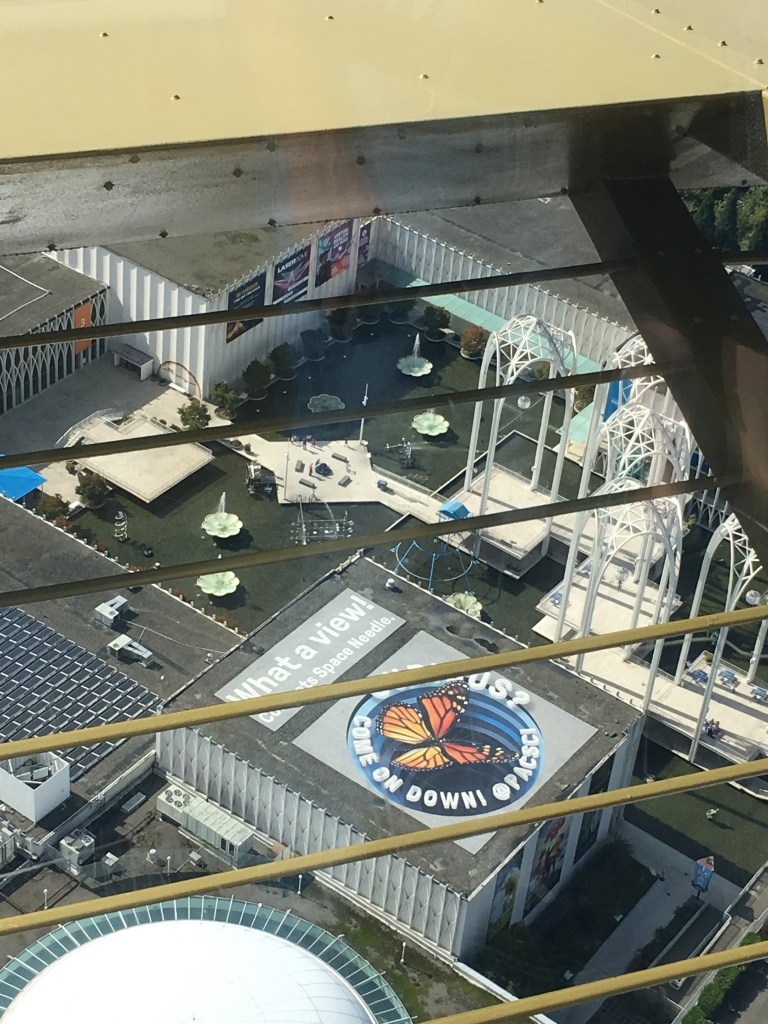
The centerpiece of the World’s Fair was the 600 feet tall Space Needle which represented America’s fascination with space travel. It is sleek and beautiful, with elevators that whisked us to the top in about 10 seconds. Our heads were spinning!
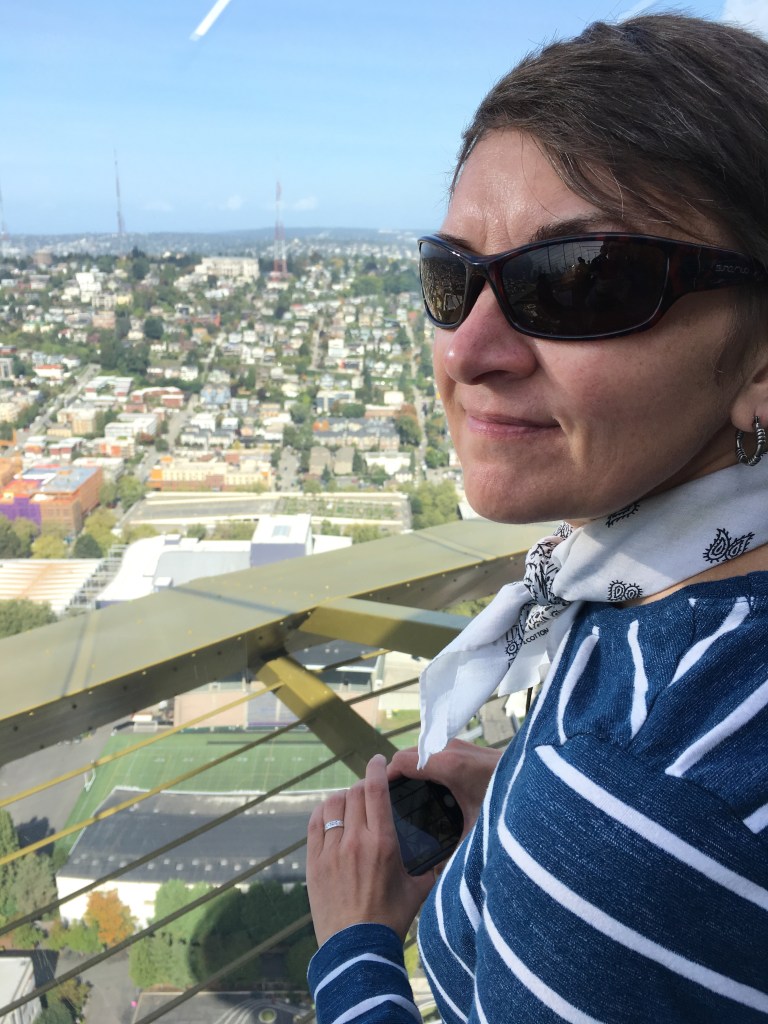
Auntie Bridgett enjoying the view
At the very top is an observation deck that goes all the way around, so you can see everything in the city. The thick glass walls lean out just a tiny bit, so your selfies get a view of the city below. It was dizzying.
On the lower level was a restaurant surrounded by a glass floor that rotates. The rotation is slow, just one time around every hour, but the glass floor was hard to get used to… it was so far down!
Getting a little freaked out…
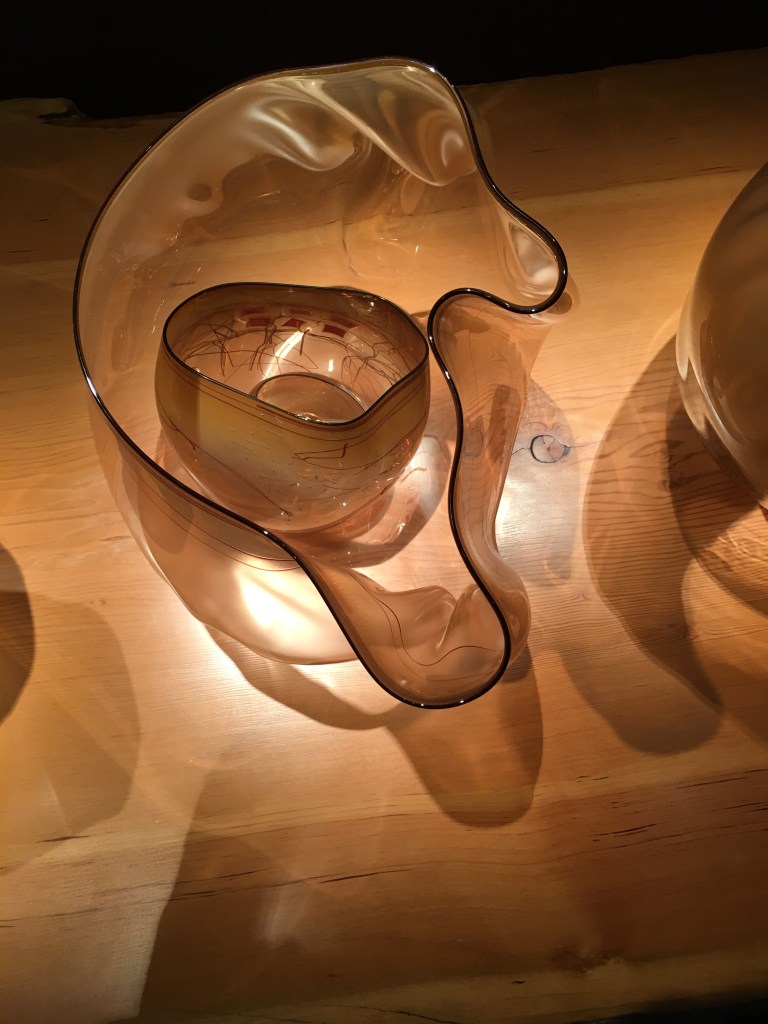
When we had our feet on the ground agin, we headed across the Seattle Center to the Chihuly Glass Museum. 78 year old Dale Chihuly has been a glass blower for many years, but he works differently than most glass artists.
Chihuly’s underwater-y world
He lost his left eye to a car crash when he was only 35 and has no depth perception, so he had to develop a team to work with him. He designs the works and teaches his team, then coaches them as they blow the glass and assemble the pieces.
“Native Baskets”
For a while I didn’t like this method, thinking it was a “Here, go make this” sort of operation, but Mr. Chihuly leads every part of the process…he just can’t do it himself.
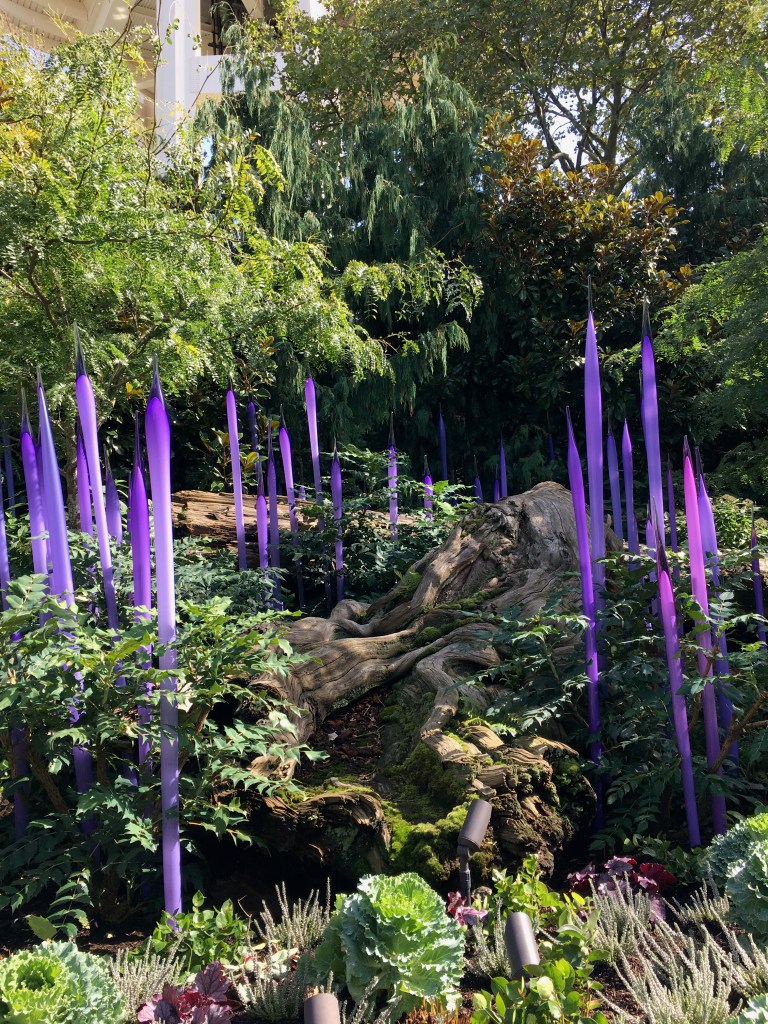
Fragile glass spears mingling with curvy nature
By the time we had seen his museum, I admired him very much, as well as enjoying the play of light, space, plants, and even the Space Needle.
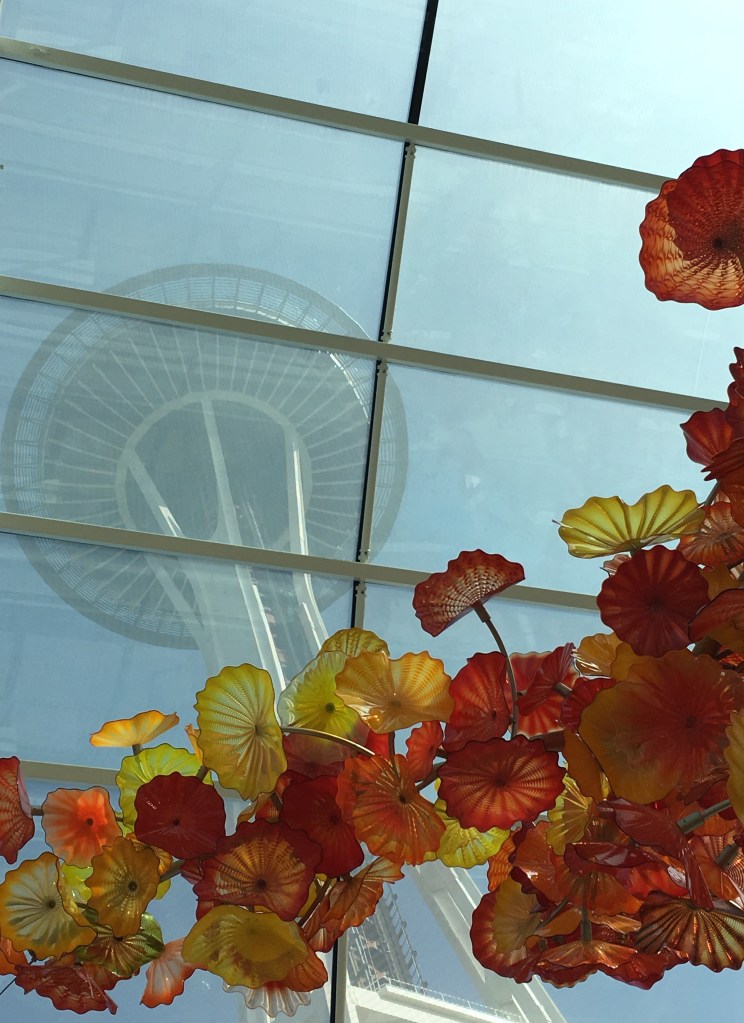
Space Needle through Chihuly’s Glass House Garland
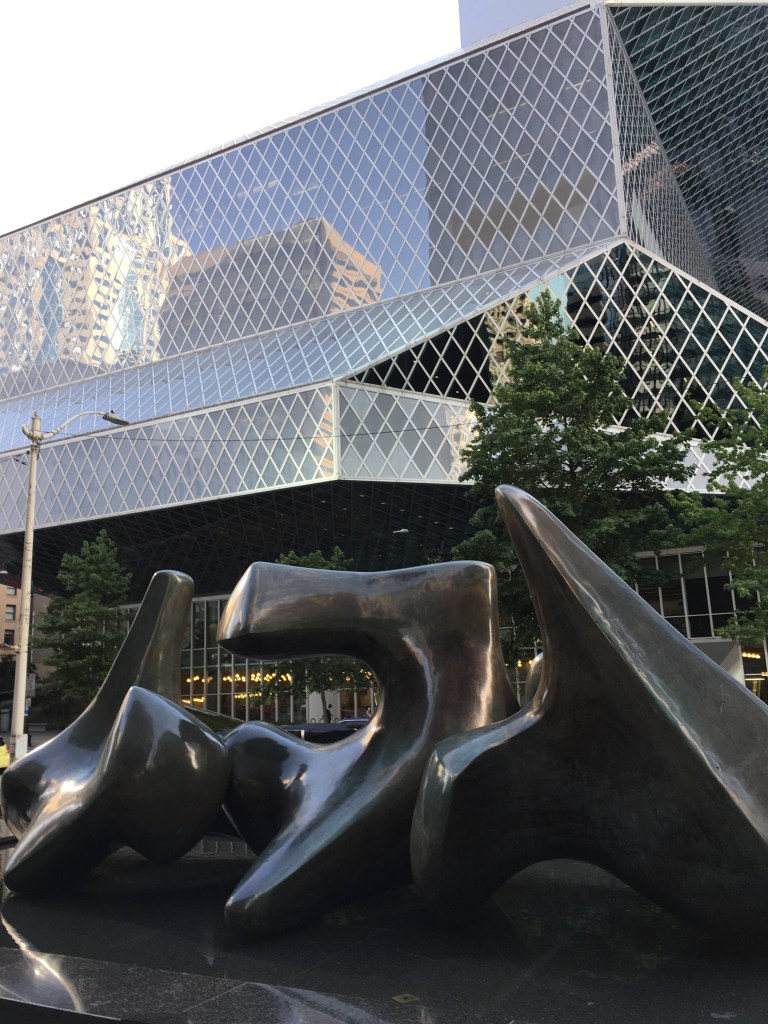
Henry Moore statue across the street from the Seattle Library
Since your Great Grandma Billie was both a school and public librarian, I was practically raised in libraries. As a teacher, I spent thirty more years loving these places dedicated to protecting and sharing books.
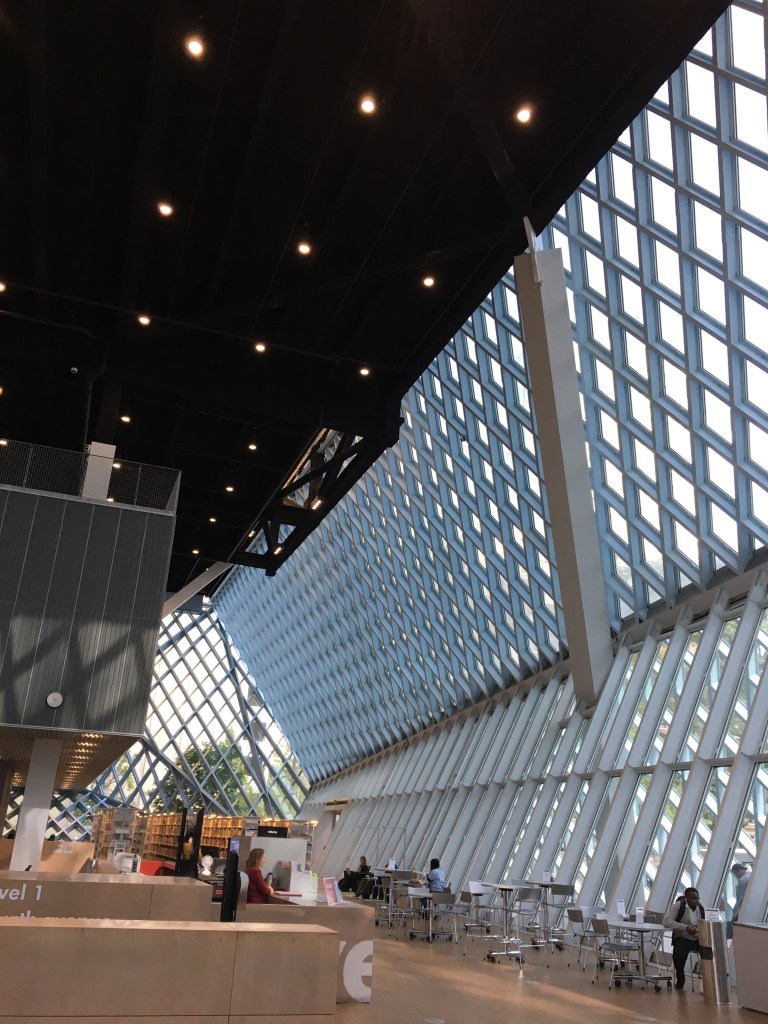
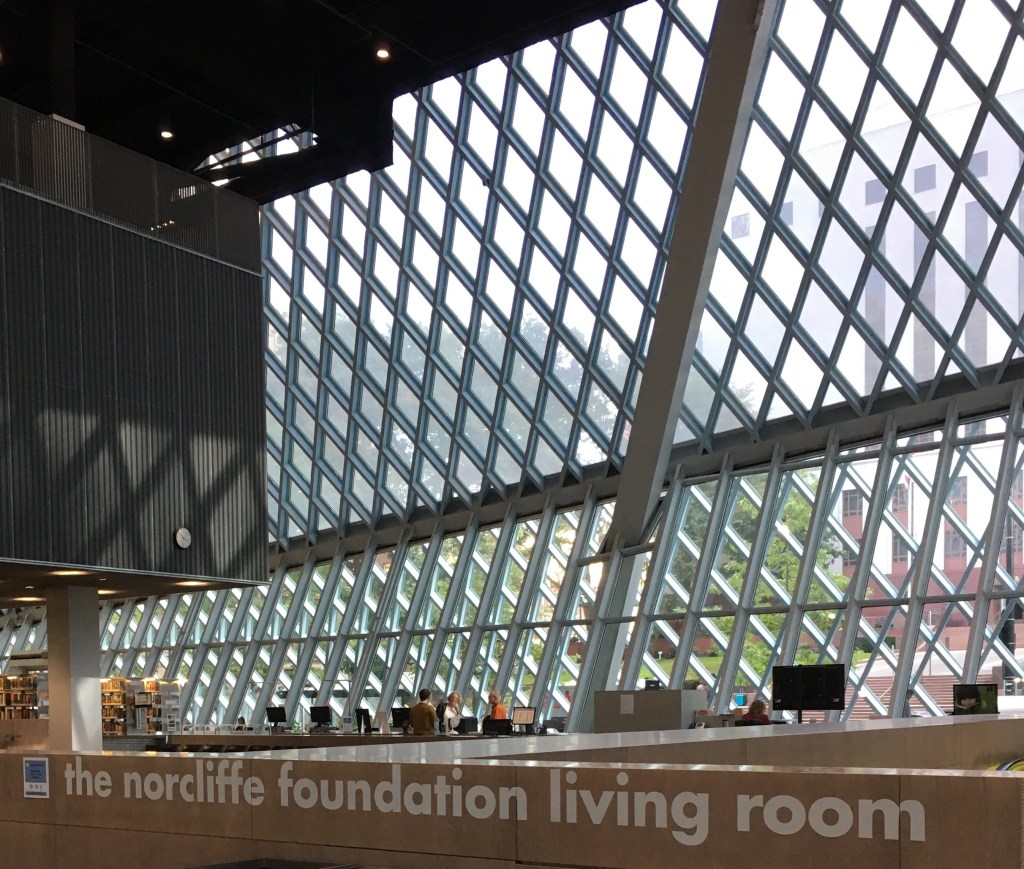
Amazing interior space!
And in Seattle, we found revolutionary architecture combined with a love of books and community service.
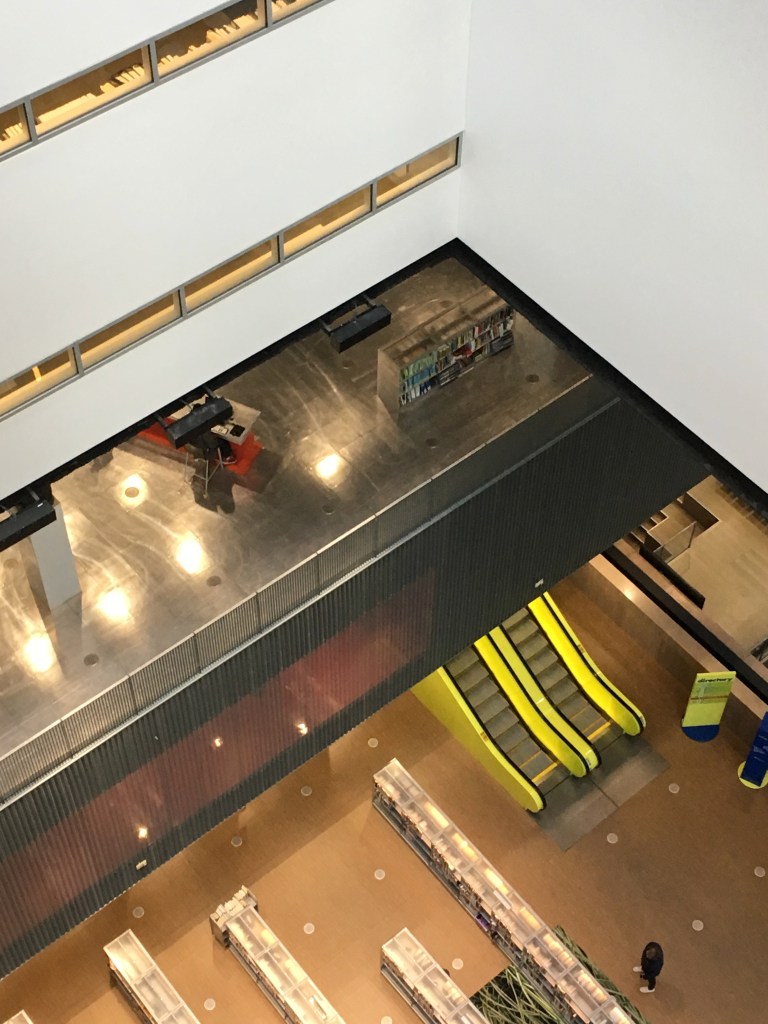
Opening in 2004, this 11-story steel and glass building was designed by Rem Koolhaas and Joshua Prince-Ramus. Nothing in it seems to be at right angles, which made Grandpa Nelson uncomfortable for a while. There is also a three story overlook that lets you appreciate the amazing architecture ( and give you the willies!).
View straight down from the fourth floor overlook
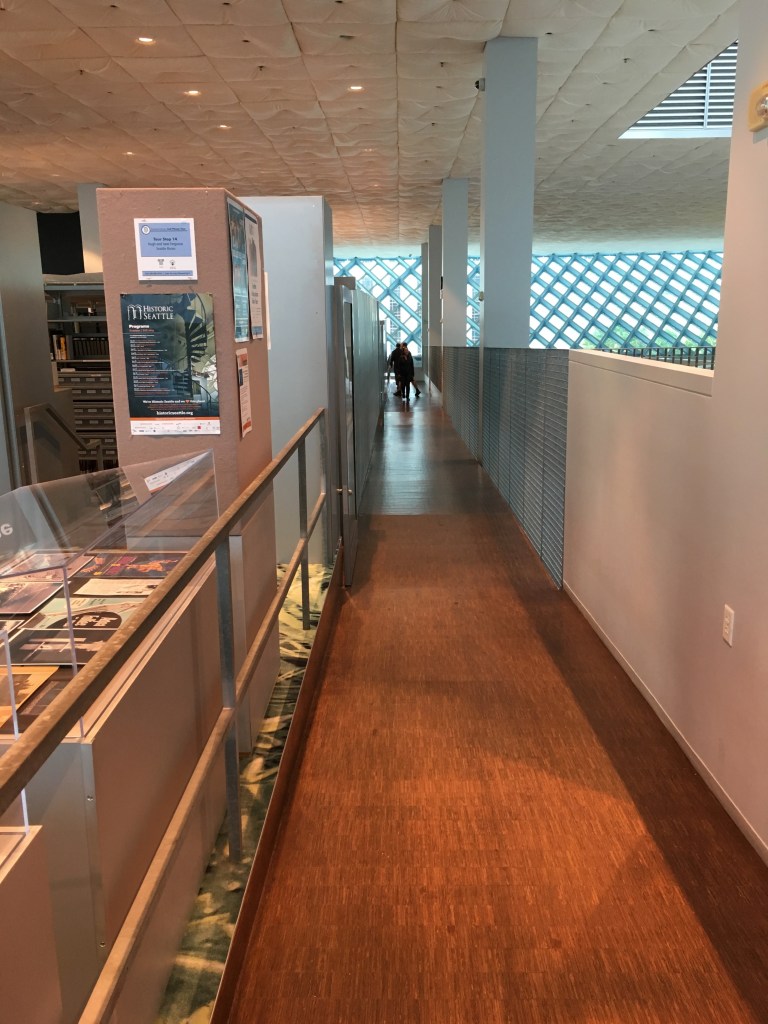
The library uses elevators, escalators and stairs to help folks get around, but also something new to me, the “Books Spiral.” Starting on the ninth floor, books are shelved according to the Dewey Decimal System (most libraries use it), but instead of dividing the sections up by floors, you walk down (or up) the spiral on gently sloping ramps. The floors are flat and level, and the ramps go around the outside walls.
walking down the Book Spiral
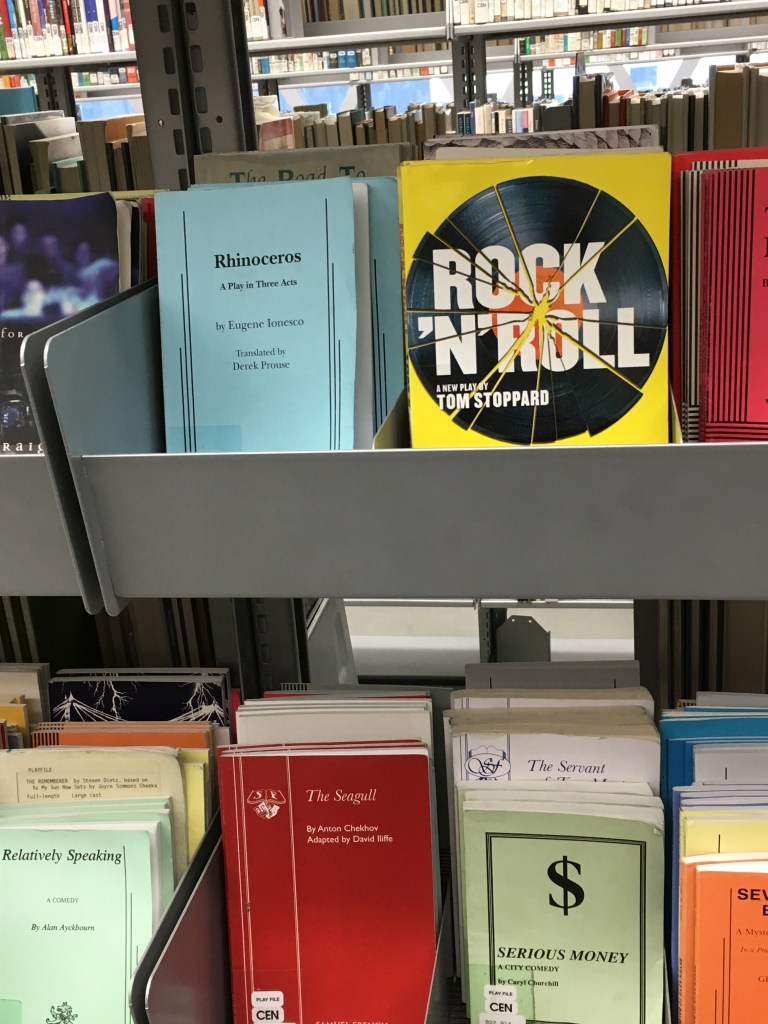
This is great for browsers like me, who hate stairs! I wandered by books on cartoons (I pulled out a Doonesbury and read a few), biographies, plays, and old sheet music, enjoying the books like they were art in a gallery. It was comfortable, fun, and very friendly.
Just browsing!
Adding to the friendly feeling was the cafe downstairs, with lots of light, sunny seating. A security guard explained that his loved his job because he worked in a safe, welcoming community space dedicated to people and learning.
Welcoming, friendly people and spaces
Homeless people, especially in cold, wet weather, will spend a lot of time in public libraries. Instead of chasing them away, Seattle’s library has certain areas where they are welcomed, so they can rest, use the bathrooms, and stay warm. It is working well so far, said the guard.
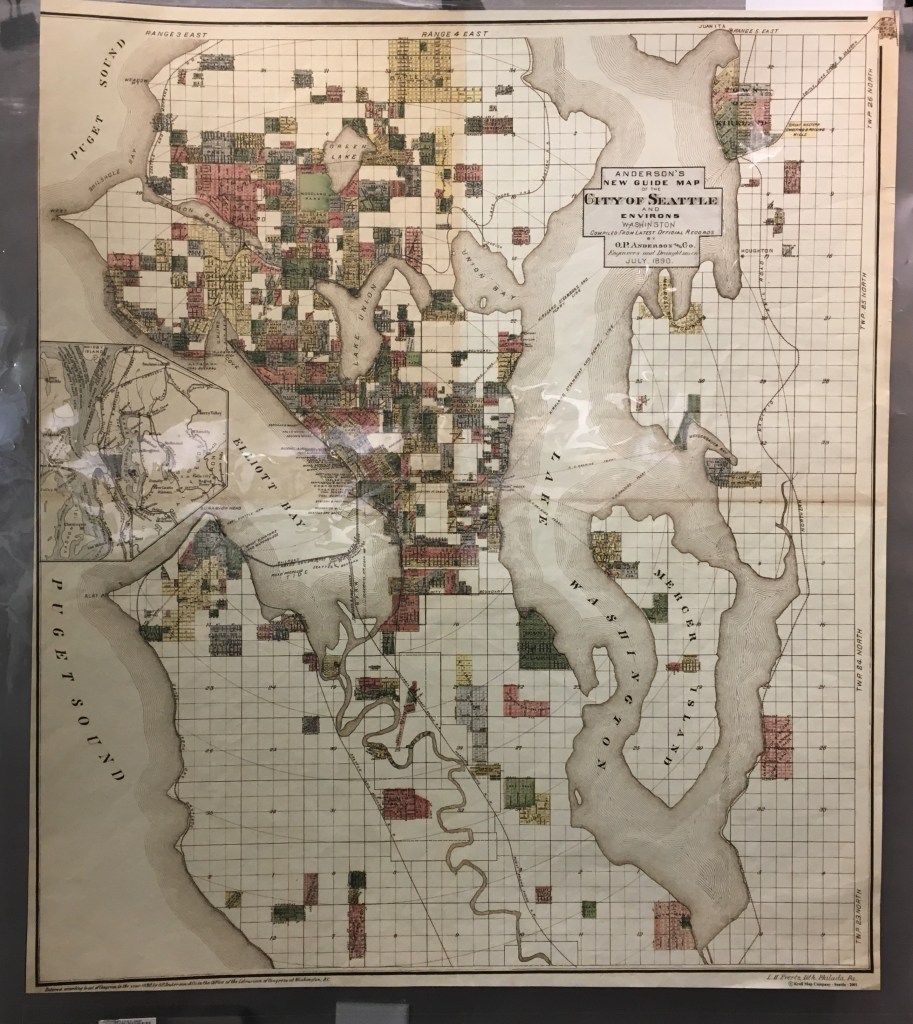
Map of Seattle in 1890. The Duwamish River is the wiggly line bottom center
On the level with maps, I found an amazing experience that I didn’t take a single picture of, because it all happened in Virtual Space. With a VR headset on, I found myself in a canoe on the Duwamish River, paddling, gathering berries, cooking salmon, and picking up trash. It reminded me of camping trips with your Great Grandpa Lowell, who loved and respected the forests we visited.
The experience also helped teach me the history of this area. Seattle was founded by white people on the banks of Puget Sound, along the Duwamish River. These folks weren’t the first people here, though.
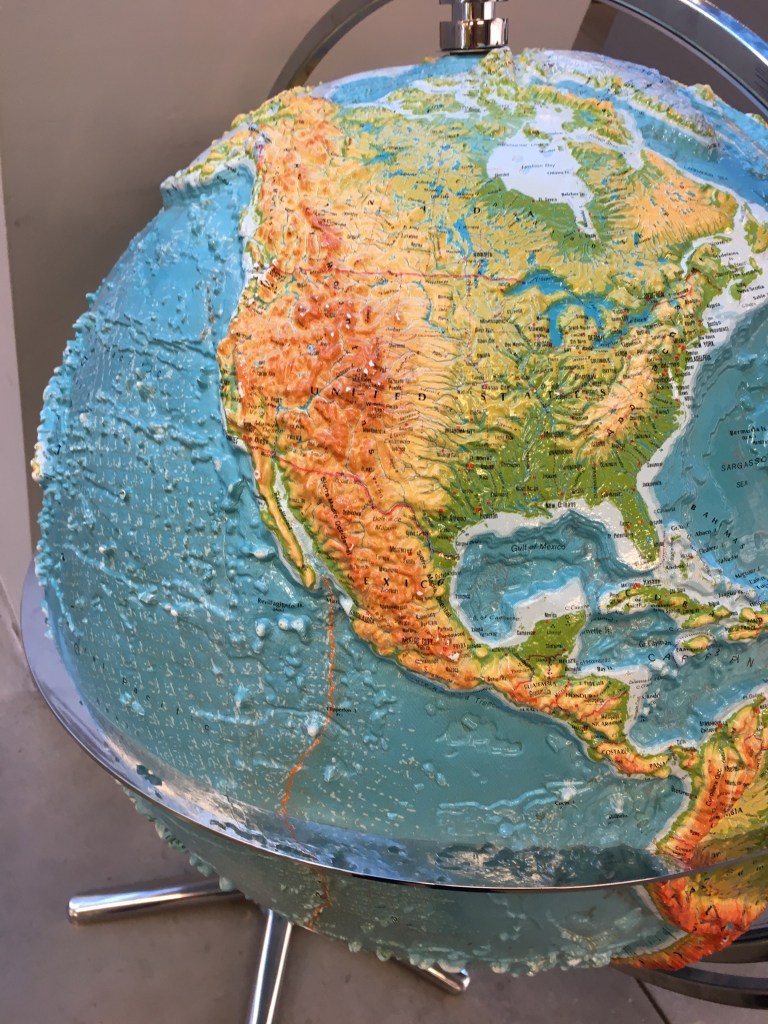
Wonderfully tactile world map
Before they came, the river was the center of life for the Duwamish people, who used the river for all their needs: food, transportation, clothing, and cleaning. As white people moved in, they wanted to use the river for different things, and have straightened, deepened, and polluted the river so that it isn’t good for anything but moving big ships through.
We all enjoyed our hour or so in the library, but the rest of the city was waiting to be explored, so we headed off, knowing we would come back soon.
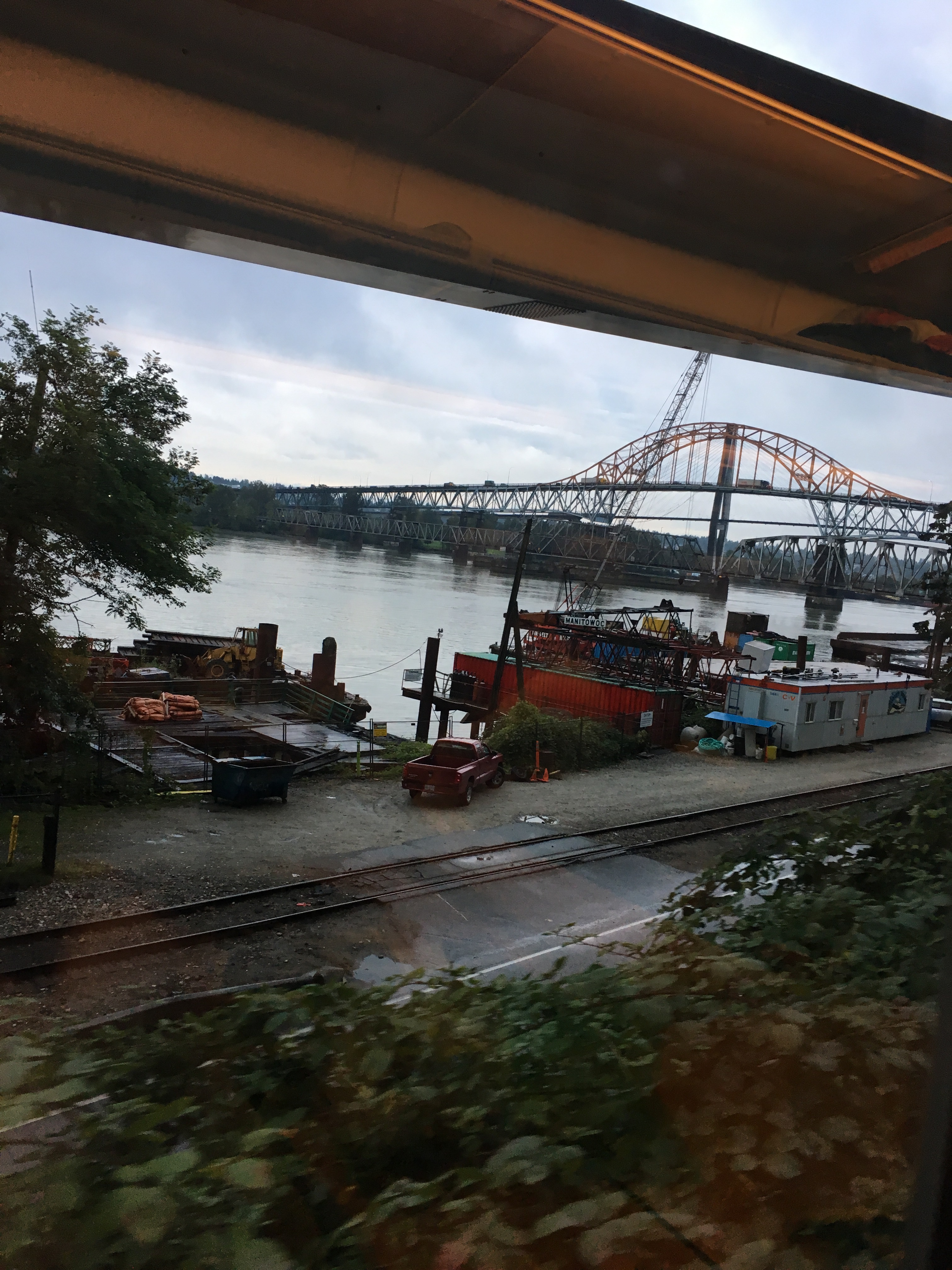
We woke up at 4:30 to catch a 6:00 train. Why, You ask? Because Vancouver is in Canada, which is a different country, and it takes a long time to make sure a whole trainful of people fill out the right forms and have their passports.
I realized that as early as 4:30 was to me, it was nothing compared to the mother of two young boys, one of whom had misplaced his stuffed toy. Mummy did a fine job calming him down, letting him know that the stufftie was indeed in the pocket of his raincoat, and was safely in the duffle, though he couldn’t get it just now.
We got to know other children on the train. There was a toddler whose first language was Spanish who enjoyed talking to the cows in the fields along the way. Long after the cows had been left behind, she kept saying “Yeeeeee Ha!” in an amazing variety of voices. Auntie Bridgett and Grandpa Nelson put in their earphones.
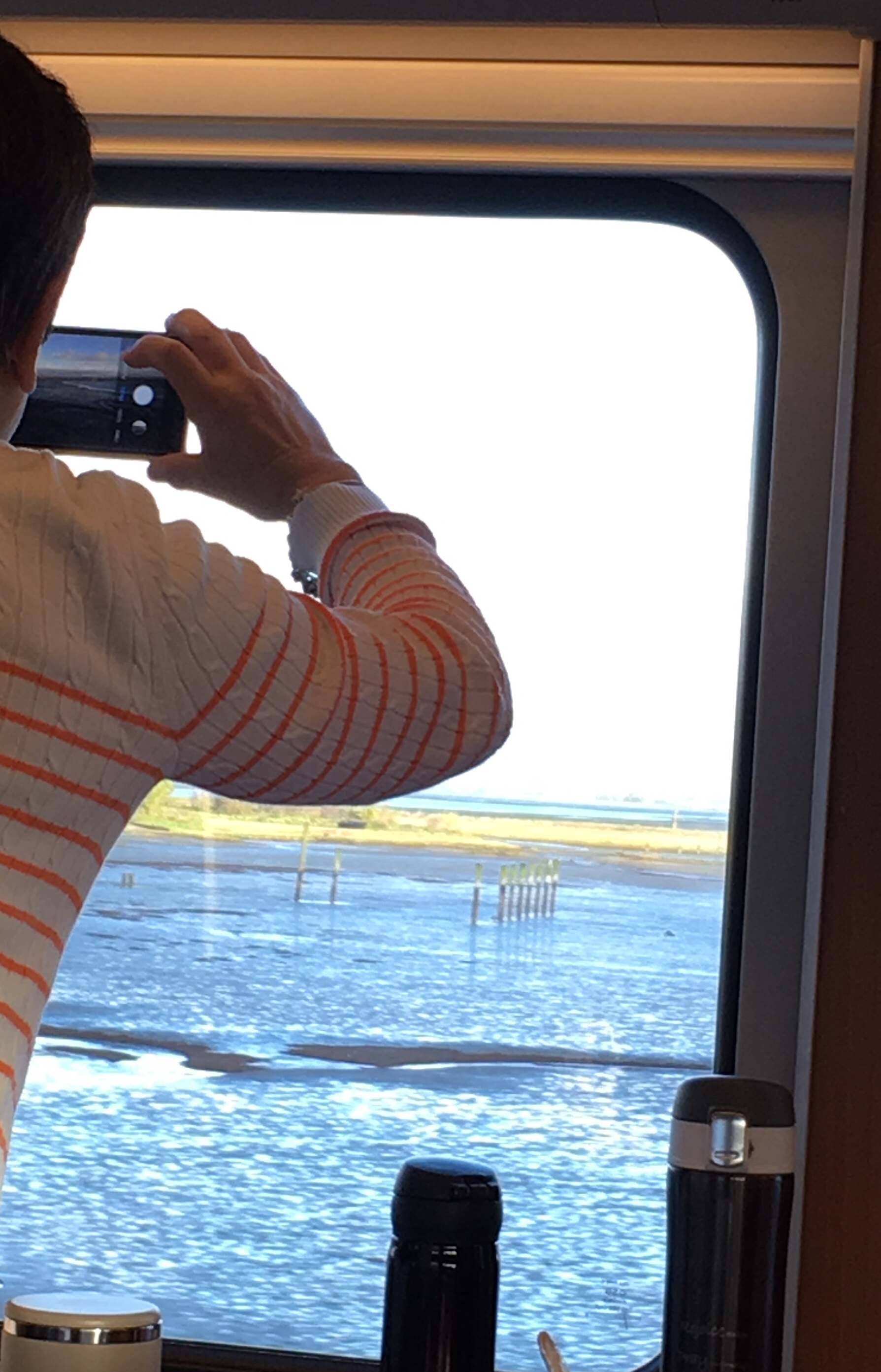
There were a group of Chinese ladies across from us, enjoying the views and taking lots of pictures. They spoke only Chinese to each other, but could read English from signs and booklets. It was fun watching them react with such surprise to things that are common sights to us, like lumber mills and mud flats.
Taking pictures of Mud Bay…. which is very muddy.
And finally we pulled into Seattle!
We walked up hill after hill from the King Street Train Depot to the Arctic Club. This wonderful building was built in 1917 by a group of men who had made their money in the Alaskan gold rush. They actually tried to join another popular men’s club in town, but were turned down because they were “new money”.
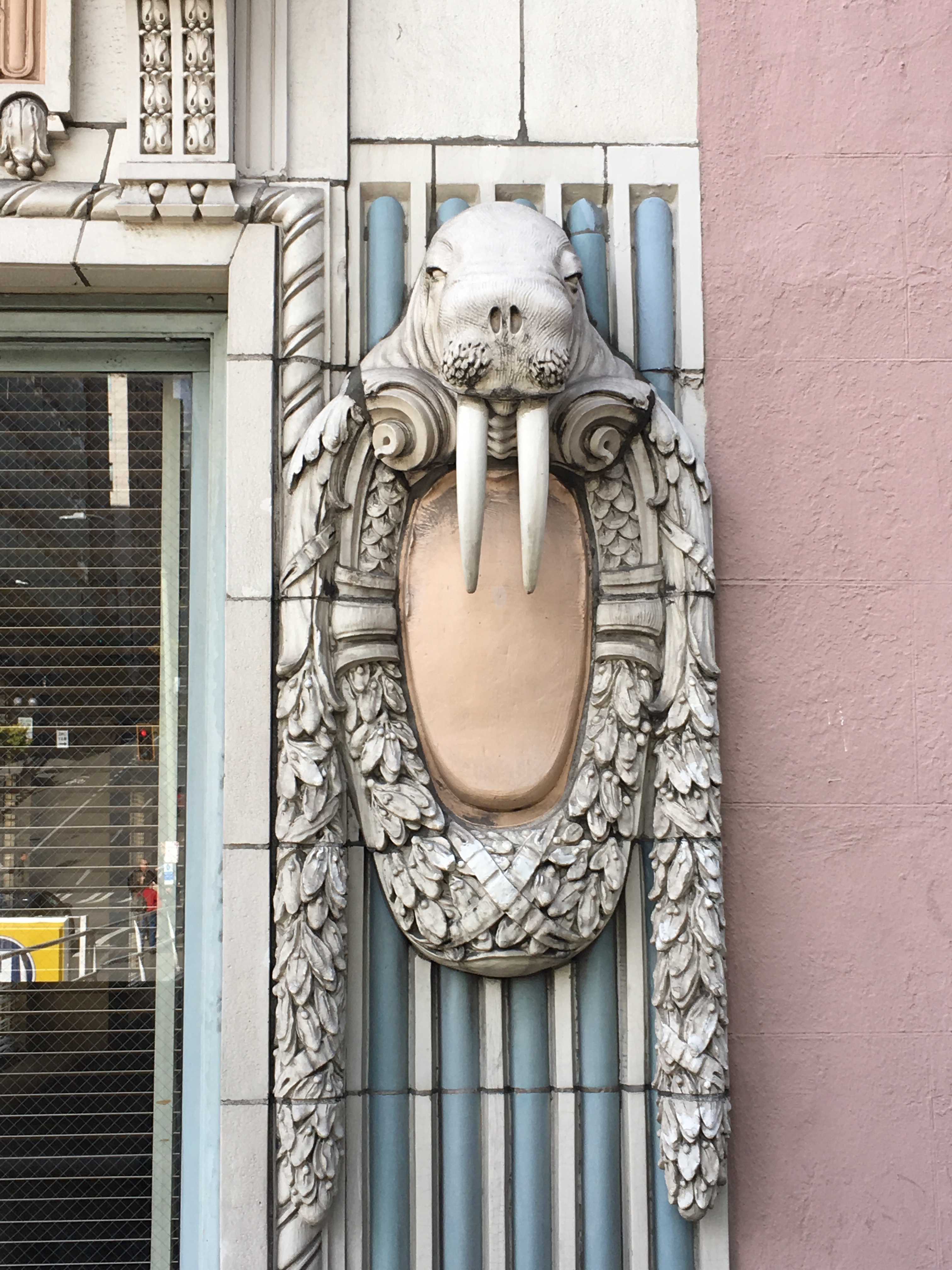
One of the dozens of walruses on the Arctic Club facade
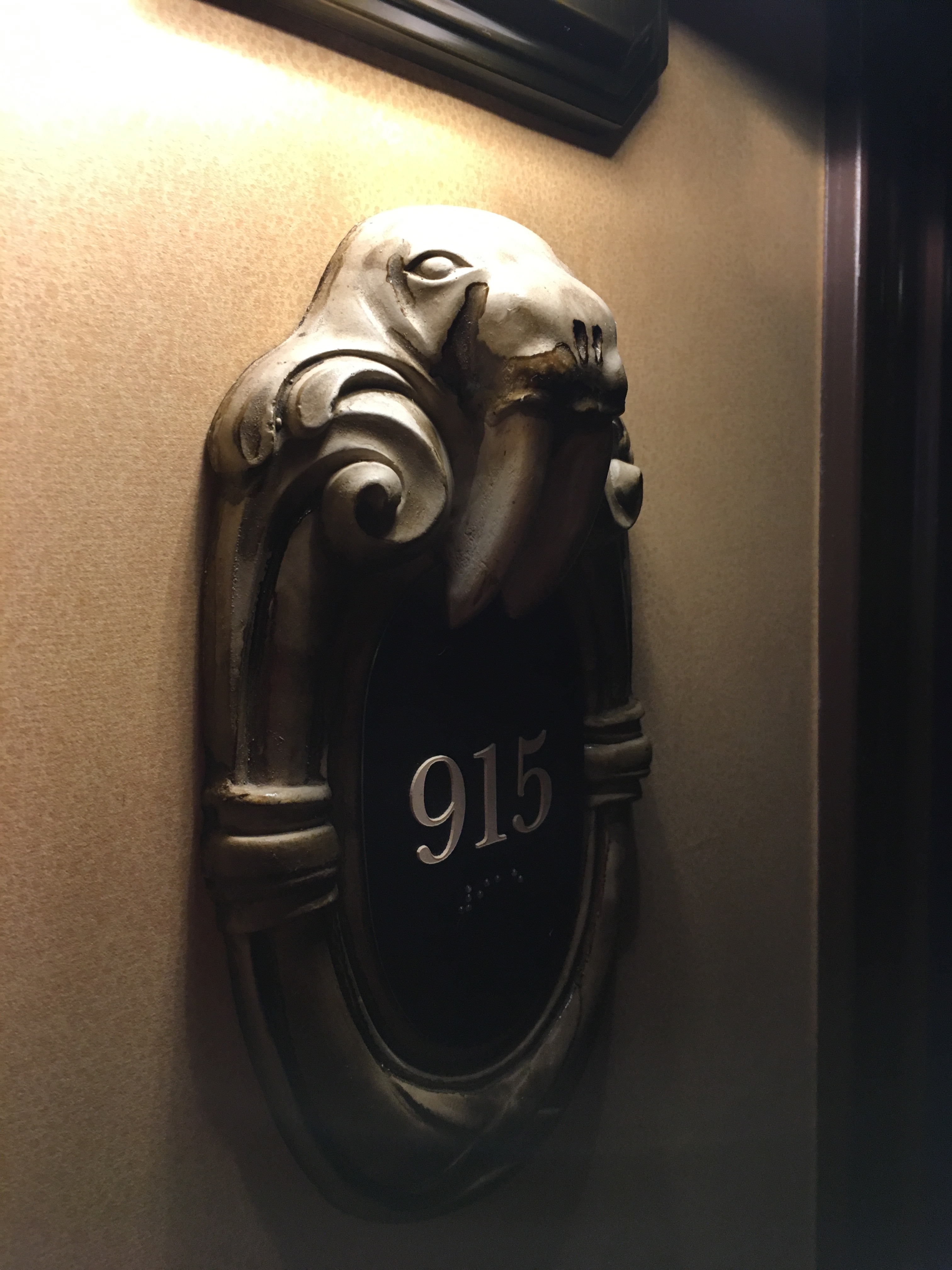
The building has walruses as decorations along the outside of the building and next to each hotel room door inside. They are on rugs, napkins , and coffee mugs.
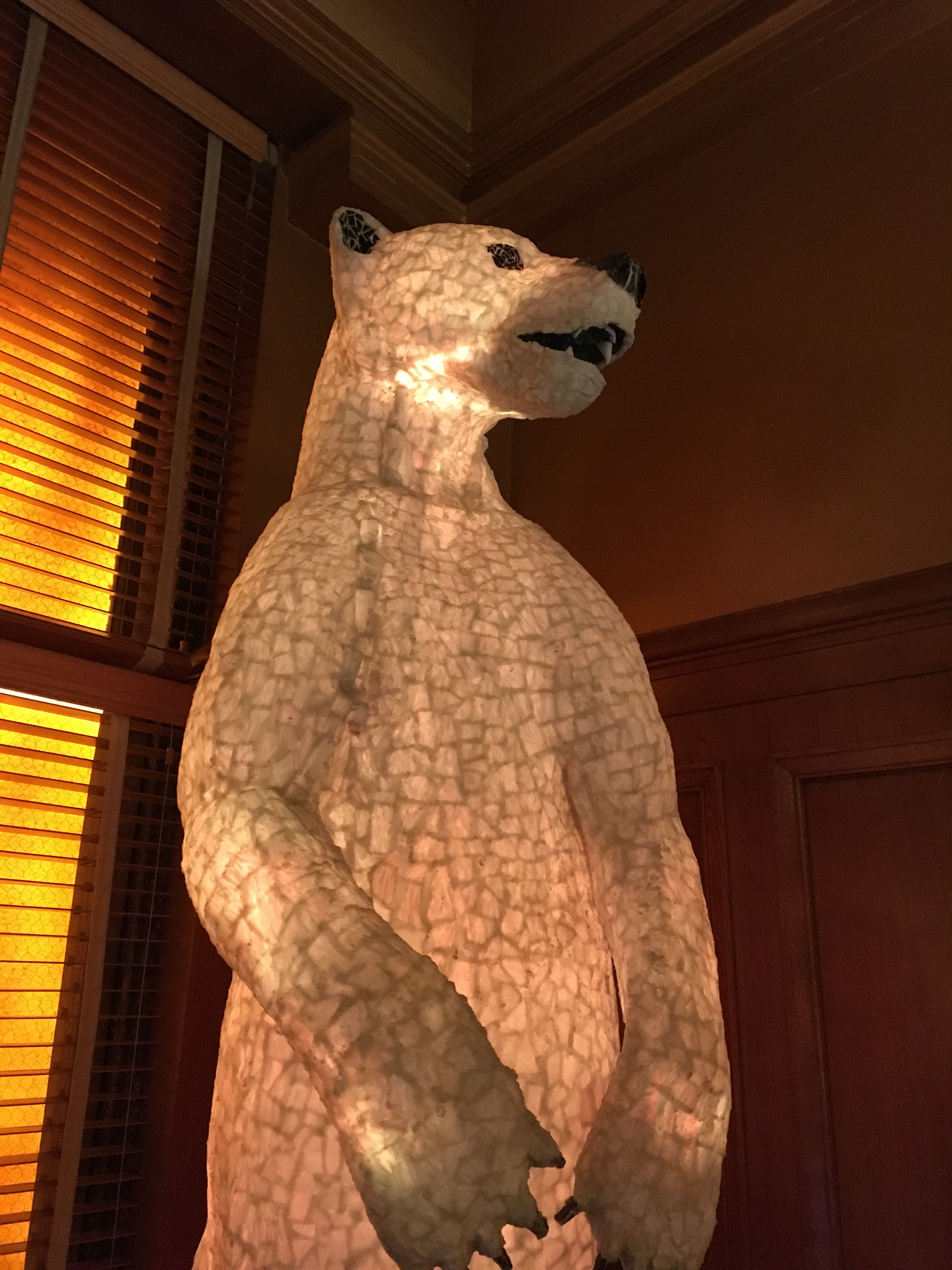
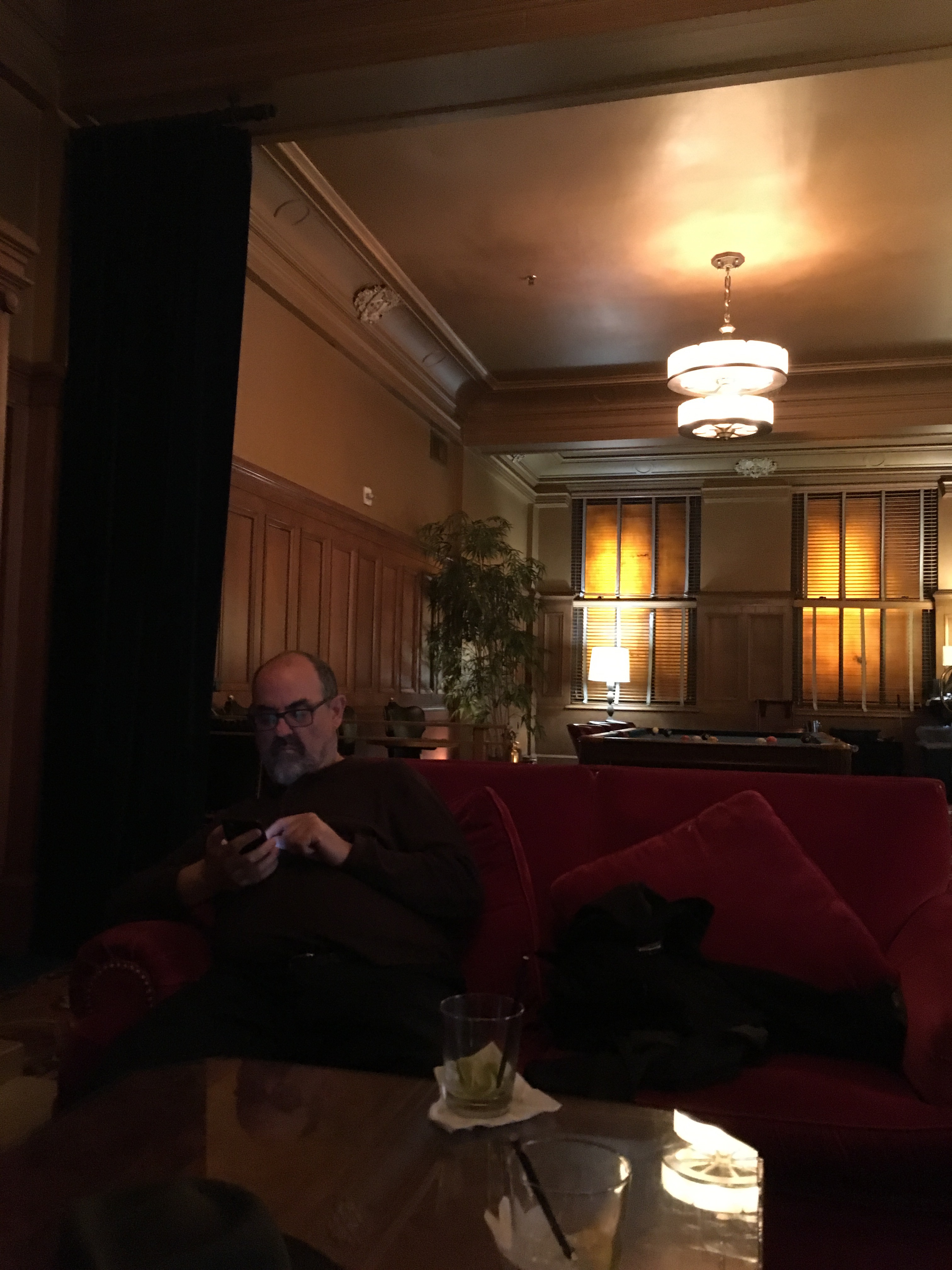
For a bit of variety, the lounge is decorated with a giant glass polar bear.
This looks like the sort of place Phileas Fogg, the hero of Jules Verne’s story ”Around the World in Eighty Days” would have stayed.
On our last day in this pretty, grey-ish city, we all had different things we wanted to do, so we went our separate ways for a while.
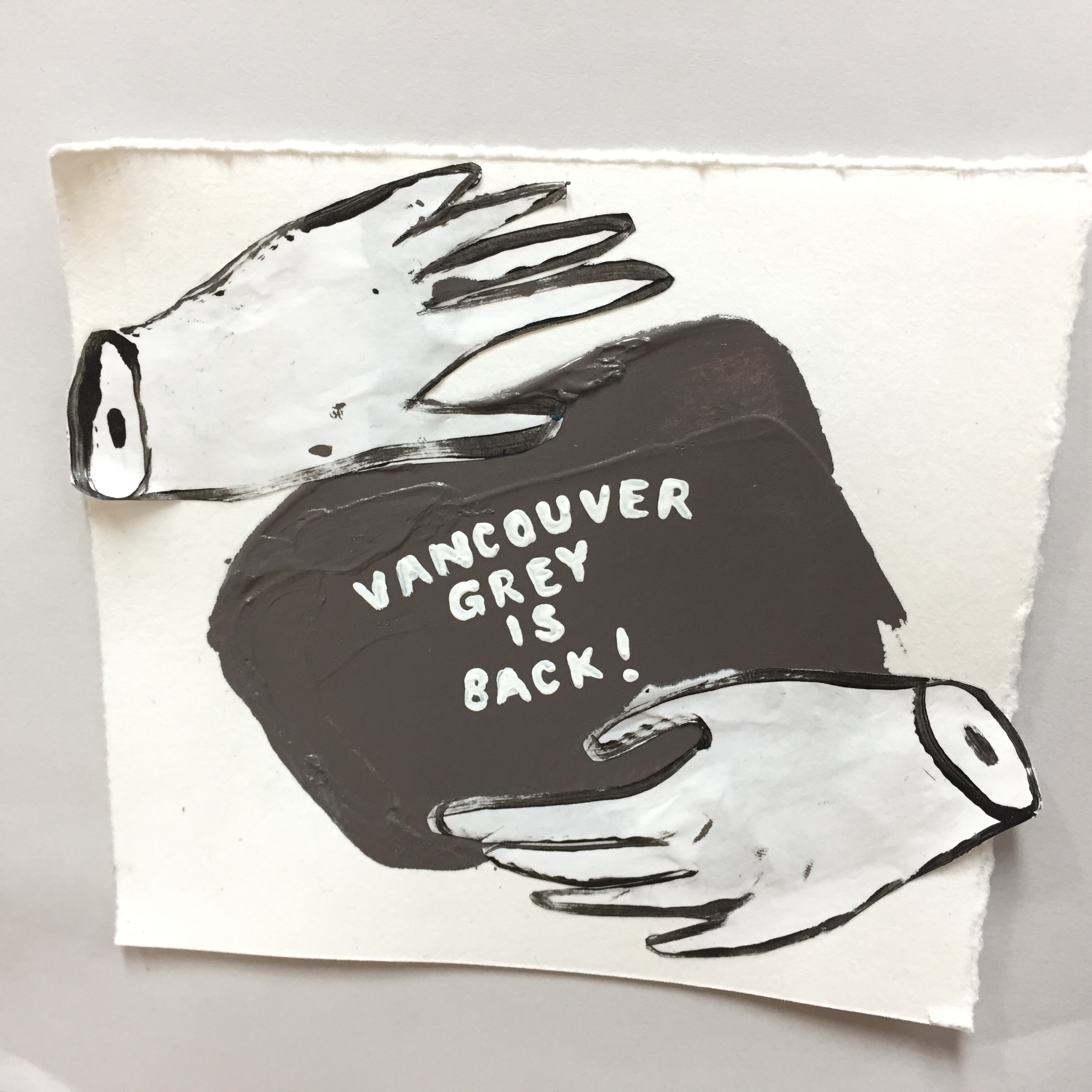
Grandpa Nelson and Auntie Bridgett wanted to return to Granville Island, to see the harbor and buy a color of acrylic paint mixed only here in Vancouver, called Vancouver Grey. Having spent some time here, I think they mixed it perfectly well.
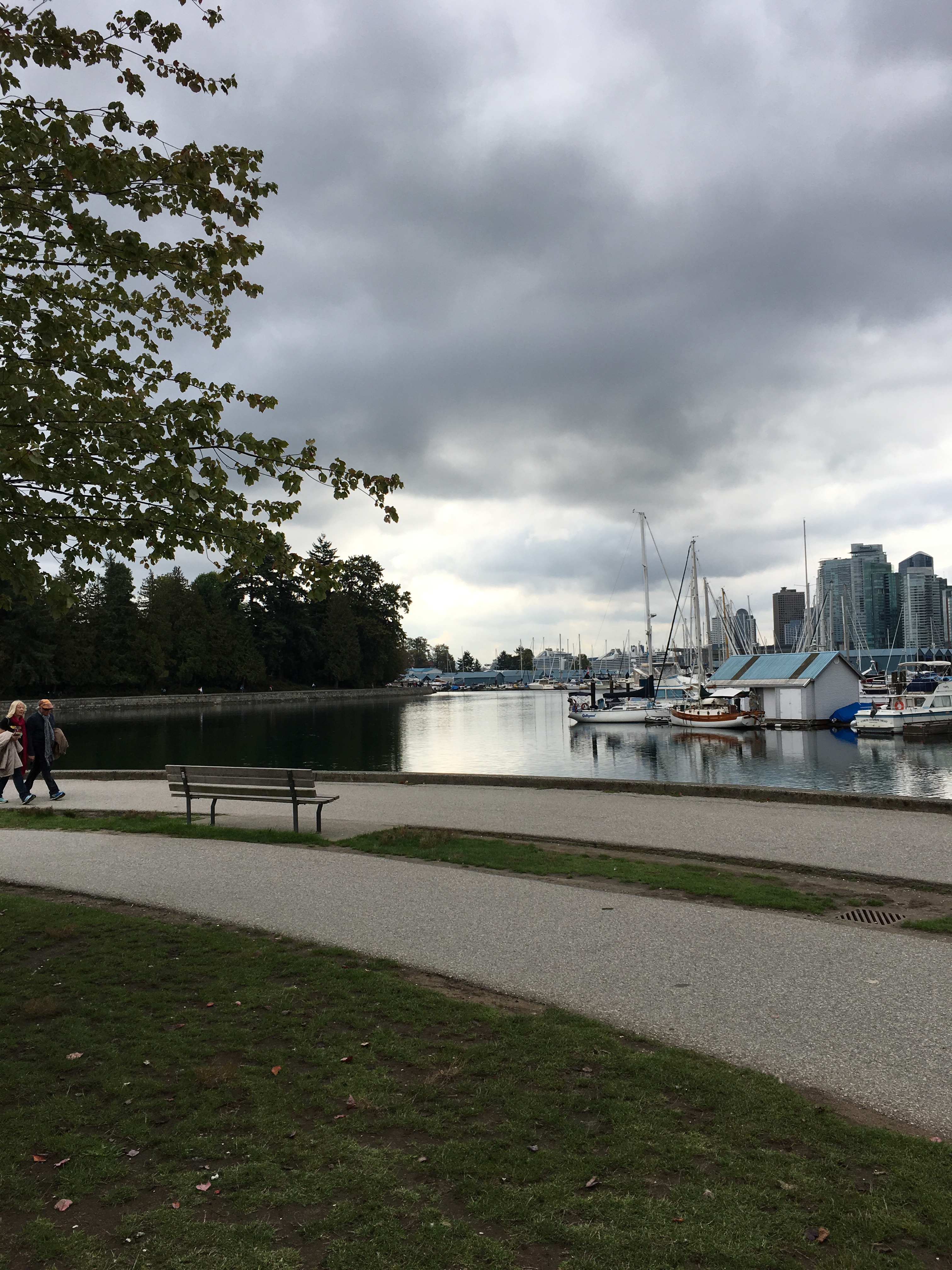
For my own last day, I chose to walk out along the path we had ridden on bikes, back into Stanley Park. I enjoyed being slow and looking at everything from every angle, waiting for the crows to be in just the right position.
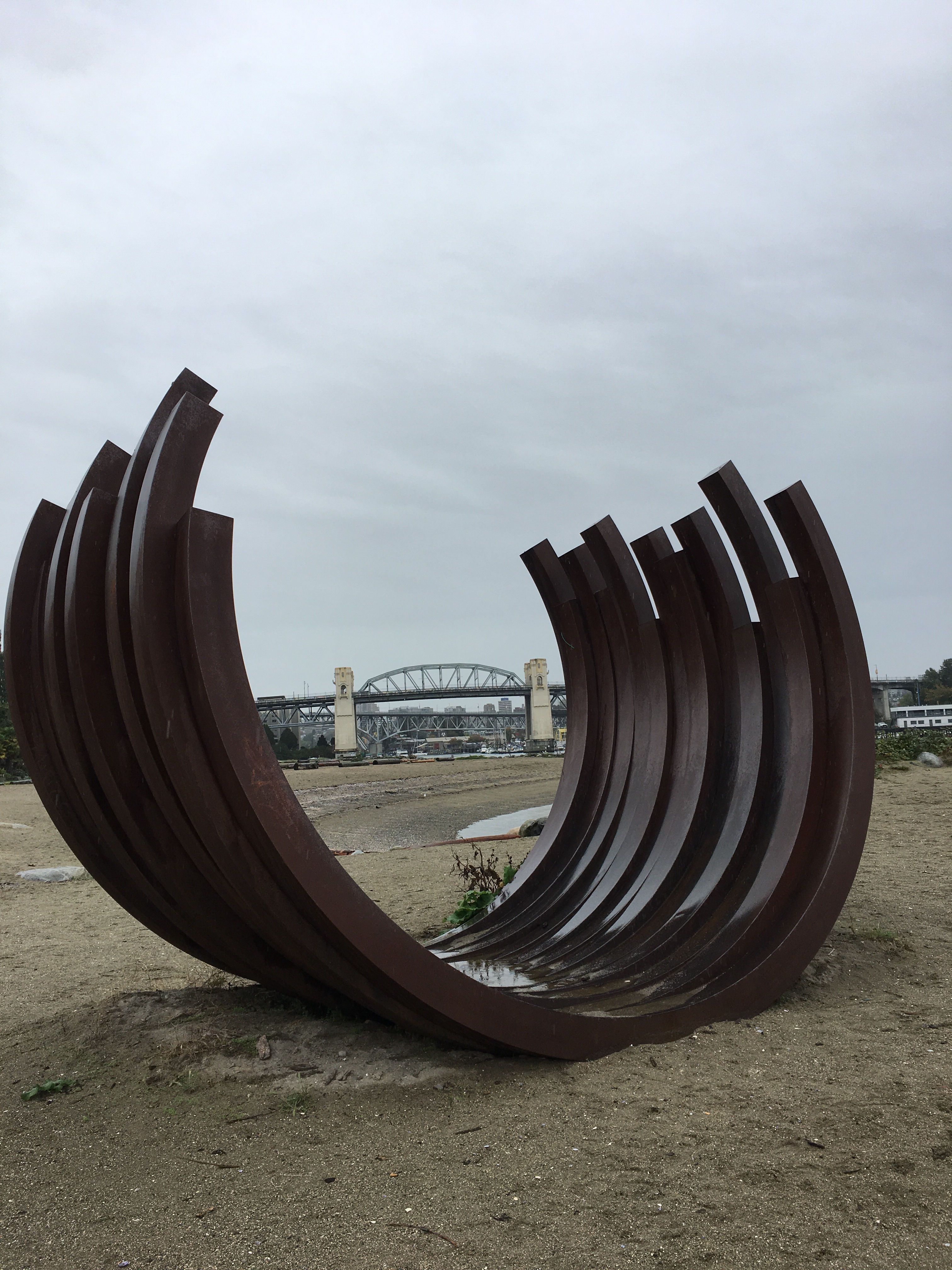
I stopped for a good look at memorials and sculptures off the path, like this “is it whale’s ribs or ship’s ribs?” sculpture placed right on the sand. Turns out, it is called “217.5 degrees x 13”, a reference to the curve itself. I like the way it frames different views of the harbor.
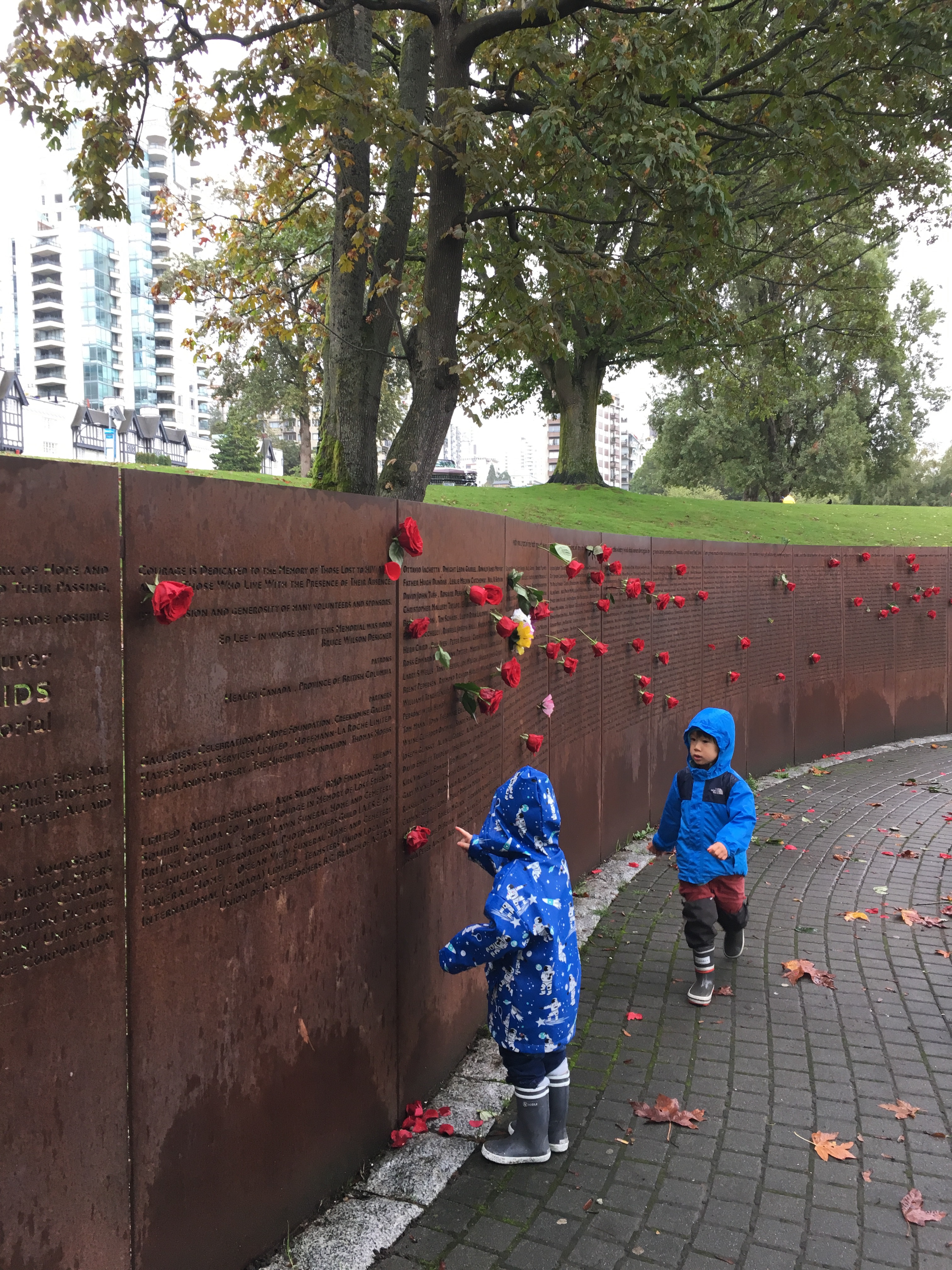
This is the AIDS memorial, with hundreds of names cut right through the steel, as well as quotes with living thoughts. There were some small children there with their mother, and she explained that these were people who had died and this was the way their friends chose to remember them, and aren’t the roses pretty? Then she mentioned ‘lunch’, and they dashed away.
Small folks appreciating the AIDS Memorial
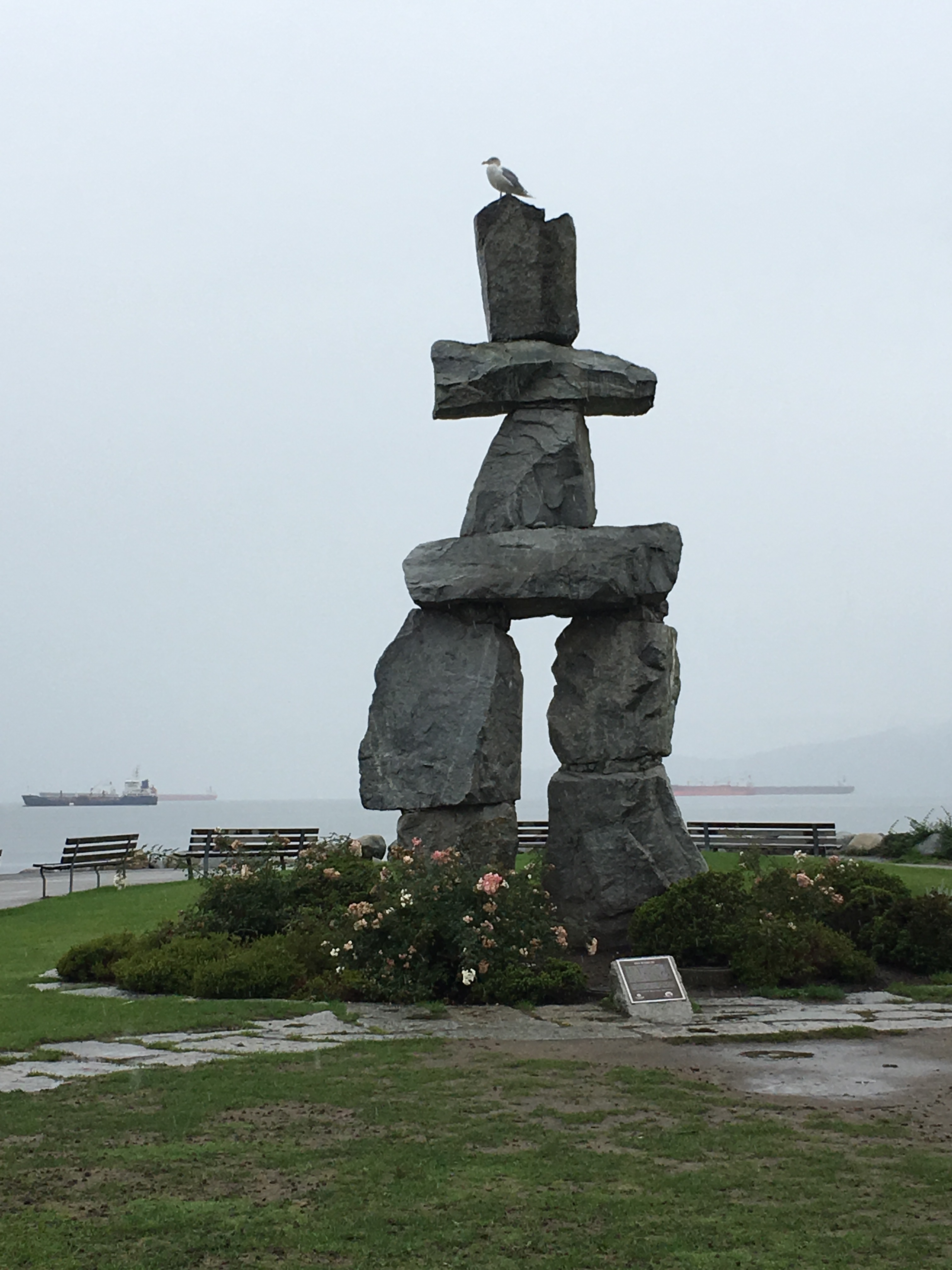
Further on, I saw Inukshuk, which was used as the symbol for the 2010 Vancouver Olympics. It was, fittingly, accompanied by a seagull.
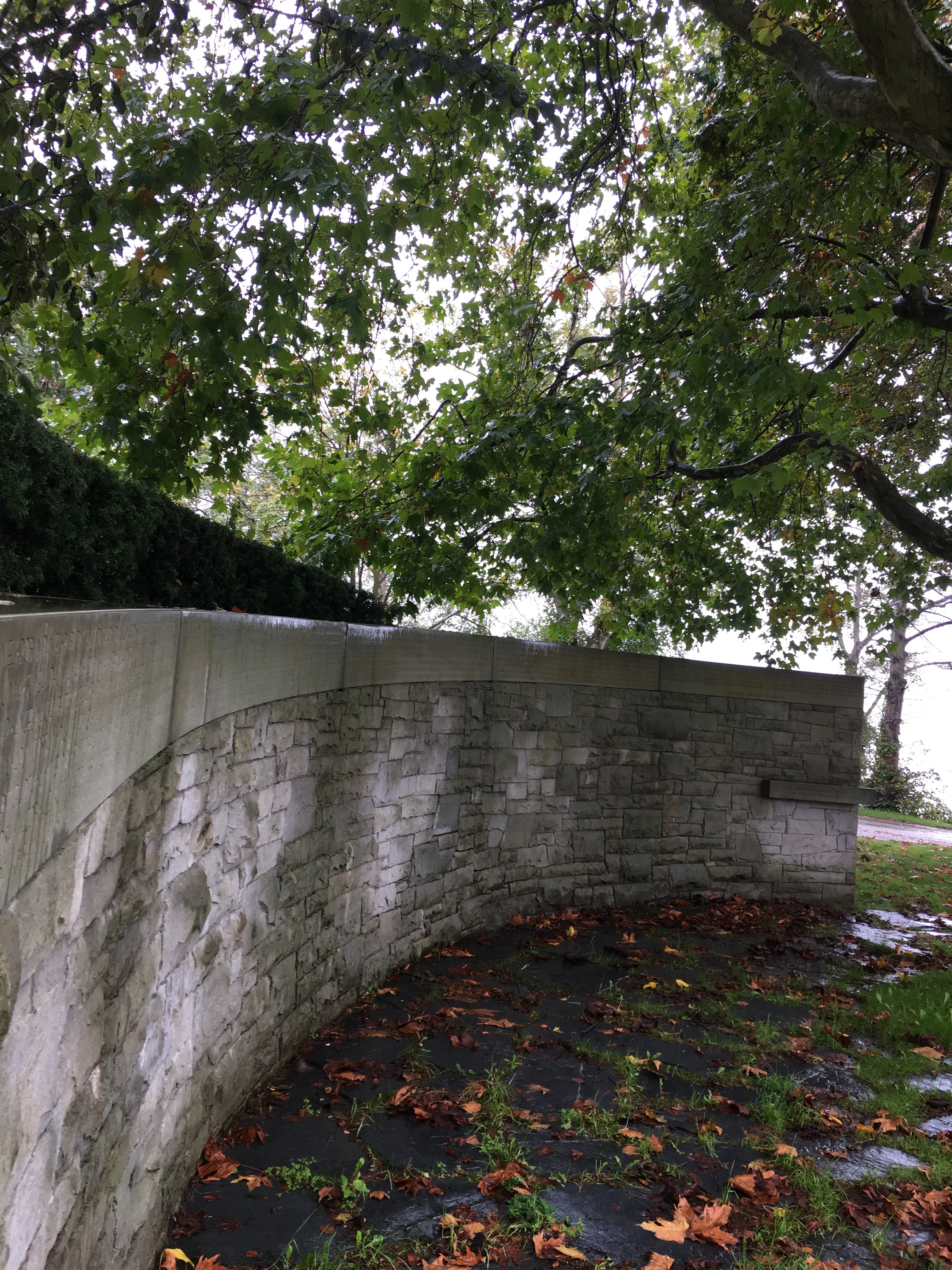
I found this memorial to Air India Flight 182, which was destroyed by a terrorist bomb in 1985. The stone wall, which symbolizes the interrupted flight path, was engraved with the names of the people killed. It was understated, sad, and lovely.
Memorial to Air India Flight 182
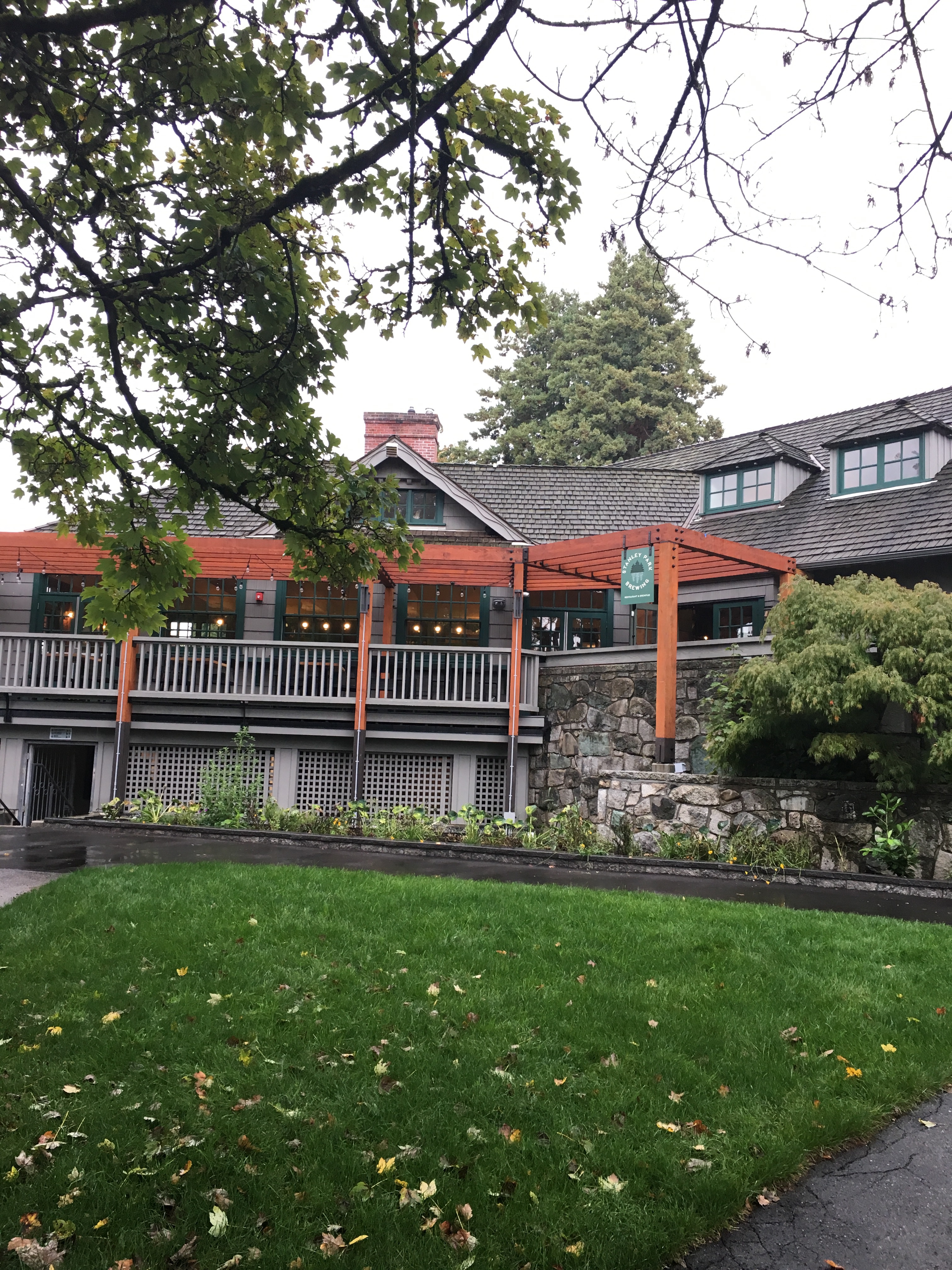
At that point, I realized that I was hungry as well as sad, and needed lunch. I found the Stanley Park Brewing, which besides dozens of locals beers, offers great lunches! I had a salad with chicken and a delightful hard winter wheat ale.
Stanley Park Brewing
I continued back into town, found Auntie Bridgett and Grandpa Nelson, and we all hung out until an early bedtime. We had a 4 AM wake-up to catch the train!!
Did you know they perform Shakespeare here in Canada? It makes sense, really. Canada was part of England (in the same way America used to be) for a long time, and Shakespeare himself was English.
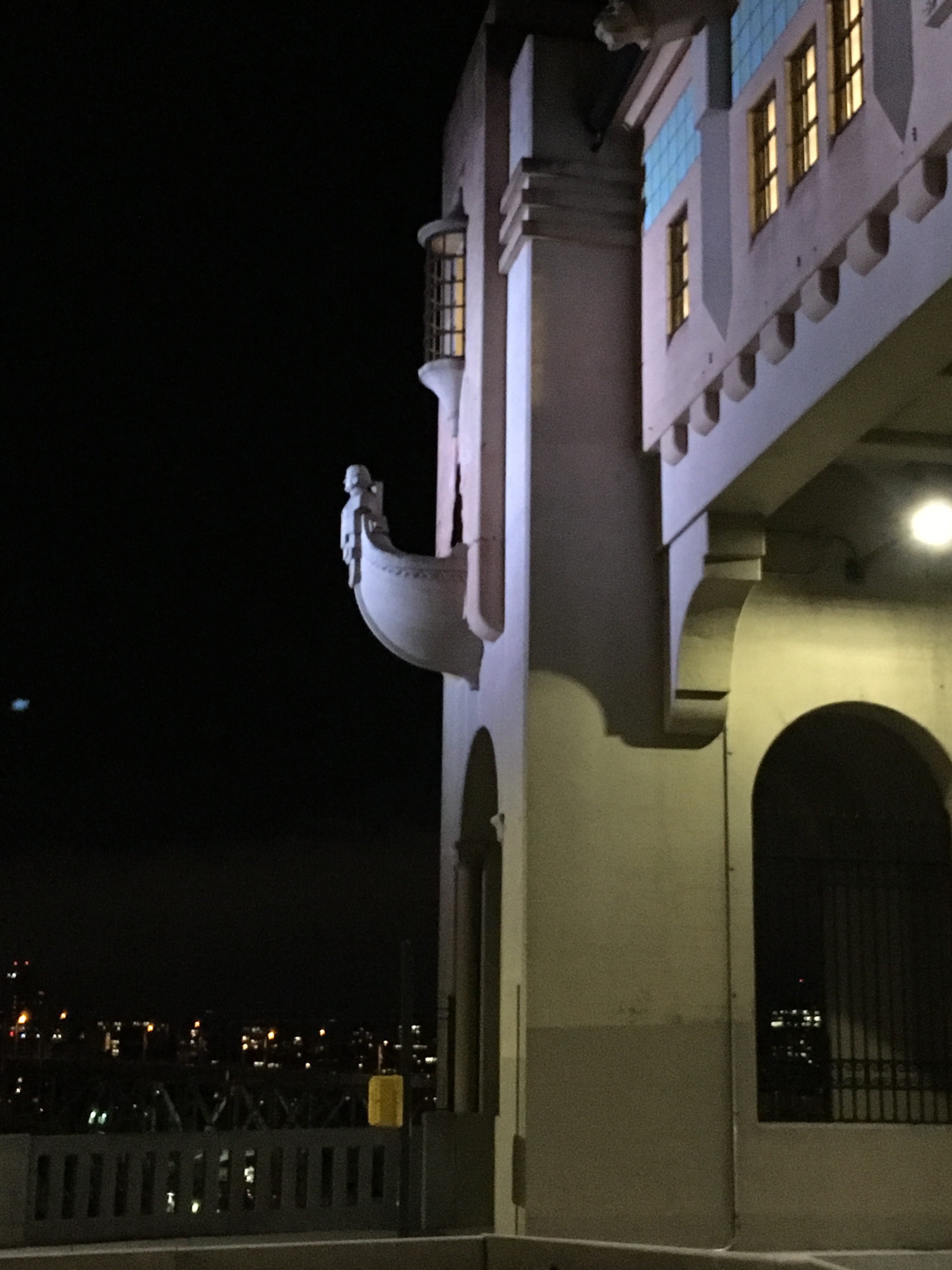
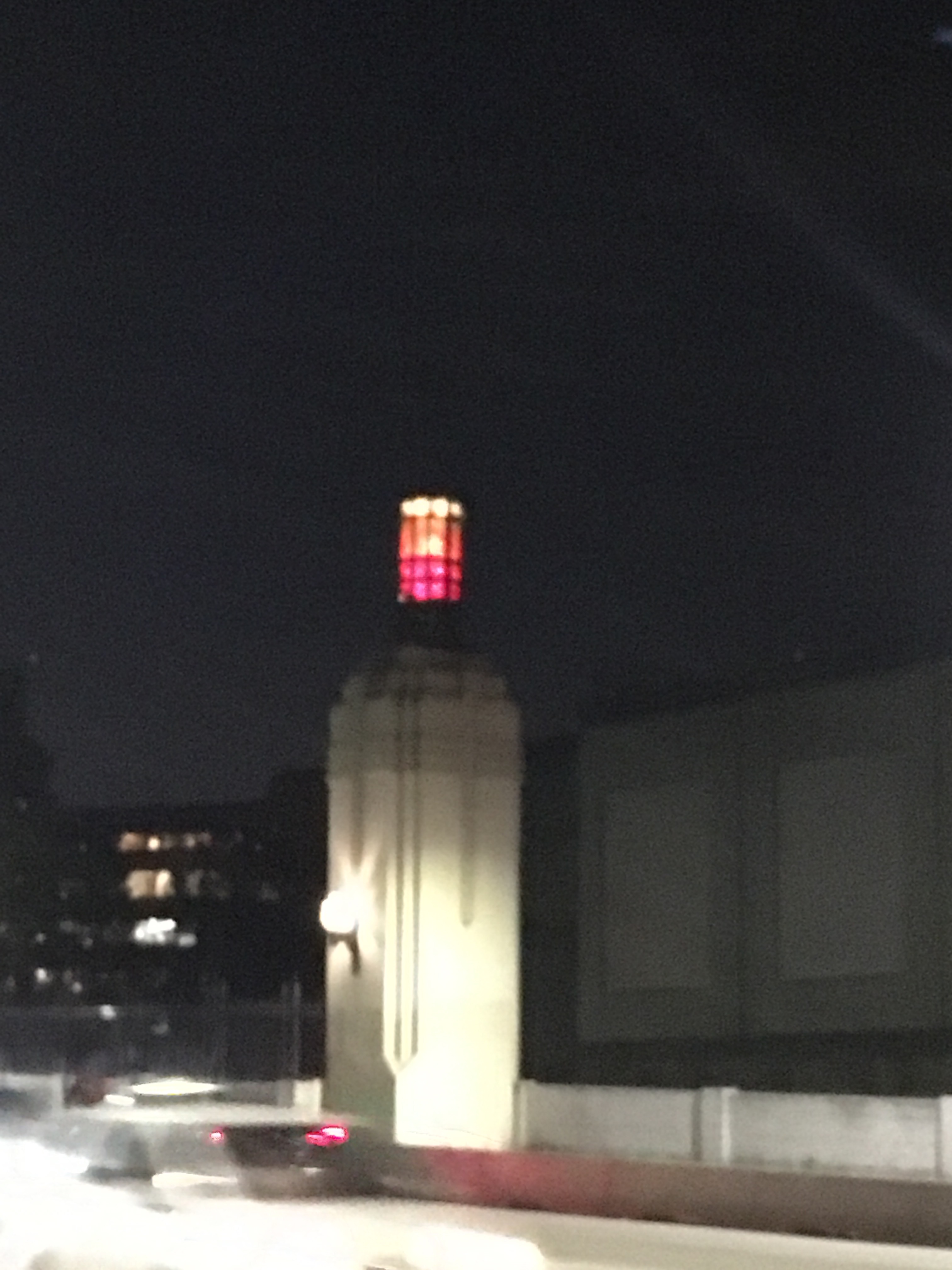
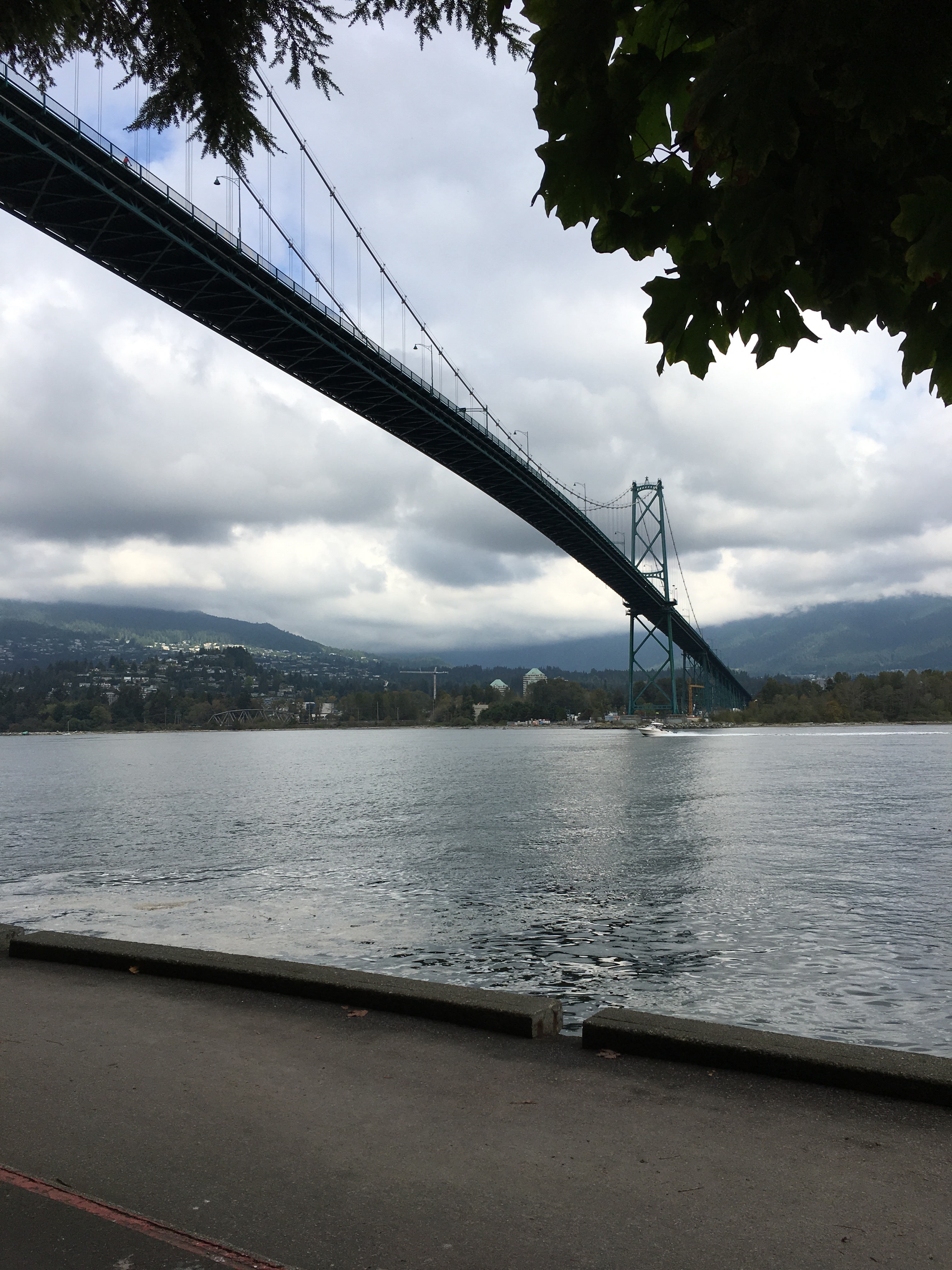
So, of course, we went to see it! To get there, we walked across the Burrard Bridge. This bridge was built in 1932 and dedicated to an English Military hero. It is beautiful for walking, and nicely lit by large, bonfire-colored lamps, which were designed to honor the World War One soldiers who kept warm by bonfires.
Lovely, flickering lanterns
Across the bridge we found Vanier Park, which has a small astronomical observatory and, for the summer, giant tents! The Bard in the Beach is really a Shakespeare performance in these tents. The play we were there to see was The Taming of the Shrew.
Where the magic happens
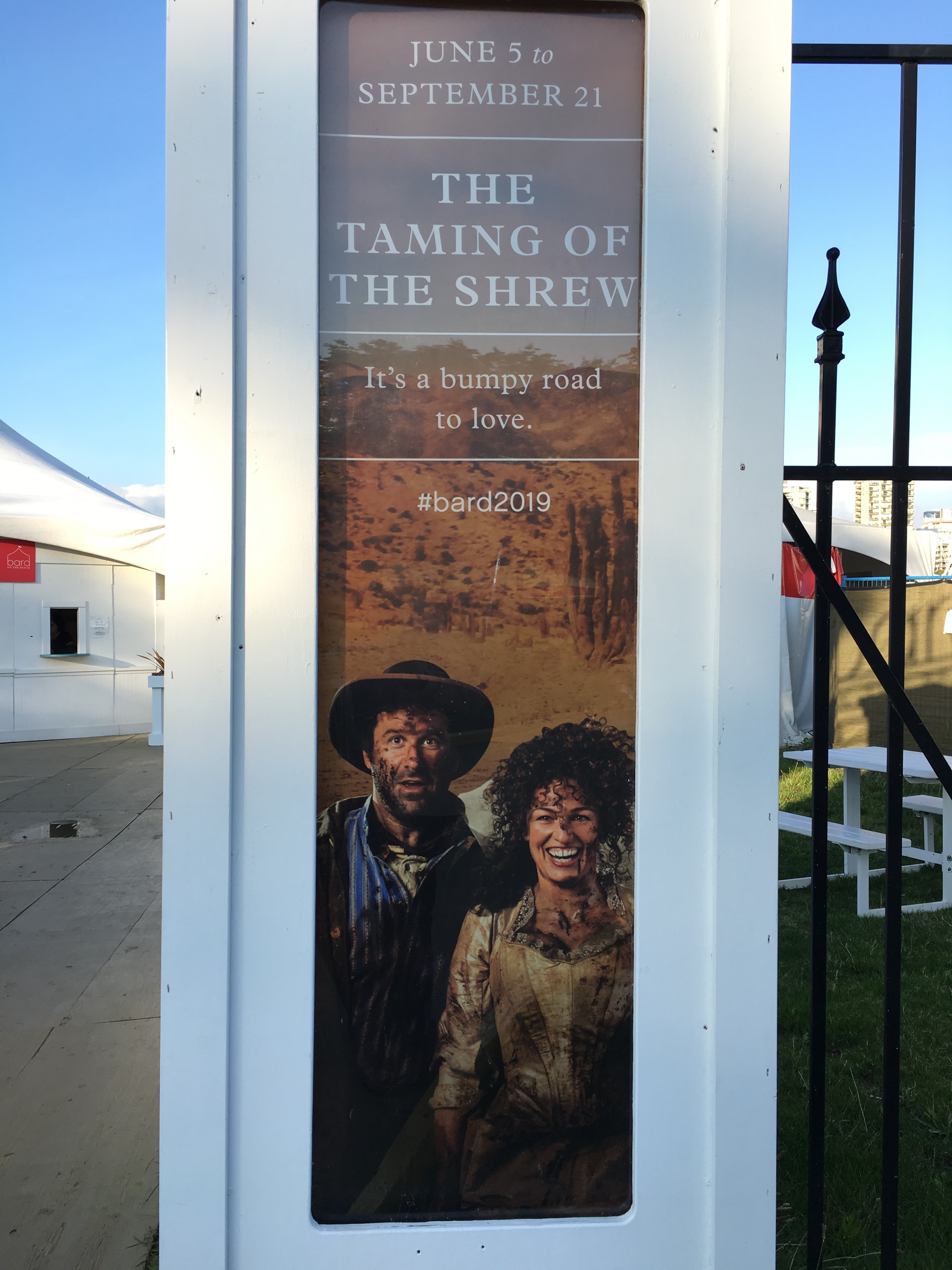
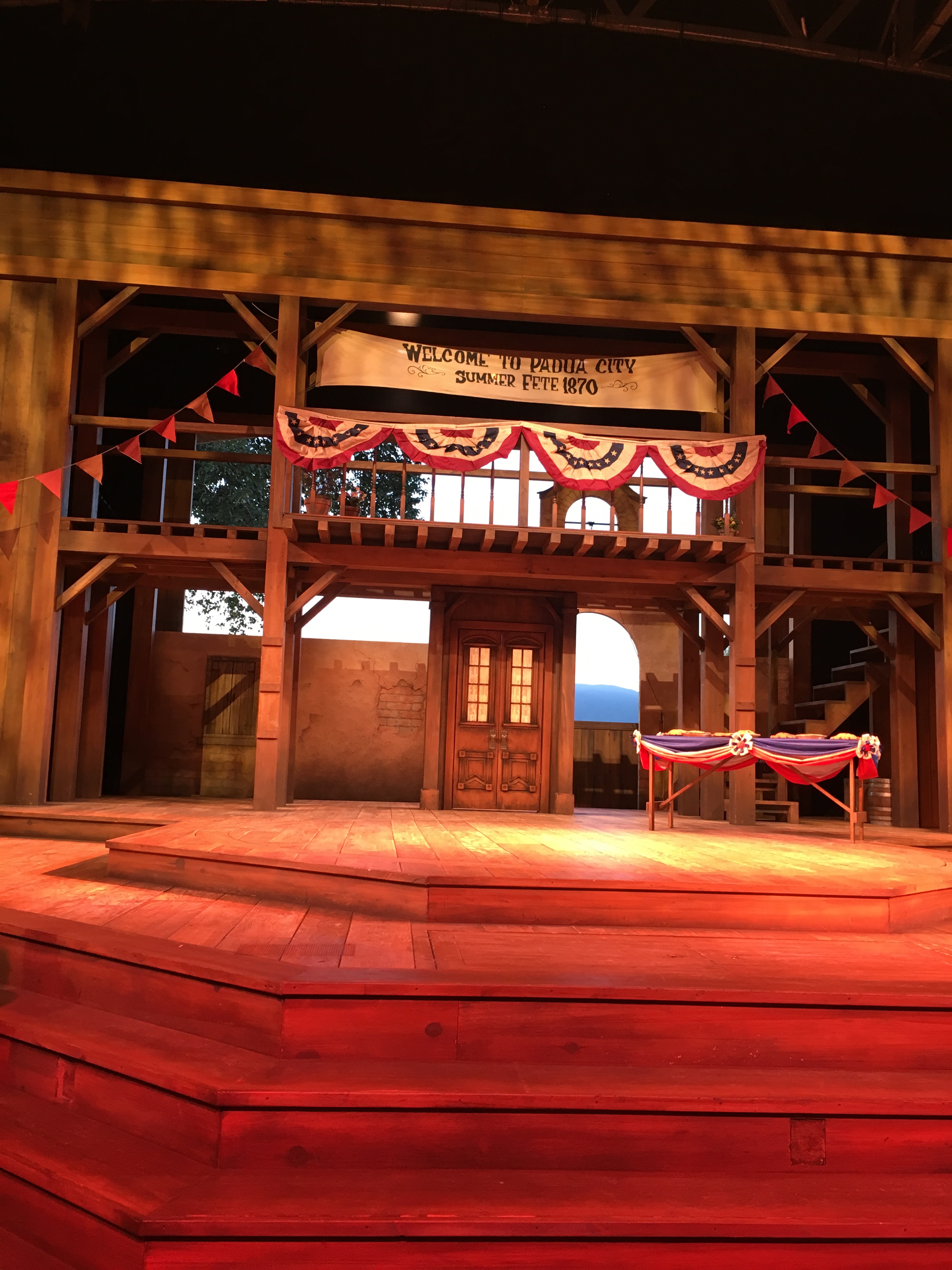
Many directors will set Shakespeare plays in different times and places, and this time, Katarina and Petruccio were battling it out in the old American West of 1870….yep, Padua City, West of the Pecos.
Poster gives you the idea….
You know I didn’t take pictures during the performance, because that is rude, but the sets and costumes were delightfully rustic, and the dialogue changed just enough to give it a western flair. For example, when Bianca’s suitors were bragging about their wealth, Lucentio said his father owned three railroads that went straight from Pisa to San Francisco!
But the changes that made it fabulous were mostly what wasn’t said… the gestures and personalities of even the smallest bit player. One of the characters, who was a musician, hid behind his tuba during a gunfight.
The set of Padua City, 1870
But for me, the best bit of re-interpretation was that Kate’s “taming” was a ruse, a trick agreed upon by her and Petruccio. It was well played and hysterical, with our two newlyweds collecting the money from Petruccio’s bet about whose wife would be most obedient, and rode off like bandits. It was laugh-out-loud funny.
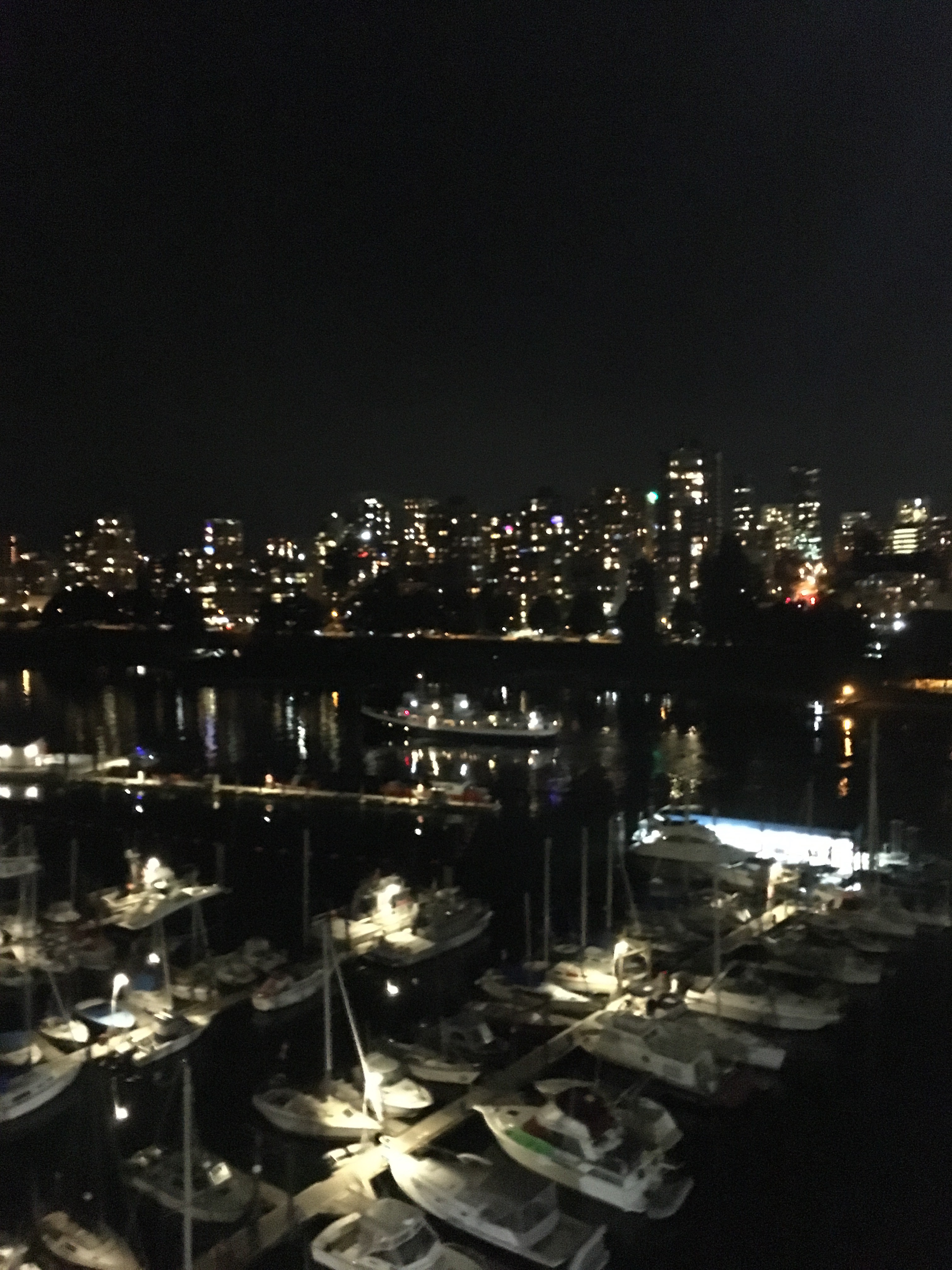
When the play was over and we had clapped ourselves silly, we walked back across the bridge and enjoyed the lights of the city under the cloudy skies.
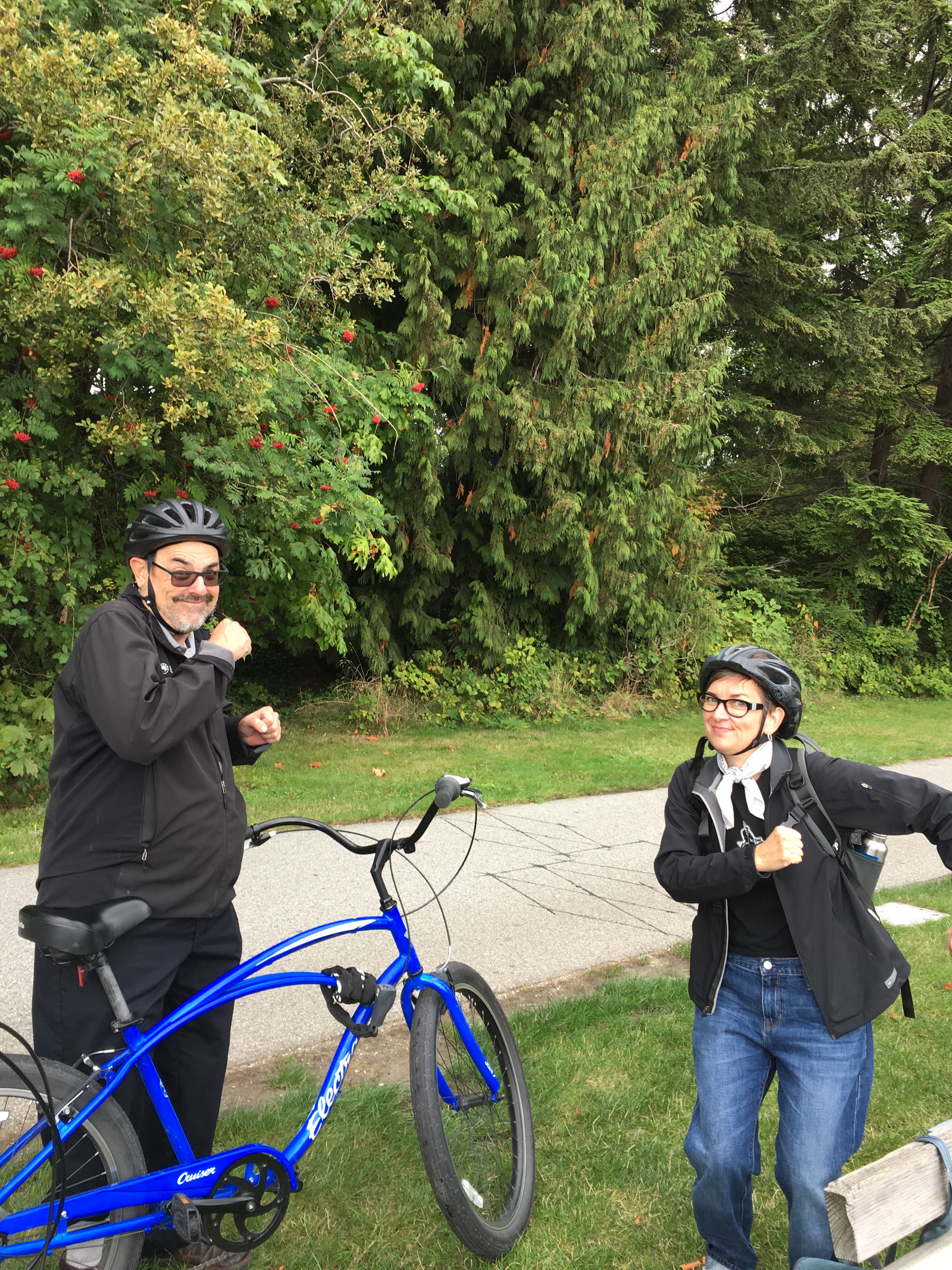
On Saturday, we went for a bike ride … a nice, long bike ride!
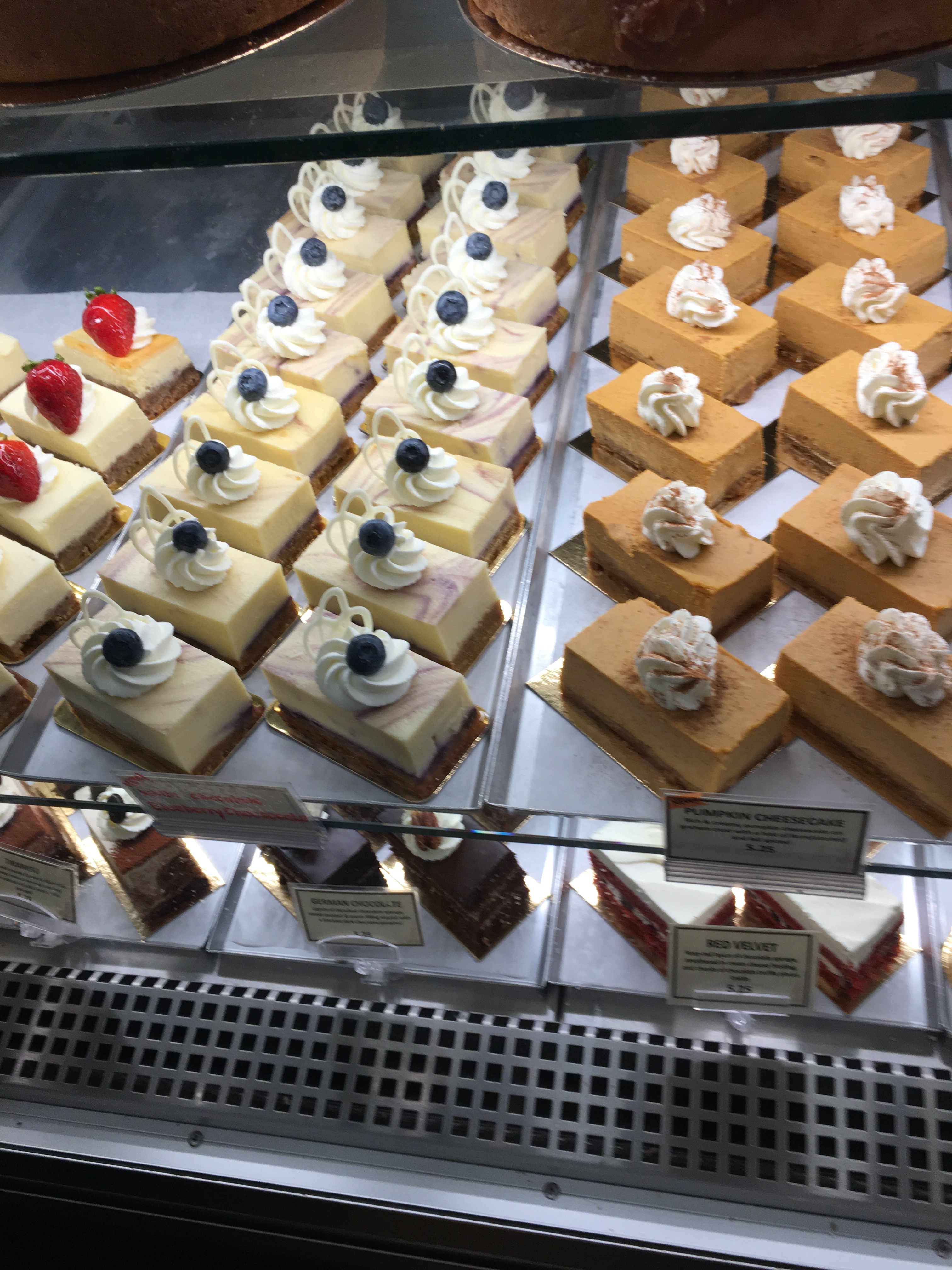
Lovely Patisserie at Breka
Auntie Bridgett and I had meusli and yogurt for first breakfast at the apartment, then we all walked to Breka for seconds. They have doughnuts for Grandpa Nelson and the coffee was very good, as well.
Harry Jerome, Champion Track Star
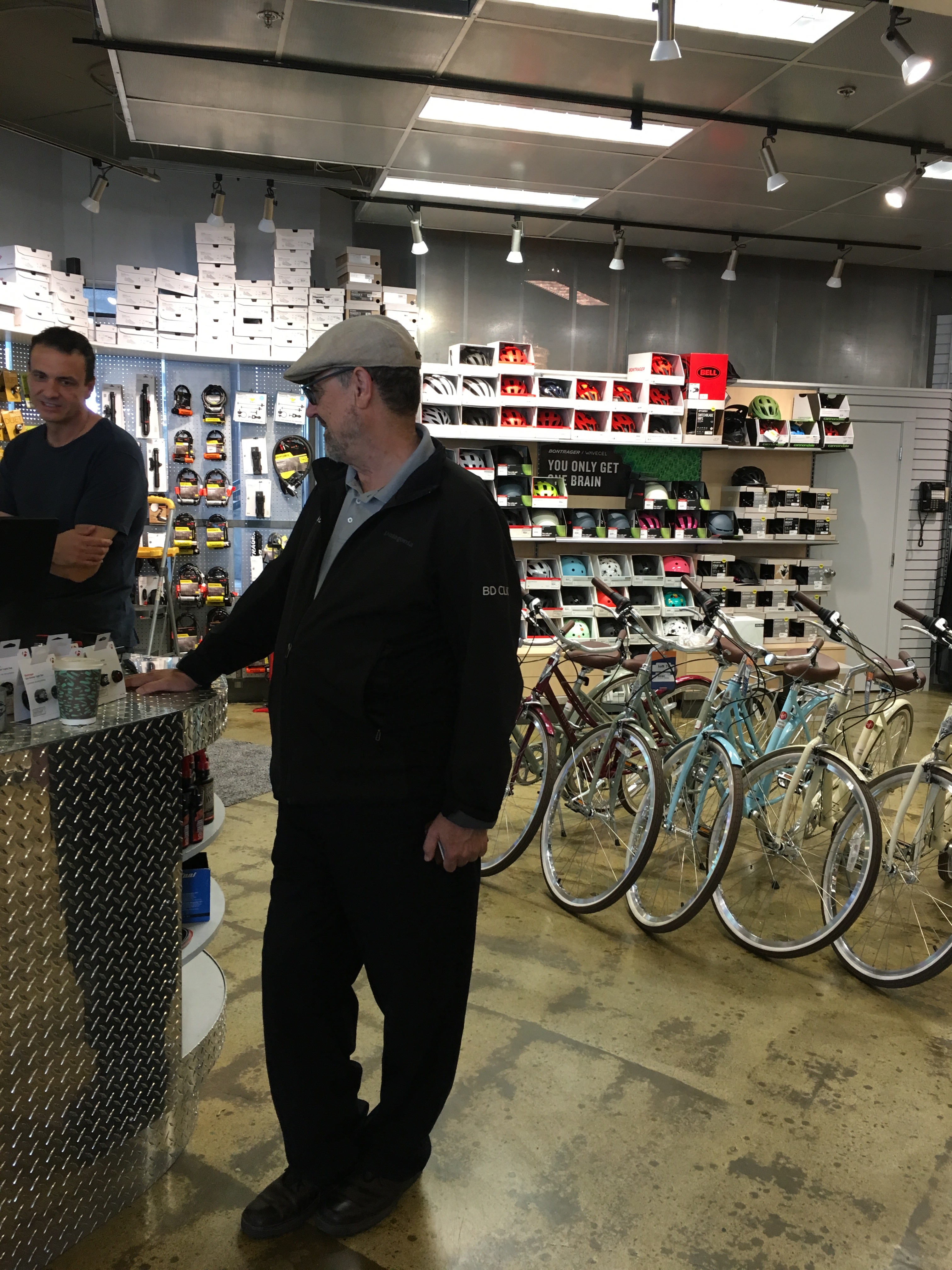
Then we walked the Pacific Sports Bicycles and some friendly folks rented us bicycles and helmets and gave us directions, and we headed off.
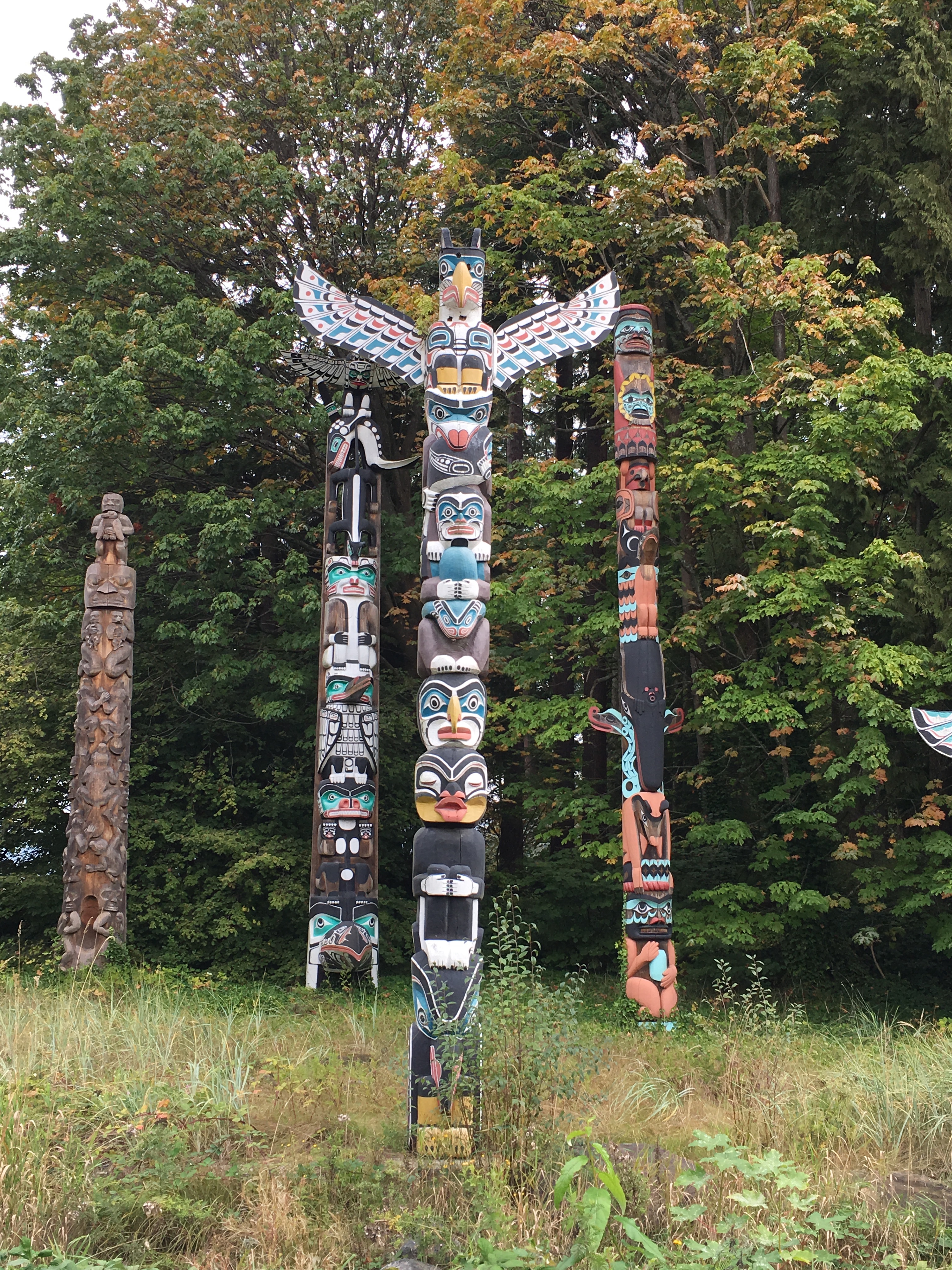
Getting set for the bikesFirst Nations Totem Poles
On Hornsby Street, which is the main road right through downtown, there is a dedicated bike lane! We felt so safe and easy, riding along without having to worry about being squashed by traffic. We rode past public art and beautiful old and new buildings.
and along the waterfront, all the way to Stanley Park.
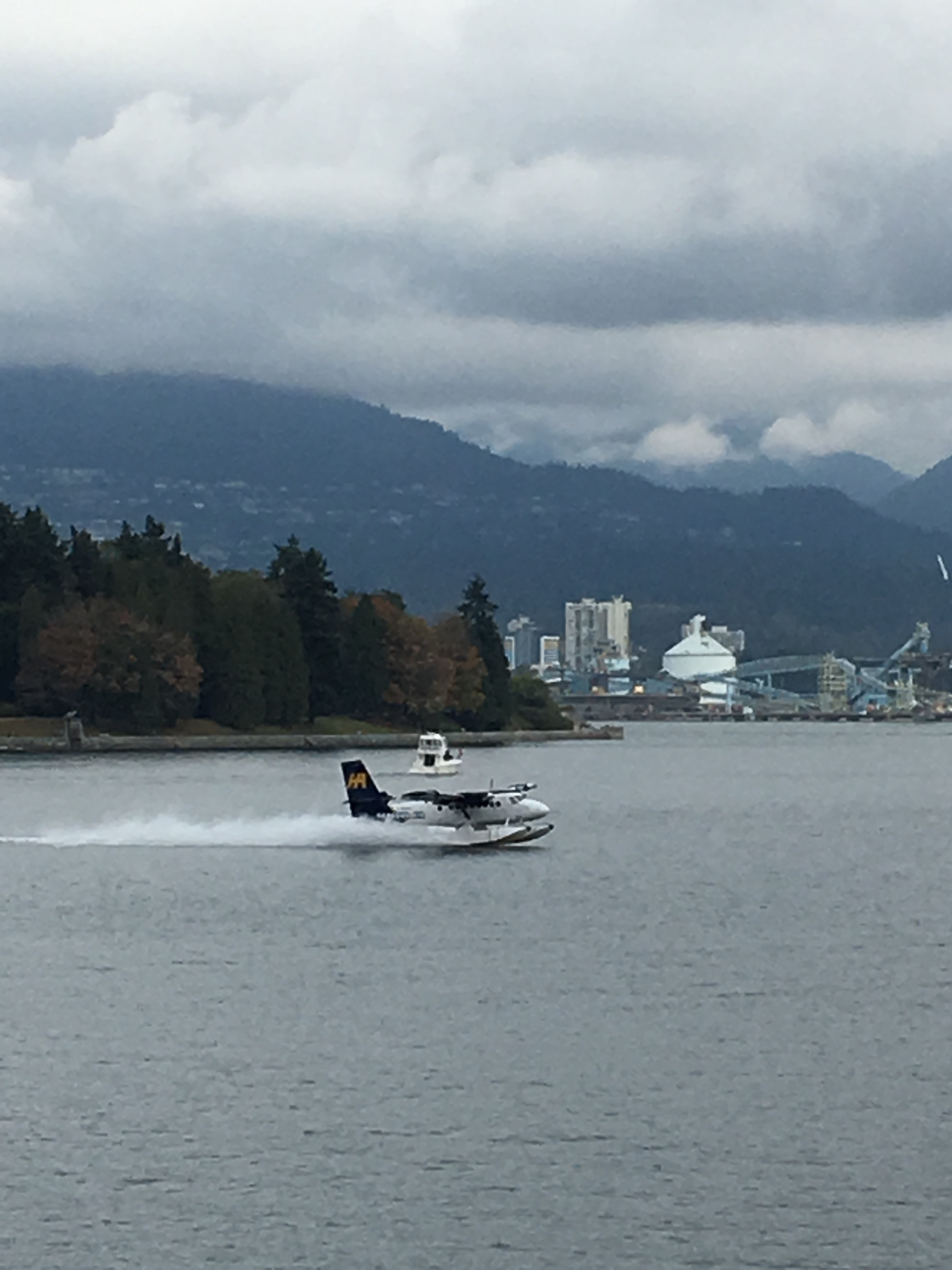
Seaplane landing!!!
In the park, we found that everyone else in the city chose today for their ride in the park, as well. There were actual traffic merging issues and crosswalks for pedestrians. Fortunately, good manners and smiles ruled the day.
The park and the city merged together very well, with just the right combination of views of high rise buildings and thick green forest.
There were views of historical statues and places, cute beaches if you wanted to get your feet wet, and places to buy snacks. We enjoyed fish and chips for lunch, then headed out of the park and into the city…
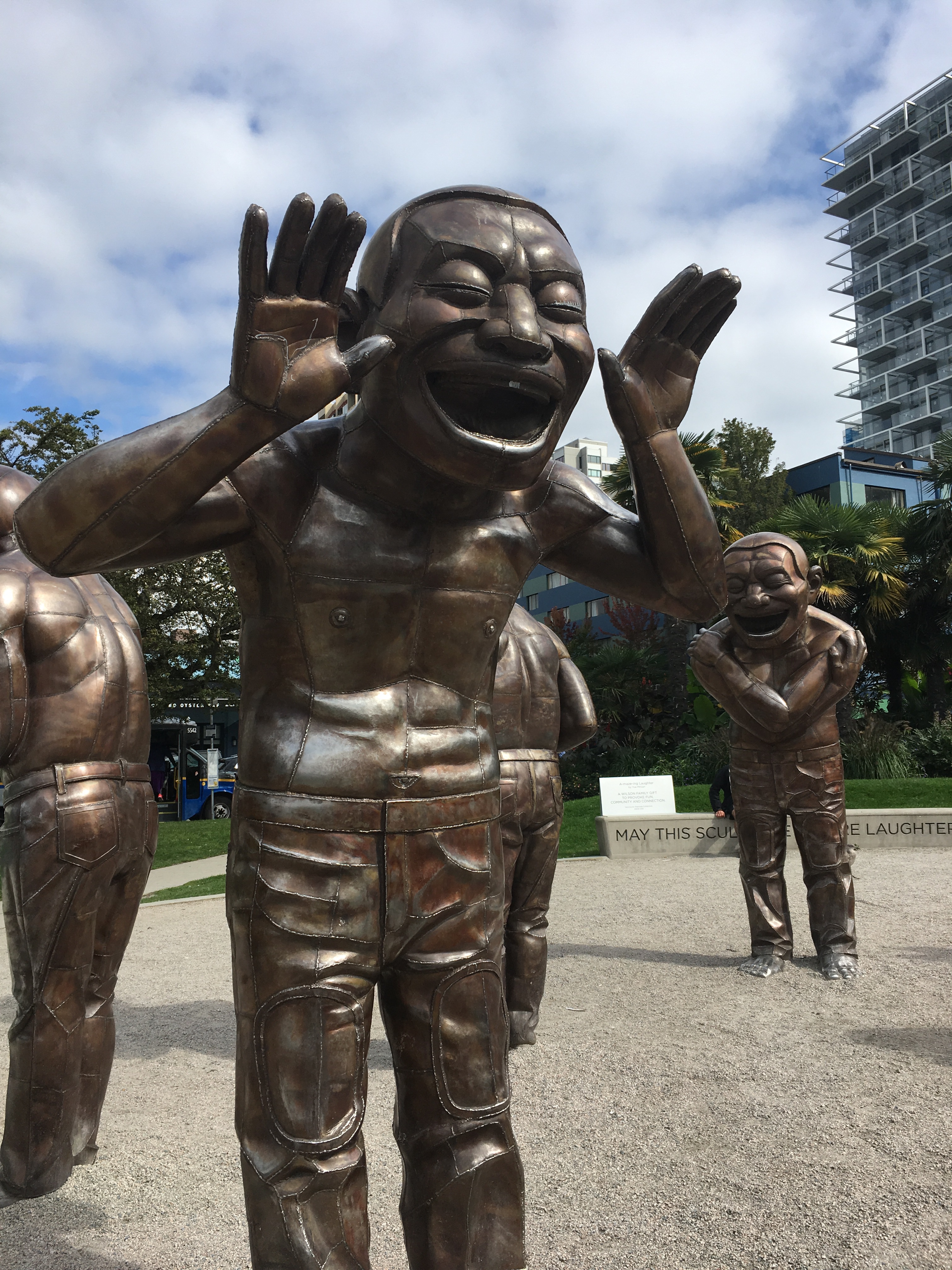
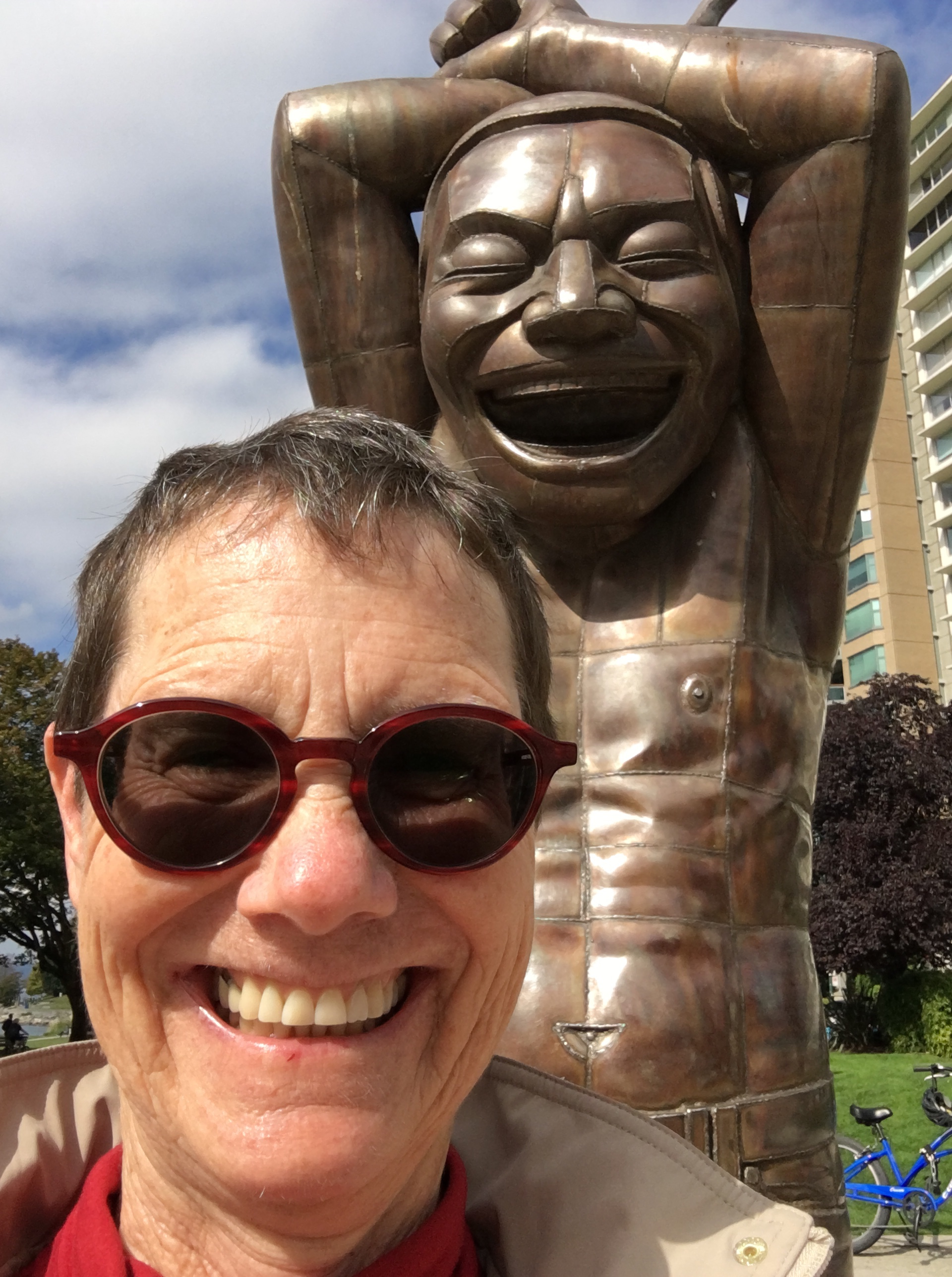
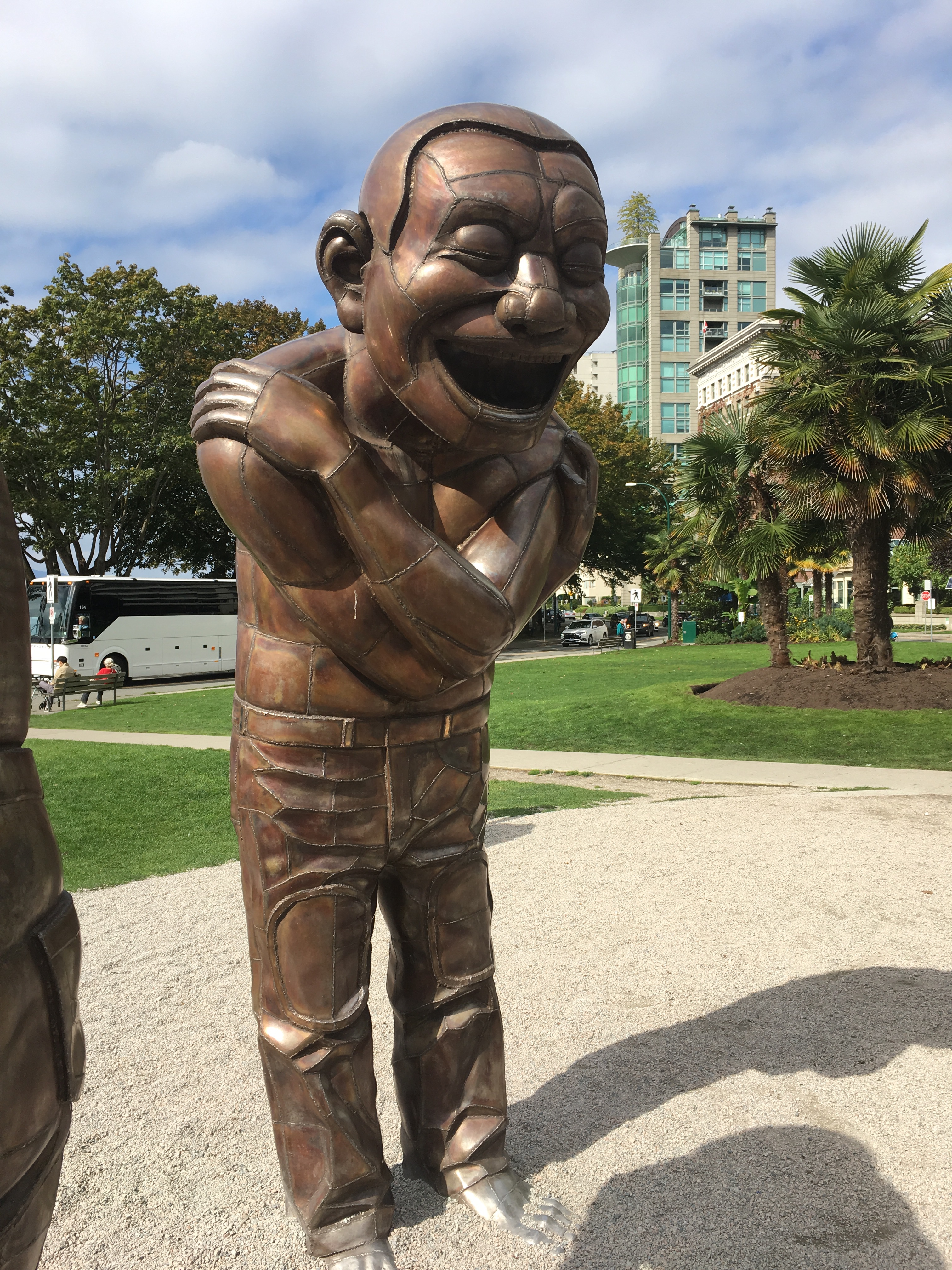
Where we found this!! This grouping of 14 statues had everyone posing and taking each other’s pictures. It was so much fun! Each was about ten feet tall, and showed the same man in various poses, laughing like crazy.
A-maze-ing Laughter by Yue Minjin
We rode along the Harbor on the bike path and ended up right where we started, at the bike shop. It had been a busy day, but we weren’t ready to head home yet.
View of the city from Granville Island
We took the water taxi back over to Granville Island and wandered a bit more. We visited the Public Market, got some snacks and sodas and watched the parade of people, babies, and dogs go by. We visited Malaspina Printing and got a tour of their wonderful shared studio space from Stefan, a woodcarver. After a while, though, there was no denying it. We were pooped.
Busy waterway, great skyline
An hour or so later, and Grandpa Nelson had not only rested, but found us the perfect place for dinner… about a block away at The Tap House…salmon salad, huge baked pretzels, wine, beer, and a lovely waitress named Julia who just got back from her first-ever visit to Portland! Considering this was our first-ever visit to Vancouver, we all had a good laugh about how life is funny that way.
We walked a bit, wishing the grey sunset was a little bit pinker, then got home to read until bedtime.
Love,
Grandma Judy
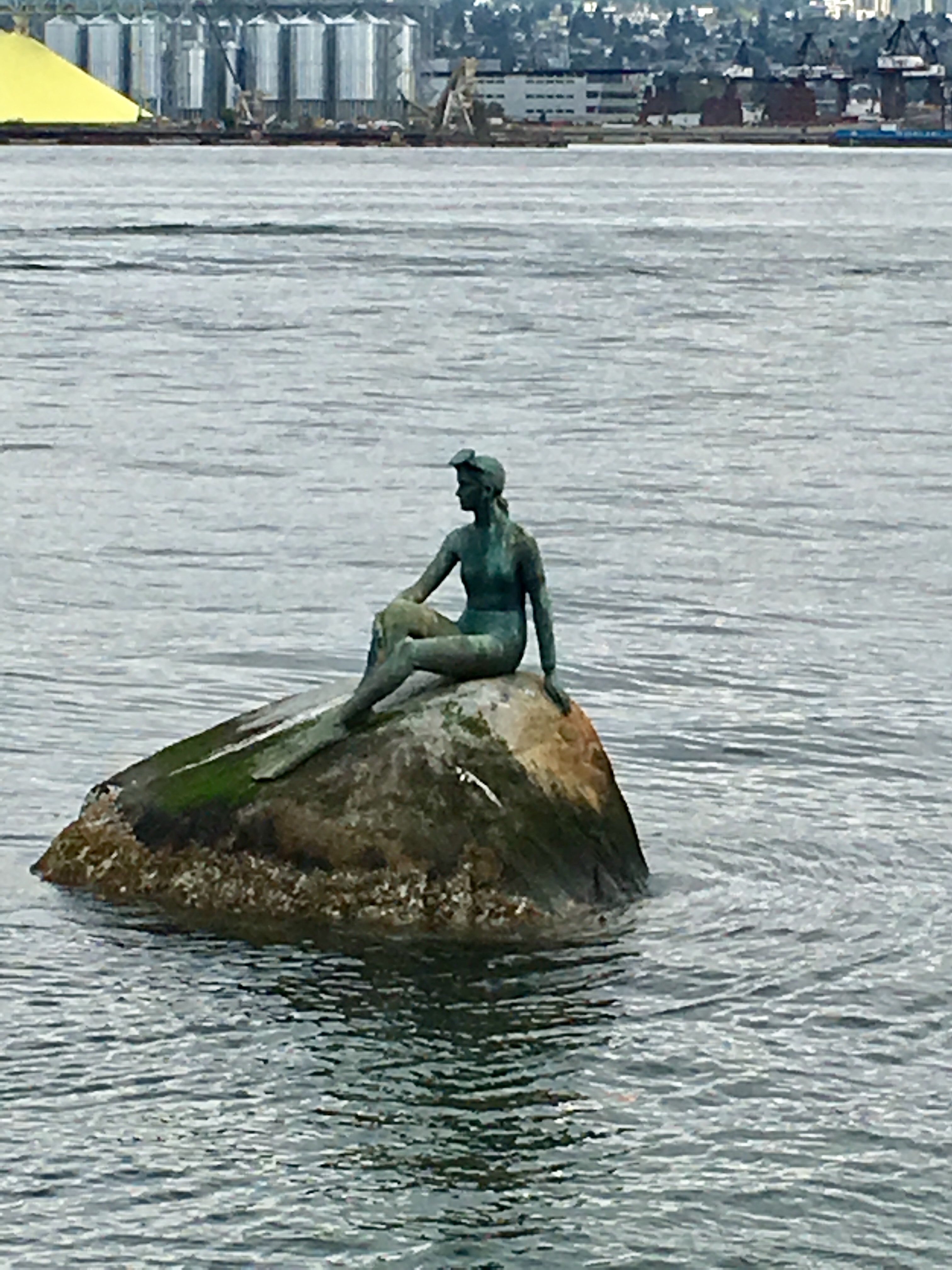
Vancouver’s Girl in a Wetsuit, their answer to Copenhagen’s Little Mermaid
Since Auntie Bridgett is an artist, we love to visit art museums when we go traveling. The main museum here is the Vancouver Art Gallery.
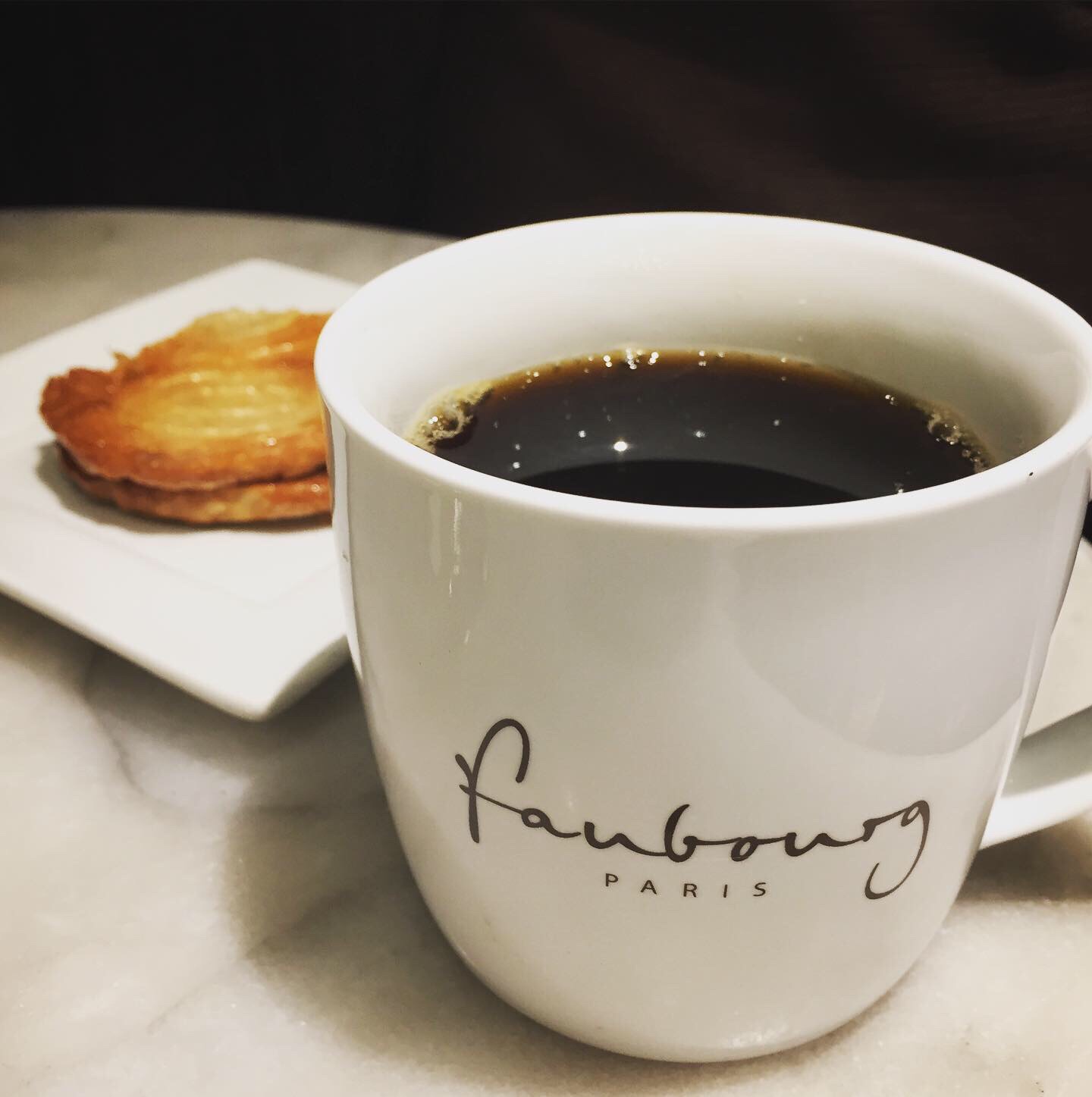
We stopped at bakery first. We are not savages, after all…
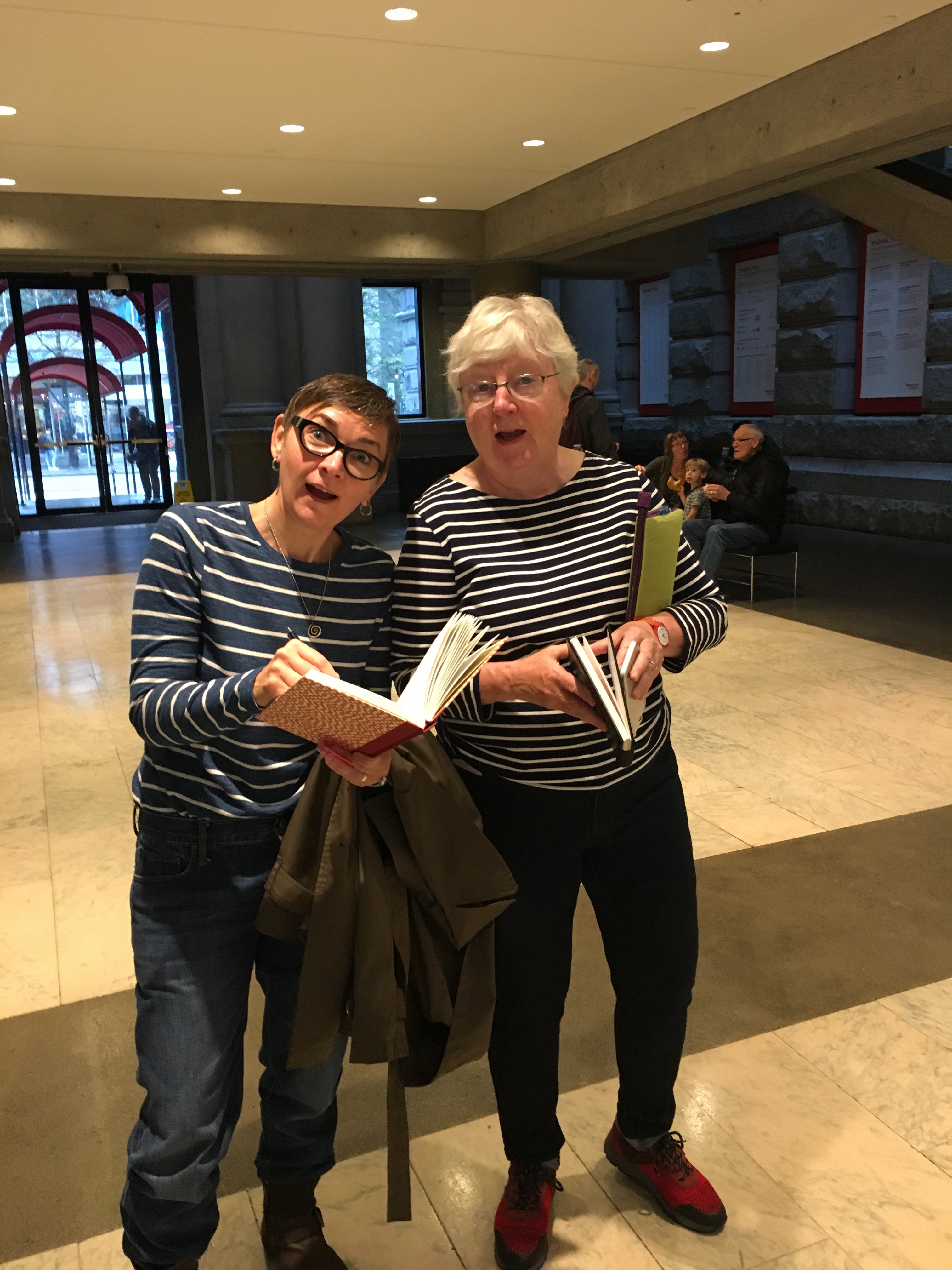
Inside the museum, we found Maura, a fellow sketchbook artist from Connecticut, and she and Auntie Bridgett talked about art supplies. They were like two kids comparing toys! It was sweet.
Maura and Auntie Bridgett
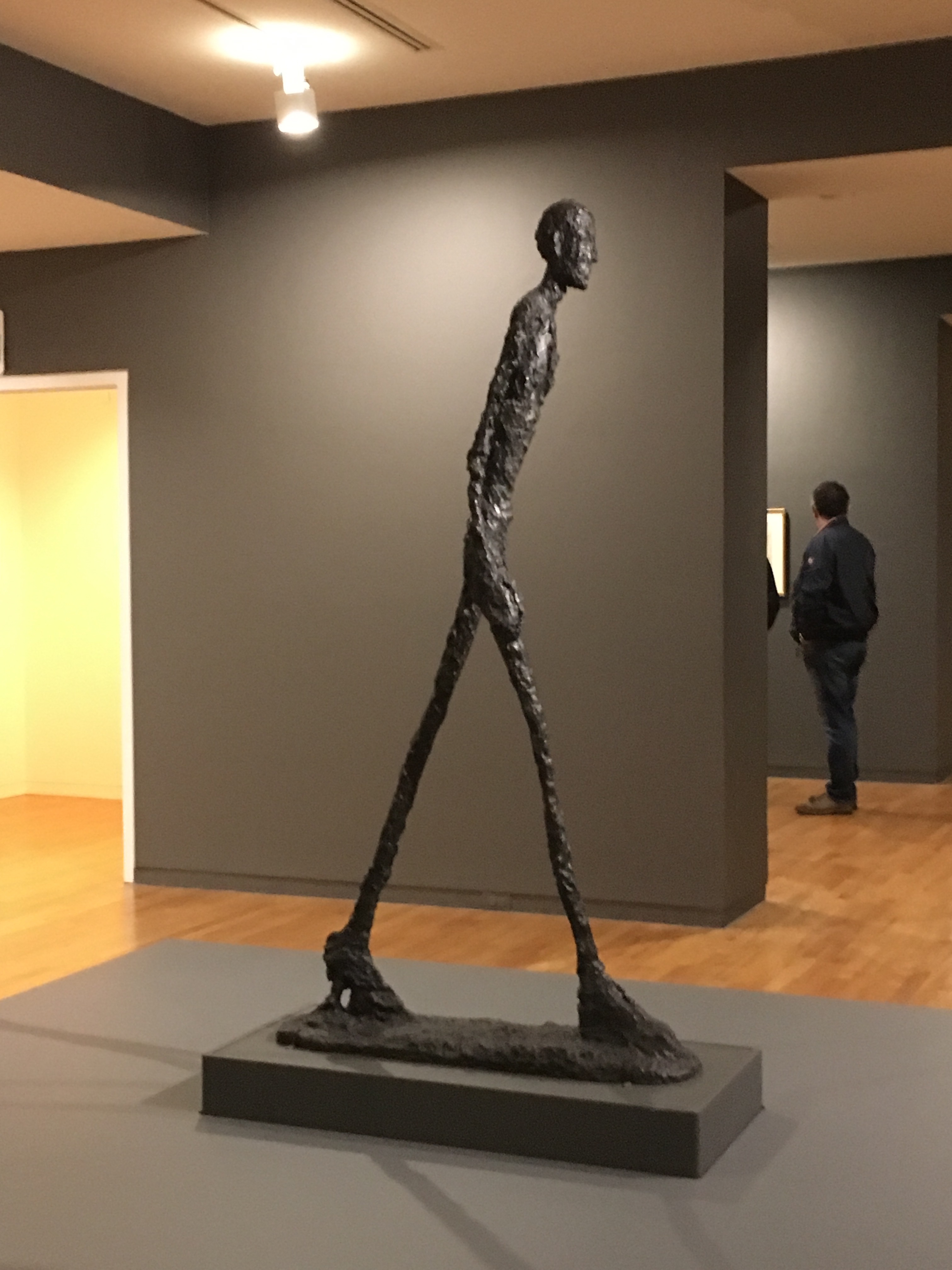
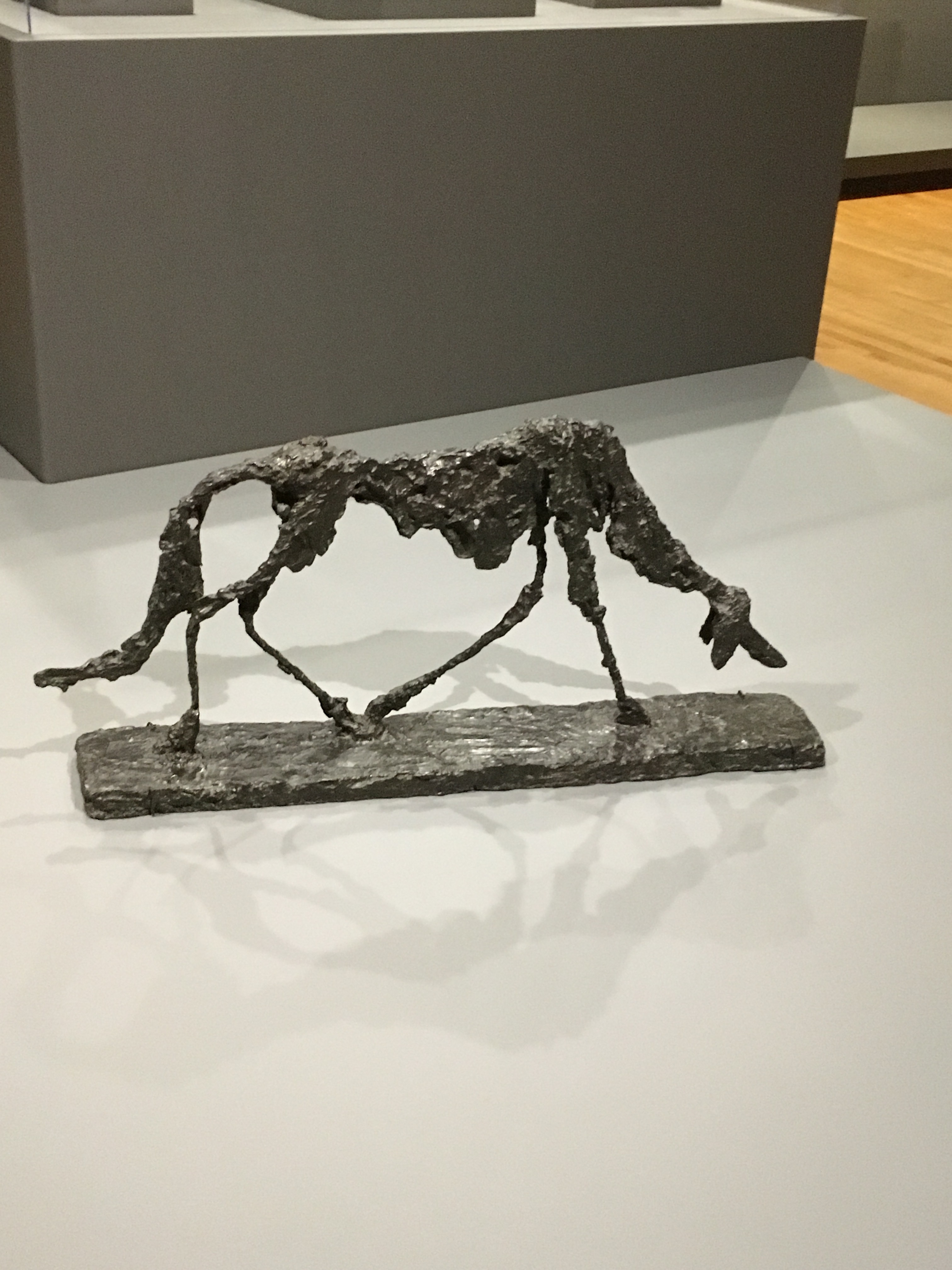
Moving along, we found the Alberto Giacometti exhibit. You would recognize his work by his very tall, thin figures.
Dog
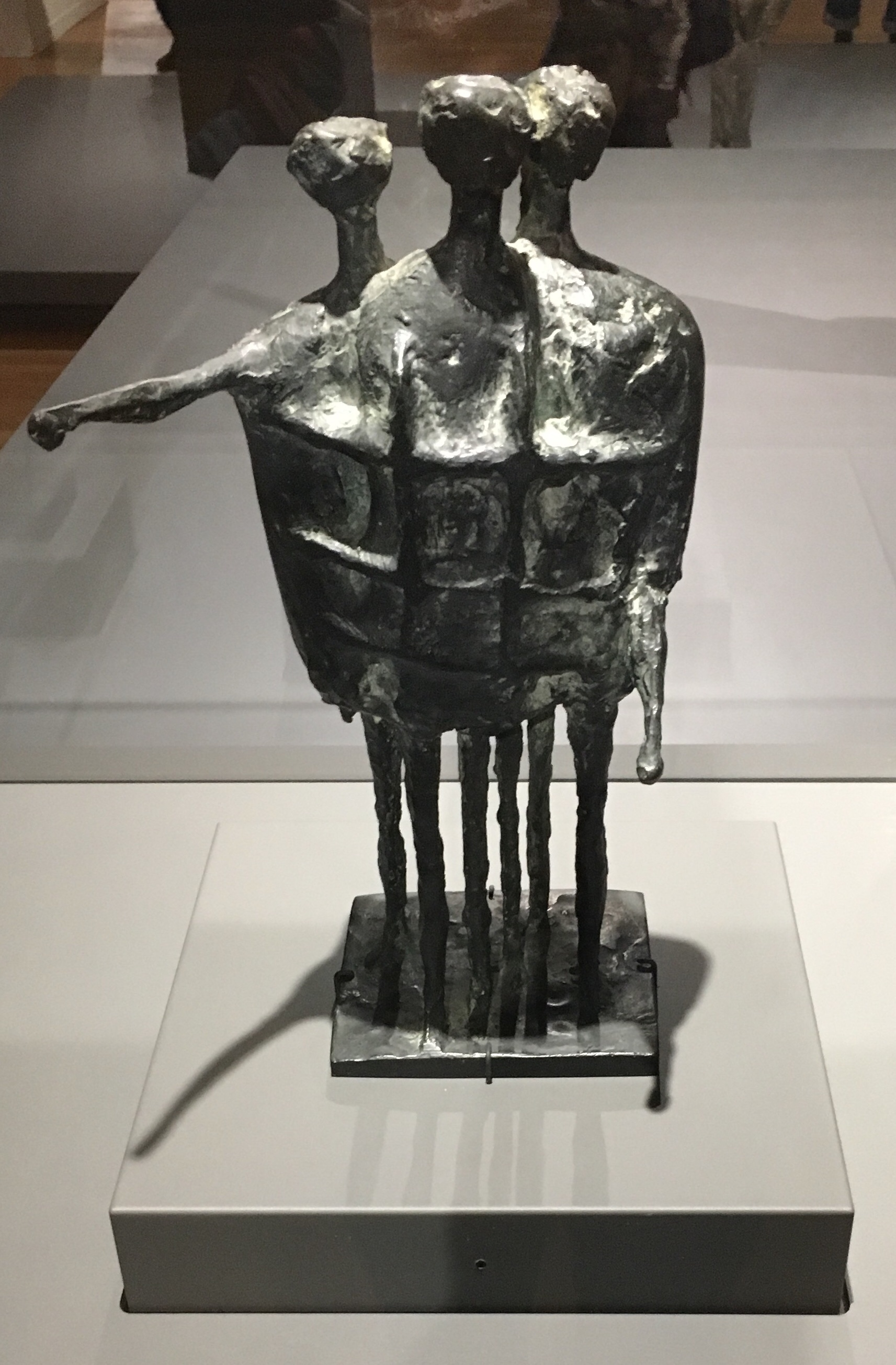
The exhibit also included artists whose work influenced Giacometti, including this work by Kenneth Armitage. It shows three figures standing together. I like it because it reminds me of Grandpa Nelson, Auntie Bridgett and me, going through life together.
Model, By Kenneth Armitage
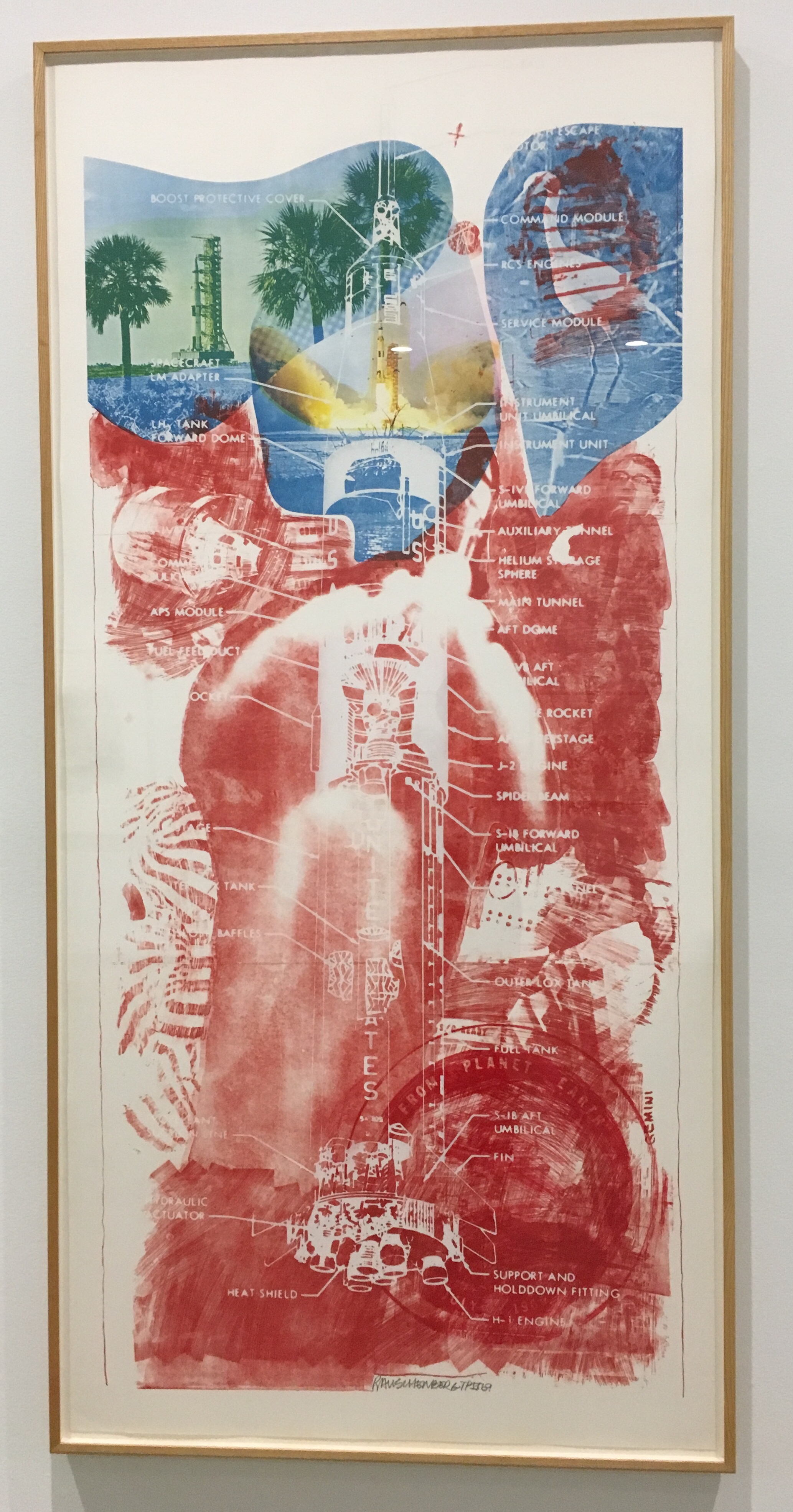
Upstairs was a show of Robert Rauschenberg, a printmaker who worked in the 1950s and 1960s, including using some NASA-provided materials to make wonderful modern art about the moon launch.
Sky Garden by Robert Rauschenberg
We walked some more around the Gallery, but really liked the building itself more than any of the exhibits, so we headed off into the rain. We found yummy soups and ciders at The Lennox Pub and then onto a very spectacular library. Yep, the library.
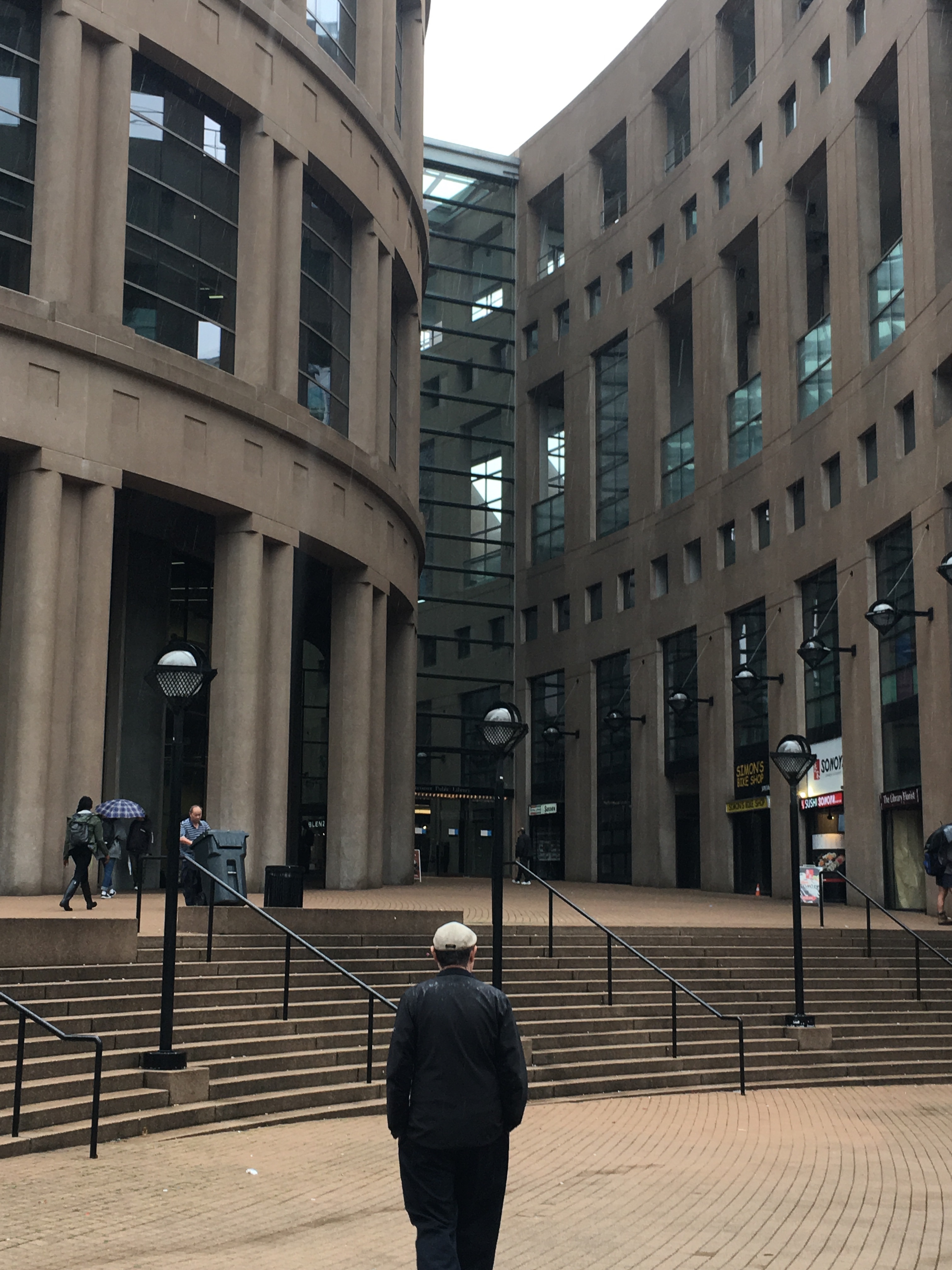
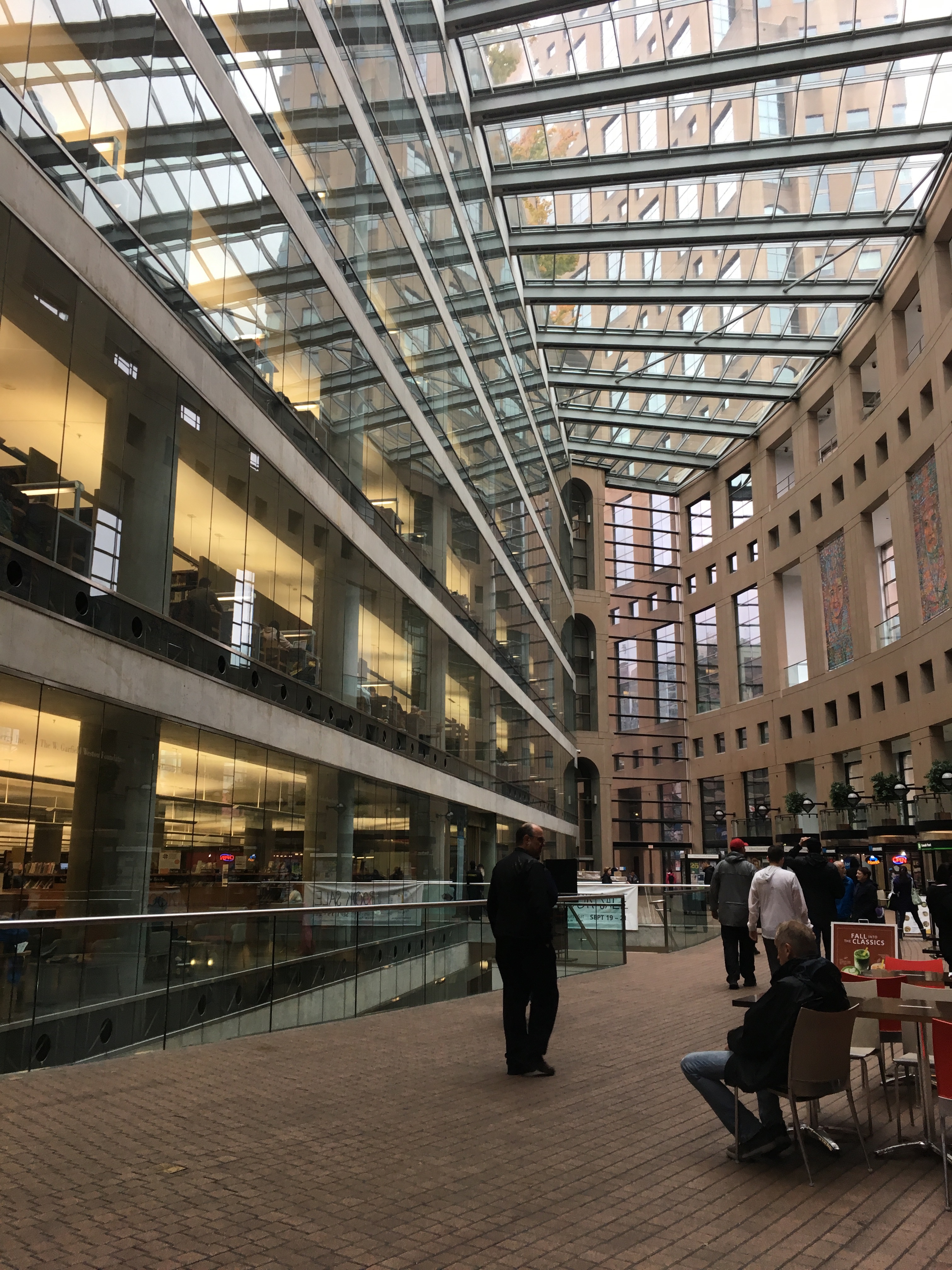
Vancouver Public Library
Built in 1995, the design of this magnificent place was chosen by competition and public voting. It soars 9 stories, reminds us of the Roman colosseum, and has roof top garden!
Outside….
There is a floor just for kids’ activities, another for “study groups”, another as a “Quiet floor.” It really has something for everyone, all in a a bright, innovative space. We never wanted to leave, but we had reservations for dinner.
Inside!
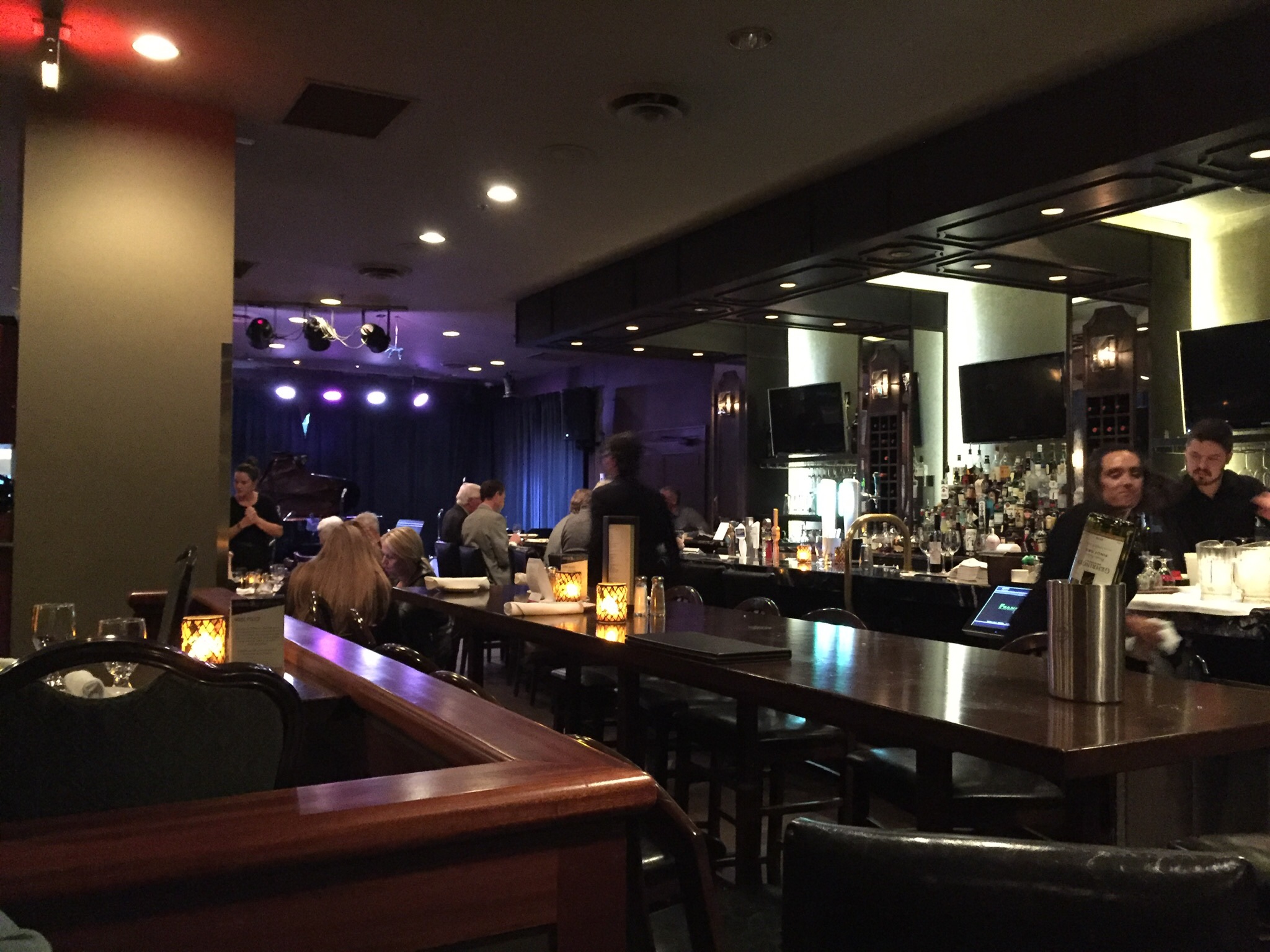
After some downtime, we got a cab to Frankie’s Jazz Club. The Aintzler Quartet, lead by their ninety-something clarinet-playing patriarch who goes by “Pop”, played jazz by Duke Ellington, Louis Armstrong, and lots of other greats. It was a musical, delicious evening. We got in late and slept like dead people.











 Dear Liza