Wandering through the Fabre Museum in Montpellier, the portraits were fun to look get to know on a personal basis. Their life stories, which I looked up if I could, were reflected in their eyes.
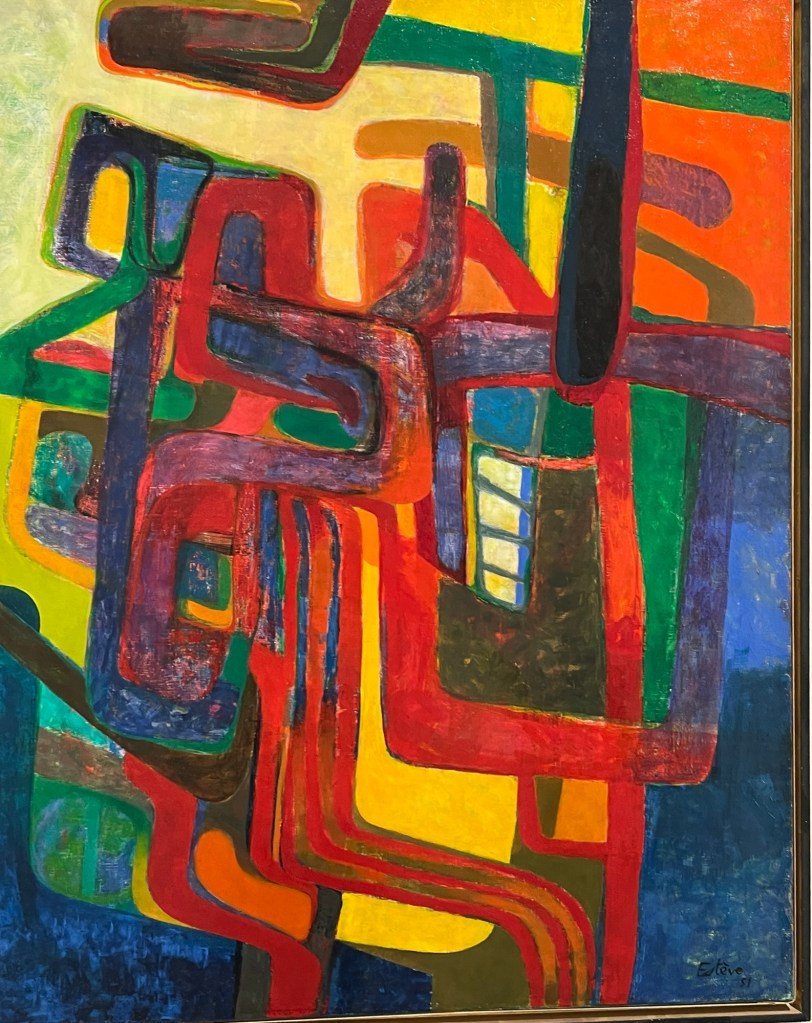
The other type of paintings I enjoyed were the modern pieces that focus on pattern. The problem is, I always forget to record the title and artist of these sort of paintings, so I can’t go look them up or find them again.
I like to try and find the balance that the artist was looking for, how the colors are related, and what I can learn from it. My quilts are much like these pieces, with blocks of different colors and textures working together to make an harmonious whole.
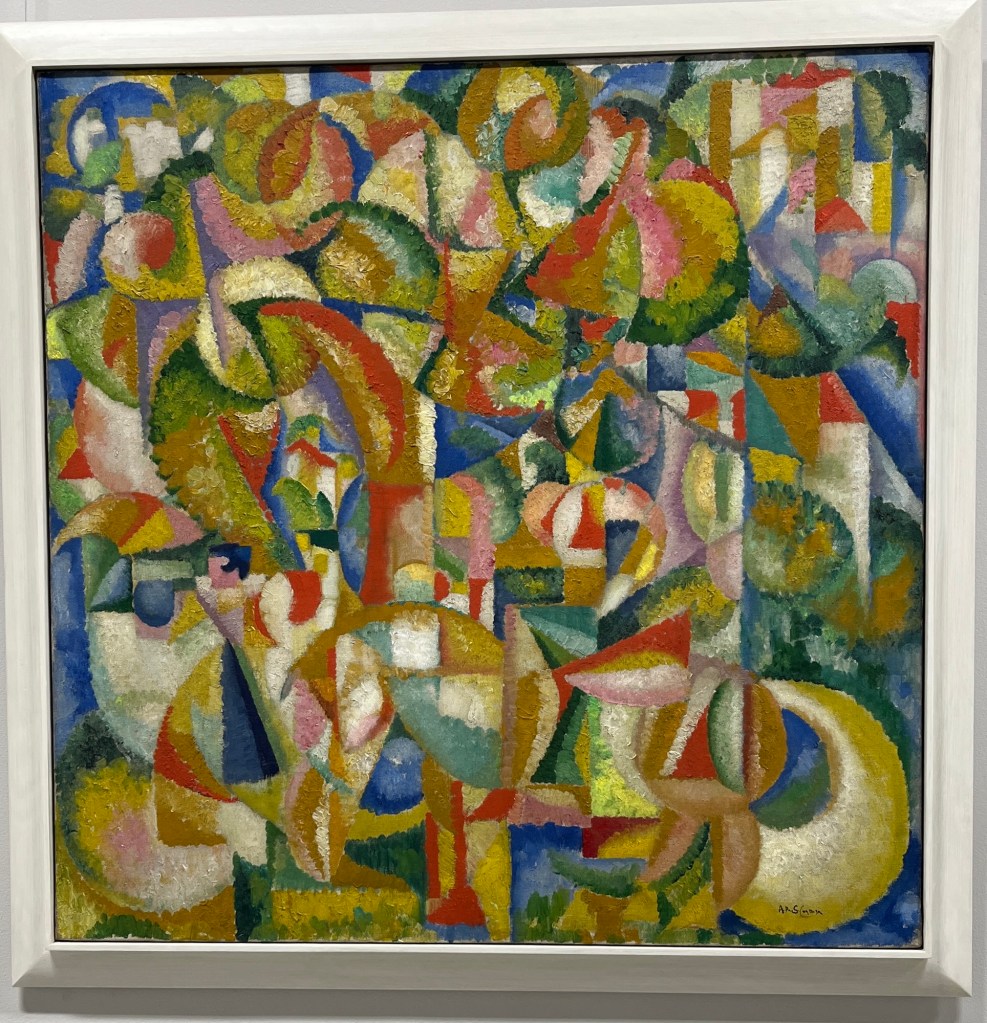
And then there is this piece, which is a very abstracted , but still representational. See the houses? The clouds? The boats?And the woman? This is a fun kind of painting… part riddle, part artwork.
I have learned something absolutely new from my friend Ruth Inman. She has found a way to re-use acrylic paints that dry on the palette.
Back when I first started painting, I was dismayed to learn that acrylics, unlike watercolors, become plastic once they have dried. Adding more water doesn’t dissolve them back into paint. This means that once that acrylic is on the palette, you need to use it, or throw it out. For my frugal self, this was bad news. But Ruthie discovered a way to make use of this dried paint.
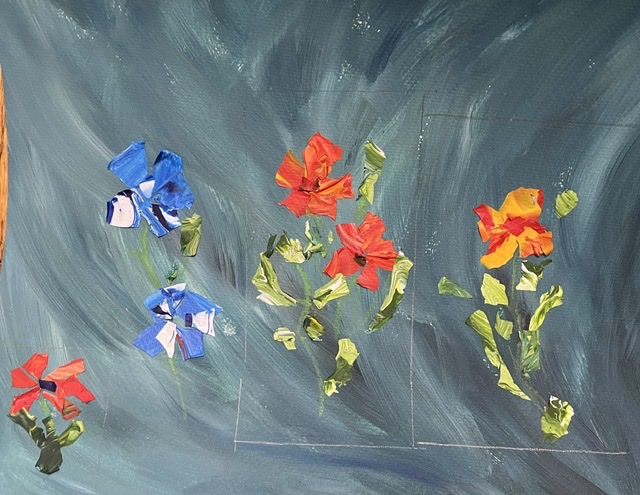
First, prepare a background for your piece with acrylic paints. Any color combination that is complementary to the colors on your palettes will be fine. Let that dry.
Next, choose a few plastic palettes with good layers of acrylics on them. I use plastic food lids, so they sit around a lot and get re-used. Give the palette a spray of water. Make it wet, even a bit puddly, and let it sit for about 10 minutes, until it starts to wrinkle.
Using your fingernail or palette knife, gently ease the edges of the paint layer up. If it is a nice thick layer, it should peel up in one “skin”. But even if it tears a bit, it is useful.
If the skin is too big for your purpose, use your fingers to tear the skin into smaller bits. Look at both sides of the skin; the prettiest may be on the bottom.
While the bits of skin are still sticky and wet, press them down onto the background. Press firmly, but don’t worry if the edges are not all flat. The raised frills add dimension. They will stick once they have dried.
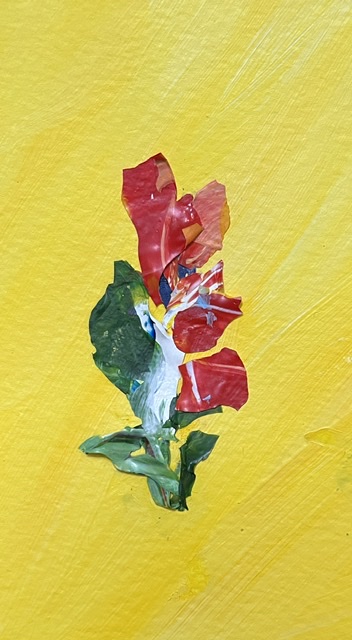
The trick to this sort of art is not to get fixated on what you intend the picture to be. The leaves of red flower on the yellow background was going to be a bit of landscape, but looked more like leaves. I turned it ninety degrees and added the flower.
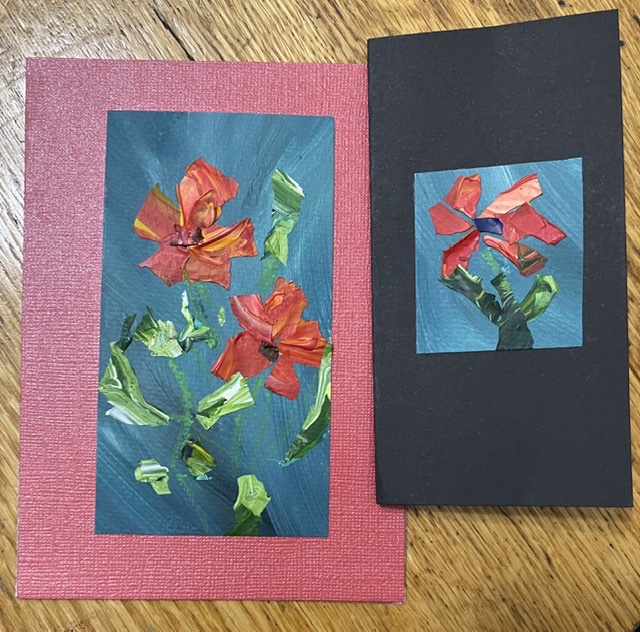
These flowers looked better apart, so got trimmed and put on cards.
The irregular and colorful nature of the skins lends itself to flowers and leaves, but could also work as feathers for birds or maybe even mountains and landscapes.
I am happy with the results and will keep experimenting.
You know about abstract art. It is all about shapes and colors, light and dark, and most definitely not about showing what things really look like. There is reality, and there is abstraction. They are two different things. Right?
Right.
So imagine my surprise when I looked at my photos from our trip to Fort Stevens beach and saw a whole lot of abstraction. Lines. Fragments. Blobs.
If I did the research, I could write a thousand words on the psychological connections between reality and abstraction. Some Ph.d’s undoubtedly have.
But I just wanted to show you some really pretty, interesting shapes that I will be playing with in my paintbox. And to show that the line between reality and abstraction isn’t so clear, after all.




 Dear Liza