Late May Walking

Dear Liza,

It turns out that the ‘training’ of exercising and eating better to get me ready for SOAK has paid off in other ways, as well. I had two long, lovely walks Friday, with two of my favorite people.
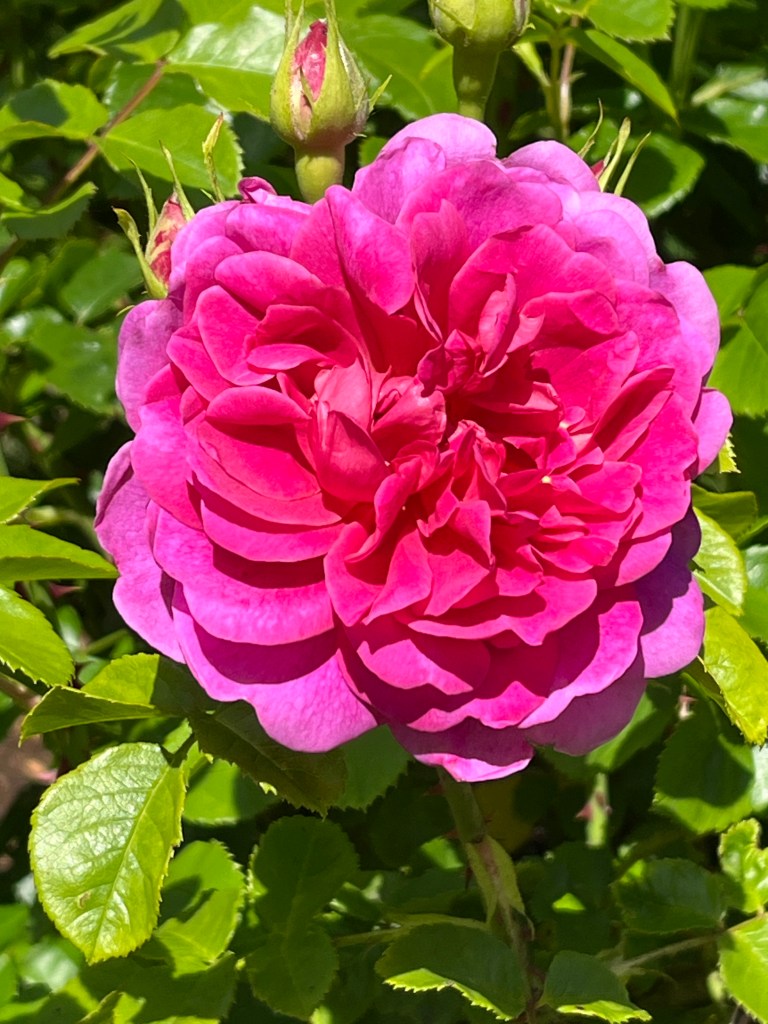
First, Cynthia and I walked around the International Test Garden in Washington Park. It was a bright sunny day, and a lot of roses have started opening up! I didn’t check any of their names, just their scents. This one was the best!

Then we walked down the road a bit to the Holocaust Memorial. This is a solemn reminder of the horrors that the Nazis visited upon 6 million Jews and other people back in the 1940s.

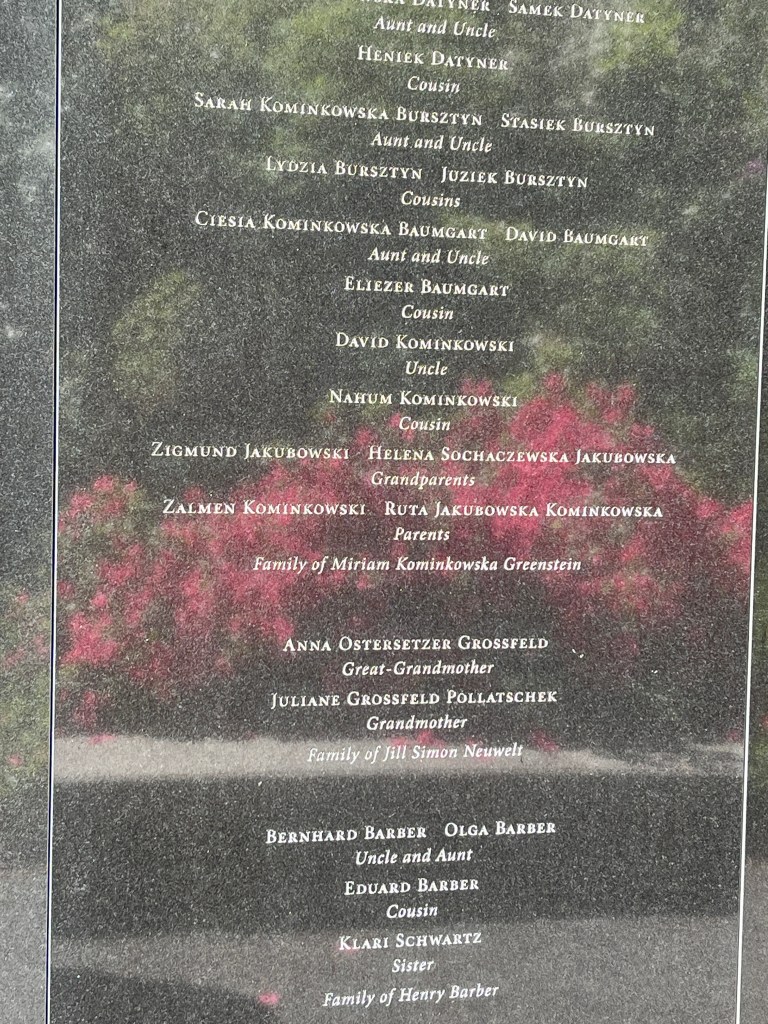
As we looked at the names and read the history, both of us wondered: How could Israel, a country founded after these atrocities, commit those happening now in Gaza? The dark side of human nature left us sadly pondering.

After a few hours of walking and conversation, Cynthia dropped me off at home. Lunch and a rest got me ready for the next outing. Auntie Bridgett was having technical difficulties and needed a walk, so I went.
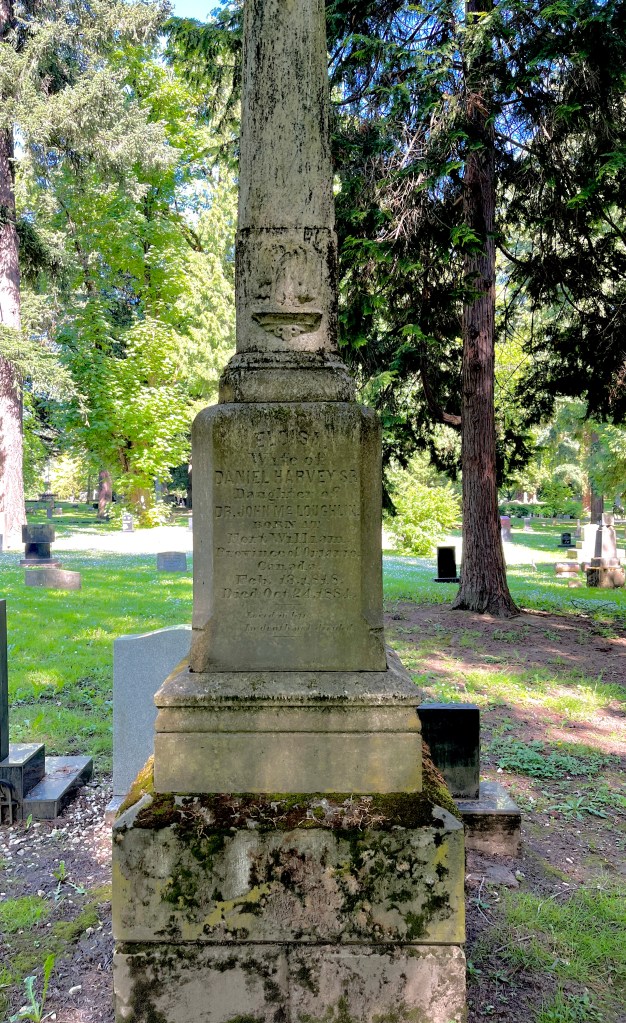
We ended up at Lone Fir, where we actually FOUND Eloisa McLaughlin Rae Harvey’s grave! She is named on this tall, mossy obelisk, along with her second husband Daniel Harvey and her son, Daniel Harvey Jr.

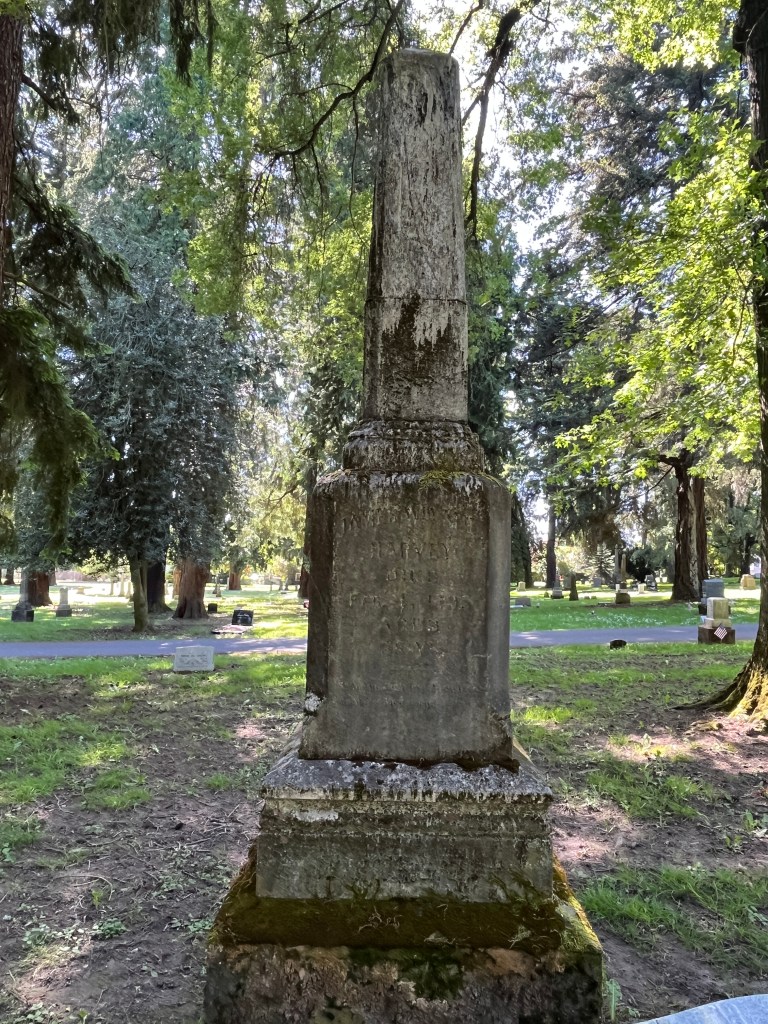
Eloisa was a woman who led a remarkable life as daughter of Dr. John McLaughlin, “The Father of Oregon”, and wife to two employees of the Hudson’s Bay Company. She traveled to Oregon, Alaska, San Francisco and Hawaii in a day when most women rarely left their hometown.

It’s a quiet miracle how dead people, whether in throngs of 6 million or one by one, give us perspective and allow us to mark their passing.

Love,

Grandma Judy

Meeting Eloisa at Fort Vancouver

Dear Liza,

Fort Vancouver, Washington, is a historically accurate re-built fort that the Hudson’s Bay Company used as the hub of its fur trading network here in the northwest from 1825 to 1866. Seeing it again this week with a proper guide, I learned so much!

Britt, a wonderful Lone Fir volunteer who portrays “Bunko Kelly” on the Tour of Untimely Departures, had made the arrangements after learning that some folks connected to the Fort are buried right here in our own Lone Fir Cemetery.

Tammy Williams was our guide. She is so knowledgable and enthusiastic that she made the fort come alive! Her explanations of artifacts and the actual smells of the cookhouse let us feel the daily routines of trading pelts for goods, cooking for twenty people or more at a meal, and raising children of white, Indian, Hawaiian, and mixed lineage.

In particular, Tammy told us of Eloisa, one of Chief Factor John McLoughlin’s children. McLoughlin is often called the Father of Oregon for his running of Fort Vancouver in support of the American Pioneers who first came to Oregon.

Eloisa was born in Fort William, Ontario, while her father was stationed there. She was seven years old in 1824, when her family came to Fort Vancouver.
She married William Glen Rae, a man of violent temperament. They moved to Fort Stikene, Alaska, when William was assigned to the Hudson’s Bay Fort there. Eloisa hated the place, which was badly run and riddled with alcohol-fueled violence. She gave birth to her second child on the boat from Alaska back to Oregon.


William moved to another of the Company’s forts in Yerba Buena, what we call San Francisco. After her recuperation from childbirth, Eloisa and the children joined him.

Created with GIMP

Eloisa described Yerba Buena as a vibrant, interesting place. She saw bull and bear fights and partied with Spanish ladies and gentlemen.

William’s drinking and bad decision-making lead to his death by suicide, and widowed Eloisa and her children returned to Fort Vancouver. She re-married a manager of The Hudson Bay Company, Daniel Harvey, and had three more children. Sadly, Eloisa was a widow again at age fifty.

Eloisa’s life was exciting and tragic, full of experiences that were rare for women of her age, like traveling by steamship to Hawaii, and common, such as being widowed twice by age fifty. Eloisa passed away in 1884 at the age of 66, and is buried in our own Lone Fir Cemetery, alongside Daniel Harvey, Sr., and her sons Daniel Harvey, Jr., and James William McLoughlin Harvey. I will visit her next time I am in the neighborhood.

Love,

Grandma Judy

Fort Vancouver

Dear Liza,

After our delicious lunch at Twigs in Vancouver, we got in our cars and headed just a little out of town to visit historic Fort Vancouver. This was first founded by the British in the 1820s as a way of protecting their settlers in the area when this part of the Pacific Northwest was claimed by England, along with the rest of Canada.

The fort was home to hundreds of soldiers, merchants, and indigenous people, along with native Hawaiian craftsmen hired to keep the fort running. It was a very diverse population for its time.


In 1846, after a shift in the border between Canada and the US, the English abandoned the Fort Vancouver and American troops took over. They let the fort fall into disrepair and it eventually burned down under not-so-mysterious circumstances.

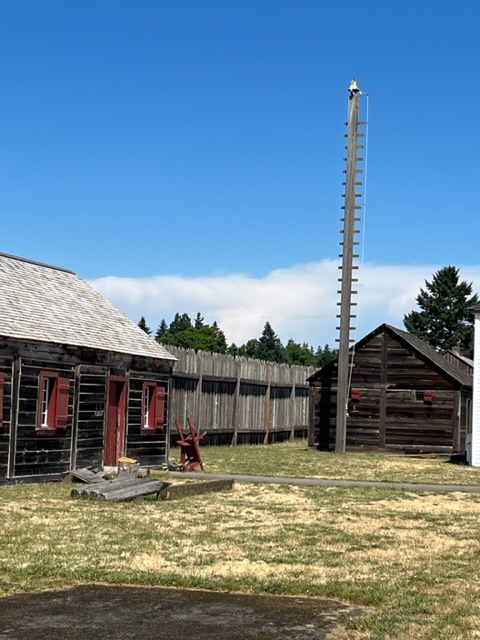
The Fort Vancouver we can walk around in today is a 1970s reconstruction, based in maps and descriptions from the 1820s. Still, it lets us see what life was like for all those folks so many years ago.

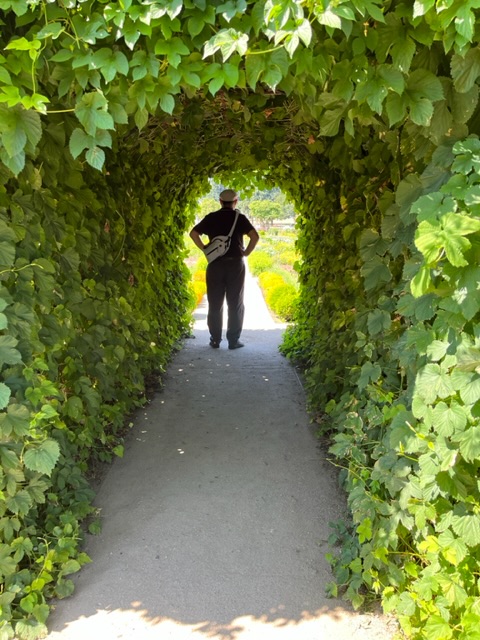
This thick, cool arbor made for fine summer shade and grapes to be harvested in the fall.

The bakery must have been kept busy all day making biscuits for travelers as well as bread for the hundreds of folks at the Fort.


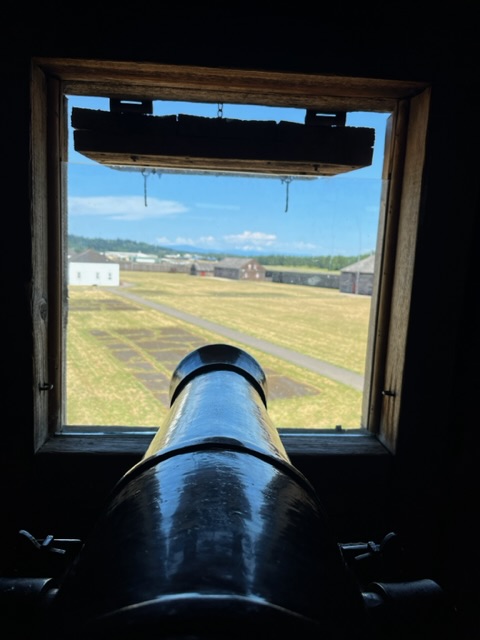
The view from the bastion tower was very cool. I hope they never had to fire this one! It’s pointed into the fort!

Grandpa Nelson and I walked around the 1976 reconstruction of the old fort, which was enclosed by pointy wooden ramparts. It included a replica of First Factor Dr. McLoughlin’s beautiful house and buildings for the bakery, the jail, the infirmary (doctor’s office) .

On that hot afternoon, we could certainly sympathize with the soldiers who had been stationed here, exposed to heat and cold, rain and snow, with only thin wooden walls between them and the elements.

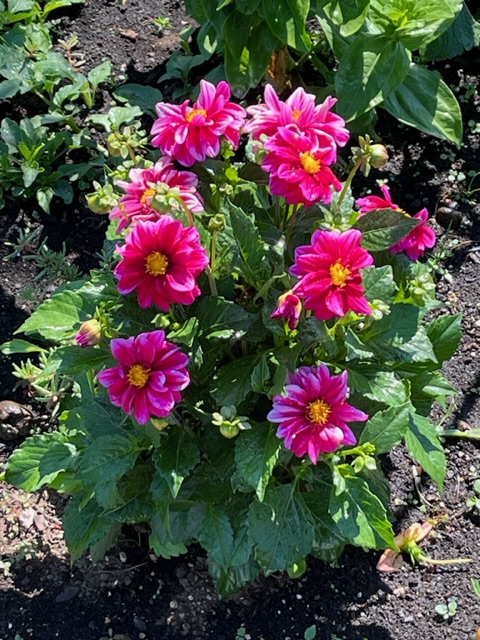
The gardens and livestock were outside the gates, where there is now a lovely, well kept flower and vegetable garden. I imagine it was a bit more rustic when every drop of water had to be carried by bucket. Still, the dahlias were gorgeous.

There are other sections of Fort Vancouver, including stately officers’ houses from the World War II era when General John Marshall was in charge here, but we didn’t visit those. We ran out of oomph and went for ice cream at Ice Cream Renaissance , then said good-bye to dear Julie and Carl and headed back across the river to have a nice rest at home.

Love,

Grandma Judy

Road Trip to Oregon City

oregon city 1.jpg

Dear Liza,

On Saturday we all took a drive south. The weather was very cold and almost drizzling, but we were snug in our coats and hats, inside Miles the Volkswagen.

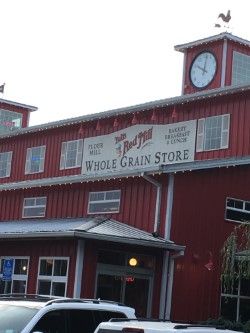
Our first stop was Bob’s Red Mill in Milwaukie. We have been buying Bob’s flour, muselix cereal and polenta at Safeway, and were happy to see a whole store filled with his healthy, tasty goodness. Entire shelves were full of different types of oatmeal, or gluten-free flours, or bulk spices. We bought whole nutmegs and cinnamon sticks for holiday baking, and a loaf of cinnamon bread….just for fun.

Further south, we stopped at  The End of the Oregon Trail Museum at Oregon City. When people were coming to Oregon from Missouri in the 1850s and 1860s, many of them ended up here, sick, tired, hungry, and desperate, after a trip of eight months. This museum showed what they had traveled with, what problems they had on the way, and how they were able to built new lives here in Oregon.

oregon city 4 .jpg
Pioneer dolls

oregon city2 .jpg
The museum used cut-outs to show the ages of the people on the Trail.

It made me sad to think of all those who died and lost loved ones along the way, but proud that people had the courage and strength to just keep going.

Dr. Mcloughlin 1.jpg
Dr. McLoughlin looked scary, but was a kind man

Further south, we learned about Dr. John McLoughlin, who is called The Father of Oregon. He ran a settlement and store called Fort Vancouver, just north of Portland, across the Columbia River.  He didn’t own the store himself, but ran it for the Hudson’s Bay Company. Dr. McLoughlin would give help and supplies to anyone who needed them, even if they couldn’t pay. He would loan boats to people stuck upriver so they could finish their trip safely. Since he worked for The Company and they didn’t like him giving things away for free, The Company fired him.

Dr. McLoughlin moved to some land he owned in Oregon City, right by Willamette Falls, and set up businesses. He ran a lumber mill from a waterwheel that used the Falls’ energy. He sold land and supplies and took care of people, this time on his own, and because the people he saved were able to live and become paying customers, he got very rich. He saw Oregon City become the largest city in Oregon for many years.

oregon citty 5 .jpg
Willamette Falls

We were able to visit his house,  which has been moved from its original location by the river to a prettier place, up on top of a bluff overlooking the town. We saw his medical office set-up, his wife’s sewing room, and their house furnished with their own things as it would have been when they were here. We visited his and his wife’s graves, which were also moved from a cemetery by the river to be by their house.

oregon city 6 .jpg
We were on the ferry, with the river between us and our road!

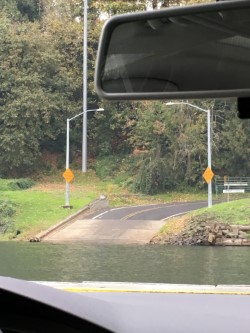
By 4:00 it was starting to get dark, so we found the Canby Ferry (yes, a small, modern-day boat) which took us across the Willamette River. I think Auntie Bridgett was a little nervous, but I was excited! I’d never been on such a small boat in such a big river.

Grandpa Nelson drove us all home, we had dinner, and slept like rocks.

Love,

Grandma Judy