Coming Back

Dear Liza,

It has been just about a month since I have posted a blog. While we were in Bordeaux on our tour around France, I got sick and was diagnosed with shingles. Yep, shingles, there on the right side of my face. Ghoulish, huh?

Being sick is never fun, but being sick in a country where you barely know the language and have no contacts, personal vehicle or knowledge of how things work is terrifying.

I was lucky to be traveling with Grandpa Nelson and Auntie Bridgett. Grandpa is a genius at transportation systems, internet apps and reservations. Bridgett knows enough French to ask the right questions, pays attention to details, and is a firm, gentle caregiver. Between them they got me to emergency rooms, got our travel insurance activated, picked up the right medications and kept me fed.

Since fighting the shingles virus left me very feeble and nearly blind in one eye, Grandpa made sure there were wheelchairs at the train stations and airports across France and in Amsterdam. I rode around like a dippy Cleopatra, grateful for all the help but not really aware of much that was going on.

The highlight of the trip was that during our stay in Amsterdam, you and your family came to visit! We had a few hours of silliness and love before I was exhausted. Thanks to your parents for making the long trip!
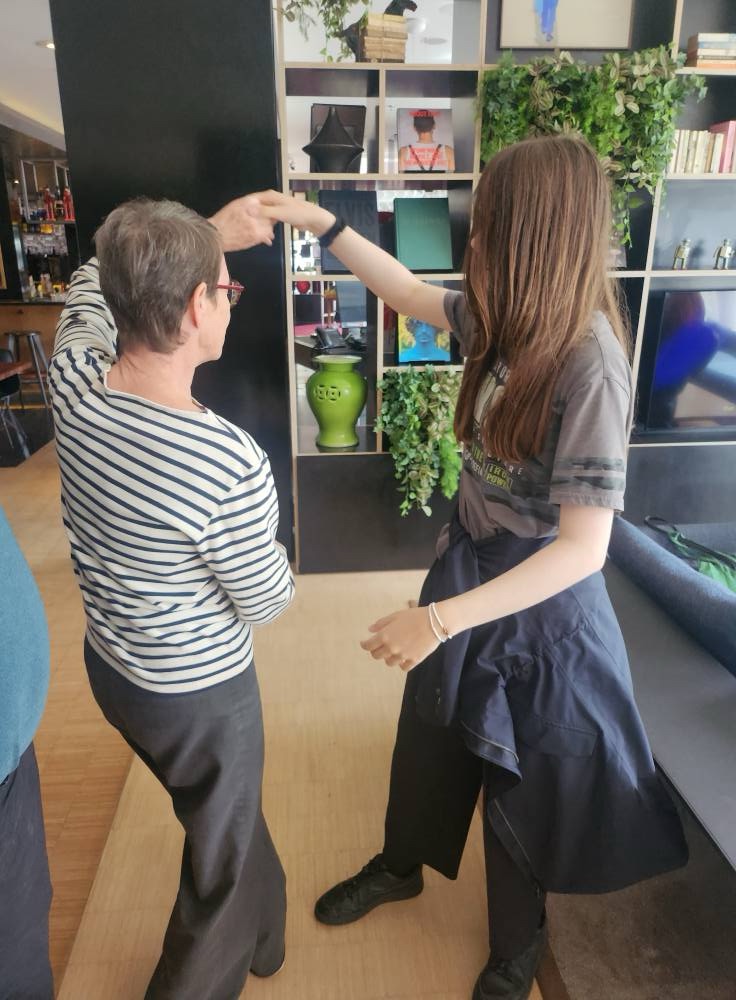
Once we got back to Portland, my doctors appreciated all the care I had received in France. My ophthalmologist was pleased that the shingles hadn’t gotten into my eye, but merely swollen and numbed a bunch of the nerves, which should go away eventually.

Then there are the meds for the ‘next stage’. After the virus has gone into remission (apparently it never really goes away) there is weird nerve pain that sticks around, for weeks or even months.

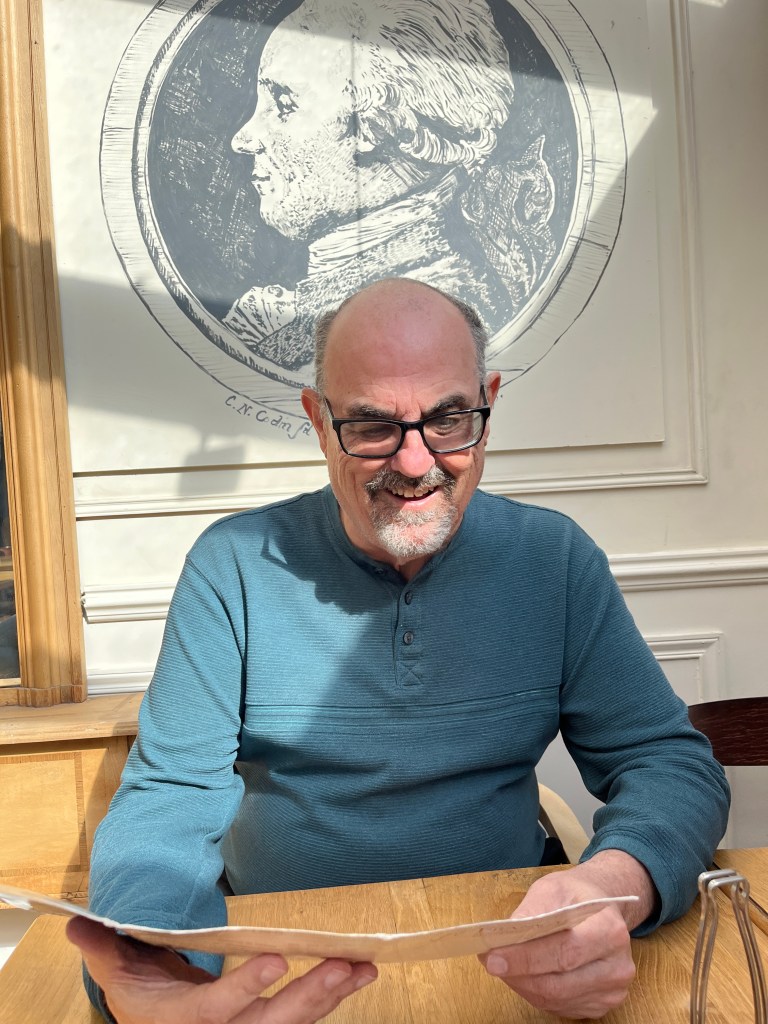
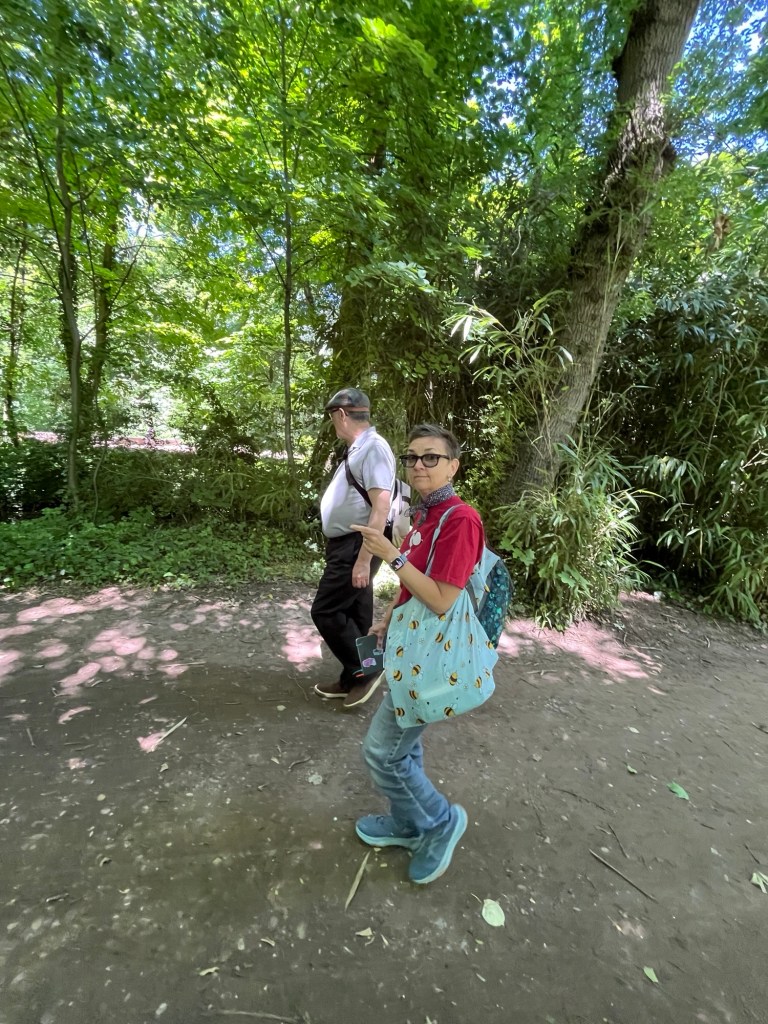
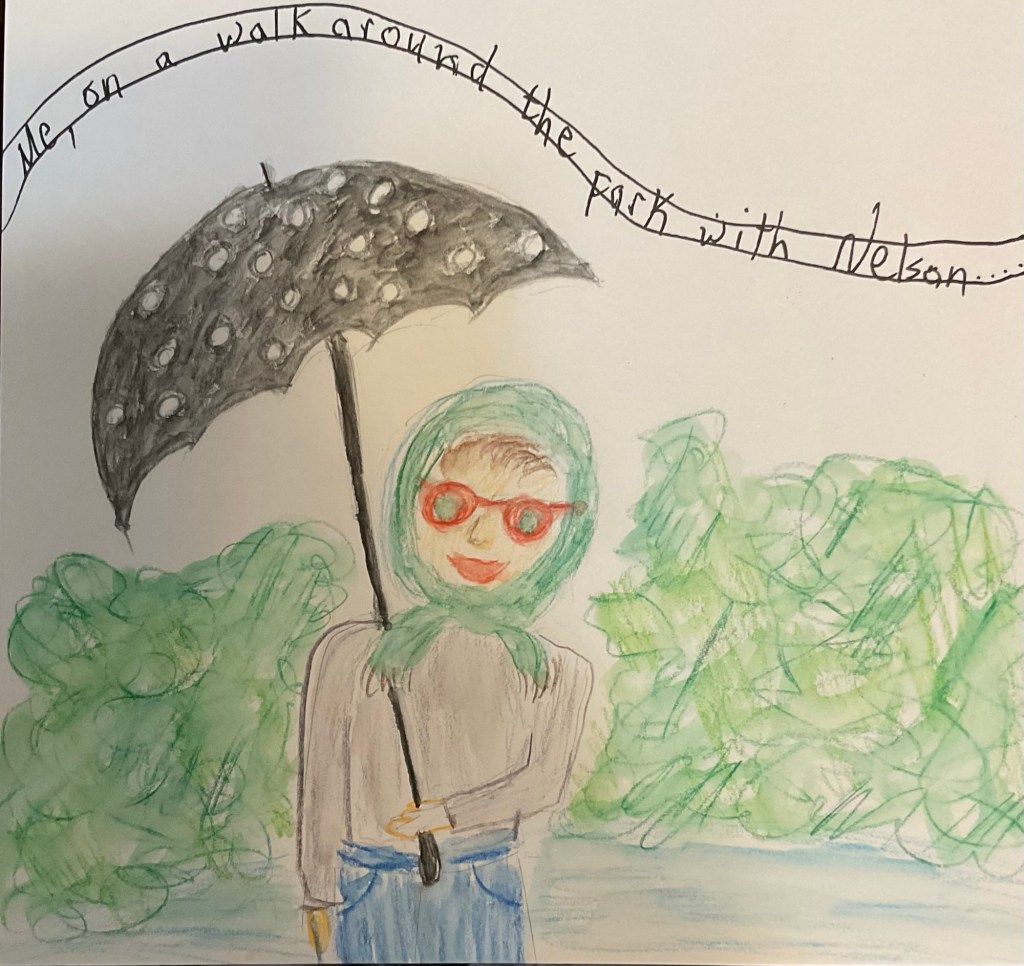
And that is where I am now. My general health is improved to the point that I can walk around the park, make art, and cook dinner. I still need meds to sleep, because the prickly nerve pain is always there, hovering behind my eye. I also must not expose myself to direct sunlight, as that can re-activate the virus, so I wear a big scarf and carry a parasol when we go out walking. Here is my self-portrait.
So, life’s not normal yet, but progress is being made.

Love,

Grandma Judy
Last Day in Toulouse

June 22

Dear Lisa,

Now that we are having shorter stays in each city, we are having less of a chance to get to know them well, like we did Lyon. We are seeing the highlights.

And our last day was full of them! Auntie Bridgett and I wanted a real French lunch out, and Chez Mamie looked fun. (Chez Mamie means “Grandma’s Place.”) She must be one of those fun Grandmas!

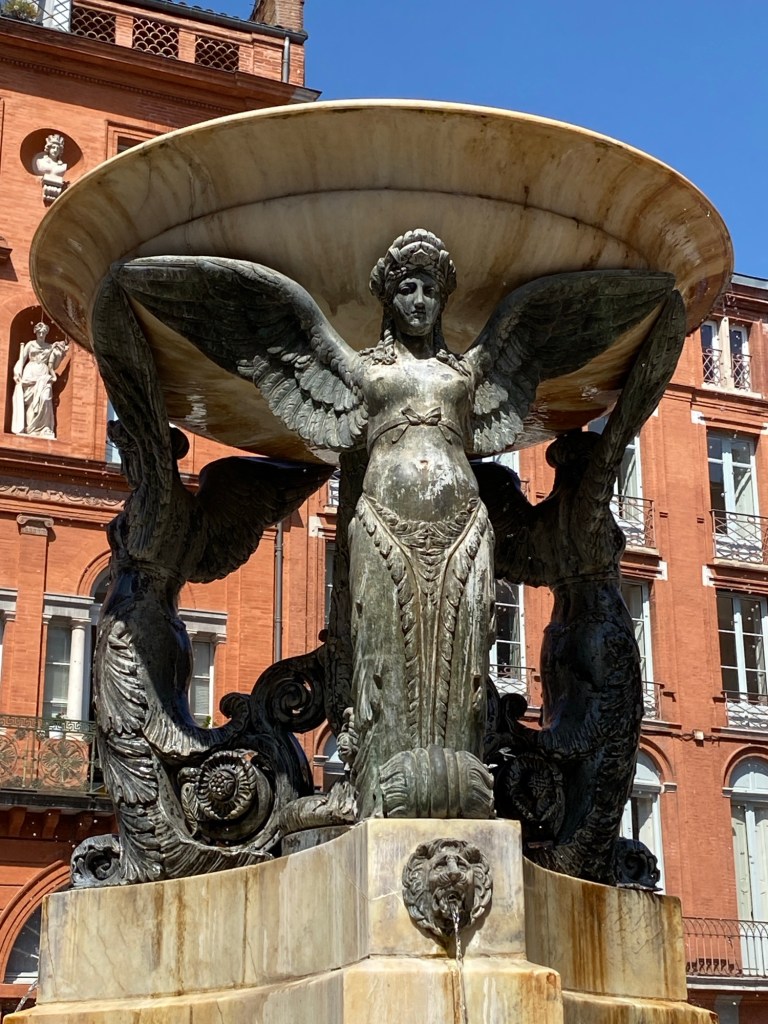
Chez Mamie is in Place du Trinité, which has this incredible fountain of three caryatids holding a large, flowing basin of water. In the heat, they were the most comfortable imaginary creatures around.

It was a fun, interesting place, and delicious, as well. I had a canard confit, a duck leg cooked until it falls off the bone, and roasted potatoes. Bridgett enjoyed a nice white fish and a yummy peppery cream sauce.

There was also a city wide music festival going on, with all sorts of groups out playing in the streets and main squares. Everyone sounded wonderful, but I didn’t get any good pictures… I was either too far away or looking at everyone’s back.

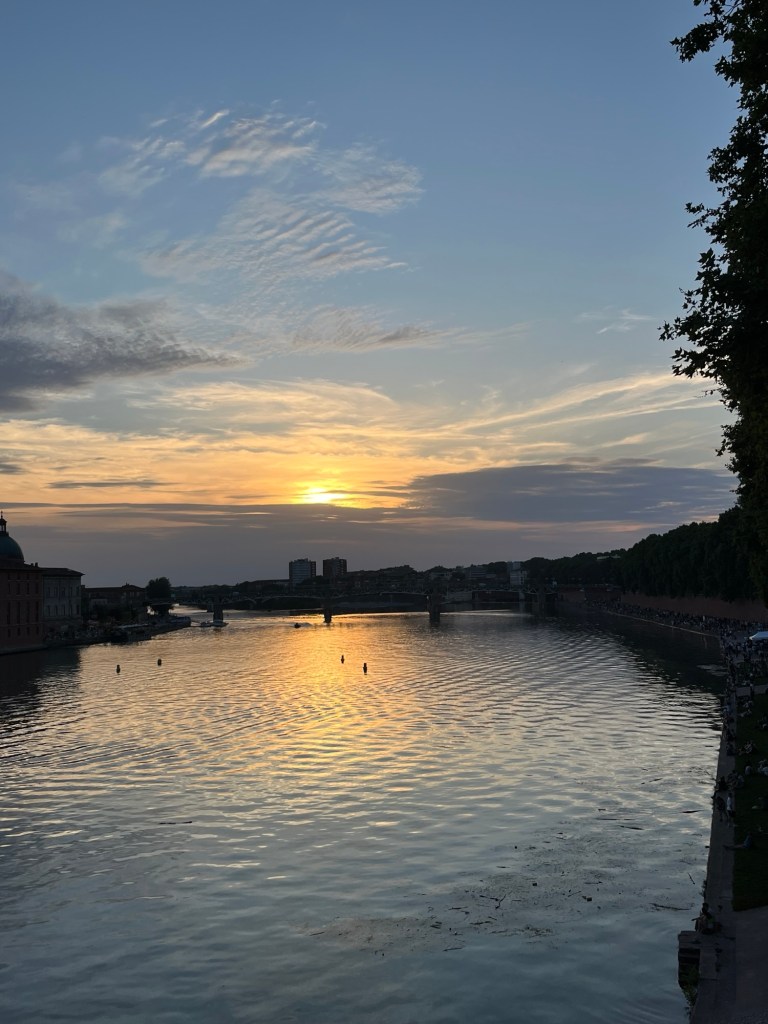
Around 8:30, Bridgett and I headed down to the Garonne River to see the sunset. (Grandpa Nelson had been done in by the 95F temperature and opted out).

The crowds along the river were big and getting bigger by the minute, folks out to celebrate the Solstice, hear the music, see the sunset, and hang out with friends.

It was lovely. We stood and listened and watched the sparkles on the river as the sun dissolved into a cloud bank.

And then we headed home. Thanks, Toulouse! You were wonderful! Really hot, but wonderful.

Love,

Grandma Judy

Day Trip to the Romans Part 2

June 9

Dear Liza,

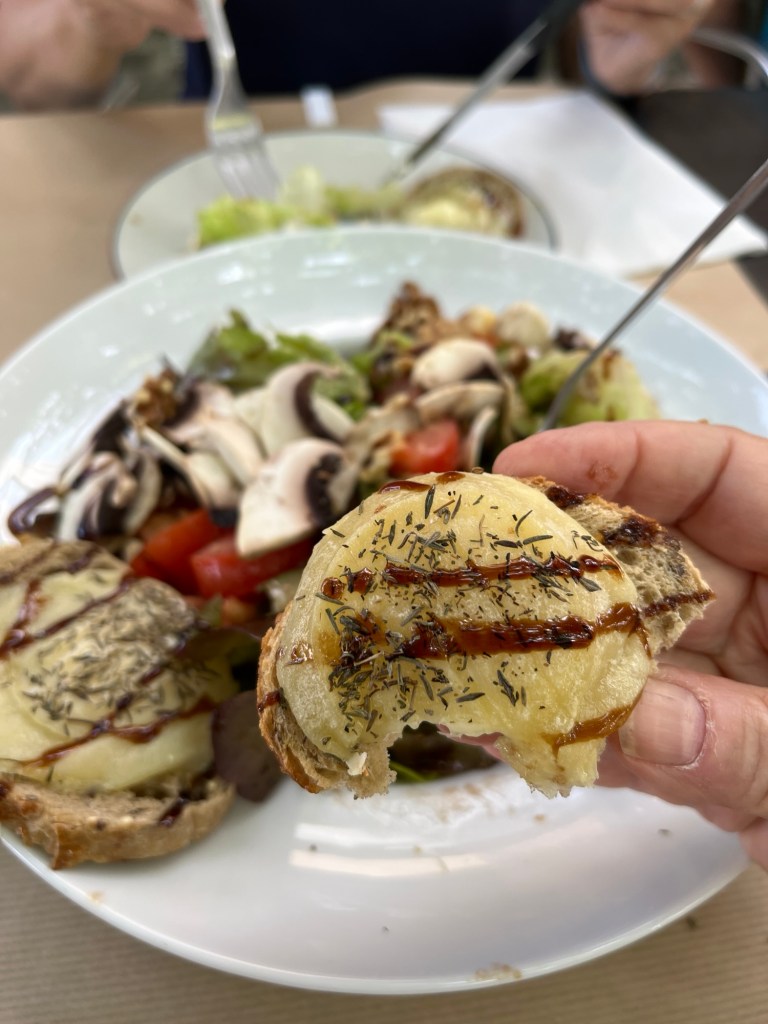
By the time we got to Arles, it was lunchtime, and we know better than to skip lunch. Fortunately, we found Le France, a wonderful café with outdoor seating under the plane trees. Bridgett and I shared a chèvre chaud salade avec toasts. This is a generous pile of greens, mushrooms, tomatoes, basalmic vinegar, and rounds of toast with warm goat cheese on them.

It was wonderful, and it even left us room for dessert! We splurged, with a tiny chocolate lava cake, tiramisu, and crème brûlée shared between us. Oh, and coffee to finish the meal (and give us jet fuel for the adventure ahead.)

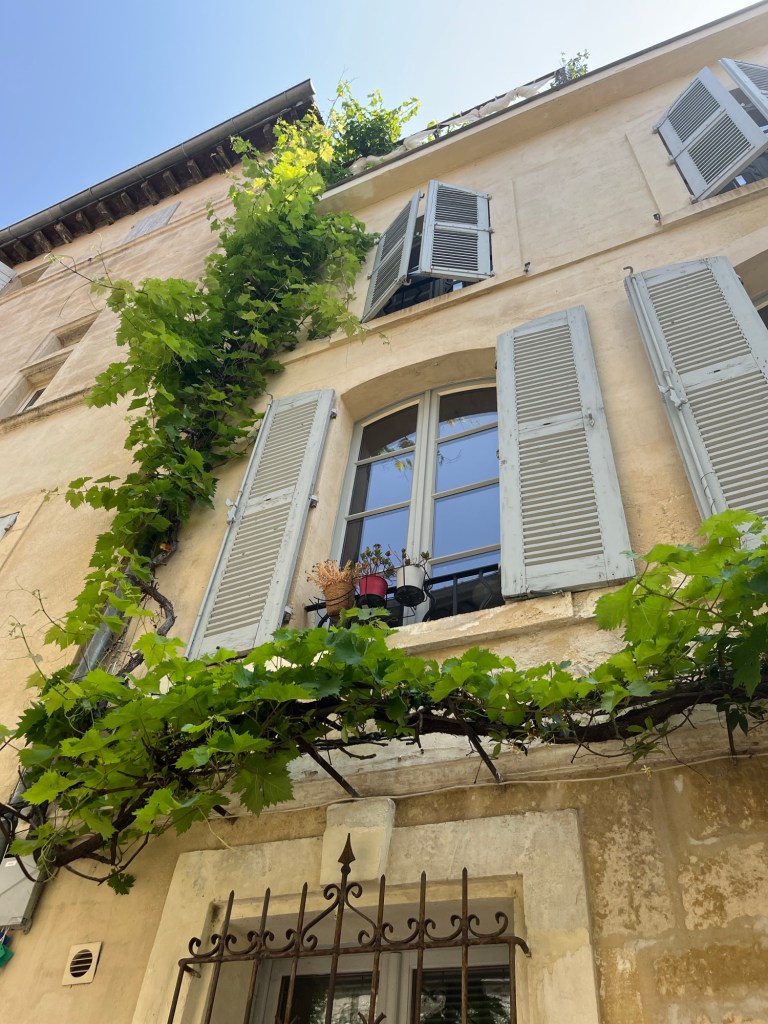
We walked through the city’s medieval walls and up the delightful Rue de Voltaire. Grape vines, wisteria, ivy, and star jasmine climbed up to balconies and made the whole street look like a painting and smell wonderful.

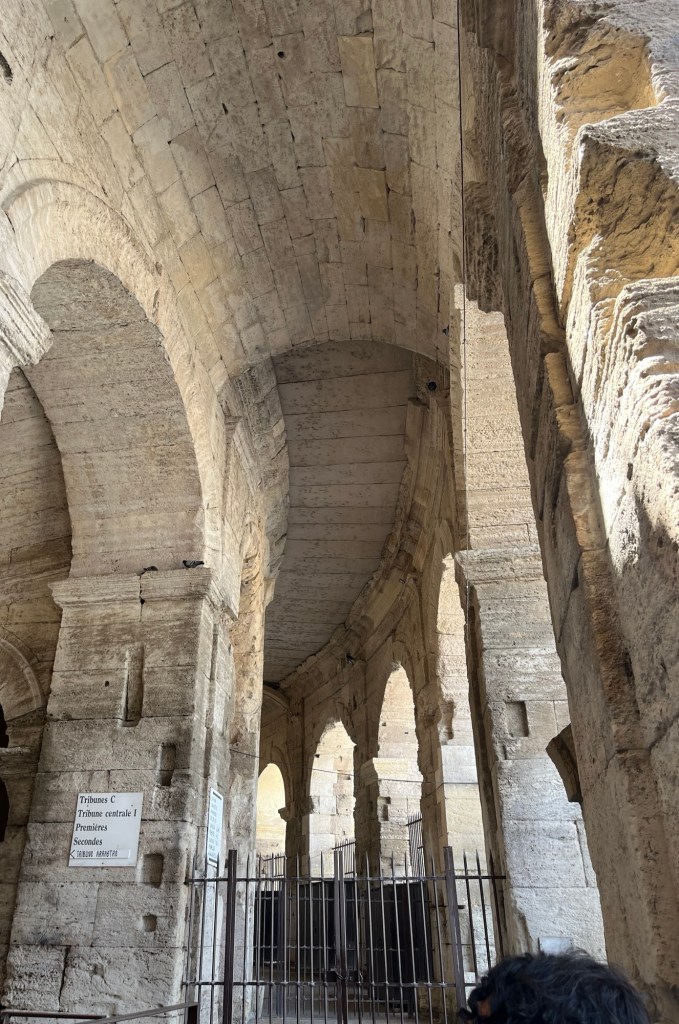
And right smack in the middle of town was the Roman Arena! Begun in 90 A.D, it was the scene for gladiator games and other violent ‘entertainment’. Being a firm believer in cognitive dissonance, I can hate the games and admire the architecture.

And I do!

This arena could hold 20,000 people, had bathrooms to accommodate them and efficient corridors that could clear the whole place quickly. It is still standing, and still in use, today. The electricity was being updated for the upcoming bull fighting season.

The most surprising thing I learned about the Arena was that in 1822, when France decided the Arena should be restored and maintained, the first thing they had to do was get the people living in it to move out! Apparently, in the lawlessness that followed the collapse of the Roman Empire around 500 A.D., folks moved into the arena and built houses, like a walled village. And their kids stayed, and they built more houses.

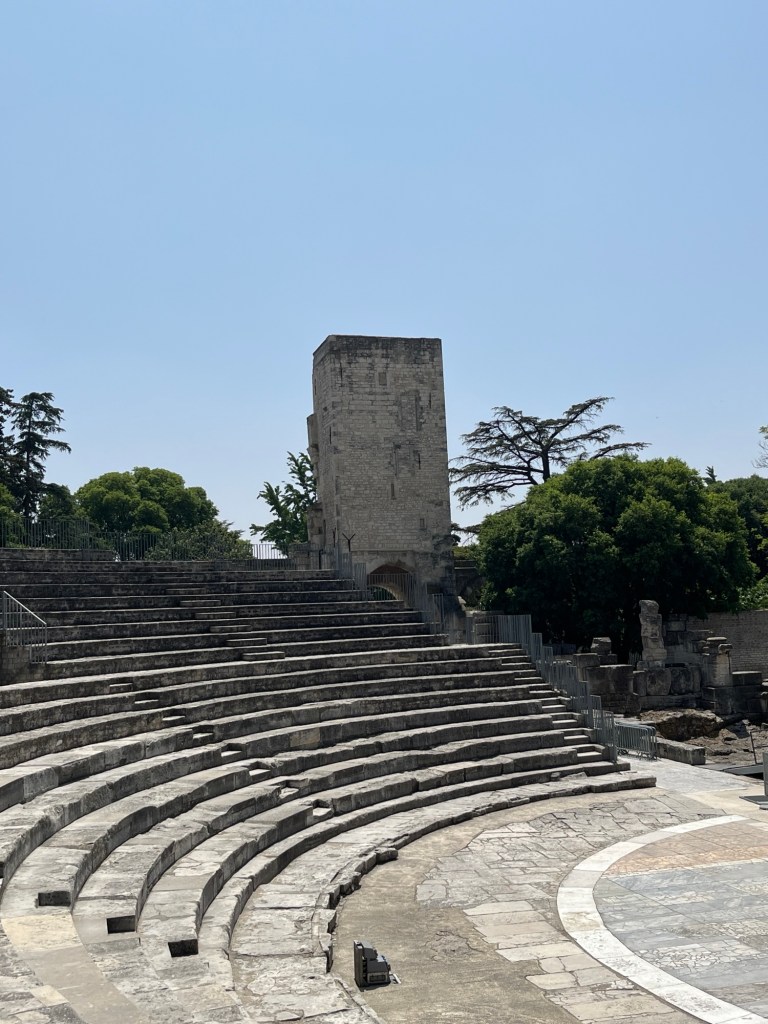
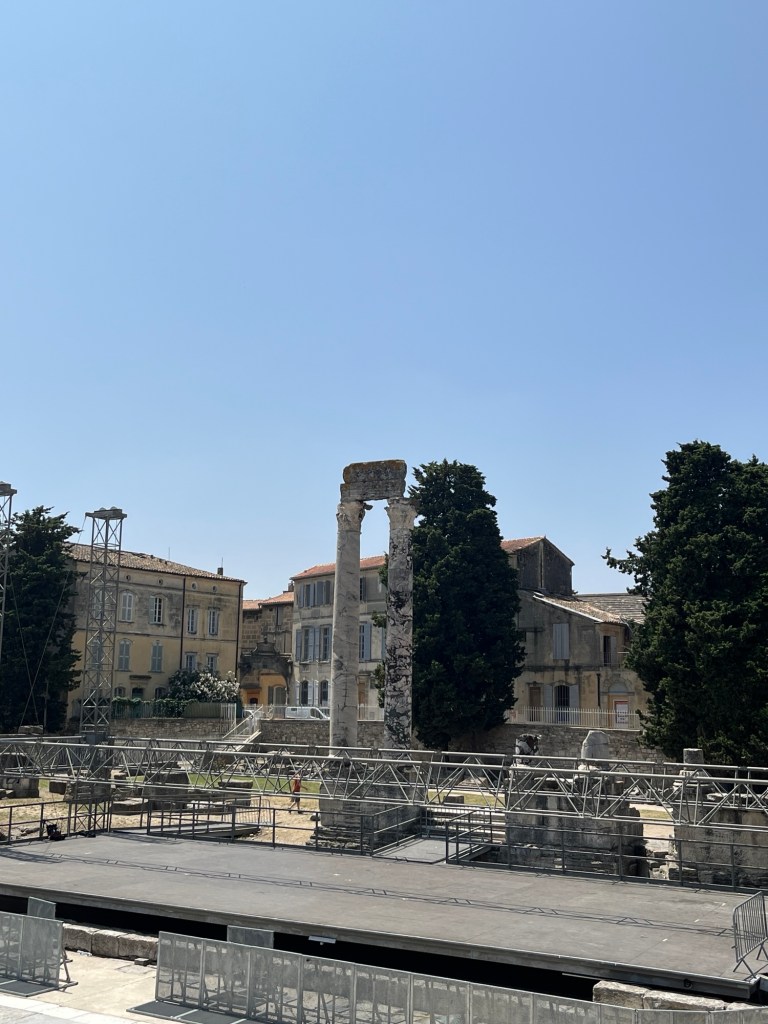
A few blocks up from the Arena was the Theater. It has suffered more from “recycling”, with only the first tier of its seats still in place. It is missing the wall behind the stage and all the decorated pillars but two that made it up the decorated back wall of the stage.

But this is still being used, as well, as you can see by the sound equipment being installed for summer concerts.

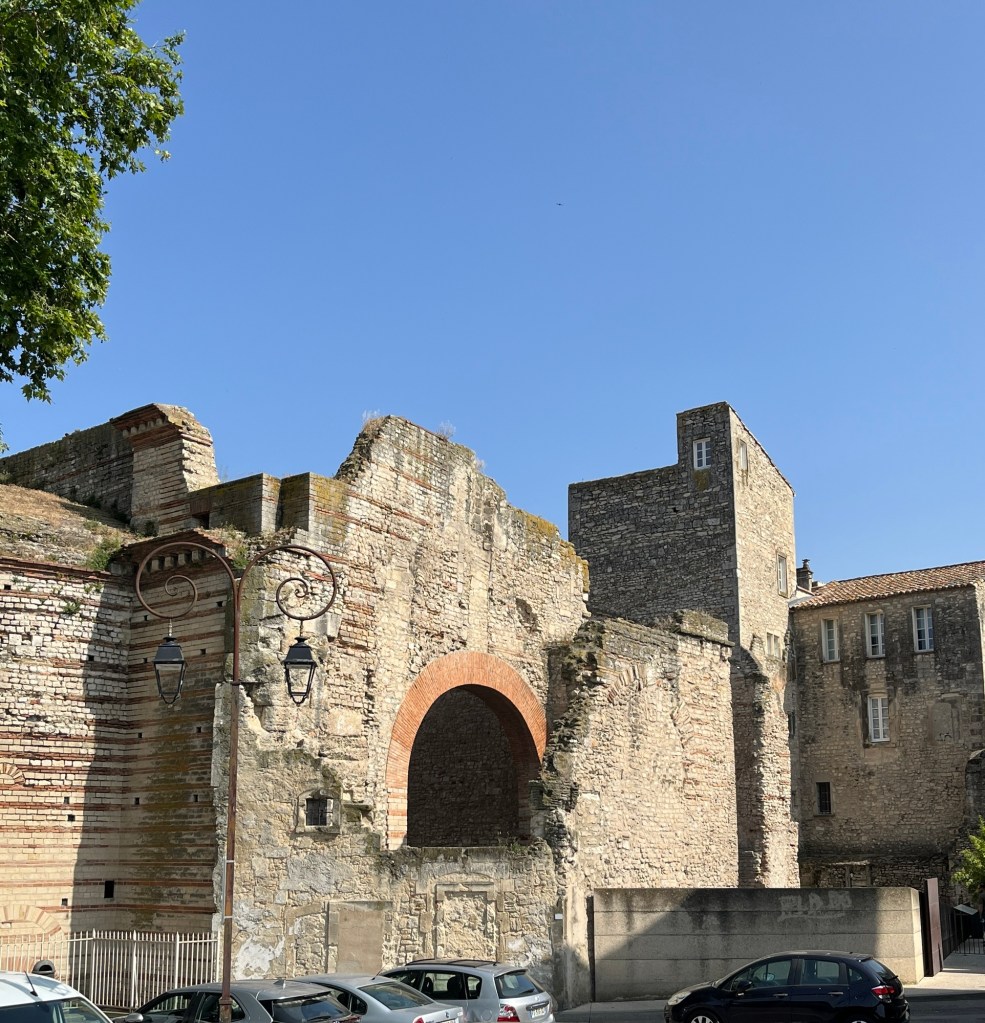
Closer to the Rhône are the ruins of Emperor Constantine’s thermal baths, but we saw them at a trot as we hurried to the train station for our trip home.

Love,

Grandma Judy
People and Patterns Part 2

June 6

Dear Liza,

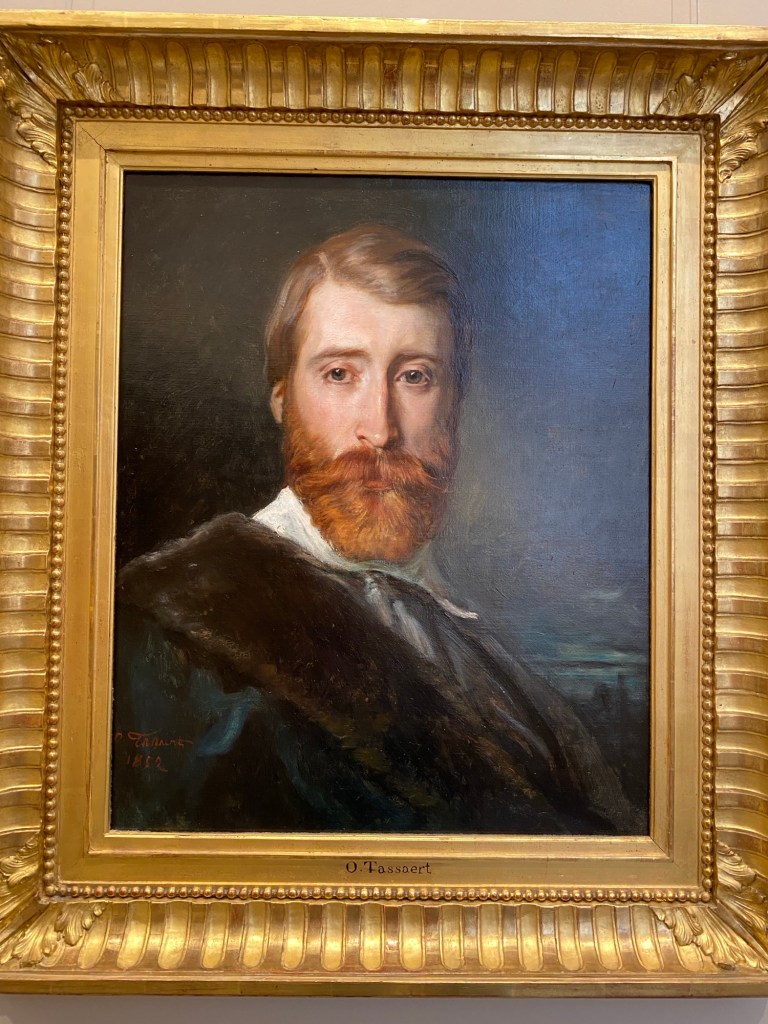
Wandering through the Fabre Museum in Montpellier, the portraits were fun to look get to know on a personal basis. Their life stories, which I looked up if I could, were reflected in their eyes.

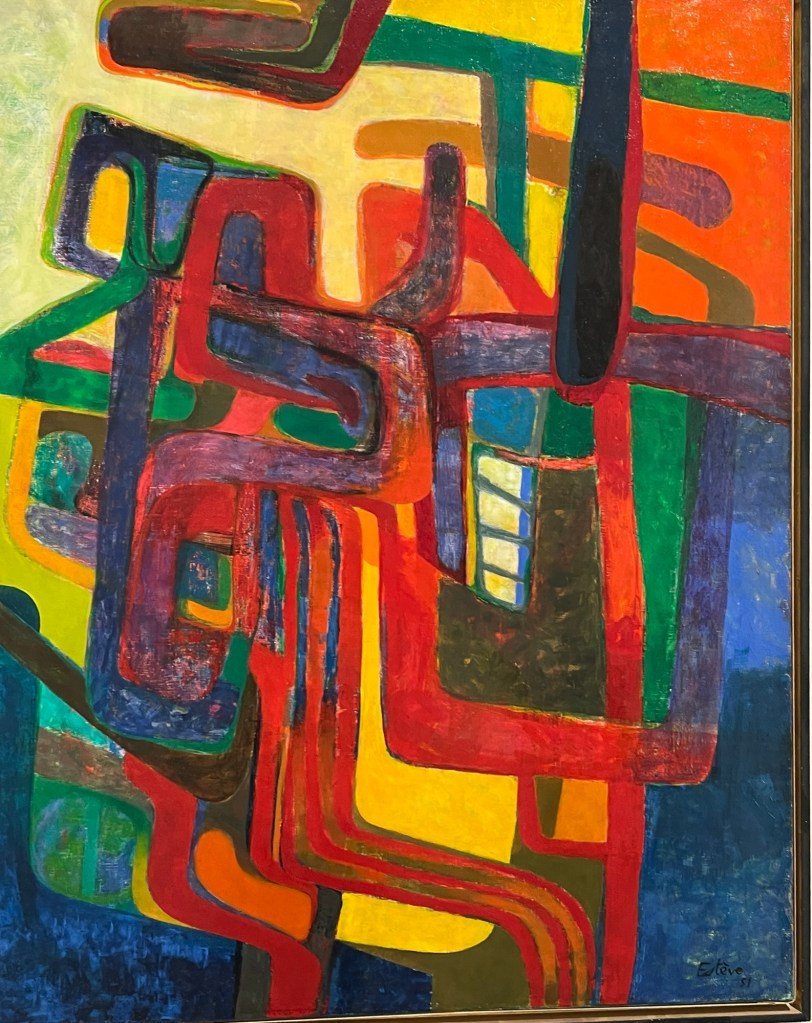
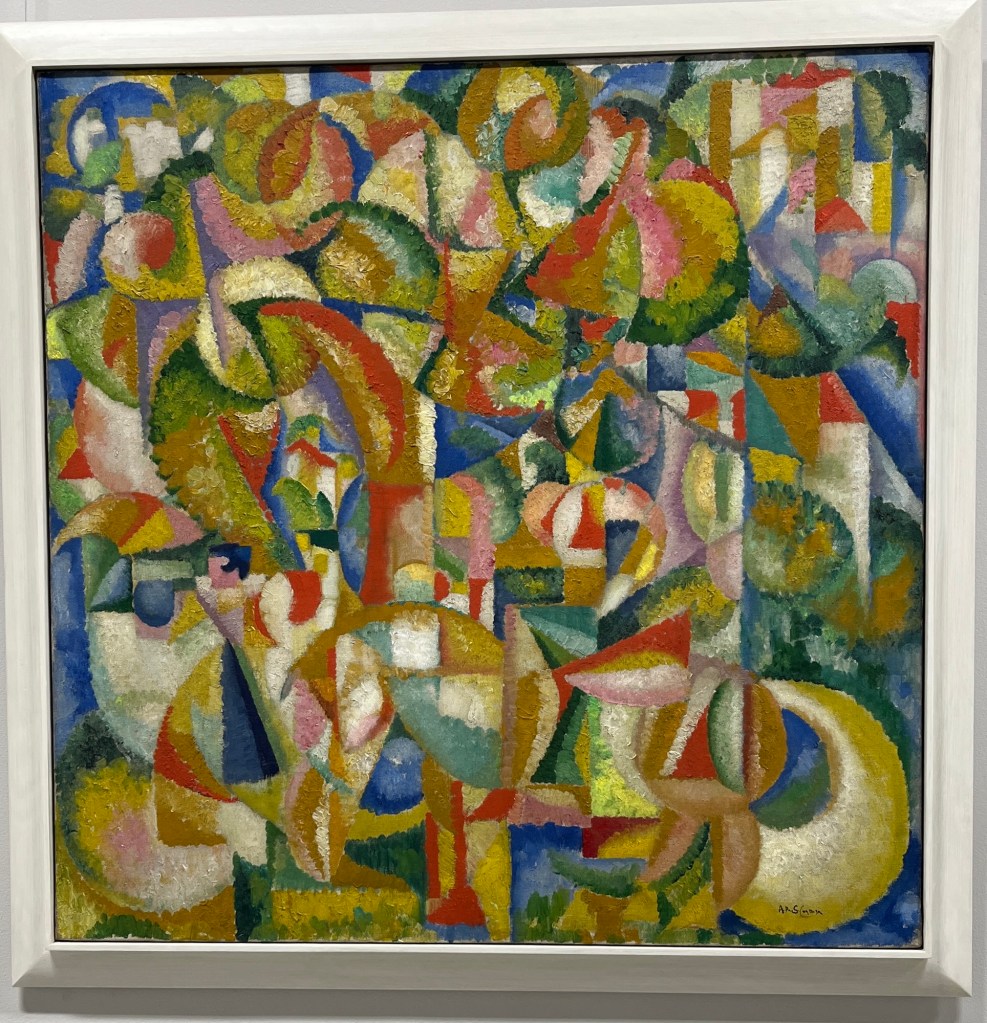
The other type of paintings I enjoyed were the modern pieces that focus on pattern. The problem is, I always forget to record the title and artist of these sort of paintings, so I can’t go look them up or find them again.

I like to try and find the balance that the artist was looking for, how the colors are related, and what I can learn from it. My quilts are much like these pieces, with blocks of different colors and textures working together to make an harmonious whole.

And then there is this piece, which is a very abstracted , but still representational. See the houses? The clouds? The boats?And the woman? This is a fun kind of painting… part riddle, part artwork.

Our day at the Fabre Museum was time well spent!

Love,

Grandma Judy

People and Patterns Part 1

June 5

Dear Liza,

Yesterday was predicted to be even hotter than usual, in the high 80s, so we chose to spend the day inside with art. Museums are always careful to protect their possessions, and we get the benefit!

The Fabre Museum here in Montpellier is housed in a combination of buildings from 1825, 1952, 1978, 2007 and 2019. Seeing all its galleries is a delightfully maze-like experience.

As we walked and stared and whispered, I tried to notice which kinds of art attracted me and which kinds I could give a glance and happily move away from.

Turns out, I like people. Portraits, formal or informal, whose eyes look right at you, catch my heart. I want to see into their eyes and get to know them. Elizabeth Denis, painted by her husband Maurice Denis, looks so happy and loved that she makes me glow.

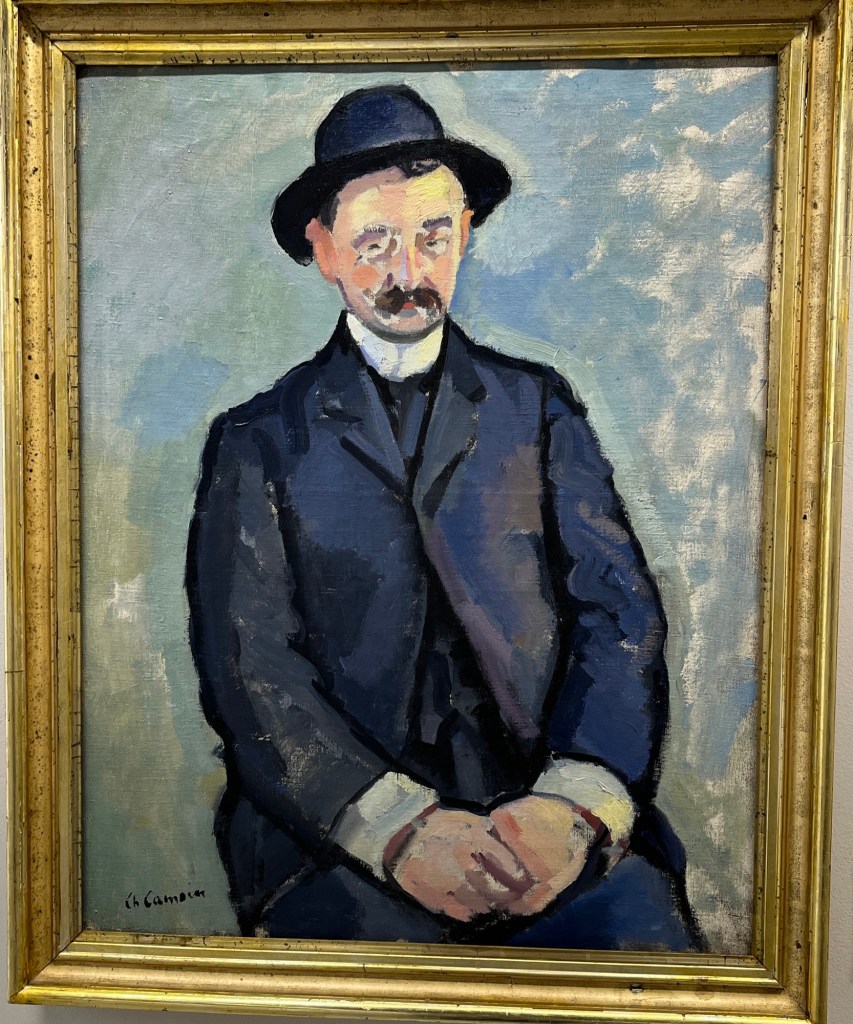
And this little fellow, Albert Marquet, painted in 1904 by Charles Camoin, look so unassuming and gentle that I want to buy him a cup of tea and hear about his day.

And then there is Alfred Bruyas, who seemed to be everywhere! Bridgett took four pictures of his portraits once she recognized him, and there were many more.

A handsome fellow, to be sure, but more than a dozen portraits? Who was this guy? Using my broken French, I asked a friendly and animated museum guard… “Qui était cet homme?” The guard was happy to explain that Alfred Bruyas was an aristocrat, with more money than he knew what to do with.

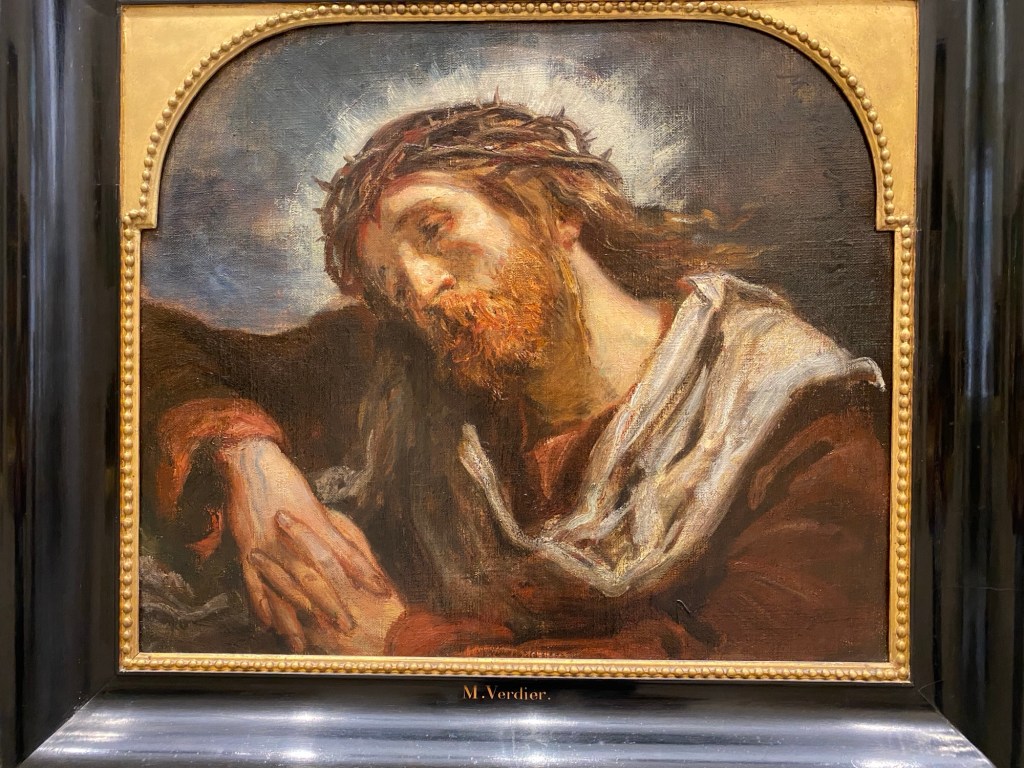
He had wanted to be an artist but didn’t have the talent, so he chose to support other artists by commissioning portraits from them. Lots and lots of portraits, including one of himself as Jesus. Apparently he saw himself as a martyr, sacrificing his wealth for art. Hmmmmm.

So, some portraits catch my heart more than others. I guess using one’s inherited wealth for self-agrandissement disguised as charity is not a new thing.

Anyway, I love where my mind wanders in Art Museums!

Love,

Grandma Judy

Exploring Montpellier

June 2

Dear Liza,

We are settling in to Montpellier pretty well. It is hotter than we are used to, so we try and get all our exploring done by 3:00 in the afternoon, then rest and do art during the hottest part of the day.

We started with the Travel Advisor list of “Things to do in Montpellier”, and found that most of them are right in our neighborhood!

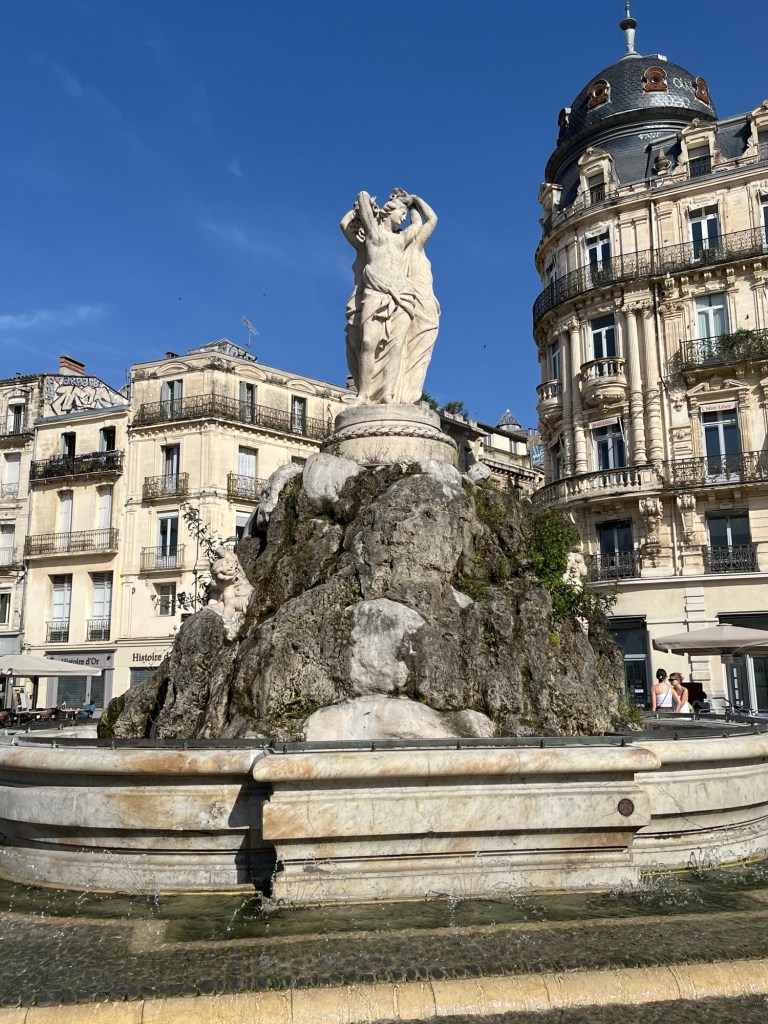
The Place du Comédie is a wide open public square, surrounded by shops and cafés and with a fountain in the middle. Called The Three Graces, it has three marble women dancing above a lumpy rock where some marble cherubs are hiding, which is above squirting fountains and a pool. As you can see from the picture, the buildings surrounding the square are classic French architecture and very pretty.

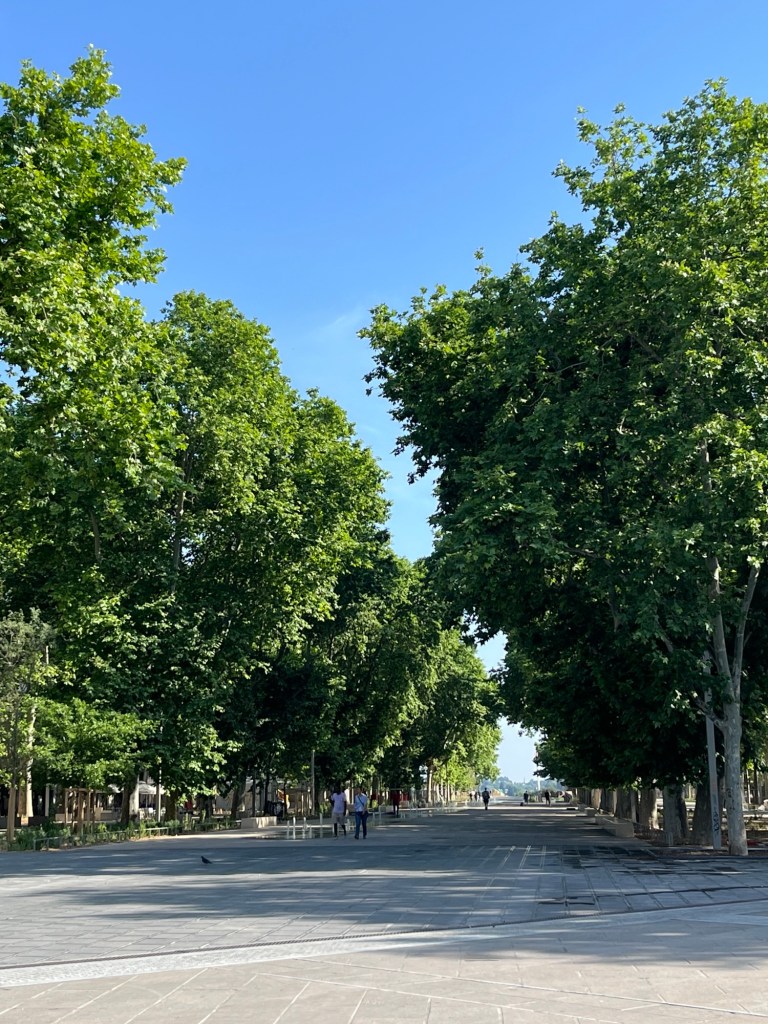
Following the public square around a corner, we found the Esplanade Charles de Gaulle, which is a wide pedestrian walkway, shaded by dozens of plane trees. Benches line the area and fun blurpy fountains squirt up out of the sidewalk. It is a fun place to hang out on a hot afternoon, staying cool and being with friends.

In the oldest part of the city, which was built in the 1400s, the streets are still laid out in their higgledy-piggledy curves, not a grid pattern like we usually do today. I think this is what Paris must have looked like before Baron Haussmann did his urban renewal in the 1800s, creating the wide boulevards.

We have seen lots of places we will got back to and explore this book and toy store looks intriguing….

And the fine arts museum.

We’re expecting thunderstorms and heavy rain tomorrow, which will make a nice break from all this heat! So we’ll be inside, doing art and writing instead of galavanting all over.

Love,

Grandma Judy
France Loves Food

May 18

Dear Liza,

France is famous for food, and Lyon is considered the Capital of Culinary Arts. And we have eaten very well since we’ve been here.

But French food means different things to different people, and as we’ve been here longer, it has come to mean different things to us.

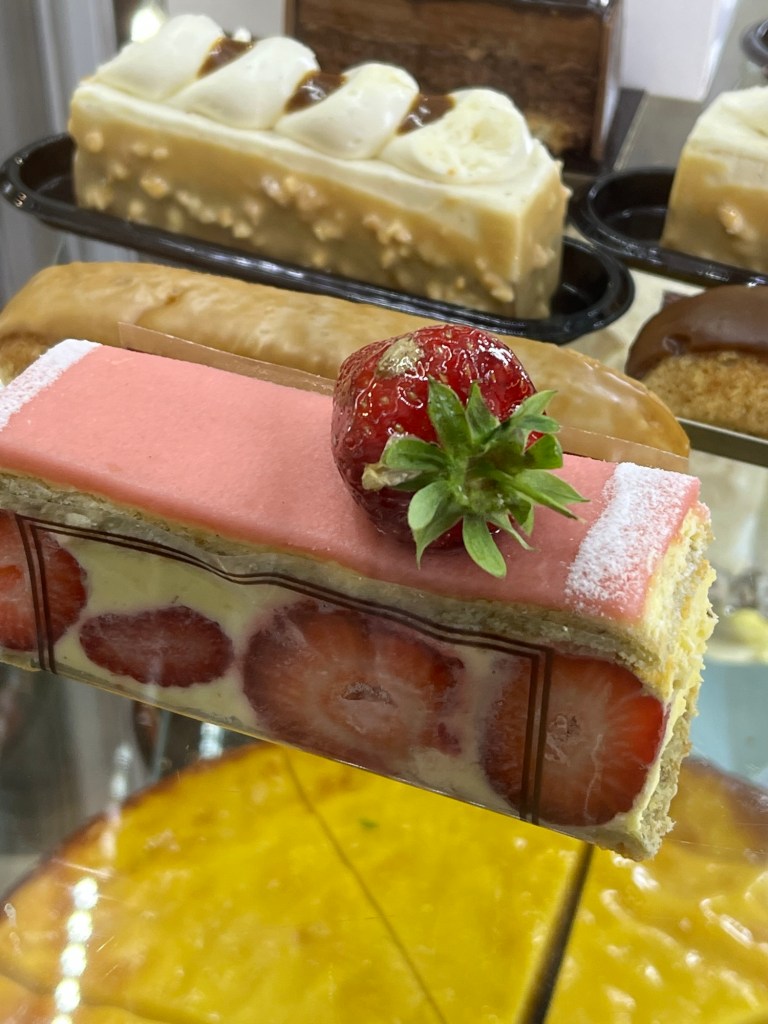
At first, you think of the beautiful pastries and delicate desserts. These are iconic, perfect, and take a lot of skill to create. But for me, they are a lot of sweet cream in a pretty shape, and not very satisfying.

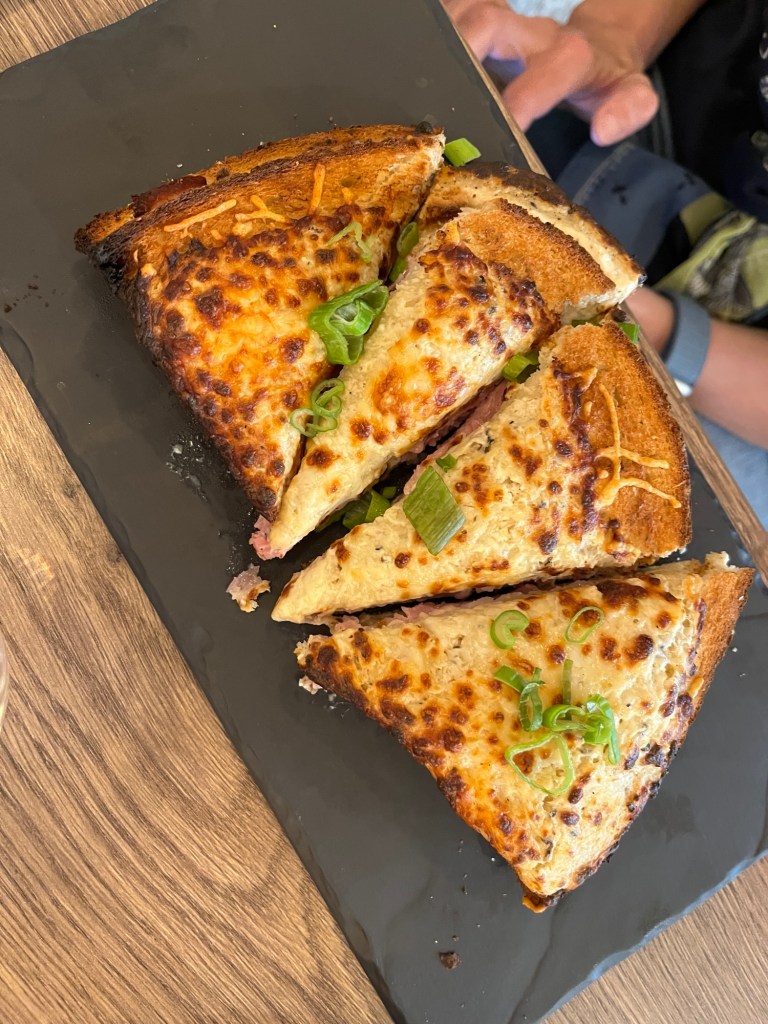
A step above them, actually, are more homely traditional foods, like the Croque Monsieur. This elevated grilled cheese sandwich has different kinds of cheese melted on brioche bread with just a few green onions tucked in. I swear, it would bring you back from the dead.

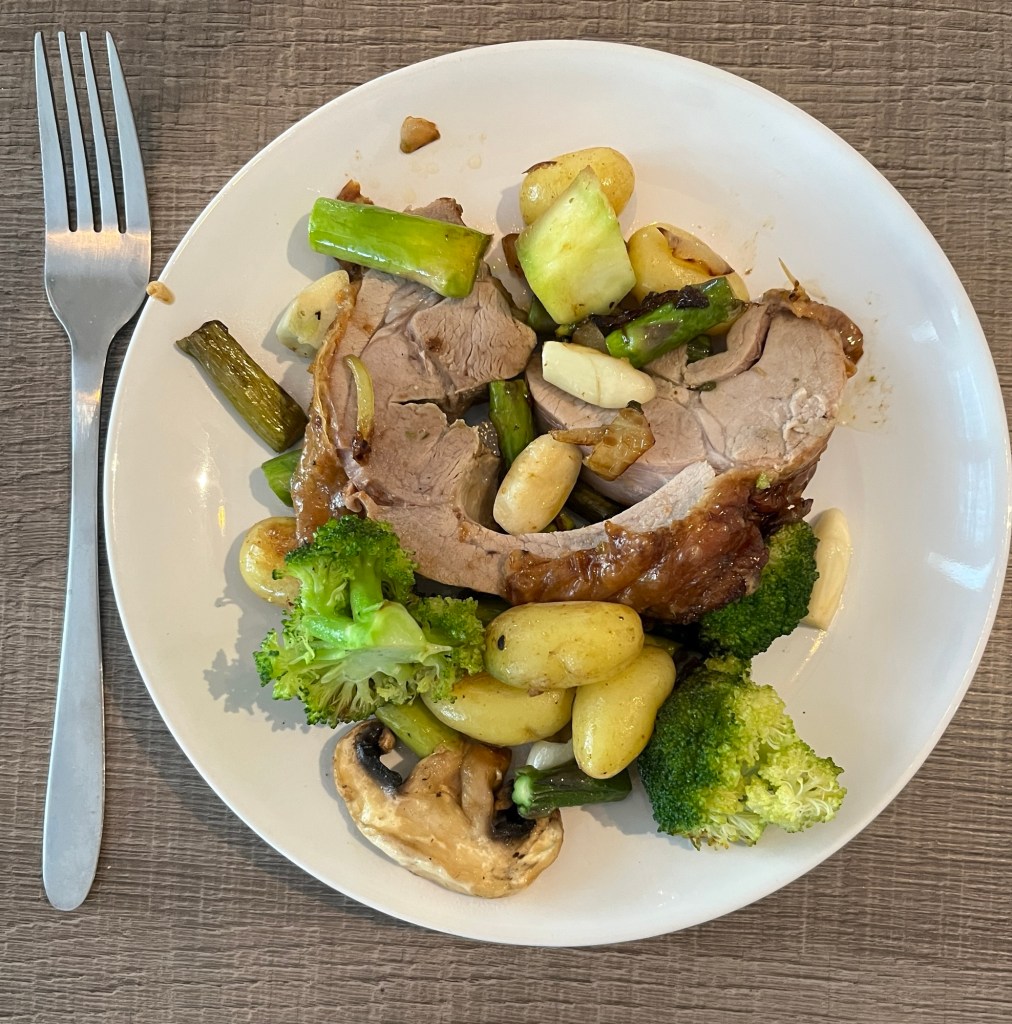
And what is becoming my favorite French food are the meals we make here in our apartment with ingredients from the twice a week marché across the street. Rotisserie Turkey rolls cooked with herbs and olive oil, are delicious pan seared with vegetables from local farms.

So far, that’s the best dinner I’ve had. And there was no reservation to make, crowd to deal with, bill, or language barrier. Just fresh, yummy food, simply prepared, at the end of a fine day’s site seeing.

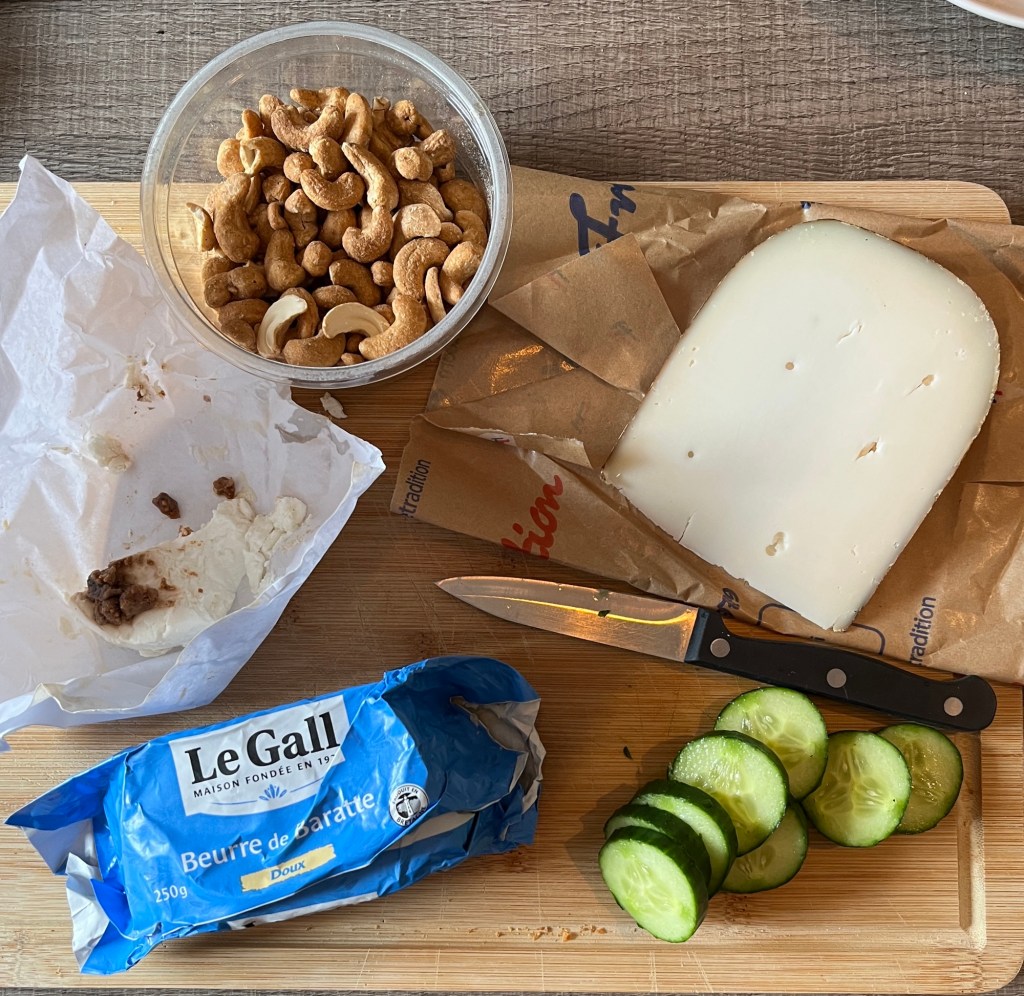
Lunches are more grab and go, with cheese and veggies, bread and butter being my favorites. Vegetables here are bred for taste, not shelf-life, and the cucumbers are firm and flavorful. French cheeses number in the hundreds, and the butter is amazing.

We are having lunch out with some new friends at a new place in a few days, and I’ll let you know how that goes!

Love,

Grandma Judy
Day and Night in Lyon

May 17

Dear Liza,

We have been so active during the day here in Lyon that we are worn out by evening, and make an early night of it. But this past weekend was the European Night of the Museums, and every museum was open, free, from 6:30 until 10:30.

You know we had to get some of that!

But first, it was a pretty, sunny day, and a walk was called for. Auntie Bridgett and I wanted a short stretch of the legs before resting up for the long evening, so we explored some new corners of Parc de la Tête d’Or.

This small, humid greenhouse had incredible jungle growth.

Huge leaves, bright blooms and bizarre shapes were hanging and sprouting all over! it was amazing.

Once evening came, we took the A line metro to Place Bellecour and walked to a place Grandpa Nelson had seen, Café Française.

It looked nice, but their terrace was crowded, smoky, and we sat for 30 minutes without seeing a waiter. We like leisurely French service, but this was ridiculous.

So we headed a few streets off the main drag and found Aperothéque, with fewer people, a cool interior, and waiters who acknowledged our presence. Their food was good, too.

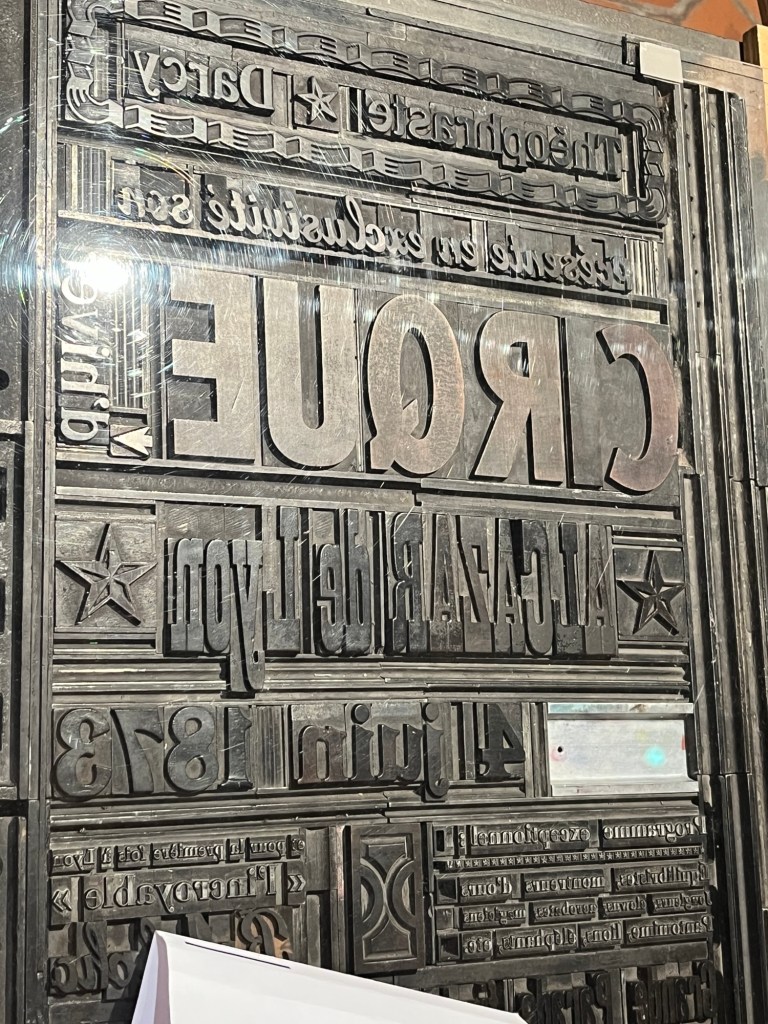
And finally, to the main attraction! We started with the Museum of Printing, which was full but pleasantly orderly. Housed in a Renaissance mansion that used to be Lyon’s City Hall, the museum tracks developments in printing from carved wood blocks to moveable type and its effect on religious reform, to multi-colored computer printing. It was reading-intensive, but well done and fascinating.

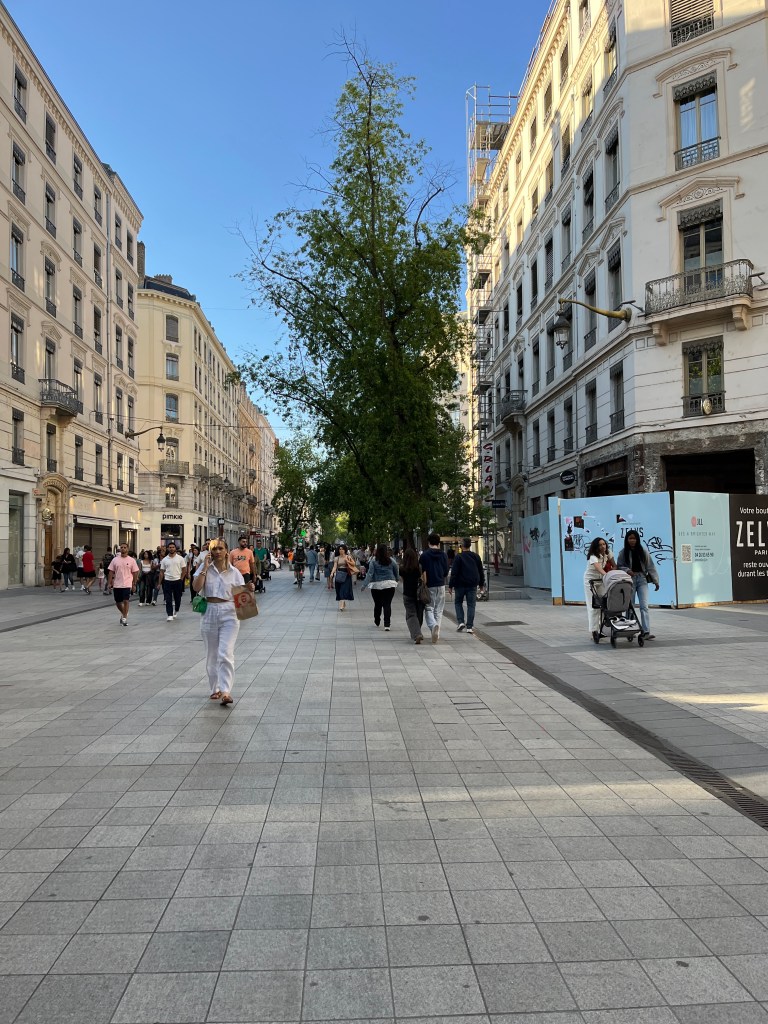
We were feeling a bit foot sore, but a delightful walk through bustling pedestrian streets got us to the Fine Arts Museum.

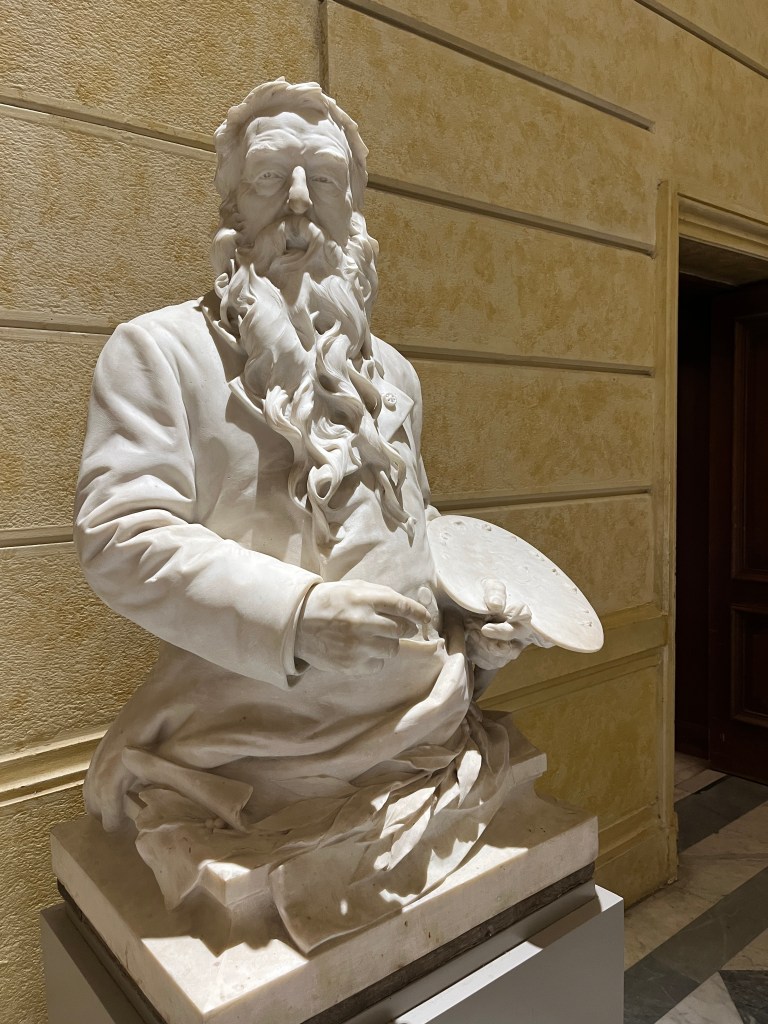
I didn’t take many pictures inside the Museum, because there were so many people coming and going so quickly, I felt like I just needed to hold on! Here is a lovely marble bust of August Rodin, looking as concerned about the crush as I was! We didn’t stay long.

Once we found peace and space outside in the Place Terreaux, we saw our first sunset in Lyon and made our way back across the bridge and home.

This is a wonderful city, day and night!

Love,

Grandma Judy
More Tête d’Or

May 16

Dear Liza,

One of the best things about having a long stay in a wonderful city like Lyon is that you can visit your favorite places more than once.

We have been back to the Parc de la Tête d’Or four times, and keep finding new things! Miniature golf. Free Range deer. Climby ropey things.

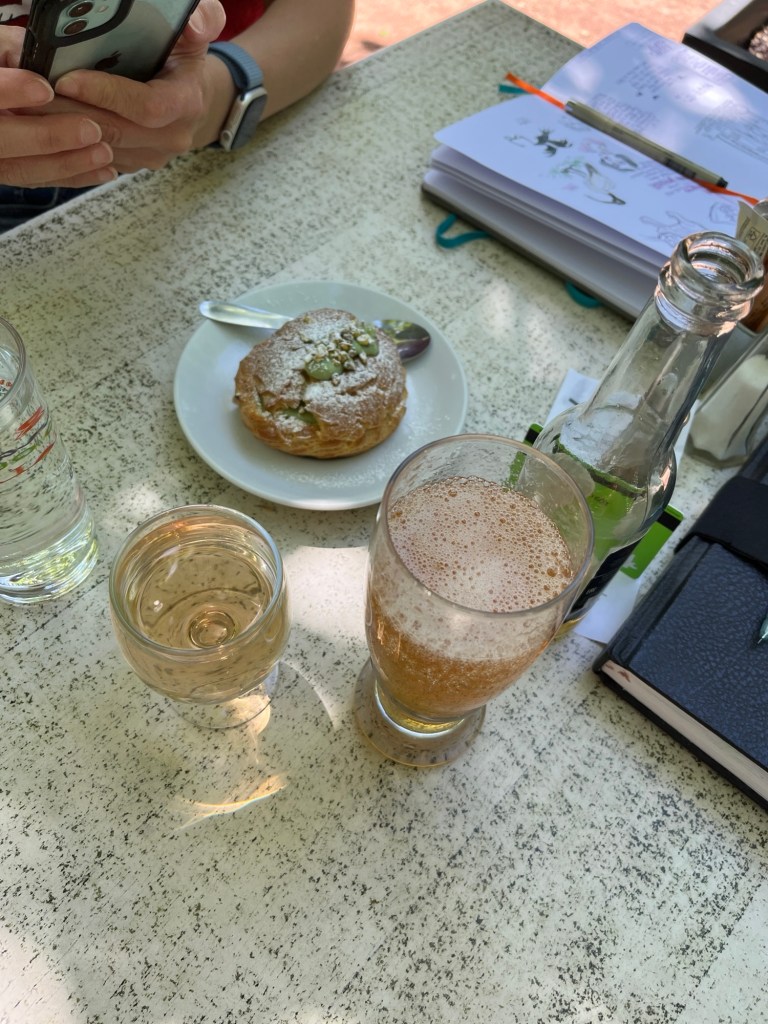
And today, we found the Buvette de l’Observitoire, where they serve all sorts of lunches, desserts, and drinks. Auntie Bridgett and I shared a ricotta chou sucré, where ricotta cheese and pistachio cream are blended together and put inside a sweet bun. SO good! I also enjoyed a cider and Grandpa Nelson had some rosé.

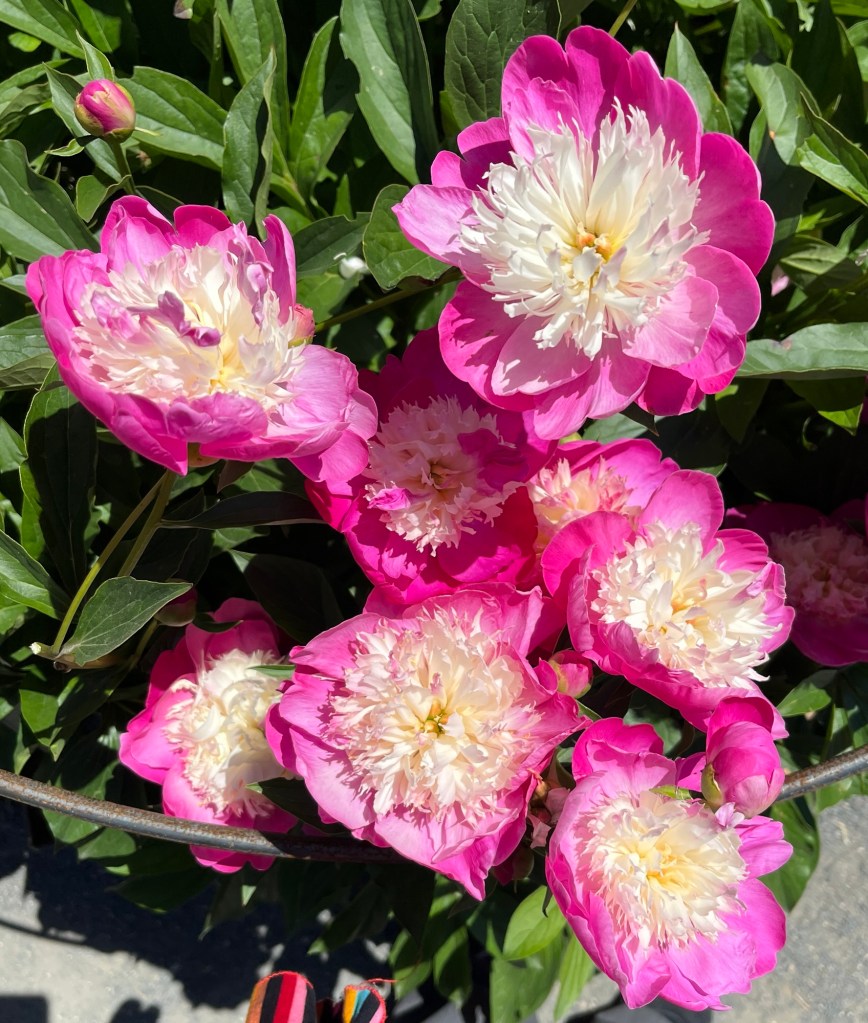
We also found several new ways to get lost on the way to the Orangerie, discovering a bunch of peony beds that are blooming like crazy.

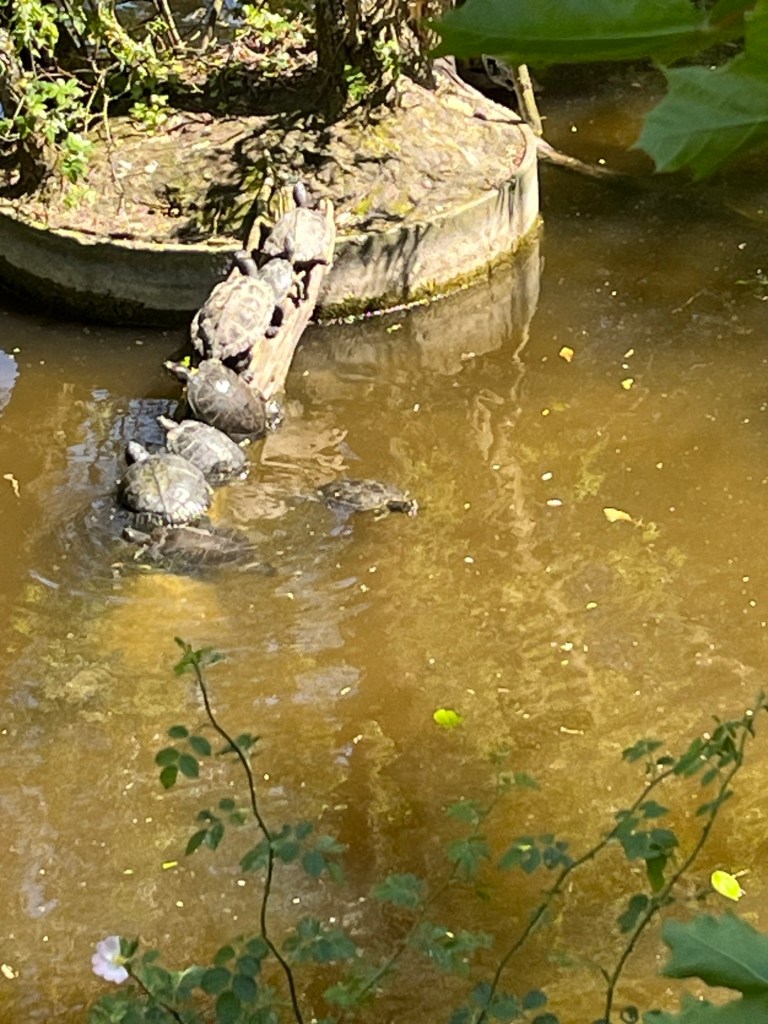
There was also some crazy turtle convention going on in one of the ponds.

By the time we got home, we had walked more than five miles…. And we do this A LOT. We could walk the park every day all summer and see something different every day.

117 hectares is a lot of park!

Love,

Grandma Judy

Finding the Families at Lyon’s Gallo-Roman Muséum

May 14
Dear Liza,

Once they got settled in, the Roman Empire was in Lyon for a long time. For 368 years, from 43 AD to 411 AD, the Roman Empire built and ran Lyon, which was then called Lugdunum.

It’s no wonder, when the Empire fell and the Roman army left, that a lot of stuff was left laying around.

Great piles of that stuff has been collected by folks who came later, from Medieval farmers to modern archeologists, and put into this wonderful, modern Musée at Lyon.

The museum itself is a wonder. Built right into the back wall of the cliff that houses the amphitheater, it spirals down, leaving only the entrance and a few windows to give it away. Artifacts are arranged by era and type, so we can see the progression in ceramics, jewelry making, and glass work.

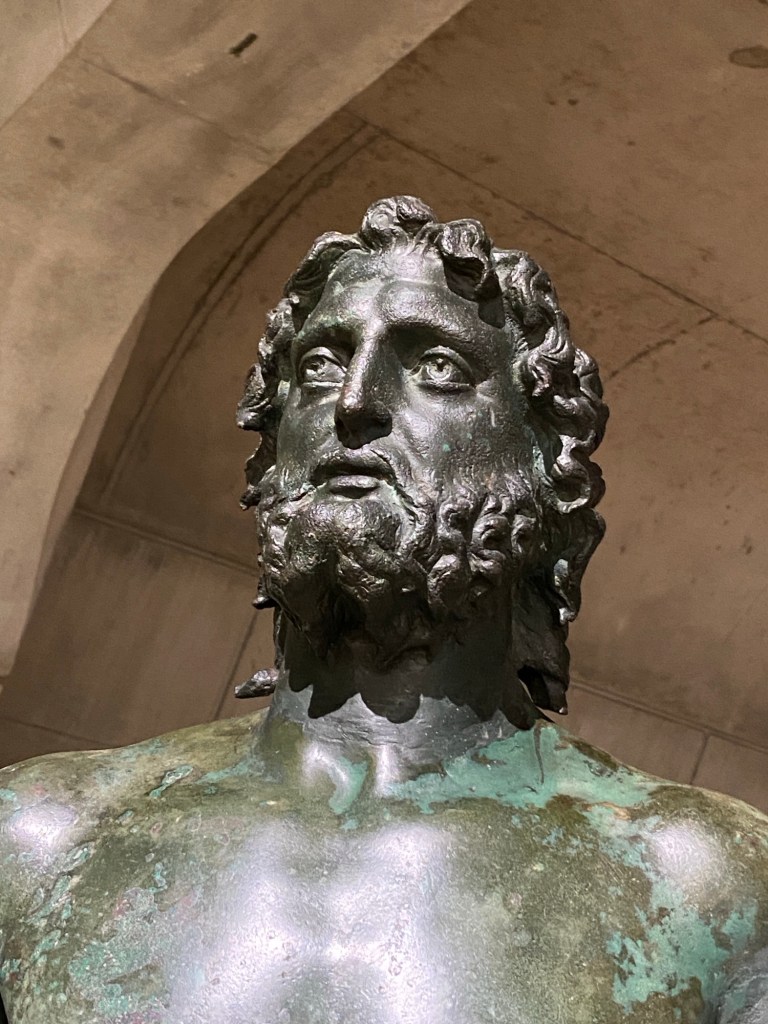
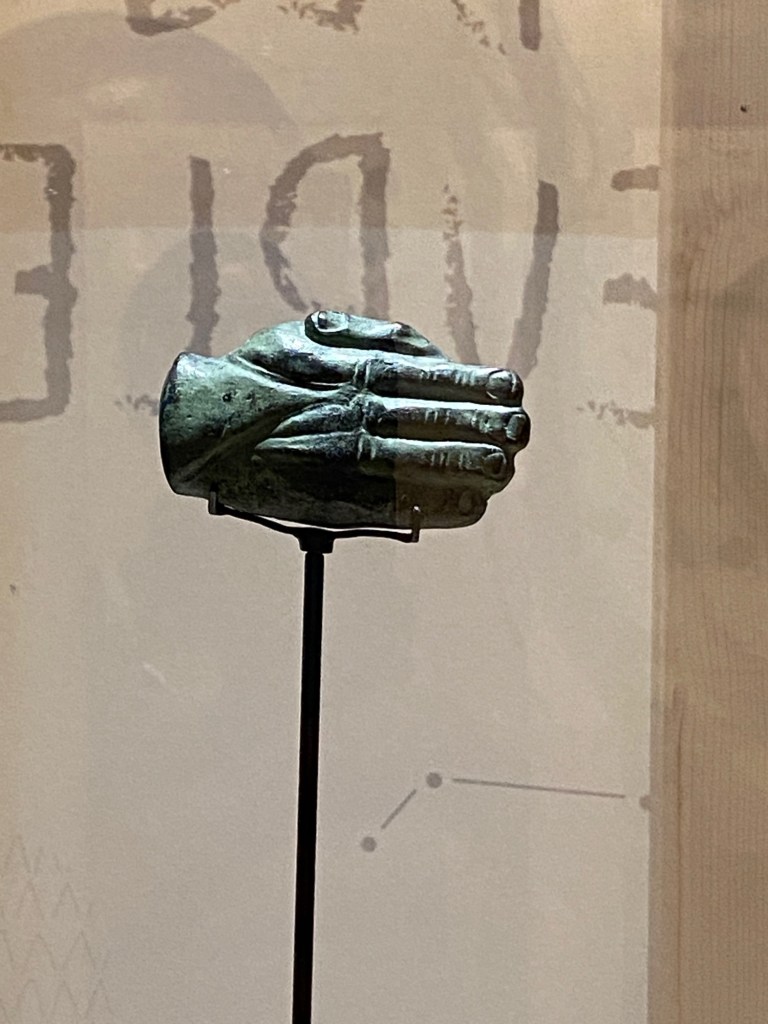
We get to see the variety of religious articles, from tiny pocket divinities to greater than life sized statues that Romans looked to for comfort and protection.

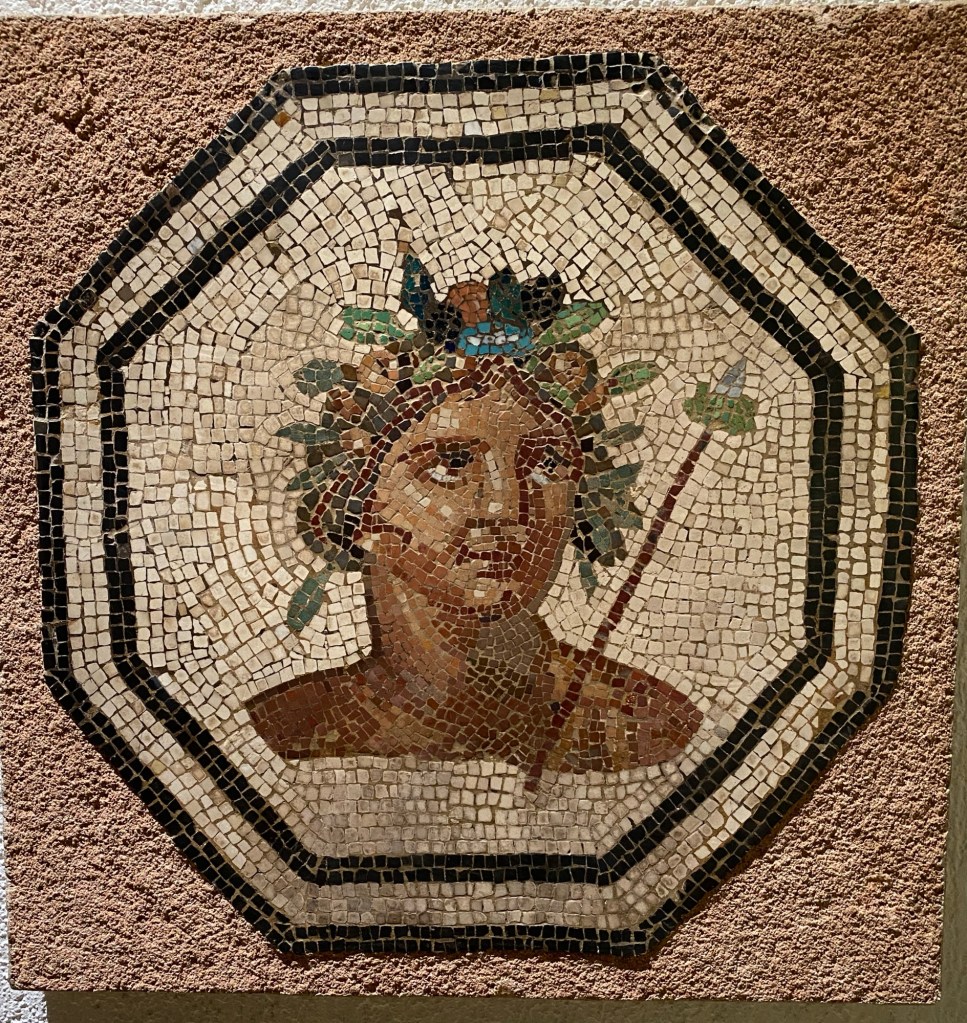
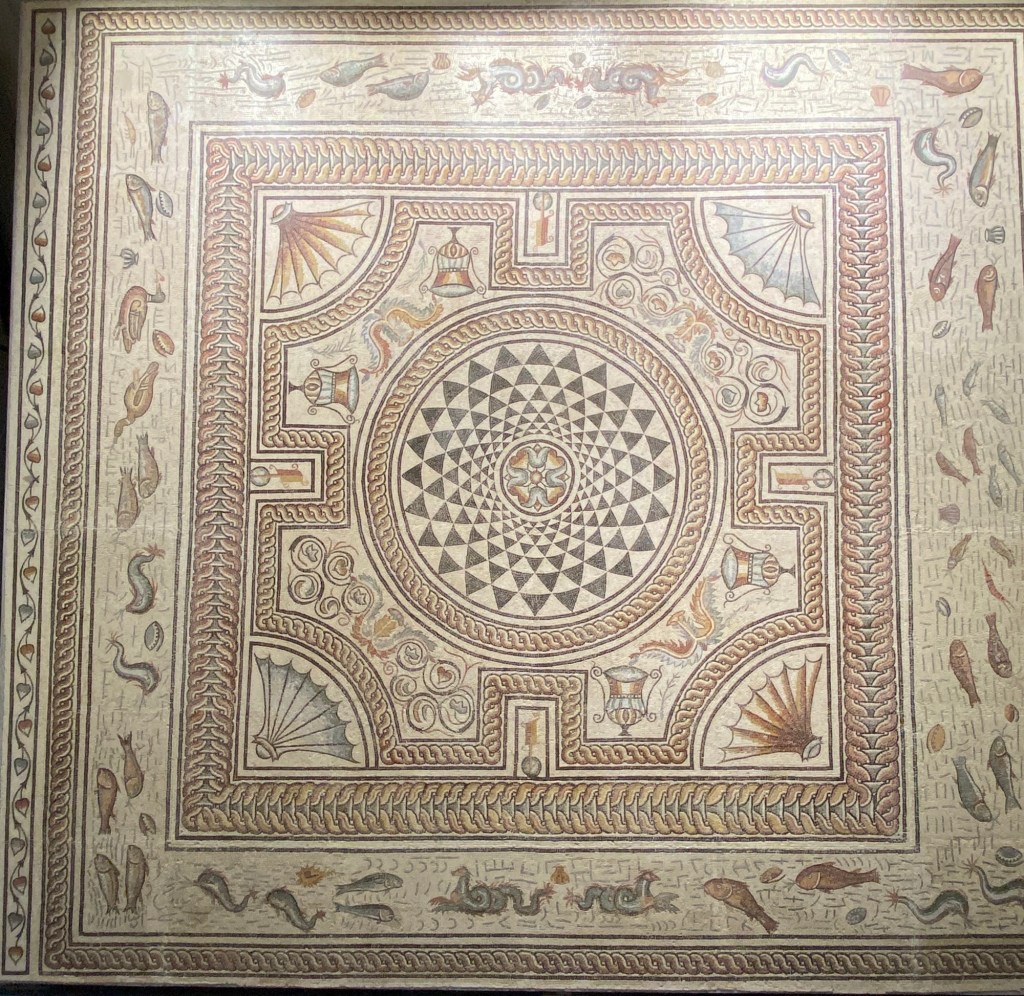
And the floors. I told you there would be floors, didn’t I? Many of the houses of Lyon, once they were properly excavated, were found to have these magnificent mosaic floors.

I actually got emotional, sitting right there, touching a floor that Roman moms played with their babies on, that dogs ran across, that people hugged and cried and celebrated on. These weren’t characters in a stone fresco. They were humans, making their way through life.

We kept spiraling our way down, learning about how people moved around the Empire, from Turkey and Spain, Germany and Iraq, to make the Empire diverse and powerful.

And when we reached the end, we were at the bottom of the Amphitheater, and just walked across the stage and down the road into town. From the ancient everyday world to the modern everyday world.

Amazing.

Love,

Grandma Judy