Up to The Hill That Prays Part 1

May 11

Dear Liza,

We headed up, finally, to visit a place we have seen every day we have been in Lyon.

The Basilica of Notre Dame de Fourviere stands on the top of the hill west of Lyon, and is visible from most of the city. But to get there, we took the A line Metro, then walked across a bridge, then took a funicular train almost straight up to the top of the hill.

Since the funicular is part of the transit system, we just used our regular bus cards!
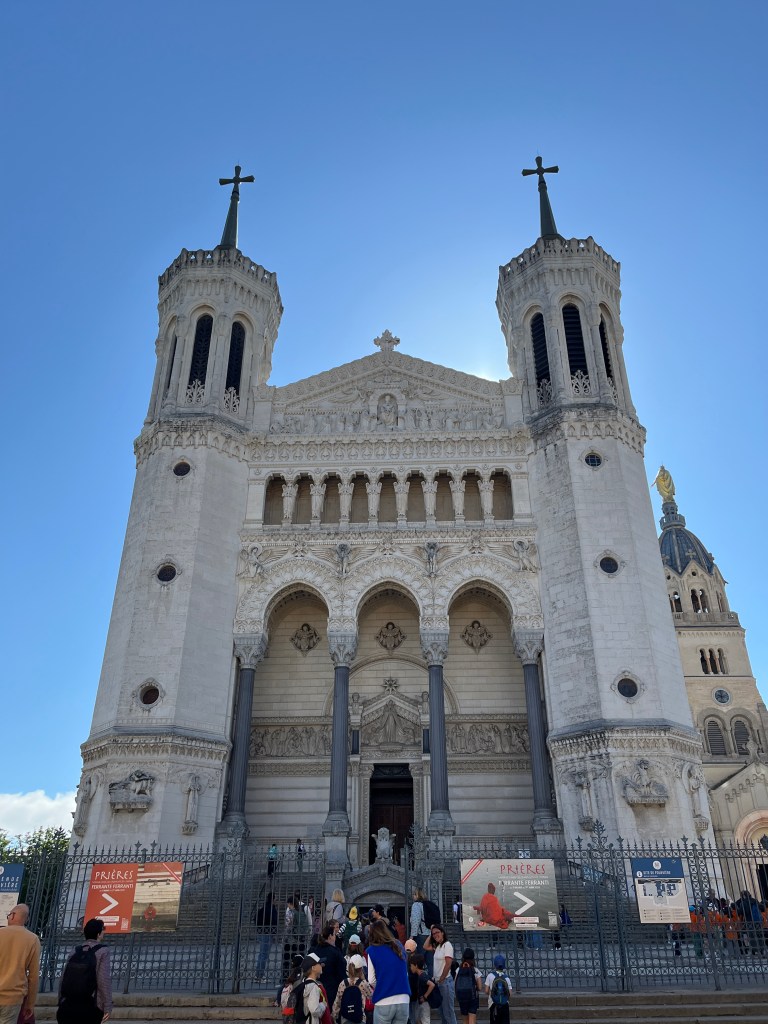
It was easy to find the church… it’s huge! Also, there was a pretty steady stream of tourist buses and school groups heading in that direction.
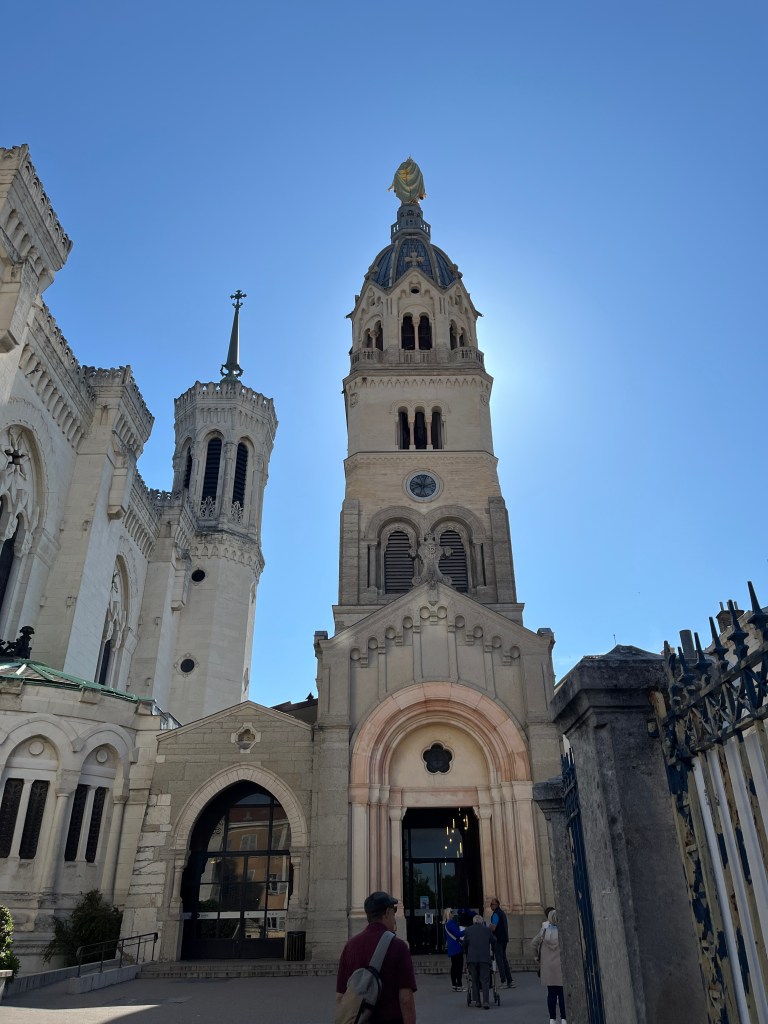
Before we went inside, we walked around to the bell tower, which is on top of the chapel that was built here originally, in the late 1700s.

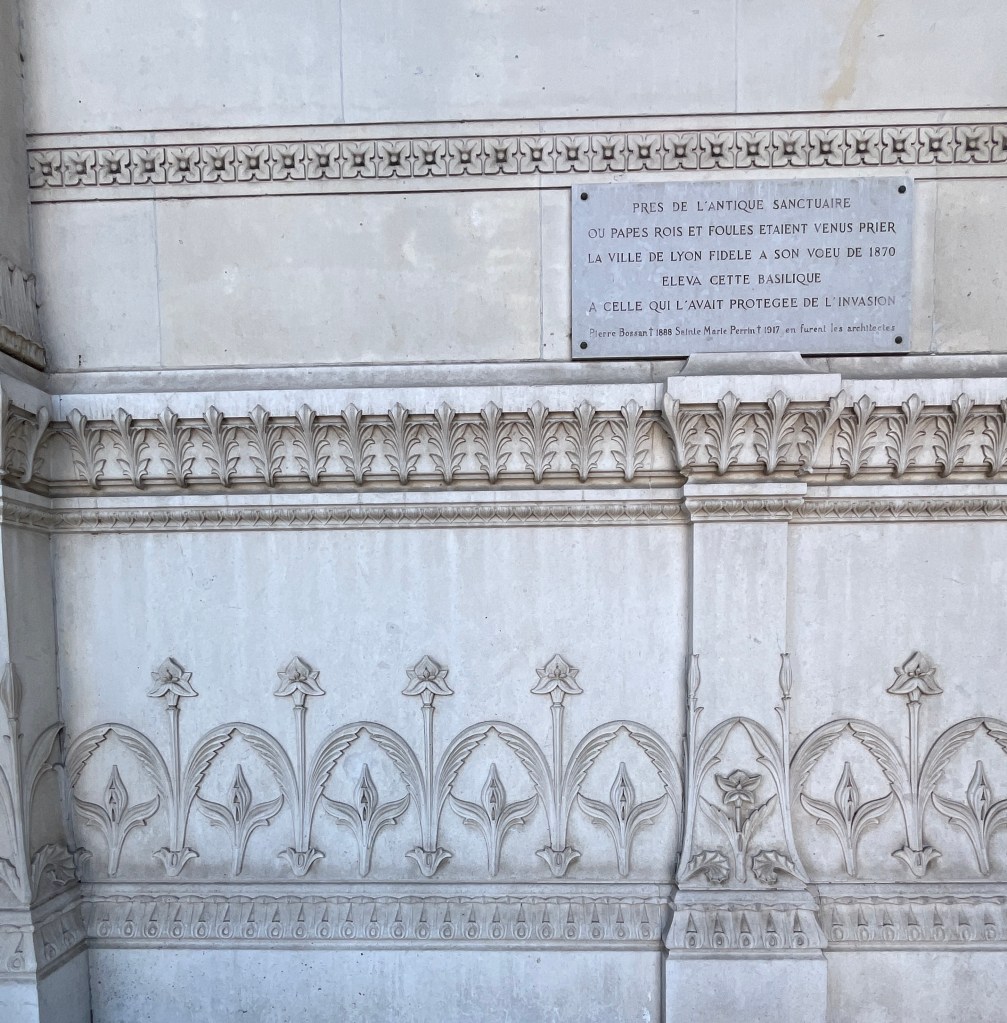
After a few years the sanctuary here became so popular, (having up to 12 masses a day to keep up) the diocese realized they needed a bigger church. The Basilica was finished in 1875, though it was designed to look much older.

The inside of the church is the most decorated, detailed, carved, painted and mosaic-ed place I have ever seen. As we sat on the wooden pews, hundreds more people filed in. Unfortunately, the buzz of the crowd, punctuated by the inevitable shrieks and giggles of school groups, made for a less-than-reverential experience.
We stepped out and walked around the courtyard, enjoying the views of the city from the overlook, and had lunch at the lovely cafe.

About this time Grandpa Nelson got worn out, and headed home. Auntie Bridgett and I decided to stick around for the second part of our adventure.

More about that tomorrow.

Love,

Grandma Judy
Musée des Beaux-Arts

May 6

Dear Liza,

When we get to any city, of course we find the art museum. In France, these are called Les Musées des Beaux-Arts. So the other day, we set out for an arty adventure.

The Musée in Lyon is on the Presqu’île, the peninsula that is formed where the Rhône River and the Saône River both run south for a bit before converging. We crossed the Rhône on the Pont Morand and walked right into the middle of the city!

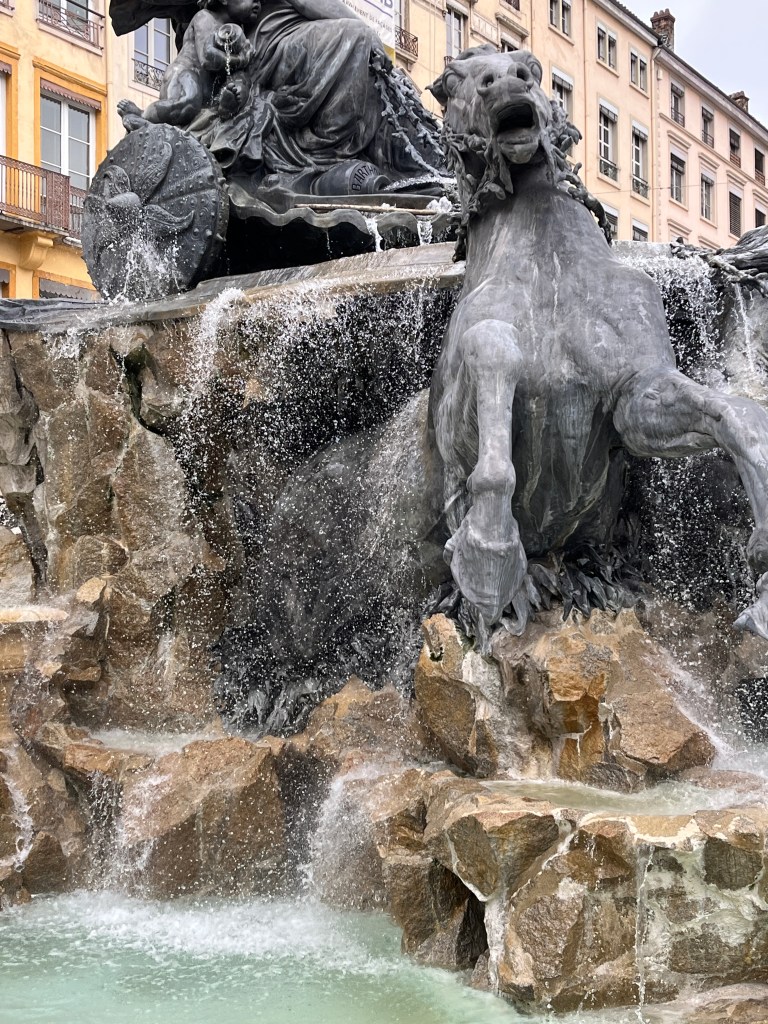
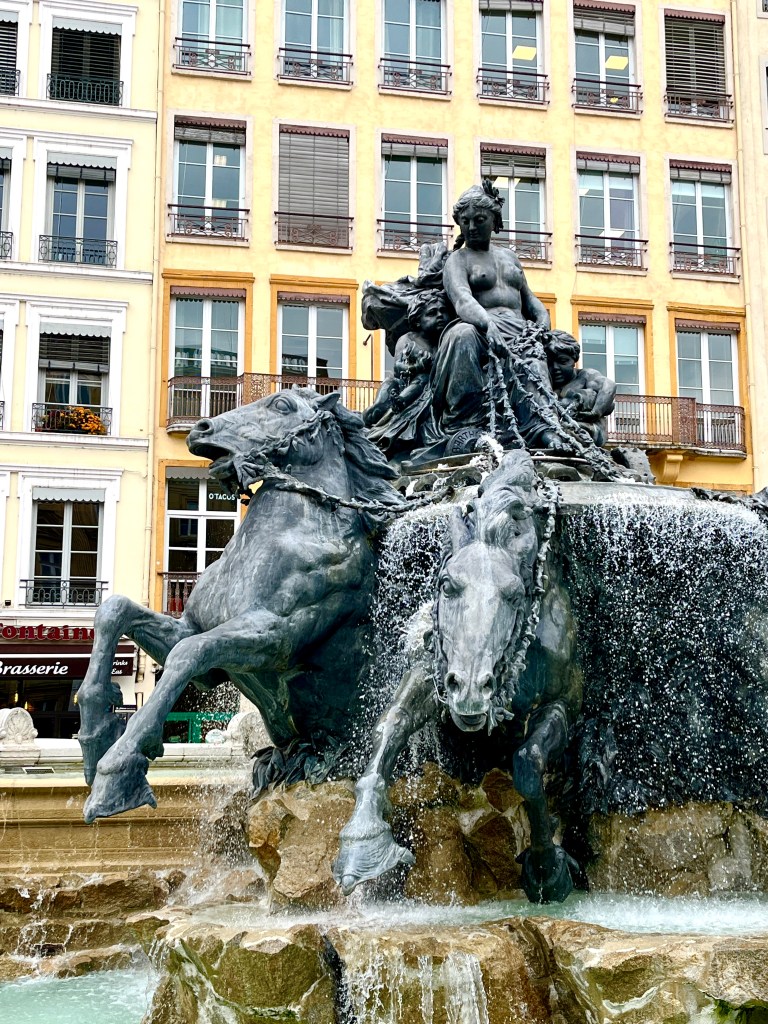
Le Musée is on a wide plaza called Le Place Terreaux, which also has the Hotel de Ville, or City Hall. The first thing that catches your eye is this magnificent, roaring, complicated fountain. Sculpted by August Bertholdi (who also did the Statue of Liberty), it shows France as a woman, riding a chariot pulled by four wild, energetic horses.

The horses represent the four great rivers of France, the Rhône, the Loire, Seine, and the Garrone, with France controlling them in a gushing, turbulent flood. We walked around and around, amazed at the details.

The building that houses the Musée is hundreds of years old and is as beautiful as the art inside. The first staircase is topped with statues that represent the Beatitudes ( “Blessed are they that …” verses from Luke in the New Testament), and were so interesting that it took us twenty minutes to get past them!

I won’t try and tell you about all the art, just let you know that their oldest item is from an early Egyptian dynasty thousands of years ago, and their newest is some crazy ceramics from the early 2000s.

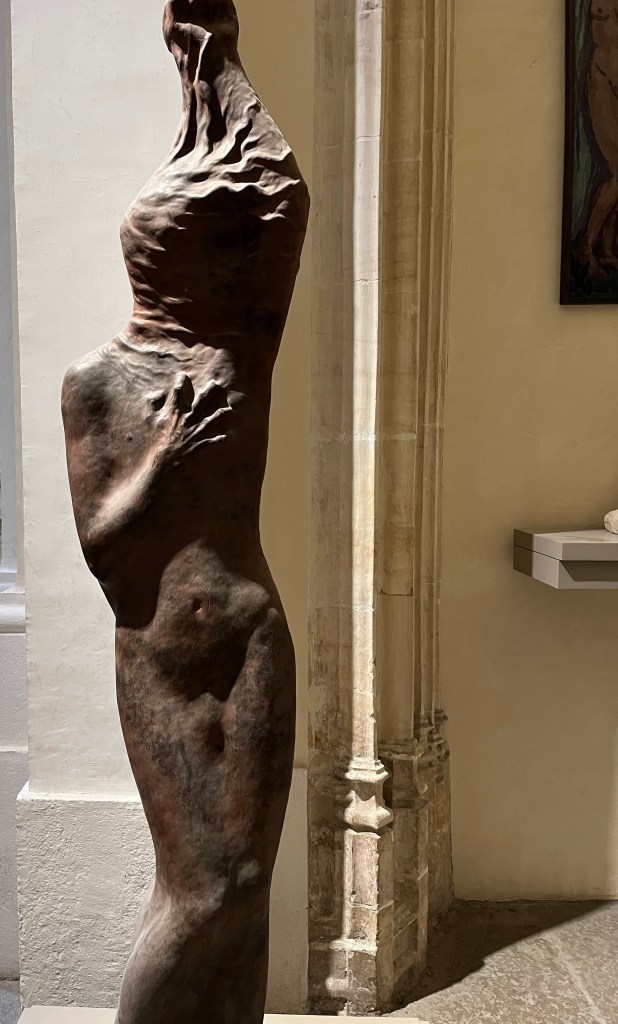
Of course, I loved the paintings, but the variety of sculpture really knocked me out. This tall fairy like person, called Abandoned Psyche, was beautiful, sad and sweet.

This wind-swept figure is called Power of the Will and shows how we all feel sometimes, just standing as straight as we can in the winds of circumstances.

And on our way out, I found the one sculpture I would take home if I could. This slightly larger than life sized dog, resting sweetly, waiting for whatever adventure comes next. I can imagine he would be very satisfying to pet, after a long crazy day.

Because he’s a good dog.

Love,

Grandma Judy

Lyon, at Long Last!

April 30

Dear Liza,

After an early flight from Portland to Seattle, a delayed flight from Seattle to Paris and a beautiful train ride south, we arrived in Sunny Lyon.

We spent our first night at the Hotel Edmund W., since our apartment wasn’t ready for us yet. This is a wonderfully old fashioned place, with an elevator just big enough for the three suitcases and Grandpa Nelson. Bridgett and I took the stairs. Good exercise!

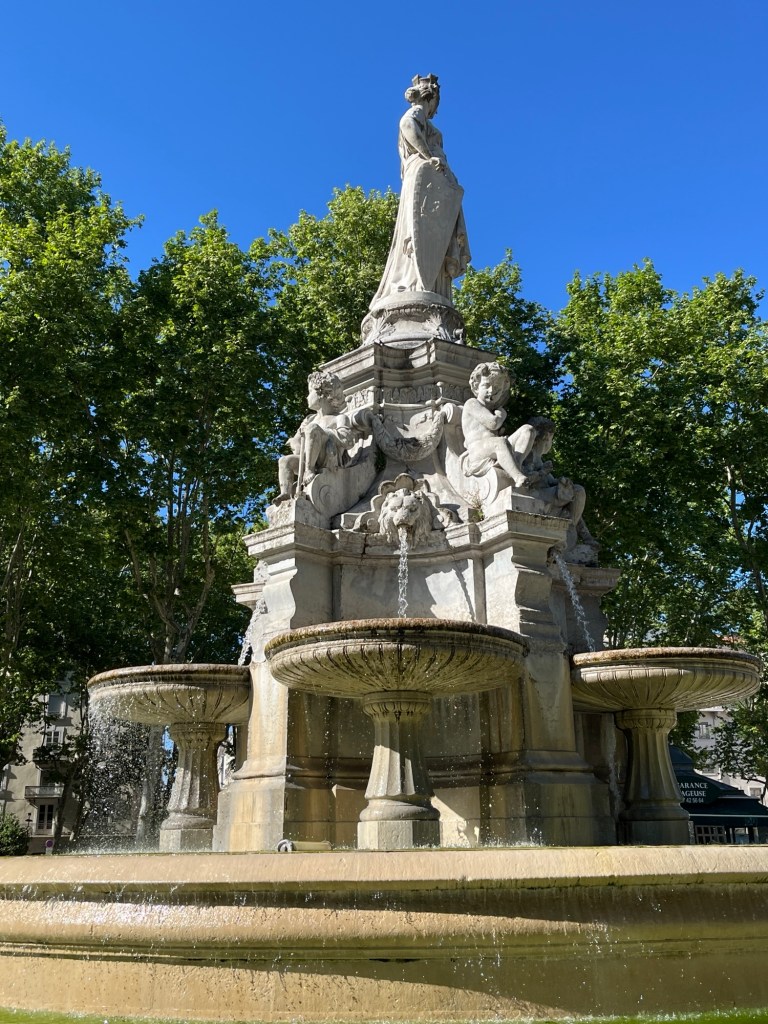
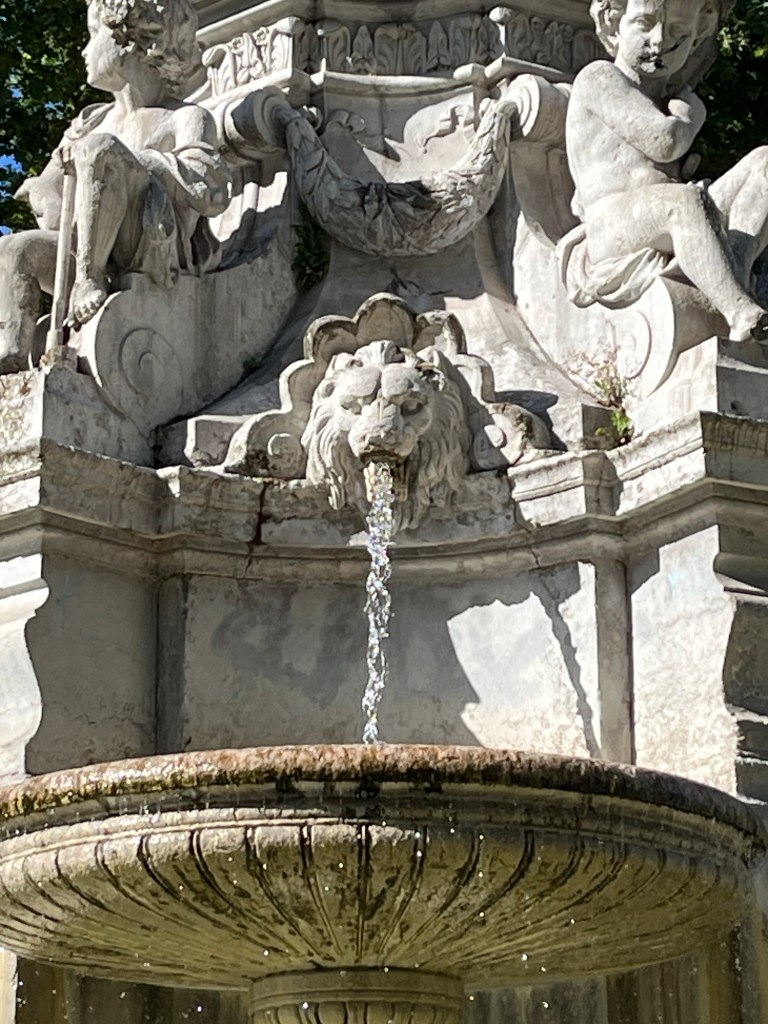
After we settled in, Bridgett and I walked to the Rhône River, just about a mile away. We found a lovely garden with an old, classic fountain, celebrating the “people of Lyon“. Hard to argue with that. Cherubs and lions spitting spigots of water were all the rage a few hundred years ago.

We sat in the shade and enjoyed watching old guys playing pétanque, (a sort of bowling game) and folks walking by with kids, dogs, and bags of groceries. The People Show!

As so often happens, we managed to walk too far, always wanting to see ‘just one more thing”, and the heat almost got the better of us. A bottle of lemonade, then a cool bistro called “Les Bons Copains” for dinner, saved us. Delicious, life preserving cassoulet and croque monsieur !

That night, none of us slept well. Jet lag wanted us to awake at two in the morning, but exhaustion wanted us to sleep. Oy.

The next morning, once we all agreed we weren’t going to sleep anymore, we walked back toward the train station to Café Millet for pastries, coffee, and Fromage Blanche. This creamy stuff is a cross between yogurt and crémé fraîche. Incredibly yummy!

Once we were fed and caffeinated, we were ready for our adventure of the day; a visit to a garden with a strange name. I’ll you about that tomorrow

Love,

Grandma Judy

L’Escargot

Dear Liza,

Yes, I have made progress! Once I got the shorelines figured out, everything starting making sense.

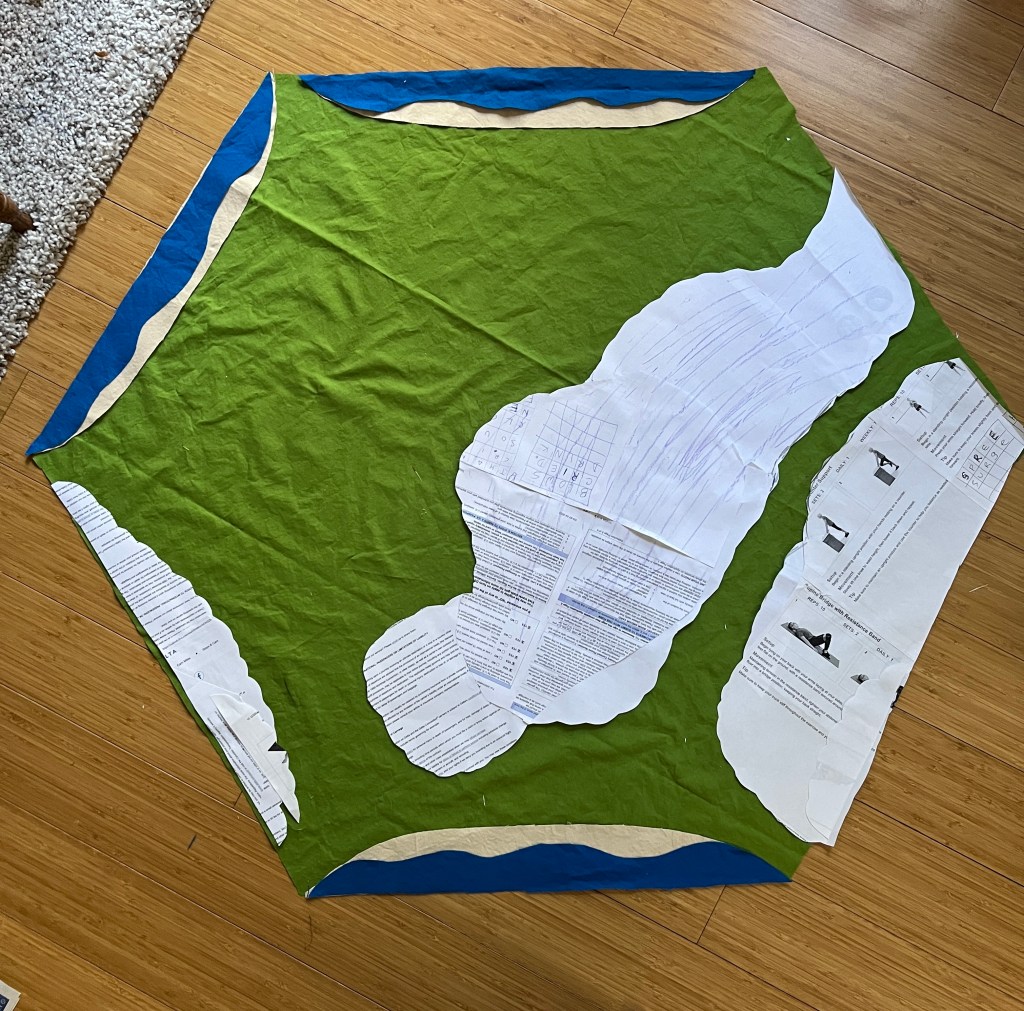
I kept looking at my patterns for the Grand Massif, the Alps, and the Pyrenees, and they were just …. Clunky. They made the whole eastern side of the country look like a mountain range, which just isn’t the case.

As you can see….

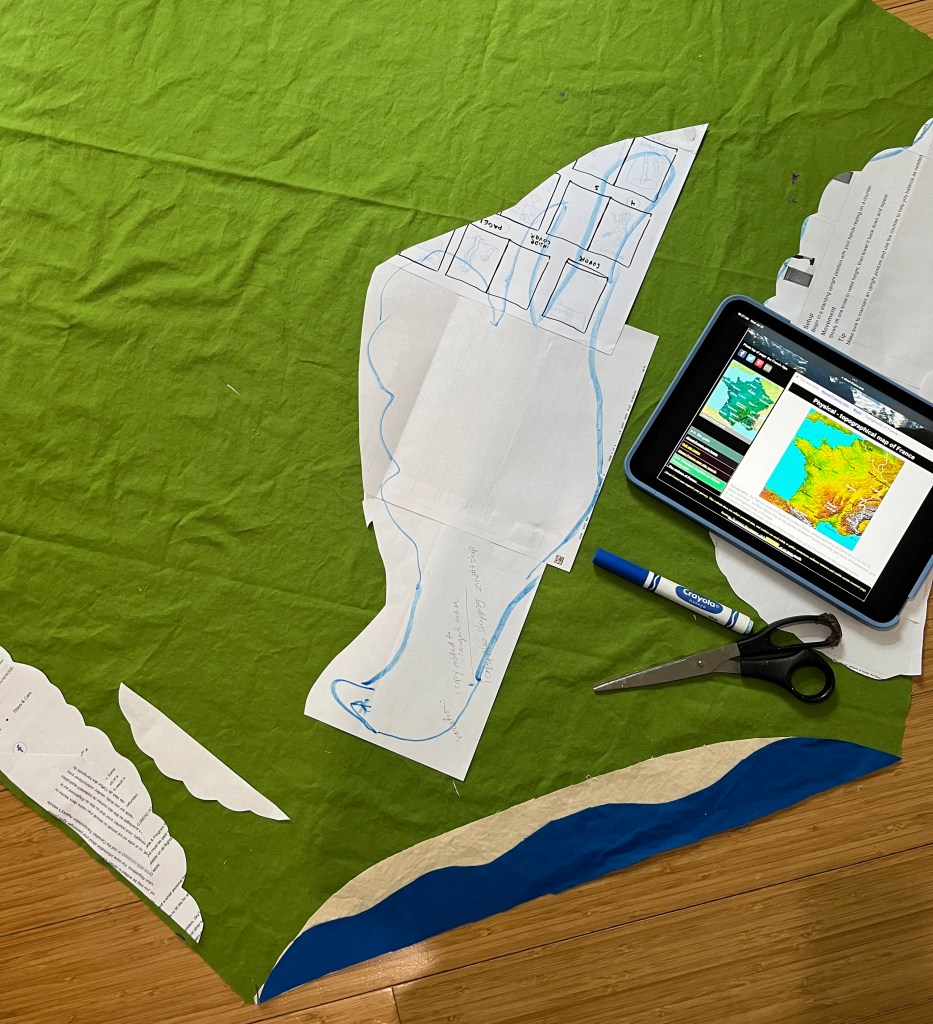
So I pulled up different topographical maps of France to see how I might make them better. Certainly more accurate, and maybe just a little prettier.

My process isn’t artistic, or even scientific. I glue sheets of scrap paper together and start cutting, staring and trimming until I get a shape I like.

This took a good part of the morning, because there is a lot of cutting, placing, staring, and walking away for a while. During the walking away parts I vacuumed, went shopping, and watched the Olympic Triathlon on YouTube.

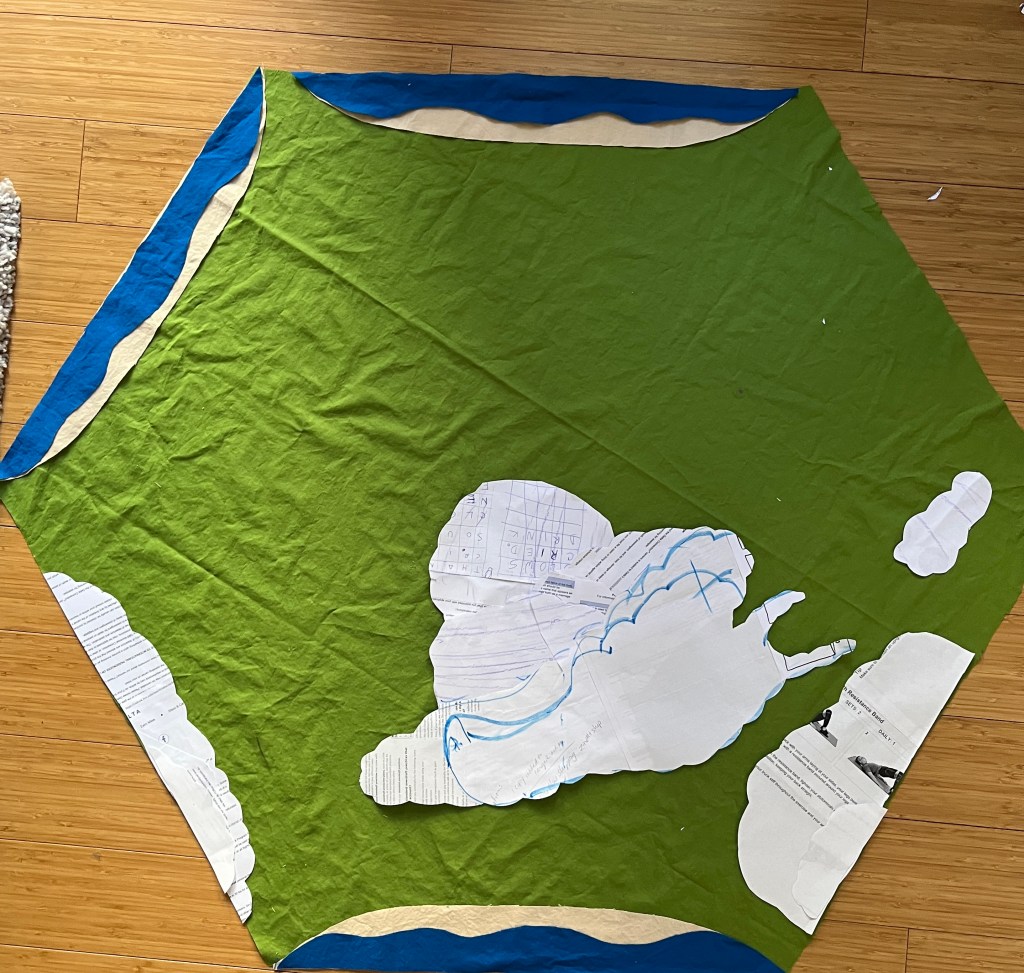
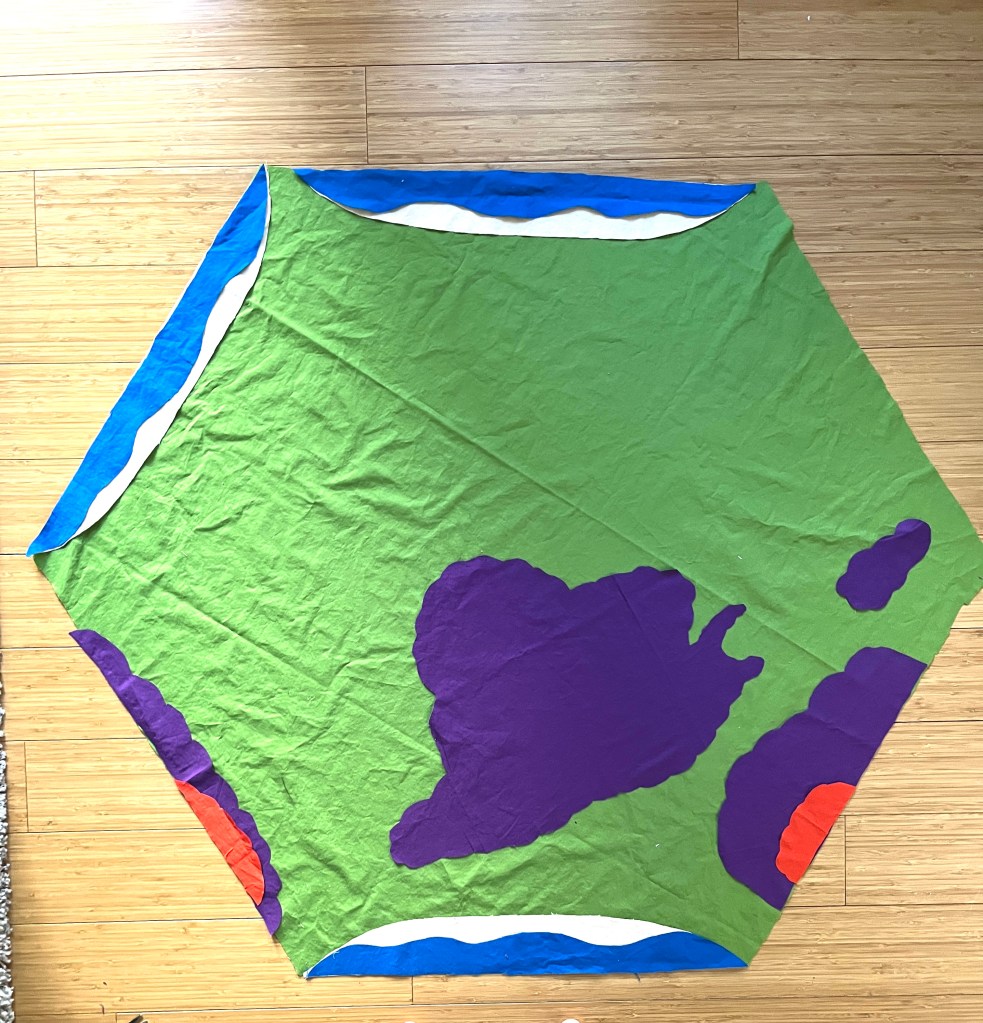
And when I got a pattern that was closer to the shape of the Massif, I laughed out loud. Un Escargot!!! That is, a snail.

I like that a lot. Escargot are one of the classic French dishes. Snails are also raised all over France for it, and it is one of Auntie Bridgett’s indulgences when we visit there.


So I chuckled and pinned the patterns down, carefully trimming the lumpy shapes out of the purple fabric. The highest peaks of the Pyrenees and the Alps will be shown in red.

Et voilà! The big shapes are taken care of.

But there is one more detail hanging over my head.

I have this half yard of black fabric that I haven’t used yet.
It is part of the color palette, and I think it will give the map some depth and drama. I intended it to be mountains, but it looked like a big black hole. I think it would be better as a detail, a curve or a line rather than a blob.

So now I get to stare at this for a while, and figure out what comes next.

Ain’t art fun?

Love,

Grandma Judy
L’Hexagone

Dear Liza,

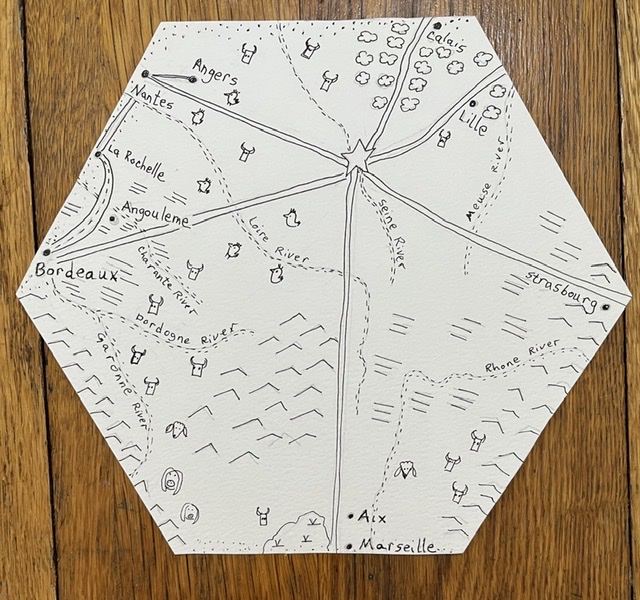
I am finding new ways to make maps into art for my Art Journal. Since we have loved our travels in France and hope to return someday, I have been looking at maps of that wonderful chunk of Europe.

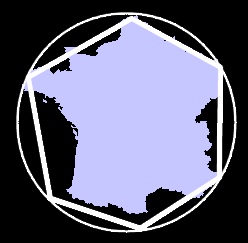
I am not the first to notice that the map of France resembles a hexagon. In fact, people have been using the nickname ”L’hexagon” since 1949 and French school children are taught to draw the map of their country by using a hexagon as the basic shape.

So I thought I would make my map of France out of an actual, geometric hexagon. First, I had to figure out how to make one without a zillion math calculations, which would mess with my art joy.

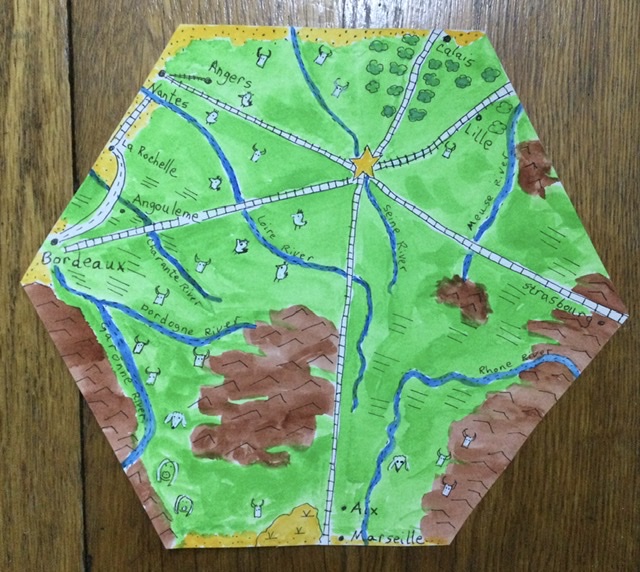
Fortunately, I found the youtube channels of both Jenny W. Chan and a fellow named Sam. They both taught me what I needed to know. I was able to fold a sheet, cut it to fit, and then sketch in the map. Than I used that map as a pattern for my real one.

Since this is a personal map, I wanted to show the places we have visited. But I also wanted to show the feel of the place, of the geography. The French understand about ’terroir’, the importance of a sense of place.


I decided that I wanted to show what was grown where, so cattle, sheep, pigs and chickens got inked in with the orchards and vineyards.

And that’s how it looks for now. I may add some shading in the mountains, but I’ll leave that for tomorrow.

Love,

Grandma Judy