
June 5
Dear Liza,
Yesterday was predicted to be even hotter than usual, in the high 80s, so we chose to spend the day inside with art. Museums are always careful to protect their possessions, and we get the benefit!
The Fabre Museum here in Montpellier is housed in a combination of buildings from 1825, 1952, 1978, 2007 and 2019. Seeing all its galleries is a delightfully maze-like experience.
As we walked and stared and whispered, I tried to notice which kinds of art attracted me and which kinds I could give a glance and happily move away from.
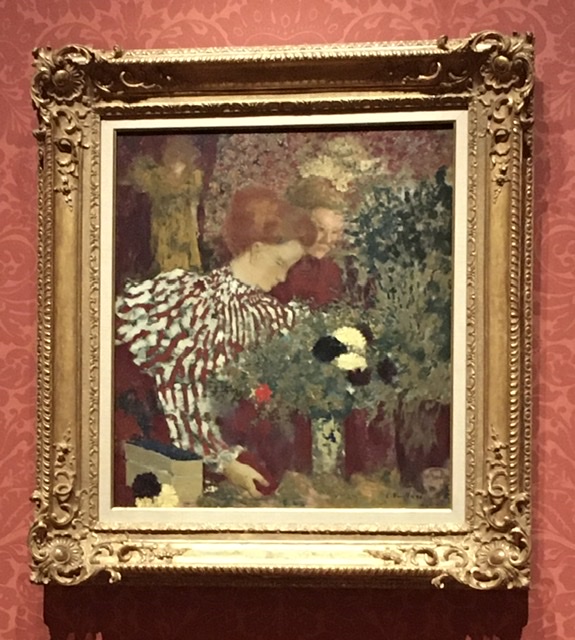
Turns out, I like people. Portraits, formal or informal, whose eyes look right at you, catch my heart. I want to see into their eyes and get to know them. Elizabeth Denis, painted by her husband Maurice Denis, looks so happy and loved that she makes me glow.

And this little fellow, Albert Marquet, painted in 1904 by Charles Camoin, look so unassuming and gentle that I want to buy him a cup of tea and hear about his day.
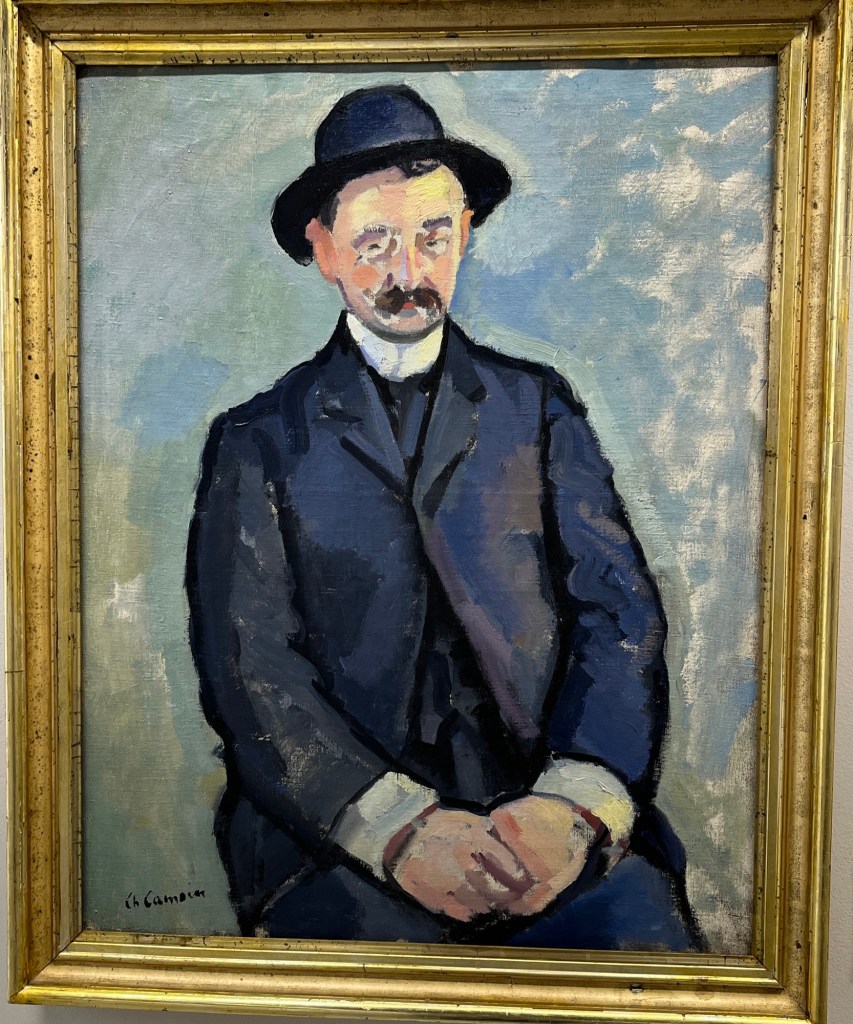
And then there is Alfred Bruyas, who seemed to be everywhere! Bridgett took four pictures of his portraits once she recognized him, and there were many more.
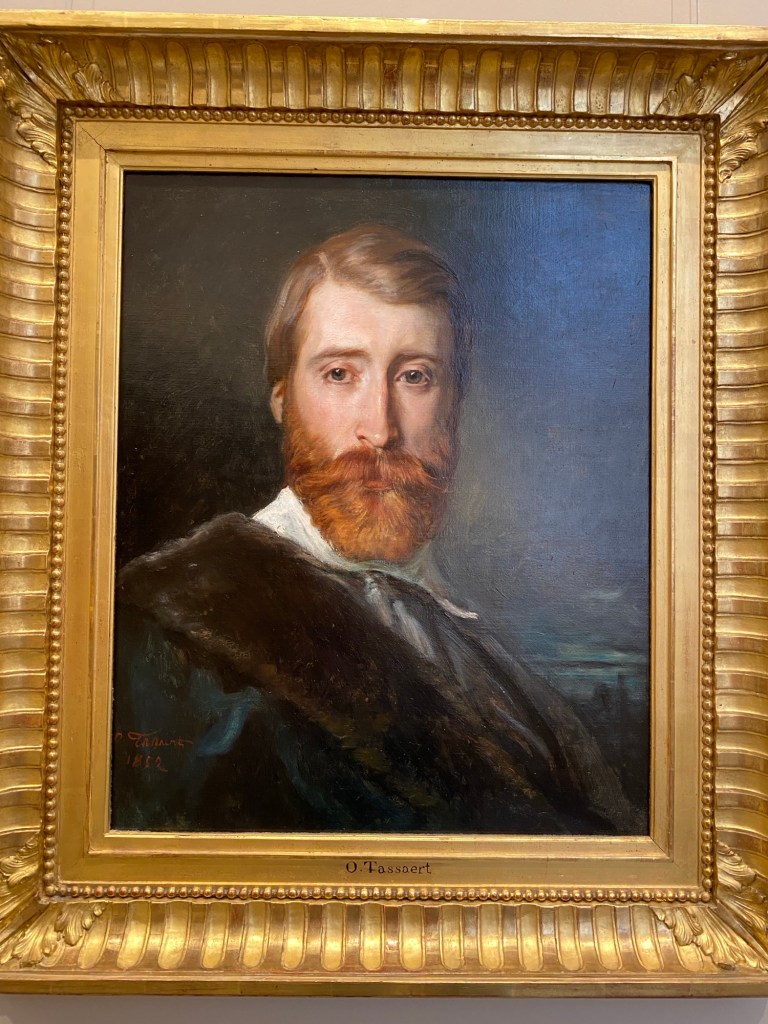
A handsome fellow, to be sure, but more than a dozen portraits? Who was this guy? Using my broken French, I asked a friendly and animated museum guard… “Qui était cet homme?” The guard was happy to explain that Alfred Bruyas was an aristocrat, with more money than he knew what to do with.
He had wanted to be an artist but didn’t have the talent, so he chose to support other artists by commissioning portraits from them. Lots and lots of portraits, including one of himself as Jesus. Apparently he saw himself as a martyr, sacrificing his wealth for art. Hmmmmm.
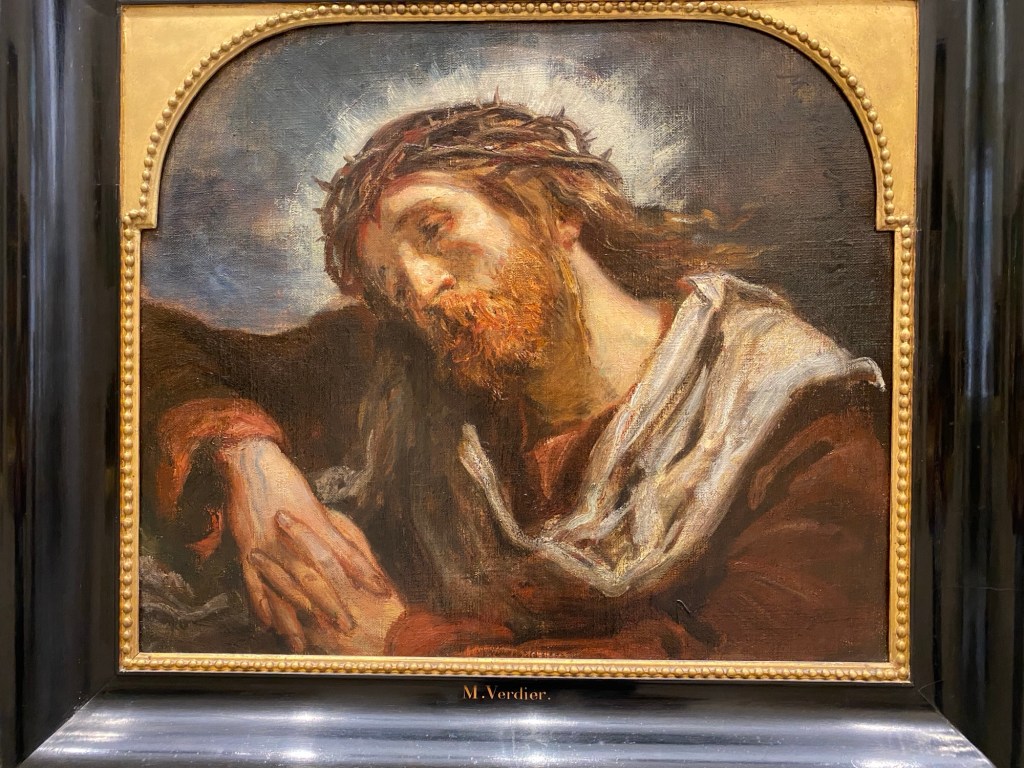
So, some portraits catch my heart more than others. I guess using one’s inherited wealth for self-agrandissement disguised as charity is not a new thing.
Anyway, I love where my mind wanders in Art Museums!
Love,
Grandma Judy


 Dear Liza