I get to volunteer at the Lone Fir Cemetery again! This year the event is called Tombstone Twilight, and will be held every Saturday in October from 4 to 7 in the evenings. (Buy tickets online at FriendsofLoneFirCemetery.com)
This should be an easier to manage, mostly-daylight activity, in contrast to last year’s event. The Tour of Untimely Departures was one, very long, very dark, evening.
I am looking forward to being part of the show, and this year, Auntie Bridgett is getting involved!
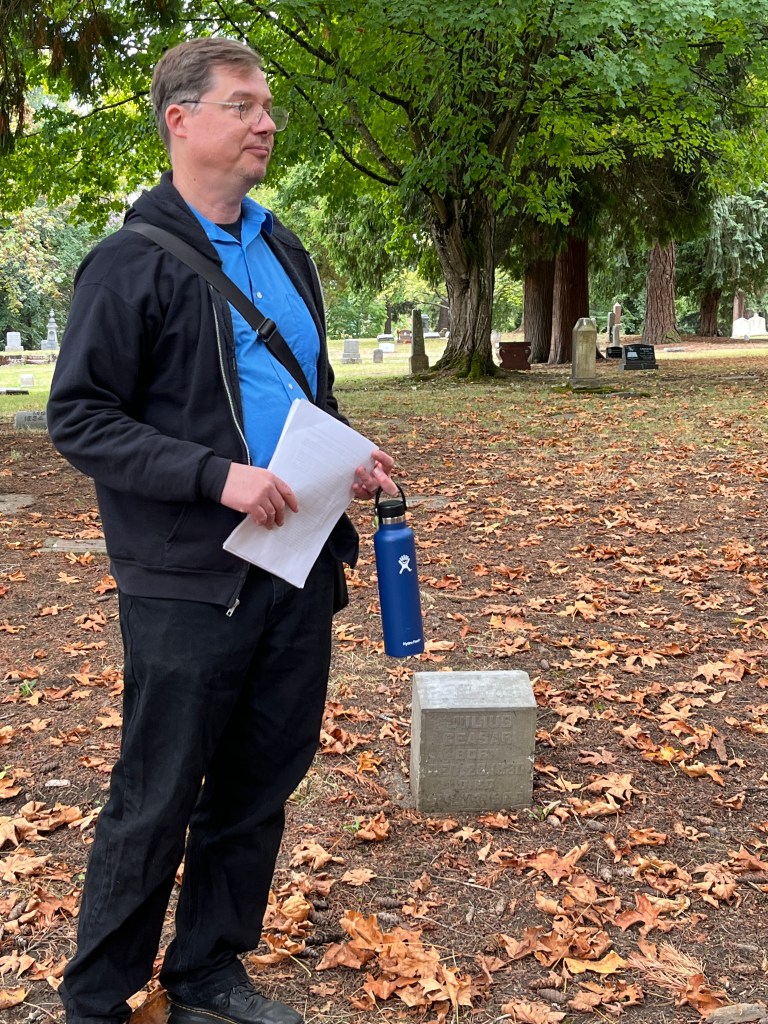
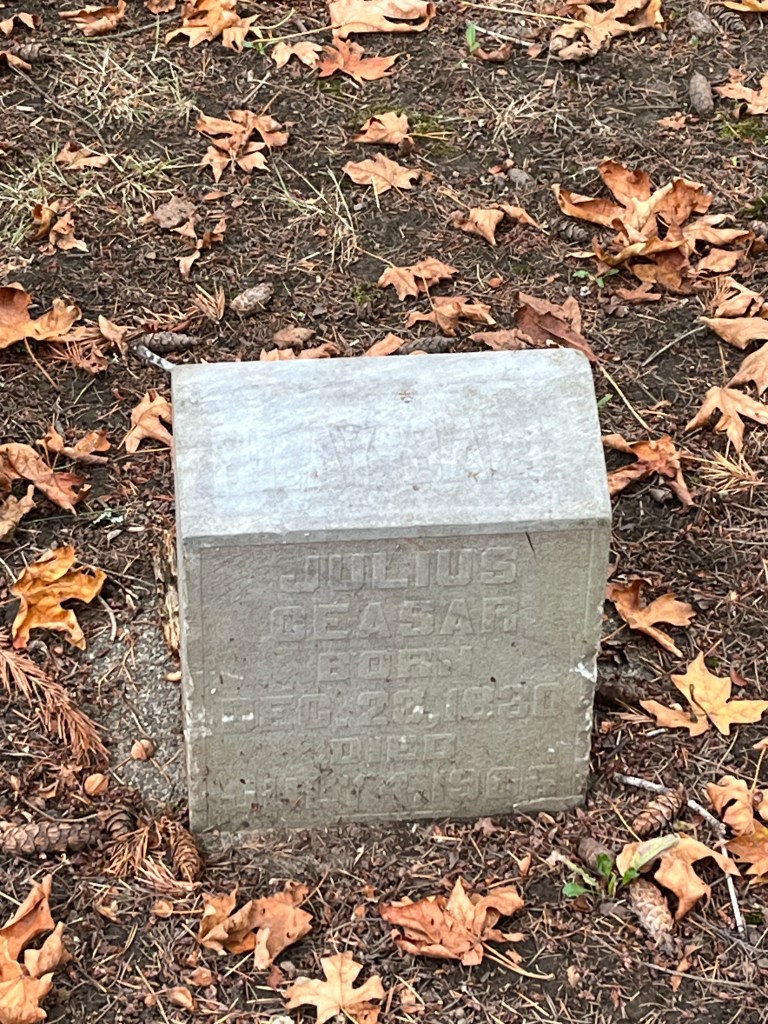
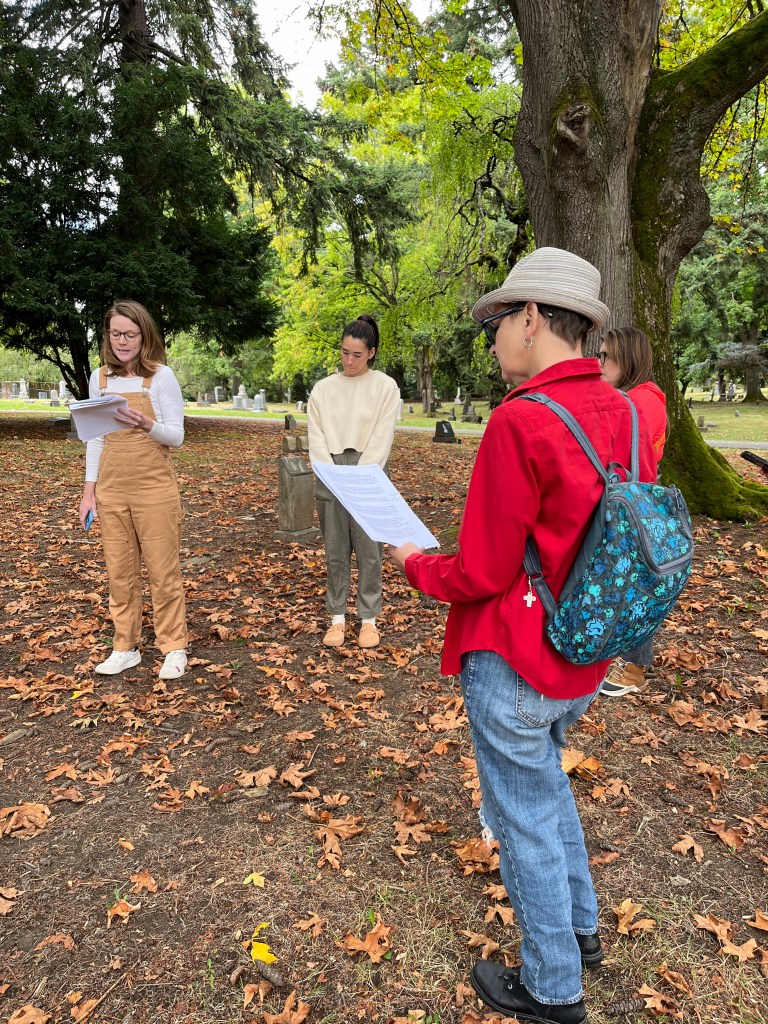
We met up with J Swofford and other volunteers at Lone Fir the other day, for a walk-through of the tour. We got to ‘meet’ such interesting folks as Julius Caesar, a formerly enslaved man who made a name for himself as a political orator for progressive causes. He was also a local baseball fan, and on his tombstone, along with his name and dates, are the words “Play Ball”.
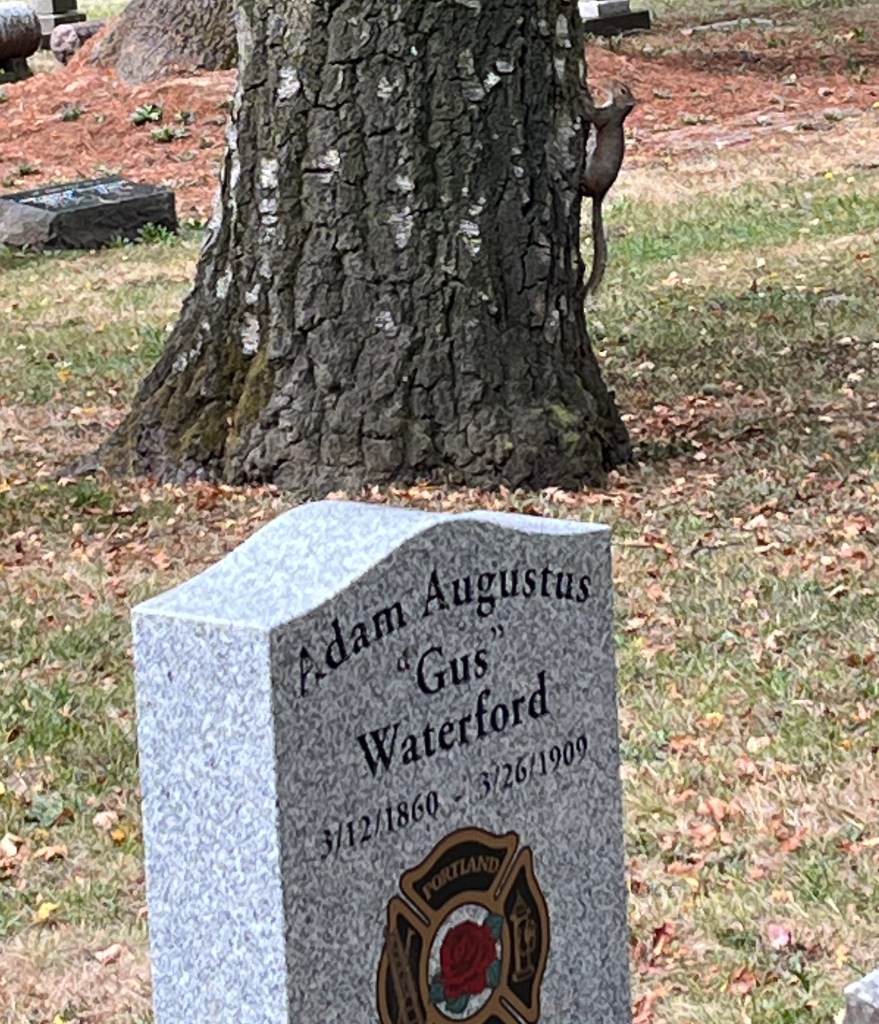
Walking in Lone Fir always gives me peace and perspective, and learning about the lives and accomplishments of the folks there shows me the possibilities of the human spirit. (There are also a lot of cute squirrels.)
I will be making the walkabout a few more times before the tour, so I will not get lost escorting folks around, and I’ll tell you about it as it happens.
Now that the weather is less awful, we are getting out for walks. We stopped by Lone Fir Cemetery on my birthday, to visit the dead people and get some perspective.
We visited our favorites, of course. Dr. Hawthorne, who treated the patients in his mental hospital with uncommon respect, the Fleidner family, who built a building that still stands Downtown, and Lou Ellen Barrel Cornell, who lead an unconventional life.
(Photo Credit : Find a Grave website)
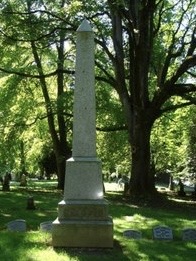
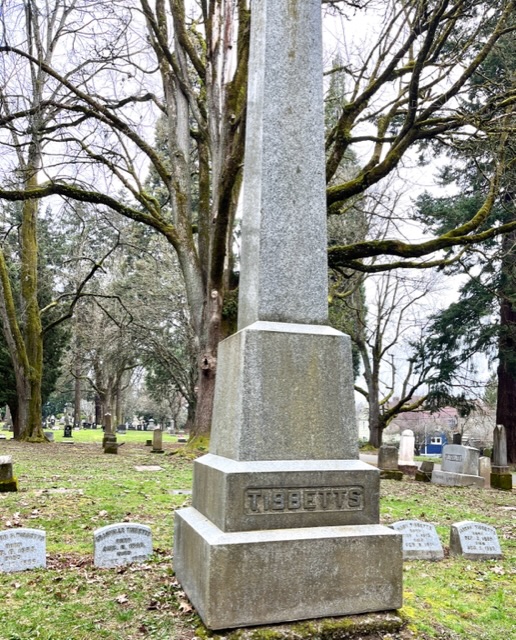
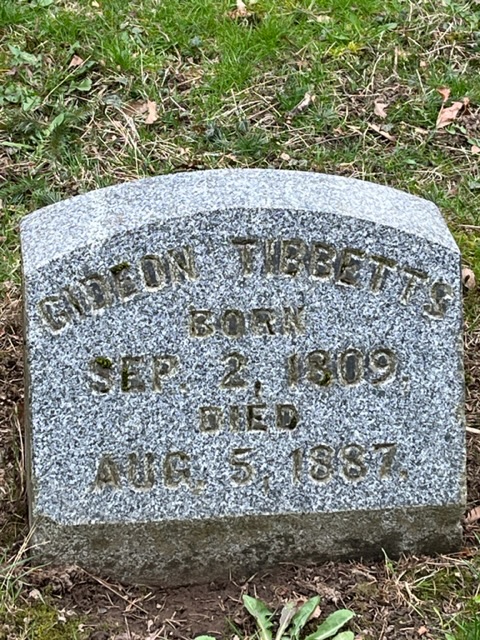
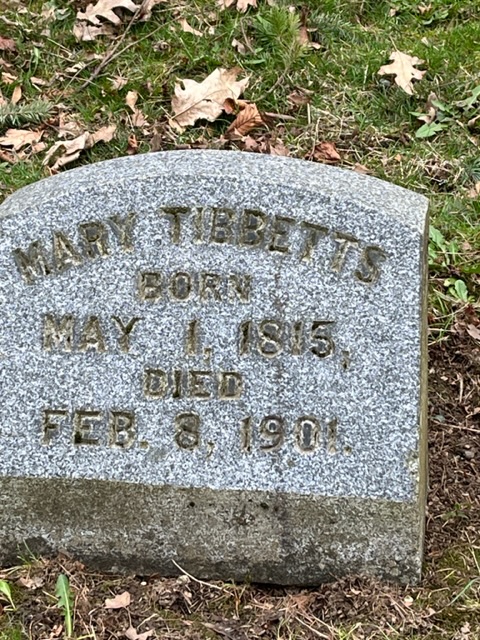
And we met some new folks. This tall monument has always caught my eye because the family name, Tibbetts, was used by local author Beverly Cleary for one of her characters. This time, I took pictures of the stones around the tall marker and did some research on my favorite research site, The Historic Oregonian.
In his obituary, we learn that the patriarch, Gideon Tibbetts, was familiarly known as Father Tibbetts. He was originally from Bangor, Maine, and married his wife, Mary, in Indiana. Their company of wagons took nine months to cross the country from there.
They rafted down the Columbia and originally settled in Corvallis, then moved to Portland.
They started their family, but childhood diseases took four of their six children between 1853 and 1859. I cannot imagine the sadness.
Gideon bought and developed property east of the Willamette, creating Tibbetts Addition, which covered the area from the Willamette River to 20th Street and between Division and Holgate, just south of Ladd’s Addition. This area is now known as the Brooklyn neighborhood. Two streets in that area, remember him: Gideon Street runs along the railroad tracks, and Tibbetts Street runs east-west between Powell and Division Streets.
Mary outlived Gideon by 14 years, living well in their family home. I am still searching for information of her two surviving children. Her daughter, whose name I haven’t found, married a Judge Kennedy from Walla Walla Washington.
As much as I appreciate the entrepreneurial spirit of early Portland, the practice of individuals (Like Ladd, Couch, Tibbetts, and others) organizing their own developments within the city is what lead to our weird street numbering system, which needed to be adjusted in the 1930s.
Every time I get to know about a previous Portlander, I learn more about the city and how it grew. And there’s 180 years worth to learn!
Portland is one big city that used to be a lot of smaller cities. Our own neighborhood of Sunnyside used to be part of a town called East Portland.
Ten miles north of downtown Portland was the town of St. John’s. It was a separate city from its founding in 1902 until 1915, when citizens of St. John’s and Portland voted to combine the cities. Because it is separated by a large industrial park along the river, St. Johns has kept its own flavor and style. It is quirky, with a mixture of country clunk and wry humor that is very different from the hipper, slicker style of Downtown.
Crossing several bridges over our magnificent river just because we can, we drove to this lovely outpost for lunch the other day, and stepped into McMenamin’s St. John’s Pub. It has the magic garden-y feel of most of McMenamin’s properties, with lots of plantings, smaller spaces within the big space, and art in unexpected corners.
We had cold drinks to take the edge off the 90 degree heat and just took some time out from 2022. We watched the cottonwood seeds drift by like fairy dandruff and heard Steller jays mentioning that they would like some fries, please.
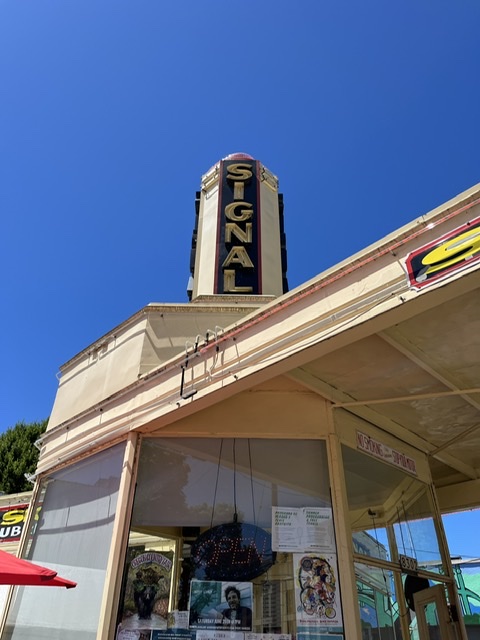
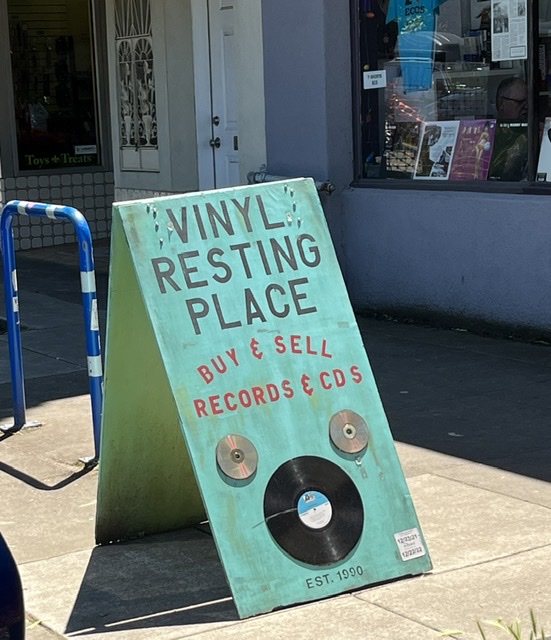
When we were relaxed and sated, we took a slow walk around the ‘downtown’ of St. John’s. We enjoyed seeing how the old has become new. An extinct Signal gas station sells pizza, an old book shop sells second hand records.
Everywhere, the past which could have been lost has been kept and re-purposed.
We started to get very warm as the day heated up, and decided it was time to head home. Getting delightfully lost as we often do, we saw parts of the city we have never visited, and realized there is still a lot of Portland we haven’t seen.
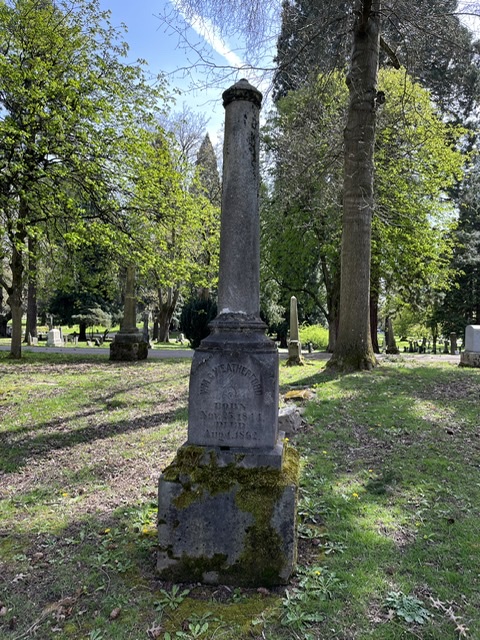
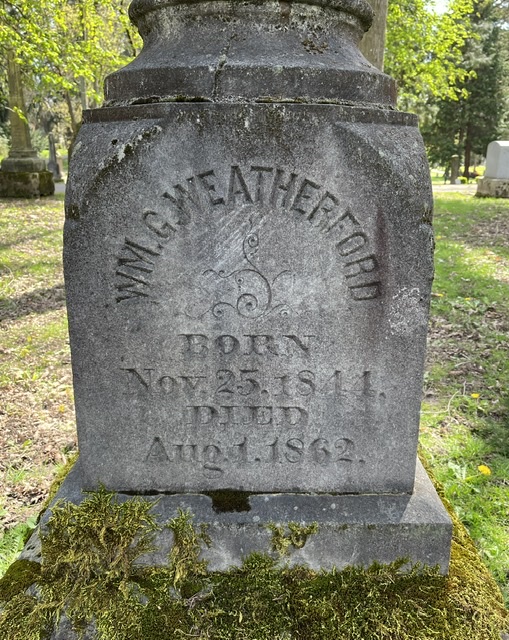
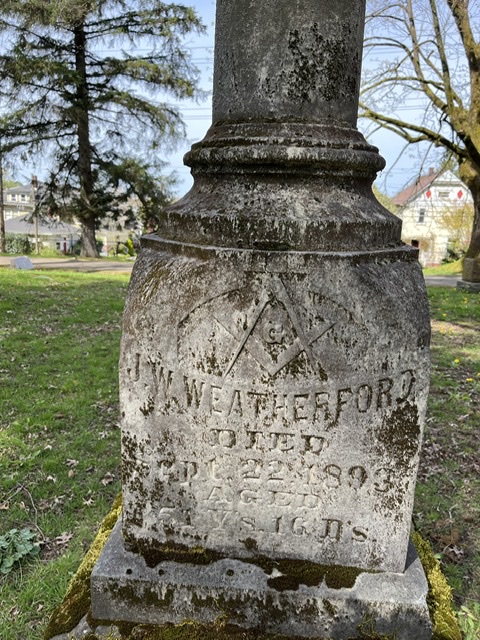
While you were visiting, we hung out with the Dead People at the Lone Fir Cemetery. I took some pictures of a monument I hadn’t noticed before, and decided to do some research by way of the online Historic Oregonian website.
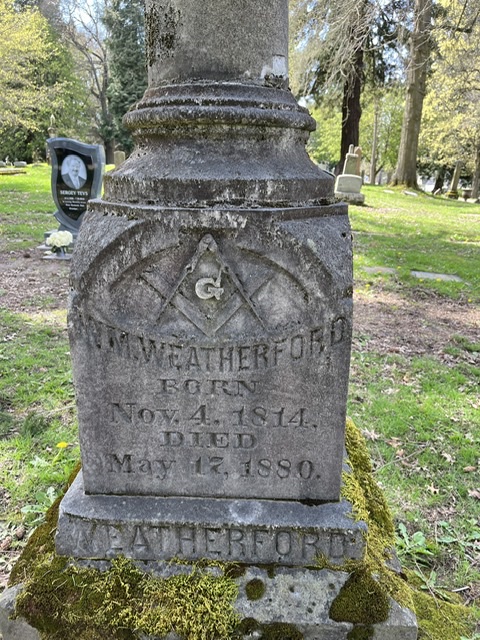
This is the Weatherford family memorial, with four family members buried in the one plot over the course of twenty- six years.
First is William Weatherford, who was born in Virginia in 1814. His family moved to Iowa when he was very young, and he met and married Mahala Harris in 1839. They had five children and then decided to move west. In 1852 they began the arduous six-month trek overland to Oregon. They were authentic Oregon Trail pioneers.
Once the family arrived in Portland, William set up shop as a pharmacist on Front Street, just south of Yamhill. They built a ‘small, stylish’ house at the northeast corner of Third and Salmon in downtown. Five more children were born to he and Mahala, bringing the total to ten.
William G. Weatherford, son of William and Mahala, died in 1862 at the age of 18 and was buried with his father. William drowned in the Willamette River. I haven’t been able to find out any details if his death. Was he swimming? Did he fall off a boat? I wish I knew. New information, see below.
///Weatherford, William On the 1st inst. Wm. Weatherford was drowned at Portland, while crossing the river in a skiff, in company with several other persons. The river was rough, and the boat dipped water and went down about the middle of the stream. [Source: The State Republican (Eugene City, OR) Saturday, August 9, 1862]///
Thanks, John Hamilton!
In 1873, the family house and business were both destroyed in a great fire that consumed 21 square blocks of mostly-wooden downtown Portland. Like many, the family re-built and carried on.
The eldest son, J.W. Weatherford, became his father’s business partner and they ran the business together until his father’s death, when J.W. took it over. After the fire, he had moved to Salem to continue the business for a few years (perhaps while downtown Portland was being rebuilt), and died of a heart attack in his Portland office in 1893 at the age of fifty-one.
Finally, Mahala Weatherford, having outlived her husband and five of her children, passed away in 1906 at the age of 84 at the home of her daughter Ella Steele in the town of Condon. She had crossed the country by wagon train, founded a business and raised ten children. She took in boarders to help the family finances, and built and re- built homes. She had served her community by ministering to the poor and it was written in her obituary that she was “truly a mother in Israel who exemplified in her life all the graces which ennoble true womanhood.”
I love where we live! Sunnyside, in Southeast Portland, is the best!
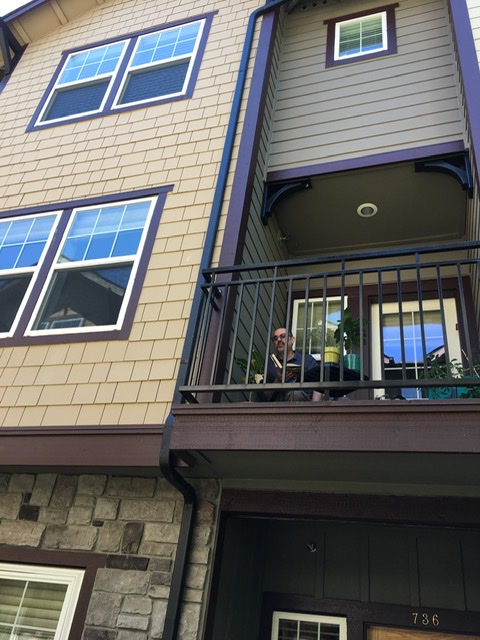
Grandpa Nelson, chatting on the balcony
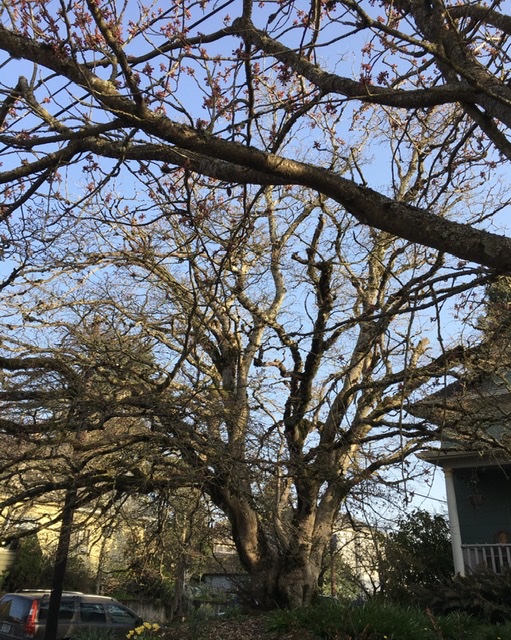
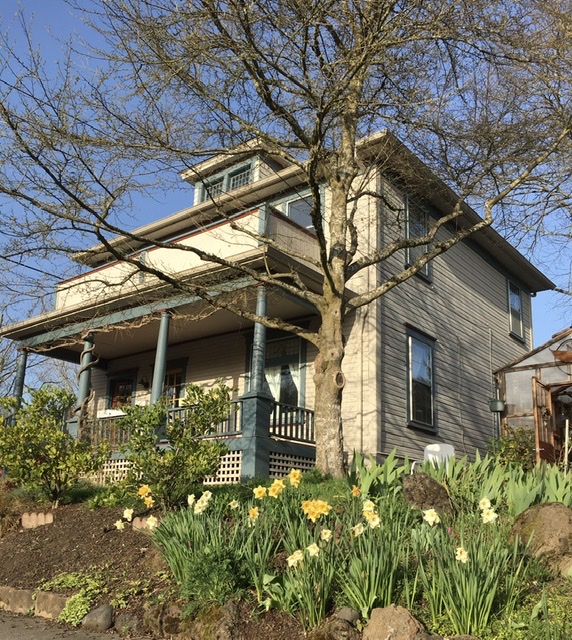
There are hundred year old houses, townhouses like ours, and brand new builds. Some of the trees were planted last year, and others have been here a long, long time. Heritage tree number 241, a Japanese maple, has probably been in the front yard of this house since it was built in the 1920s.
Because of how closely the trees and houses are spaced, winter, when the trees are bare, is the only time to get a picture of it.
Sunnyside was started in the 1890s as a trolley car neighborhood. Folks would live here, a few miles from the mud and stink of downtown, and be able to take the newly installed trolley cars to work.
From the 1900s…..
Back then, the houses and lots were bigger.
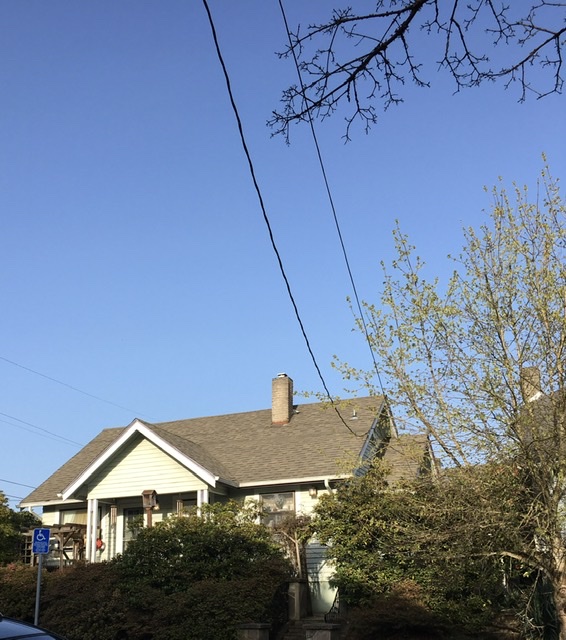
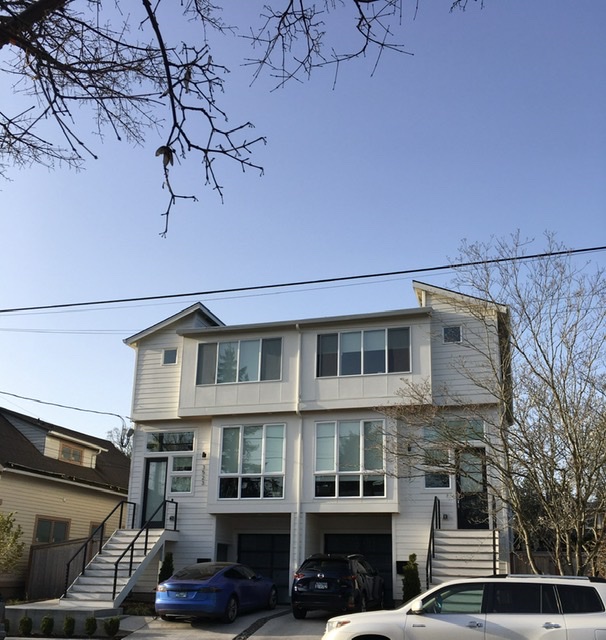
As the city became more crowded, newer houses were built in between the original ones. Each was built in its own style. These three very different houses stand within two blocks of each other.
1950s….
…. and 2020!
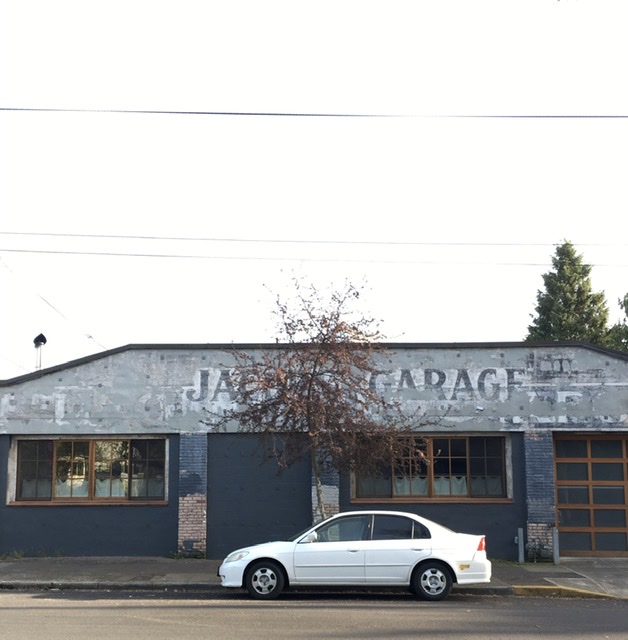
There are some industrial buildings that are being up-cycled, as well. Jacob’s Garage, which housed the trucks for the Belmont Dairy, is now a set of very cool condominiums, having kept its brick-Ish charm.
Every walkabout shows us new things! As flowers come up and trees leaf out, some of the hard lines are masked and softened, but the architecture of the turn of the century is still here if you know how to look.
Besides, where else can you find a tiny free library right next to a dinosaur-infested dogwood tree?
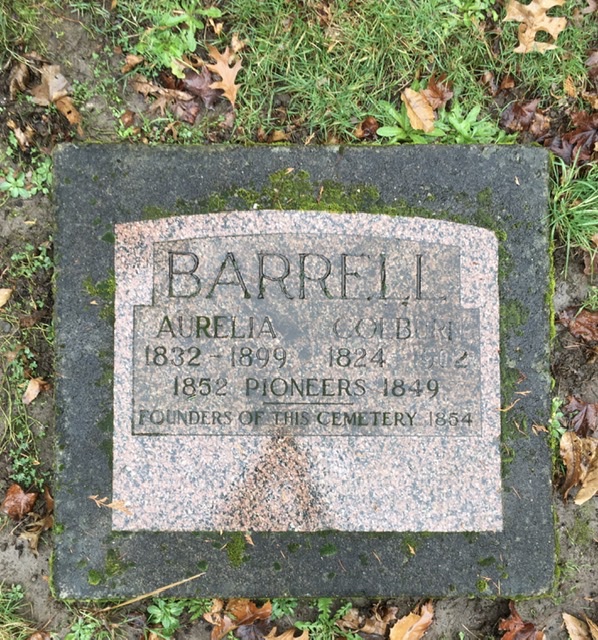
Today we continue the life of Lou Ellen Barrell Cornell. Born in 1891, the youngest of seven children to Oregon pioneers Aurelia and Colburn Barrell, she married (and later divorced) Richard Cornell. She buried three of her five children, was prominently mentioned in a very public trial involving the Spiritualist Association, and was active in a popular benevolent group, the Women of Woodcraft.
In 1912 Lou Ellen started a campaign to save her father’s legacy, the Lone Fir Cemetery. In the 70 years since he had founded it, the place had been carelessly used and not maintained. Blackberry brambles covered the stones and the unmaintained graves were sunken and dangerous. There had even been a effort by the city to remove it. Over the next 16 years, Lou Ellen not only made sure the cemetery would remain where it was, but succeeded in getting taxes passed to pay for its maintenance.
One of the thousands of headstones unearthed and repaired in 1928
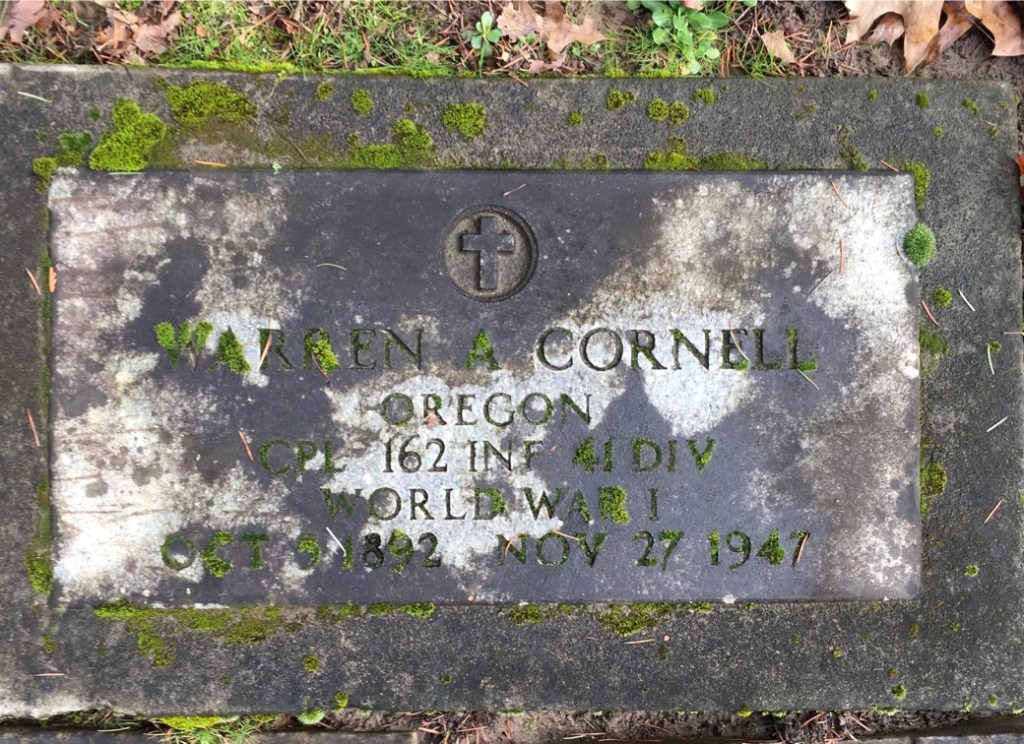
In 1917, at the age of 25, her eldest son Warren went off to fight in World War I, becoming an Army corporal while fighting in France. He returned safely, living a long life until 1947. That same year, a volume of Lou Ellen’s verse, called “Thorns and Roses” was published, available by contacting the author at her home, 802 East Yamhill Street. Her verse was well-reviewed, having a “fine religious feeling”. I have not been able to find any of the poems, but I am still looking!
Warren’s headstone
A few years later, when her sons were 28 and 22, Lou Ellen got married a second time to Edgar W. Philips. The wedding was written up on the Society page, though no information is given about the groom except that he was a native Portlander returning to town after an absence of 15 years. After the wedding, Lou Ellen remained active in the Women of Woodcraft and the Spiritualist Association, and continued writing poetry.
That same year she began giving lectures for the Spiritualist Association, such as “Is Spiritualism a Religion?” and “The Spirit of Freedom”, under the name Mrs. L.E. Philips. During this time, except for one small mention, her husband, Edgar Philips, was not visible. This isn’t necessarily suspicious. He is simply not mentioned in the paper.
In 1926, her son Lew Elwyn was divorced from his first wife, and he and their three children moved in with Lou Ellen, just blocks from where I live now in Southeast Portland. I imagine this brought lots of joy, but also a lot more work into her life. Three kids in the house to look after, cook and clean for, is a whole new layer of chores.
Lou Ellen passed away in 1931 at the young age of 59. Her son Lew moved to Beaverton and his children went back to live with their mother. Lou Ellen had been active in Women of Woodcraft until just a few months before her death. She is buried in Lone Fir, surrounded by her children, just across the lane from her parents and siblings.
The weird part, and the part that had me reading all my research over again, was that her obituary does not mention her divorce from Mr. Cornell or her second marriage. It tells of her drive to save the Lone Fir Cemetery, but not her interest in Spiritualism or her poetry.
My guess is that the obituary was provided by the family, and maybe her sons and siblings didn’t want the public to remember the lawsuits, the divorce or the remarriage, but simply the dutiful life of a mother and daughter, a woman who served her family and community. Still, I am glad to be able to learn more.
Life is always interesting, even folks who lived long ago.
You never know what you’ll find, looking through old newspapers and city records. Yesterday, I was looking at the seven children of Aurelia and Colburn Barrell, wondering what they had been up to at the turn of the last century. I decided to start with the youngest, Lou Ellen, because she was NOT buried with the rest of the family, which always gives me a big question mark.
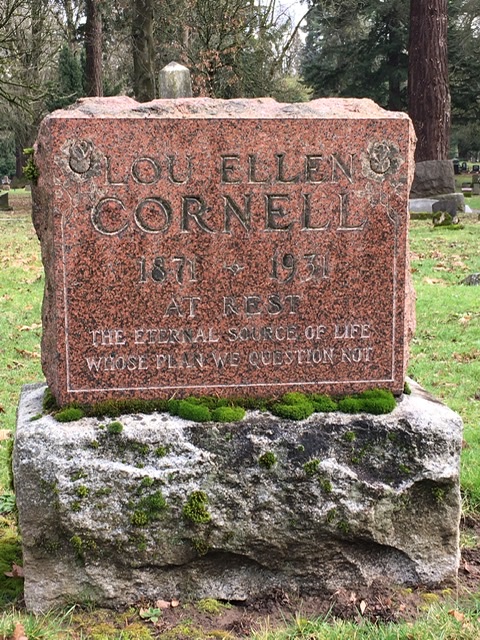
Lou Ellen’s headstone. She and her children are across the lane from the rest of the family….
Using my old standby, the Historic Oregonian website, I walked through every mention of Lou Ellen in the paper, trying to piece together what seems like a complicated life. I will try and give you a clear story.
Born the sixth child to Colburn and Aurelia Barrell, Lou Ellen married Richard Cornell at 19 and gave birth to5 children over the next 7 years. Sadly, three of these children died before they were ten, leaving just two sons, Warren and Lew Elwyn. During that same time, Lou Ellen lost both her parents. I can’t even imagine how terribly sad she must have been.
Such a short life!
Maybe having all these dear ones pass away gave her a curiosity about life after death, and some time after her father’s death in 1902, she joined the Spiritualist Association. This group sees contact with the dead through seances as proof of eternal life and as a source of universal wisdom.
But for Lou Ellen, this led to her being in court, and in the newspaper, every day for months in 1908, as disagreements within the Association became lawsuits. Lou Ellen, as secretary of the Association, was ordered to produce the account books. She evaded, avoided, and even resigned her post, never giving up the records. Finally, the case was dismissed.
Lou Ellen filed for divorce from her husband Richard, the very next week, claiming cruelty and lack of support. Richard had left town already, and made no statement for the court. Her divorce was granted.
For the next six years Lou Ellen continued her work with the Women of Woodcraft, planning events and even reading her poetry at parties and meetings. In 1912, she acted in a Suffragist play put on by her former elocution teacher. She was busy and active in her community.
I will tell you more about Lou Ellen tomorrow. It is so interesting learning about our old neighbors!
Yesterday was a hard morning. I woke up tired and grouchy. I didn’t even write a blog. Even the snow which was supposed to come, didn’t, and we had cold, wet slush.
But as the day moved on, I pulled myself out of it. Drank a lot of water. Had an apple and peanut butter. Did a crossword puzzle with Grandpa Nelson.
After lunch I decided to head to Lone Fir Cemetery, in spite of the drizzle. I am researching the family of Colburn and Aurelia Barrell and wanted to see their headstones. Back in the day, Mr. Barrell was a businessman who invested in all sorts of things, and by 1854, he owned a steamship called TheGazelle and a large chunk of property on the east side of Portland.
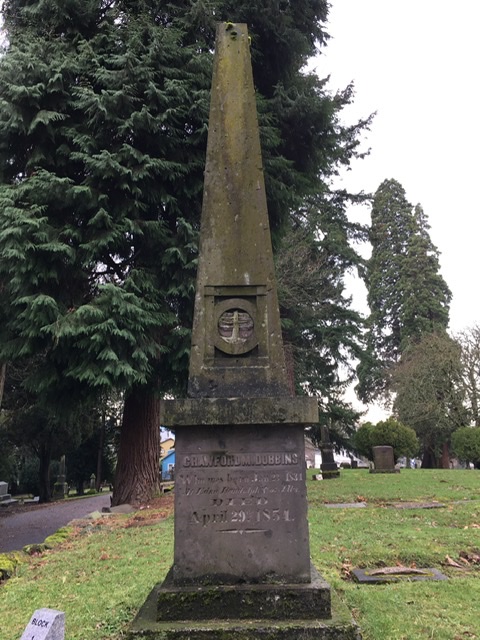
Young Crawford Dobbins’ memorial
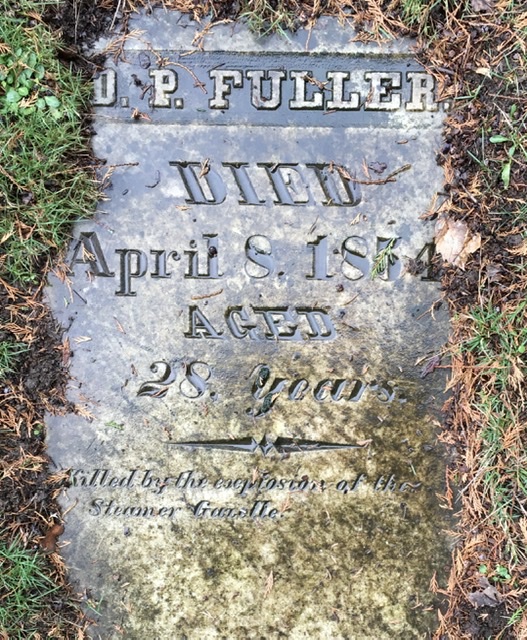
That year, TheGazelle exploded, killing twenty people. Two of them were young friends of Mr. Barrell, and he wanted to honor them with proper burials. He established the Mt. Crawford Cemetery on his East Portland property and had very nice monuments put up. Mr. Crawford, who gave his name to the place, has a ten foot high obelisk, and Mr. Fuller, a coffin-sized slab.
David Fuller’s slab, which says “…killed by the explosion of the steamer Gazelle.”
Mrs. Barrell later convinced her husband to change the name to Lone Fir, because of the one fir tree that stood on the property.
That is what people know about the family. But there were seven children…. surely, in the 160 years since, someone else must have done something else interesting. I am researching old Portland newspapers online to see what they might have been up to. I will keep you posted.
From 2016 until last spring, I worked just about every day on a story that I wanted to be published, printed, and used in the local schools. I had plans for this story. It was going places.
It was a fictionalized history of Portland in 1903, and to make the history correct and interesting, I researched everything from the conditions of children working in fish packing plants to the layout of elementary schools. I created some characters I really liked, and a few that were loathsome.
And then, last February, I just stopped. It was like a brain fever broke and I didn’t need to do that anymore. Now that I’ve had some time to think about it, there were a few factors involved.
Children, 1903
My favorite character idolized President Teddy Roosevelt. The more I learned about Teddy’s racism and imperialist views, the less I wanted this character to admire him. Since that was central to his motivation, it sort of fell apart.
I realized that for a really dramatic story, terrible things have to happen to my characters. I don’t like to even think of terrible things happening to children, much less write about them.
I realized that it was the research, the hunting of details, that I loved the most. The writing of the story was secondary.
House from 1903
Also, since I have lived here in Portland, I have met a few people who have published their stories. The books are well-written, well- researched, and entertaining. But the folks say that their experience with the publishing industry was miserable, frustrating, and made them pretty much zero income. So why go there?
Ego? That would be just sad. Wealth? I’m comfortable, thanks. Fame and fortune? Nope.
But I still have this research, these interesting bits of history and trivia of life back then. How to share them without publishers? Well, maybe you’re looking at it.
Online publishing is a popular venue, costs next to nothing, and demands fewer compromises. And it seems to be just about as profitable as print publishing (that is, not at all.) So maybe I will go back to my notebooks, find the best bits from my research, and put them in this blog.
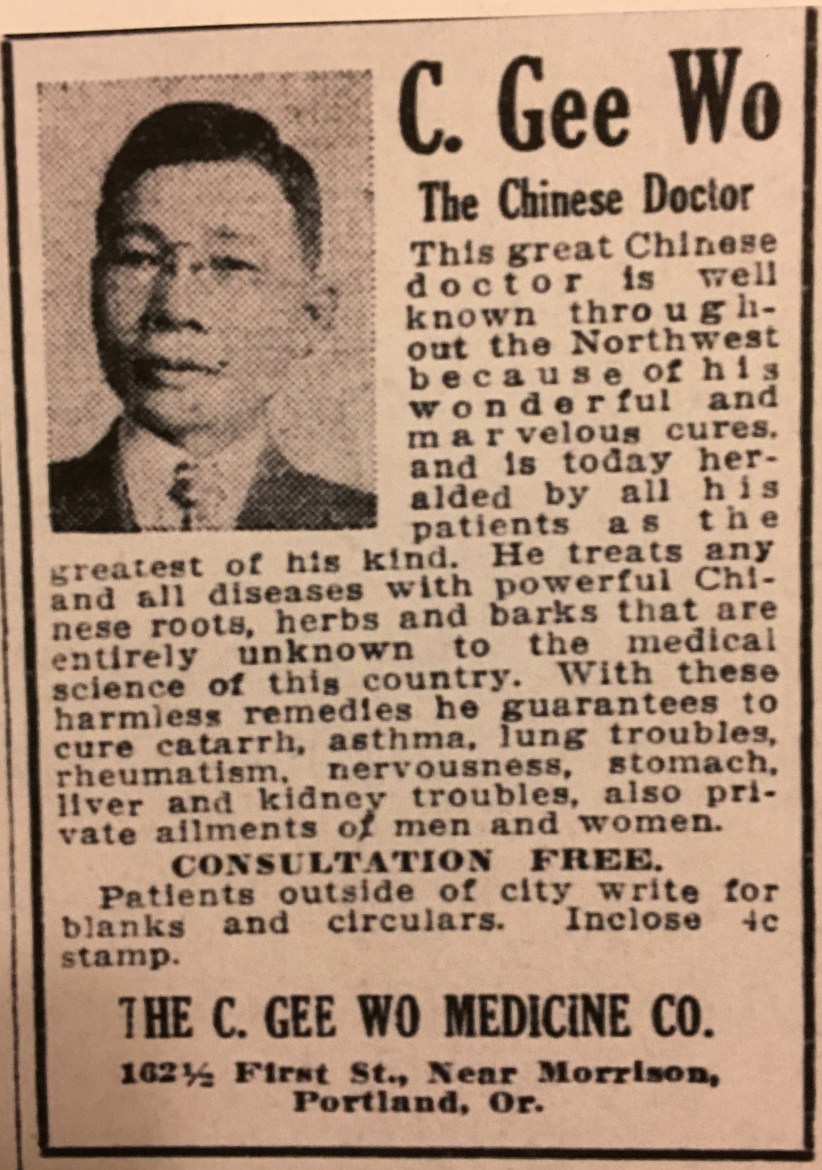
About two years ago, I wrote to you about a Chinese herbalist who had worked and lived in Portland around 1903. His name was Dr. C. Gee Wo.
Doctor Wo’s ad from the early 1900s
Back then, I learned that the doctor was from China and had studied herbal medicine both there and in Nebraska. He married a woman named Saide Celestine Starbuck and then they moved to Portland, Oregon, where he ran offices and sold medicines until he retired around 1921.
Last summer I went in a walking tour of Chinatown here in Portland, and learned that Dr. Wo had been very well known in the city, and had a clientele that included both Chinese and White people.
And then, this morning, it got even more interesting. Kol Shaver, a collector and dealer of antique and rare books in Vancouver, Washington, contacted me. Kol has been looking for information about Dr. Wo to help categorize some of his writings, and found information in my old blog! It made me ridiculously happy to be useful.
Kol runs an on-line shop at zephyrbook@gmail.com and was also able to give me more information about Dr. Wo.
Dr. Wo issued a series of books entitled “Things Chinese” through his Company Chinese Medicine, which had testimonials about his medical treatments. The testimonials within the book indicate he was still living as of 1926. He was also present at the baptism of his grandson Kenneth, born to his daughter Celestine (her mother’s middle name) in 1925.
Kol told me that there is still no information about the Doctor’s burial, but Mrs. Wo and their daughter are buried right here in our own Lone Fir Cemetery, even giving me the section and plot numbers! I could go visit!
Paying my respects to Mrs. Wo….
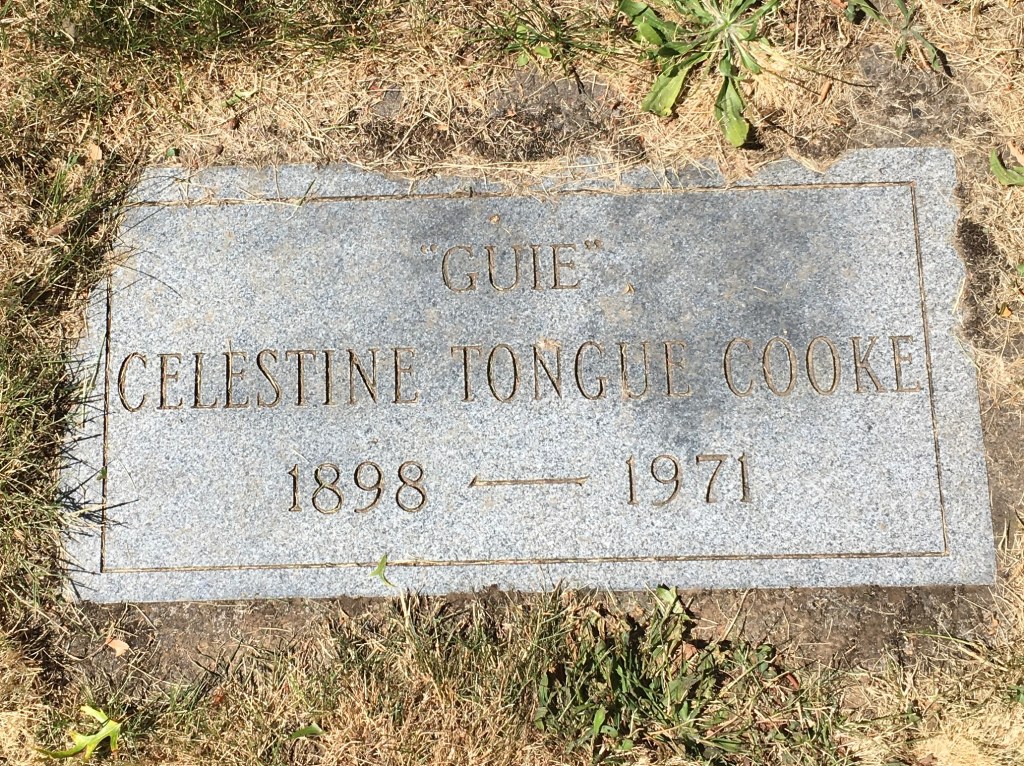
But, as Kol told me, if you didn’t know what you were looking for, you’d never find it. Mrs. Wo’s tombstone reads “Sadie Leo, 1868-1927”. Maybe because of anti-Chinese prejudice, they chose not to use their surname “Wo”. Close by is Celestine “Guie” Tongue Cooke, their daughter, who was born in 1898 and died in 1971.
Their daughter Celestine…
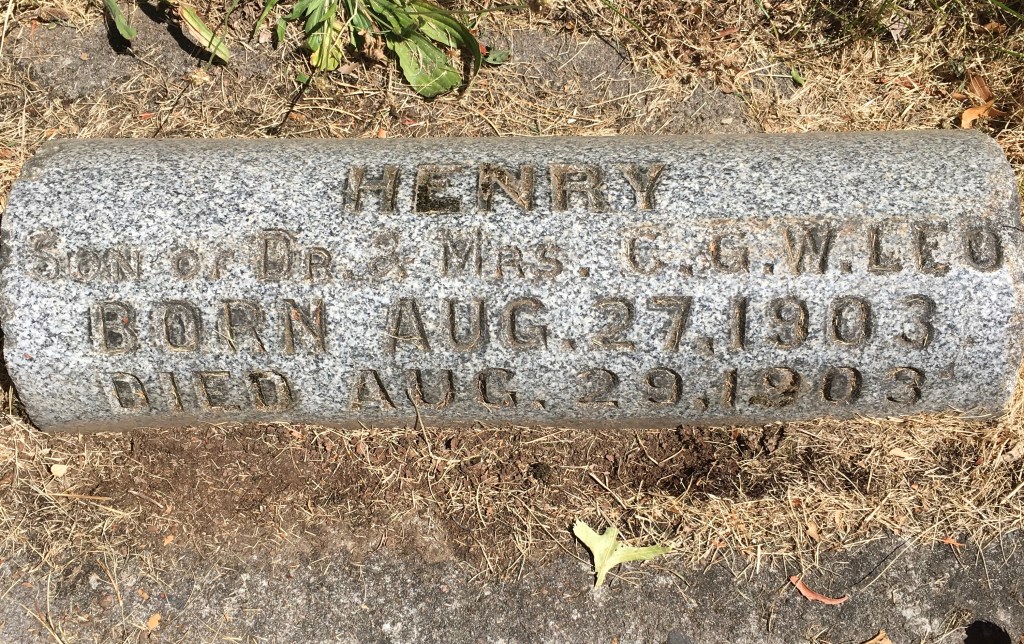
Also nearby is the smaller grave marker of Henry Leo, a son, who was born on August 27, 1903, and only lived two days. I mourned for his parents and little Guie, who would have been just five years old when she lost her baby brother.
And little Henry, who only lived for two days.
I am so happy to have been in contact with someone who is interested in Dr. Wo.








 Dear Liza