Return to the Quilt Show, Part 1

Dear Liza,

img_08071.jpg
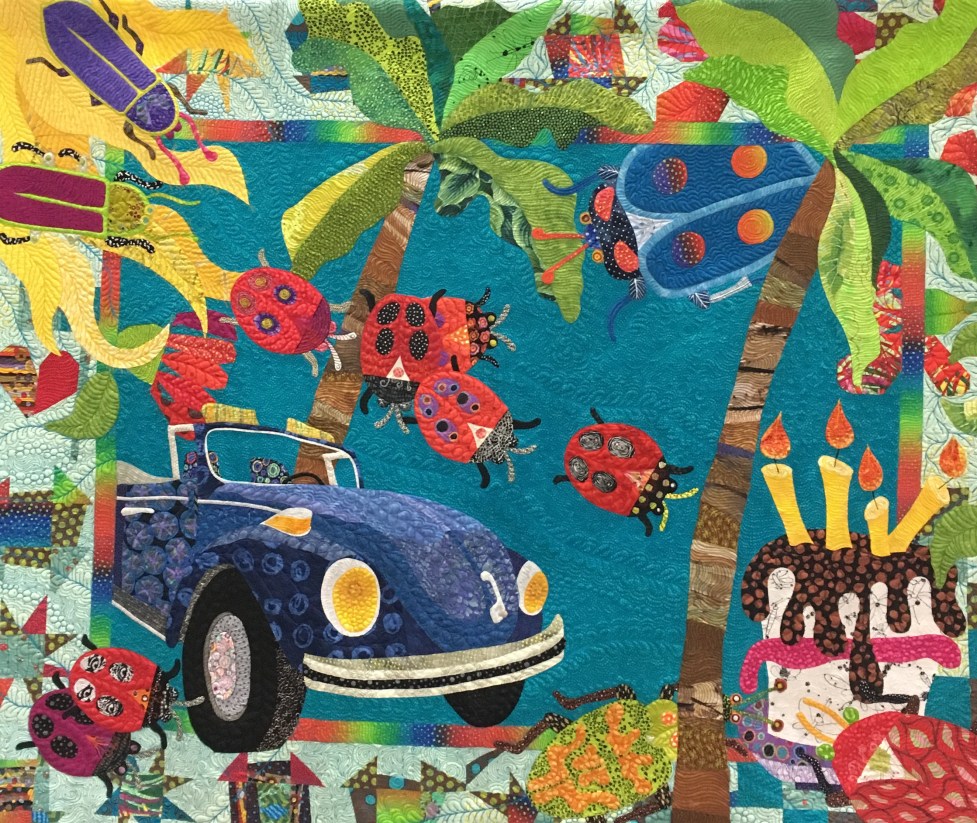
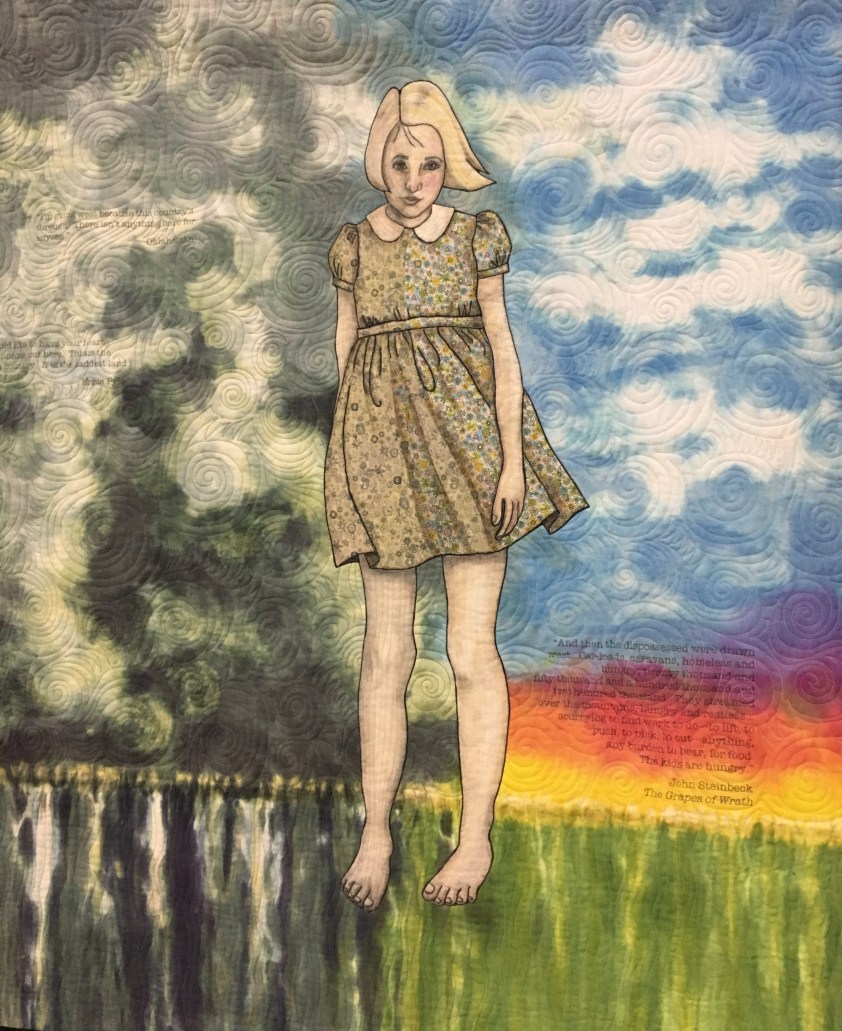
Last Hope California by Ginny Hebert

On Friday, Auntie Bridgett took the day off from making art and went with me on an adventure. We took the number 15 bus downtown, walked over to the Yellow Line Train, and rode clear to the end of the line.

There was some drama on the train, as a few people with mental health issues were being loud and a little scary, but Trimet Security folks came and calmed them down and got them off the train. After they all went on their way, we breathed more easily and the train continued north.

Inside the Expo were hundreds of quilts by scores of quilters, as well as demonstrations of the latest sewing machines and gadgets. Auntie Bridgett tried the ABM International Innova embroidery machine, which you drive sort of like a motorcycle! It is bigger than our sofa, and costs a lot more.

img_07311.jpg
Auntie Bridgett plays with toys!

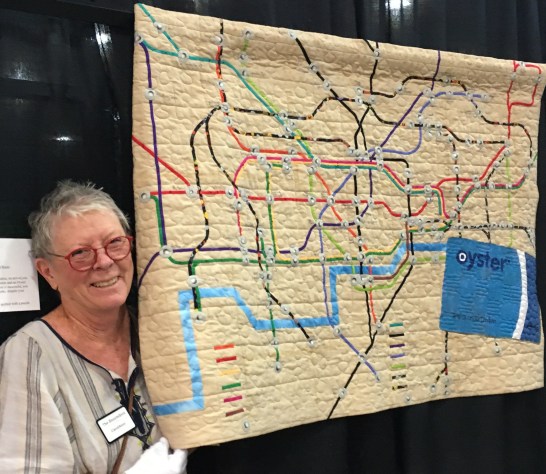
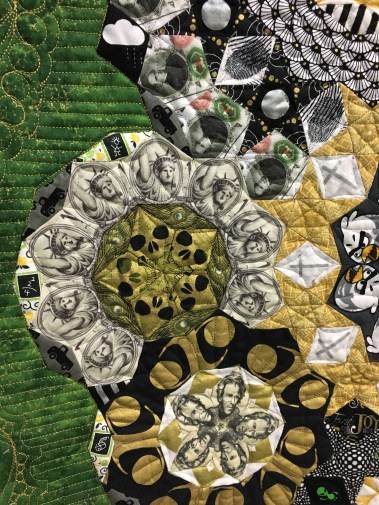
We found a whole series of quilts by Virginia Hammon, called “Money Quilts”. They are all perfectly pieced and machine quilted, and all say something about money, politics, and humanity. These aren’t just pretty quilts: these are politically informed art.

IMG_0734.jpg
A Money Quilt by Virginia Hammon

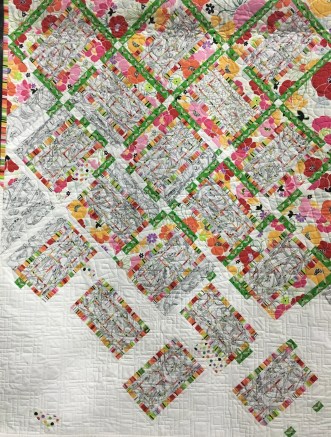
I saw quilts that I had noticed and photographed last year, like this lovely map-looking one called “Bee Good, or Be Hungry”, also by Virginia Hammon.

As with all good art, the more I looked, the more I saw. There was a barren white section, quilted in tight city blocks, representing the city. As the city gave way to suburbs and countryside, more colors were introduced and the quilting became looser. The message was clear: make room for bees, or do without their help.

img_0743.jpg
Bee Good or Be Hungry by Virginia Hammon

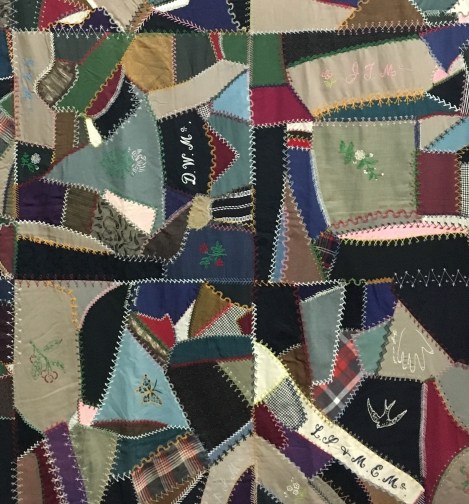
Along with these very contemporary quilts were Victorian Crazy Quilts from around 1903, found in people’s grandparents’ attics. I love the combination of piecing and embroidery, and the any-way-it-falls- piecing technique. I may need to get out Great Grandma Billie’s velvets and Ruth Andresen’s silks and do something.

img_0758-e1538242481777.jpg
1903 Crazy Quilt


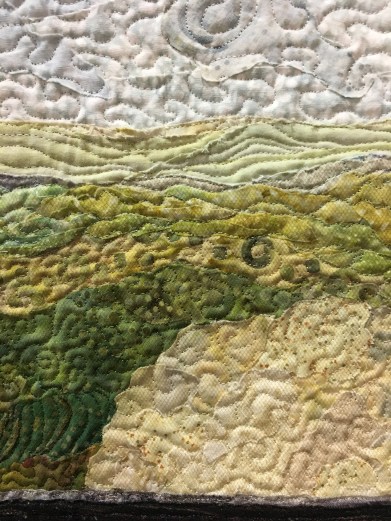
I was inspired by so many techniques! The raw-edge machine applique I saw last year has gotten more impressionistic, looking like landscape paintings. I want to use this on my Portland quilt this winter.

IMG_0753.jpg
Extreme close-up of raw edge applique


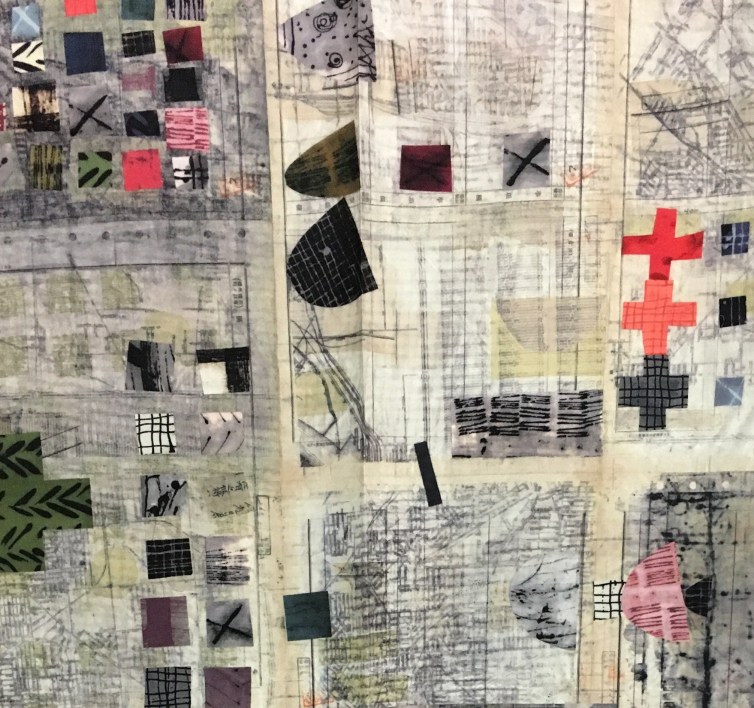
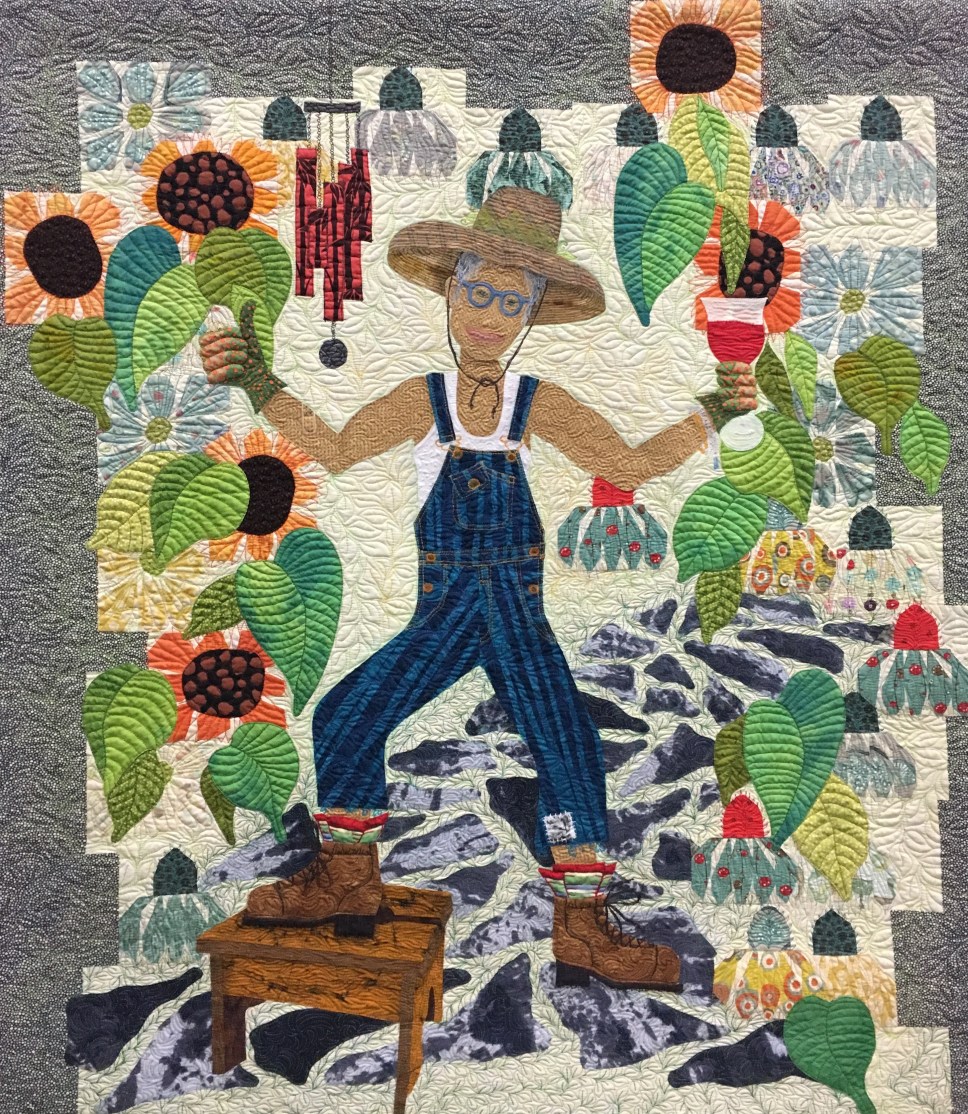
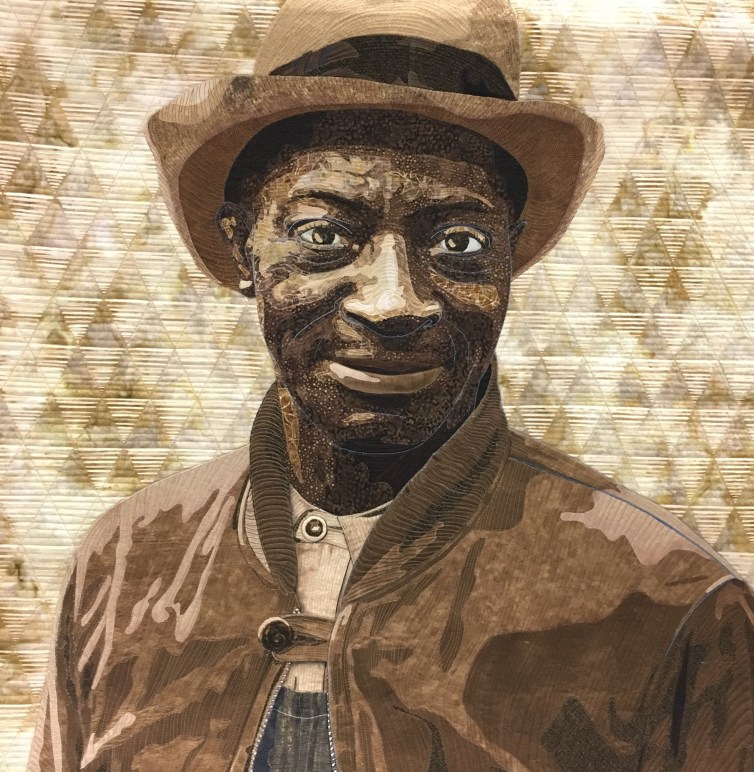
Realistic, moving portraits show how quilting and painting can be combined.

img_0826.jpg
Fabulous Portraiture in paint and thread

There was more to see and interesting people to talk to, and I will tell you about the tomorrow!

Love,

Grandma Judy

Facelift on Belmont Street

Dear Liza,

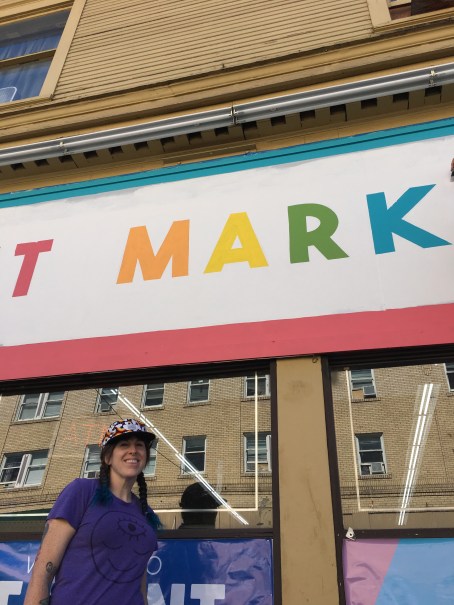
IMG_0714.jpg
Janet of Wokeface and her good work!

As I have said before, cities, and even small neighborhoods, are always changing. The other day we got to watch it happen and talk to the folks behind it!

On the corner of Belmont Street and 34th, just a block from our house, is a small family-run store called the Belmont Market. It has been there for many, many years, changing hands but basically staying the same.

The painted front of the store was old and sort of, well, sloppy. It took a while looking at it to realize it was, indeed, a market. I am sorry to say that it was so unspectacular that I never even took a picture of it!

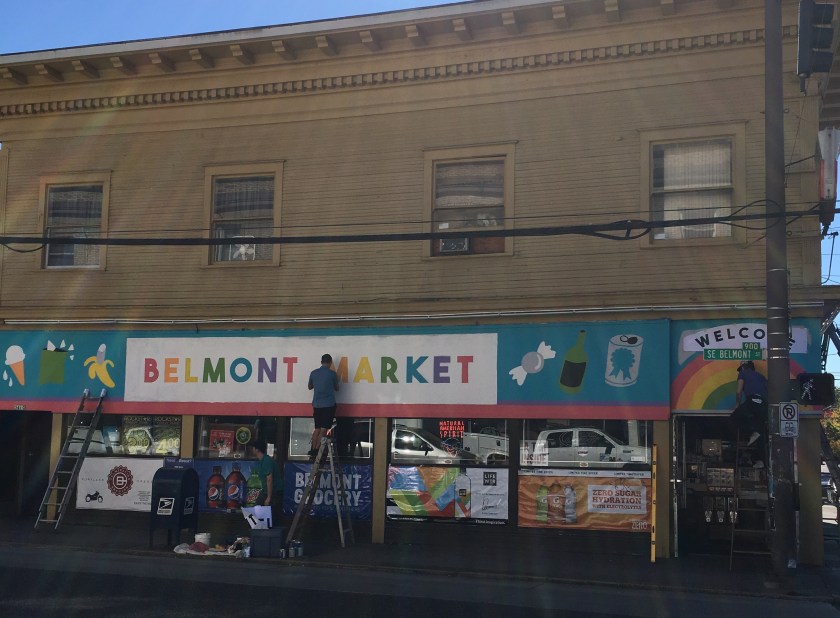
IMG_0703.jpg
A promising beginning

Tuesday afternoon we saw that the old front had been painted over, and a promising new front had begun.

Wednesday, as we were walking to lunch, we noticed some lovely people up on ladders, lettering and continuing the new work.

I stopped by to tell them what a great job they were doing, and got to visit with Janet, the designer and head painter. She told me that they were working with the Portland Street Art Alliance, the same group who has painted so many of the other murals we love.

In addition to rainbows and sunshine and fine lettering, they will paint a can of Pabst Blue Ribbon Beer and a bottle of Underwood wine on the sign, as advertisements. For this, the Pabst and Underwood companies have paid them enough to pay for the paint. The design and painting was done as volunteer work, for the good of the neighborhood.

img_0709.jpg
Nearly done!

This coming together of volunteer and paid work, private and public cooperation, and art and commerce just makes me happy. I love my new city!

Love,

Grandma Judy

The Pied Cow

Dear Liza,

I have told you about the delightfully quirky, slightly spooky coffee house in our neighborhood called The Pied Cow. But now I have learned more about it.

IMG_8250.jpg
The J. C. Havely House at sunset

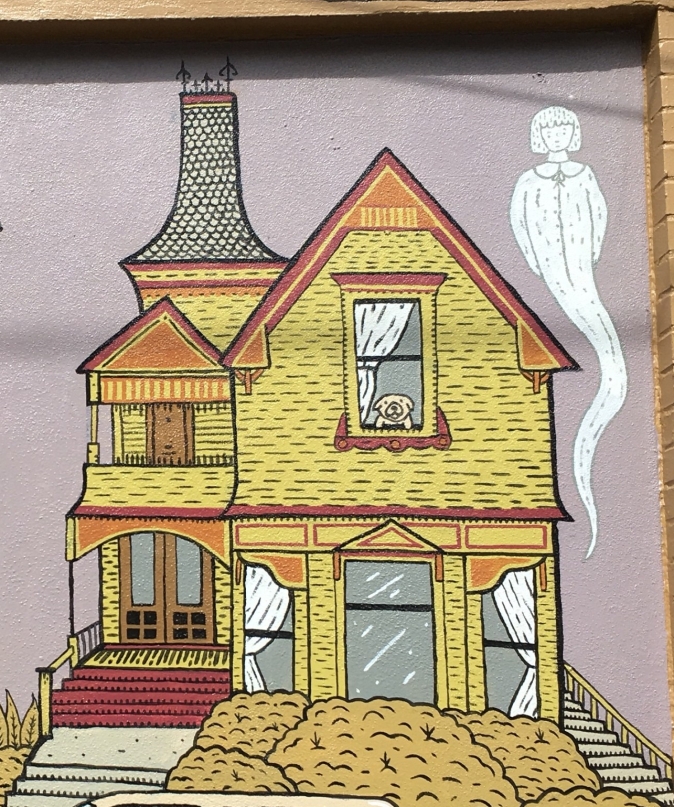
The Pied Cow is in the house and yard of the J. C. Havely House, built in 1893 by Mr. Havely, who is called a railroad tycoon because he made a lot of money building railroads around the Northwest. It was a mile and a half out of town at the time, reached by trolley car or wagons over muddy roads. It is a Queen Anne Vernacular Style, and has lots of decoration. A square tower with balconies and a roof like a pyramid, and details my Momma called “gingerbread” give it a really unusual look. It is currently painted a shade of green that looks like faded moss.

During the 1890s and early 1900s, the house hosted Suffragist meetings. That means people met here to plan how to change laws to allow women to vote.

After the Havely family moved away and sold the house sometime after the 1920s, I can’t find out who lived in it until the early 1960s when it was used by historic restorers Ben Milligan and Jerry Bosco as a storage place for architectural bits and pieces they used in re-building old houses.

IMG_0617.jpg
Auntie Bridgett likes The Pied Cow!

In 1979, Ben and Jerry offered the building as a place for some friends’ new restaurant, Buttertoes. The friends, three sisters named Carolyn, Charmon and Cherous, ran Buttertoes for ten years, using family recipes. The popular, story-themed restaurant also hosted children’s tea parties and was known for making delicious pastries.

It was during the Buttertoes years that the ghost, Aunt Lydia, was discovered. The sisters reported that someone would walk into the back room, which had no exit, and there would be no one there. The people who rented to upstairs apartment reported furniture moving by itself and having strange dreams. A spiritualist was called in and confirmed that a spirit was present.

img_6307.jpg
Aunt Lydia, in the Belmont Mural

Maybe it was the spiritualist who gave the name Aunt Lydia to the ghost, and described her as wearing a black, high collared dress with her hair pinned up. I still have no information on WHOSE Aunt she might have been.

When Ben and Jerry passed away in 1989, the sisters closed the restaurant and sold the building to the owners of The Pied Cow. They opened Buttertoes Gift Shop down the road on Hawthorne, which ran for another 13 years.

The Pied Cow has been a funky place to have coffee, drink sangria, smoke a hookah, or have some of the best ginger cake ever for almost 30 years now!

Love,

Grandma Judy


Tiled Entrances

Dear Liza,img_01781.jpg

I love walking around Portland, and especially our Belmont neighborhood, looking for signs of the past. They are like layers in a painting or the growth rings of a tree, showing you what has come before.

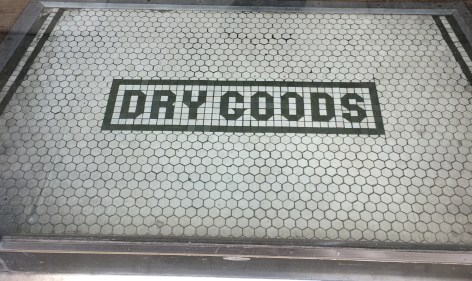
One example of these signs are, literally, signs. Many of the tiled doorways that businesses laid down in the 1890s are still looking good, even when the original business has long gone.

The Pantorium, for example, was a dry goods store on Belmont in 1894. Since then the building has been more shops than I can count, including “It’s a Beautiful Pizza”, “Hall of Records” and currently, “Suzette”, home of sweet and savory crepes and delicious cocktails. But the tiled entryway still reminds us of what has come before in an elegant, useful way.

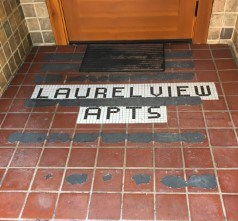
Other doorways graced by tiles show the permanence of cities. The Laurelview Apartments have been right here, renting space within sight of our beloved Laurelhurst Park since the turn of the century. Back then the park was fairly new, and the trees were just coming into their own.getattachmentthumbnail.jpg

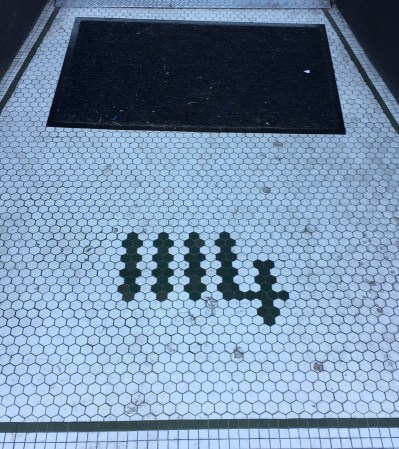
Another way the tiled entrances show us the history of the city is by the addresses. As Portland grew, it incorporated smaller surrounding cities, which then became neighborhoods. St. John’s, East Portland, Albina, and others had their own street systems and addresses, which were carried over to their new status as as part of Portland, causing duplicate streets and addresses. This confusion was solved in The Great Renaming of the 1930s, which introduced an organized grid system. Numbered streets told you how far east or west of the Willamette you were, and north and south told you where you were in relation to Burnside Avenue. It was a few years’ work, but sure makes getting around town easier now! img_0175.jpg

The address of this shop used to be 1114 Hawthorne. After the renumbering, it became 3741 SE Hawthorne, which places it 37 blocks east of the Willamette, and south of Burnside Street. I am happy that all the owners in between have chosen to keep the old tiled entryway.

Layers of history, everywhere I look. Amazing.

img_0700.jpg

Love,

Grandma Judy

Gateway Discovery Park

Dear Liza,

img_0666.jpg
The Fifth Wind

After walking in a light rain around the Leach Botanical Garden, we were hungry. Dairy Queen to the rescue! The restorative powers of ice cream and french fries always amazes me.

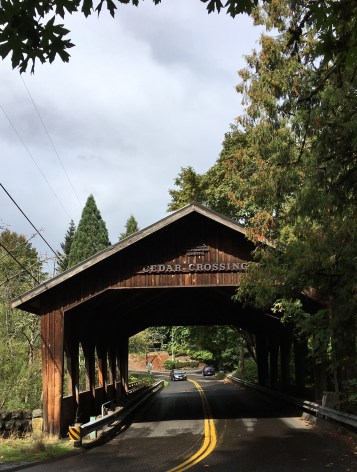
We visited the Cedar Crossing covered bridge (who knew there were covered bridges in Portland?) which crosses Johnson Creek. It feels more like the Connecticut countryside than suburban Portland, and is lovely. It was built in 1982 and feels wonderfully historic.

img_06561.jpg
Cedar Crossing Covered Bridge

Then Grandpa Nelson had another surprise up his sleeve, and we drove north about 4 miles to Gateway Discovery Park, which the city of Portland calls the “newest urban park”, as it just opened in August of this year.

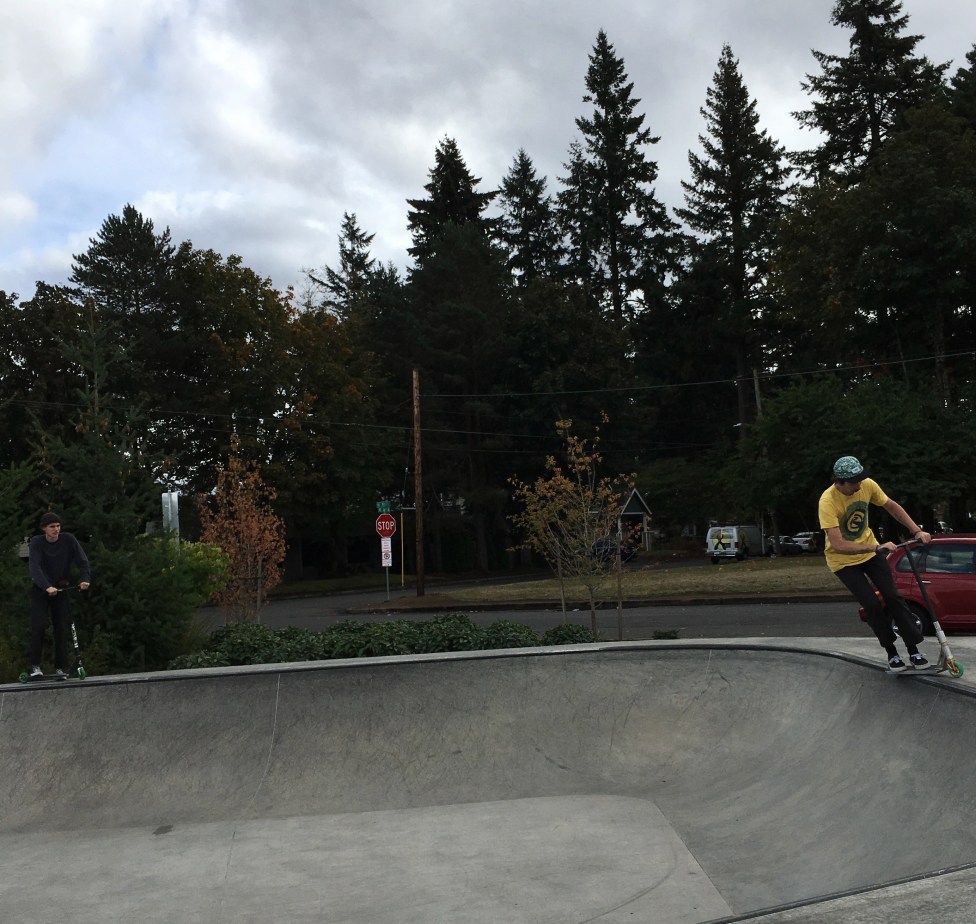
This four acre park and plaza has newly planted trees, a fountain, a covered meeting and arts and crafts area, an open, grassy play area, creative sand play area, climby toys, adult exercise equipment, and a skate park, all laid out in a shared space.

IMG_0673.jpg
Great Sand Play Area!

We wandered from bit to bit, chatting and watching families enjoy their favorite spots. I loved how involved and happy everyone was in their own activities. There was plenty of room for everyone.

img_0693.jpg
Scooter on the Edge

The park is on the corner of NE Halsey and 106th, and there is lots of street parking. The main area is marked by a piece of steel and stained glass art called The Fifth Wind.

I wonder if I will ever run out of new things to see. I hope not!

Love,

Grandma Judy

Leach Botanical Garden

Dear Liza,

IMG_0627.jpg
Pathway through the Garden

On Saturday, Grandpa Nelson had a surprise for me. He took me to see a garden in the city that I had never even heard of, the Leach Botanical garden in the far southeast, just off of Foster Road and 122nd Avenue.

When a park has someone’s name on it, you think: Who was this person? Why is there a park in their honor? In the case of Leach Botanical Garden, there’s an easy, delightful answer. This 16 acre garden was their garden, and the house on the property was their house! The garden was their gift to the city.img_0625.jpg

But of course it’s never that easy.

John and Lila Leach were married in 1913 and were an unusual couple for their time. He was a pharmacist and businessman, and she was a scientist, studying botany and teaching science at Eugene High School. They belonged to a group called the Mazamas who hiked, camped, and skied in the Oregon wilderness. On their trips, Lila discovered two new genera of plants that had never been seen before!

IMG_0624.jpg
Delightfully threatening skies

In the 1930s they bought 16 acres of land on Johnson Creek and built a small stone cabin. They hired a landscape architect to help lay out the steeply sloping property, and began putting in plants. They named the property Sleepy Hollow.

When World War II started, Lila volunteered with the Red Cross, and after the war, the two were active in supporting the YMCA and the Boy Scouts. They worked in the garden and lived in the larger house they built later until John passed away in 1972. Lila moved to a care facility in Lake Oswego and passed in 1982. Their ashes were spread in the Oregon wilderness they loved so much.

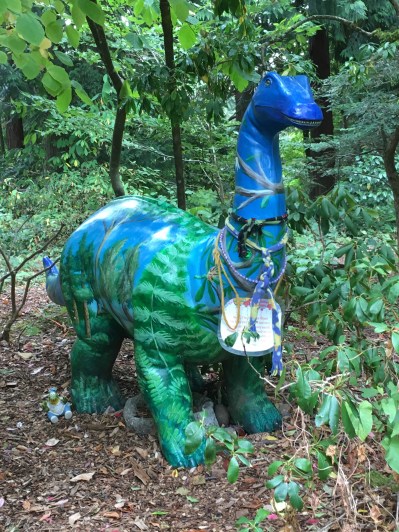
IMG_0637.jpg
Well loved dinosaur!

In their wills, they both had stated that the house and property was to be given to the City of Portland. But after ten years of typical civic squabbling, the city was ready to let the property go to developers when Parks Commissioner Jordan went to visit the garden and decided it was too precious. It was developed and is maintained by a combination of public and private funding.

It hosts weddings, parties, composting classes, children’s activities, and seedling sales. You can learn more at Leachgarden.org.

img_0655.jpg
Fall colors in the garden

And that is your Portland history lesson for today!

Love,

Grandma Judy

Evening Walk in Laurelhurst

Dear Liza,

In case you missed me and my blog over the weekend, I have decided that I will only be posting on weekdays, and taking weekends off. I am feeling like I’m so busy writing about life, I’m not having time to DO life. But for now…

IMG_0599.jpg
Firwood Lake reflections

We are at the part of Fall where it can be warm during the day, cool in the evening, but still light enough to walk after dinner. If I am quick to get out and careful, I can take some nice photos.

In the neighborhood around Laurelhurst Park, there are signs of Fall everywhere. Leaves changing, seed pods doing amazing things, squash and pumpkins swelling and getting fat for Halloween, crows scavenging.

img_0585.jpg
Seed pod magic

Sitting by Firwood Lake, the pond inside the park, I kept seeing reflections and shadows, trying to channel my inner Monet.

Dahlias, one of Auntie Bridgett’s favorite flowers, are still blooming, catching the lower light in their dense petals.IMG_0583.jpg

And, of course, chestnuts! The scary-muppet looking ones that you can eat, and the studded-motorcycle-jacket ones that you can’t are both falling like rocks from trees all over the neighborhood. Keep your hats on!

img_06081.jpg
CAN eat…sweet chestnut!

And, as Edith Ann used to say, that’s all I have to say about that.

Love,

Grandma Judy

img_06051.jpg
CAN’T eat…horse chestnut!

North to Alberta, Part 2

Dear Liza,IMG_0548.jpg

After I had explored old buildings and seen monuments, I found what I had originally headed north for, a fabric shop called Modern Domestic. It is bright and well laid out, and carries the variety of fabrics I have been looking for.

Martha, who is the ‘new kid’ at the store, and I had a wonderful conversation about the colors of Portland, and what I would need to do the city justice in my quilt. Greys, for the clouds, she said, and reds for the bricks. It was nice to talk to someone who understood what I was aiming at.

img_0559.jpg
Martha

After moving bolts of fabric around, I found a perfect Easter Egg, a collection of Fat Quarters from Robert Kaufman in the colors and textures I had been looking for. I tucked it under my arm and continued looking, because the collection was lacking a forest green. Martha helped me find it, hiding in a corner across the shop. Everyone was so helpful, even letting me recharge my phone while I shopped.

IMG_0555.jpg
Treasure!

Then I headed off in search of lunch! It is amazing how hungry I suddenly realized I was. I knew Martin Luther King Jr. was a main drag, so I just walked north, knowing something would turn up.

img_0562.jpg
Tile decoration outside Aberus

And something did. Aberus Ethiopian Food was on the next corner, a small restaurant,  totally empty the whole time I was there, but the food was delicious. I told the lady (cook and waitress) that this was my first time eating Ethiopian food, but that I wasn’t afraid of spice. She recommended Doro Wat, a chicken and chili dish served on a large disc of spongy bread, a hard boiled egg, cheese, and salad. It was spicy, messy, and a wonderful experience. I left with leftovers.

GetAttachmentThumbnail-1.jpg
Ethiopian Feast

Now sated and ready for home, I caught the number 6 south. Walking between Grand and MLK, I found a fellow leaning against a building who seemed to need the leftovers more than I did, so I  gave them to him. We chatted for a minute, then my bus came.

After I had rested, Auntie Bridgett and I went for a walk. I keep finding new things! Did you know gingko trees have nuts? I didn’t! But now I do, and here is what they look like.

IMG_0567.jpg
Gingko nuts!
img_05731.jpg
Silly Mousekin

The rest of the evening was spent watching the Giants beat the Padres and playing with Mousekin.

Love,

Grandma Judy

North to Alberta, Part 1

Dear Liza,

o-1.jpg
The Weatherly Building

The weather Tuesday was cool and clear, perfect for an adventure. I took the number 15 bus to Grand Avenue, close to the Willamette River. I was walking toward the number 6 bus stop when something caught my eye.

This wonderful building has been puzzling me for some time. It is on the corner of SE Belmont and SE Grand and is, as far as I can see, the tallest building on the Eastside of Portland, certainly the tallest for miles around. So I walked over to learn more, if I could. Many old buildings have a name, a plaque declaring it to be on the National Registry of Historic Places, a date….something to indicate when it was built, why, and by whom.

img_0540.jpg
Fabulous ironwork

What I found was some ornate old iron work, odd architectural bits, and Charles McCloud.                 Mr. McCloud has run the parking lot behind the building for the last ten years. He told me the building was built in 1927. There used to be a theater where the parking lot is now, and a dry cleaners next door. He doesn’t know if the building has a proper name.

Later, I found that the Weatherly Building was built in 1927 by George Weatherly, a man who made his fortune in the ice cream retail and manufacturing business. One of his employees invented and patented the first ice cream cone making machine. Civilization owes them both a great debt, I think.

IMG_0542.jpg
Mr. Charles McCloud

Mr. McCloud does know that the building has recently been sold and his parking lot will be closed within a month or two, which means he will need to find another job.

We lamented together that change usually means someone gets pushed out of where they are, I wished him luck, and caught my number 6 bus heading north on Grand Avenue, which further on joins with Martin Luther King Jr. Avenue.

I got off at Alberta Street, the main drag of the neighborhood. The Alberta neighborhood has been one of the main black neighborhoods in Portland since the 1940s. In those days, red lining practices in real estate meant that black people couldn’t buy property in most areas of the city. Even after these racist practices were outlawed, they were still quietly continued.

The Alberta has the feel of an older neighborhood working to re-invent itself. Murals and memorials show the racial struggle and heroes the the community. There are smaller houses and storefronts, but many lots have taller new construction going on.

On a corner, I found a small silver monument to Officer Harry Jackson, dedicated in August, 1997. This memorial was erected while Officer Jackson was still working for the Portland Police Force. Becoming a police officer in spite of discrimination, he became respected for his community-building and encouragement of shared responsibility within the area. He represented the best in policing. img_0547.jpg

IMG_0560.jpgAfter looking around for a while, I found my primary quest: Modern Domestic, a fabric store that was recommended by the lady at Josephine’s Dry Goods.

This store was what I have been looking for. It carries cottons, wools, linens, blends, all the sorts of fabrics I want for my quilt.

Tomorrow, I will tell you what I found!

Love, Grandma Judy

IMG_0548.jpg