Our Fall weather is turning grey and cool, which means I’m drinking more tea. “Earl Grey, Hot”, as Captain Jean Luc Picard would say. It helps keep my spirits up.
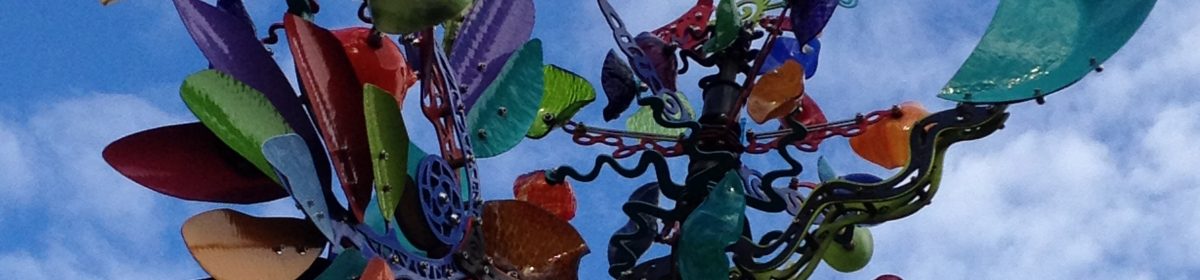
Outside, the grey is varied and spectacular. Our local church looks absolutely blessed as the sun peeks through.
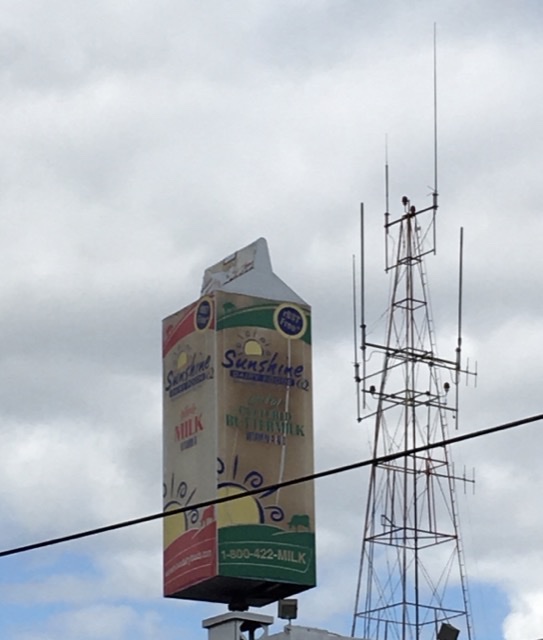
The sight of a cloud-shrouded Sunshine Milk Carton looming over the store always makes me smile. It has been standing up there for decades, and seen much worse weather than this!
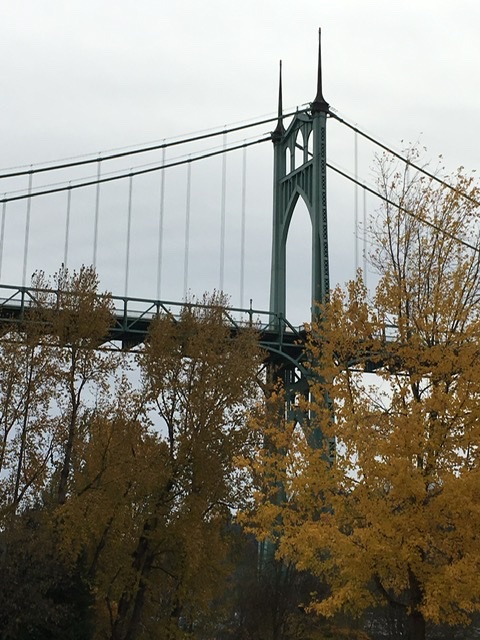
And mere clouds can’t make the St. John’s bridge look any less delightful.
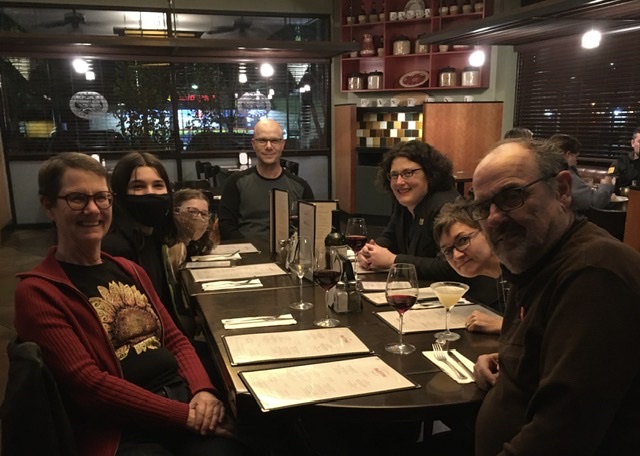
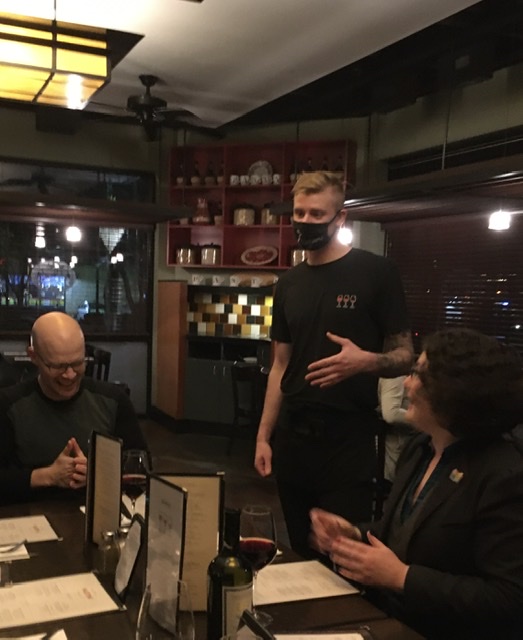
Auntie Katie, Uncle Dave and the Cousins all met us down at Pastini Pastoria on Division Street. Our waiter, Austin, took good care of us. He took our picture. He made sure we had wine and pasta. He made sure we had a knife for the birthday cake I made and brought in. He was funny and efficient and made Auntie Bridgett a tasty Lemondrop cocktail.
We chatted and laughed, playing with words and being silly, like we always do.
Since all of us, including the kids, are vaccinated and boosted, we felt comfortable enough to be in a room that was pretty full of folks. Then this morning, I read that a new virus variant may cause more lockdowns. Well, poop.
So, life is unpredictable. We knew this. The greatest intelligence, said Darwin, is the ability to adapt. So we will adapt and see you at the other end of whatever is coming up. Stay happy!
After days of preparation, Thursday was the Go To Day for Thanksgiving. The turkey thighs went into the slow cooker, the mince tarts came out of the fridge, and Auntie Bridgett’s spicy sweet yams went into the oven.
I am sorry to say I didn’t take any pictures of the cooking…. I was busy cooking! I really get into the process and sort of forget to photo document.
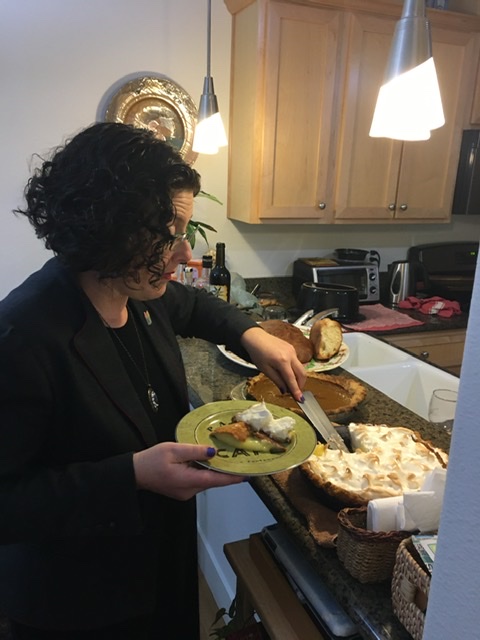
When Auntie Katie and the Cousins came, they brought two delicious pies and a turkey shaped challah bread. What a feast!
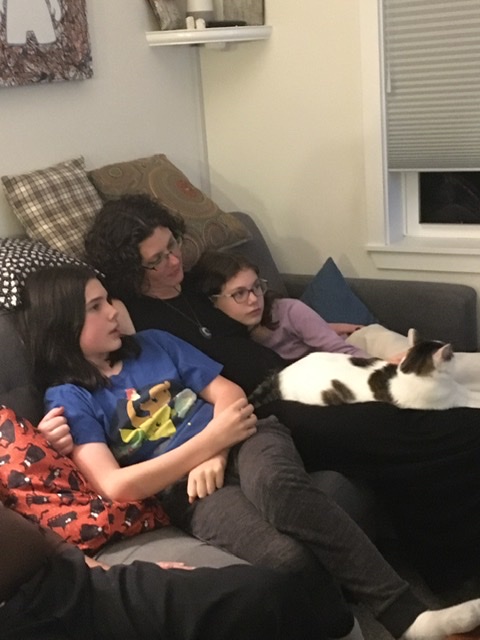
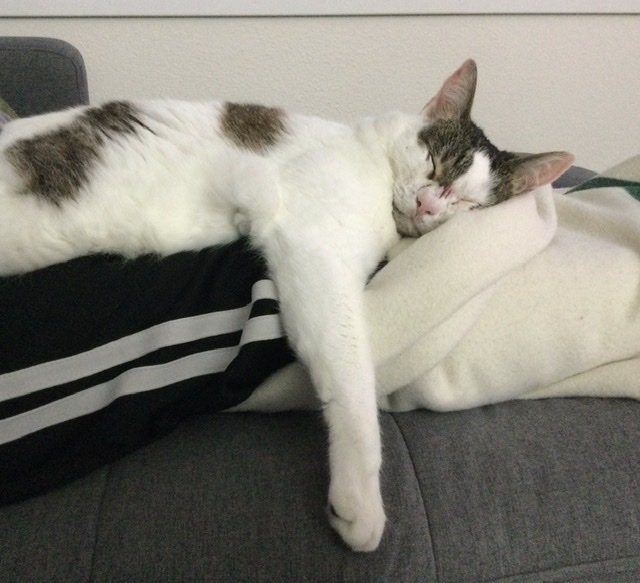
When we had eaten and chatted, had wine and desserts, we played some guitar, made each other laugh, and watched a movie none of us had ever heard of! Mouse took advantage of some company lap time.
Auntie Katie’s buddy Kitty recommended “Strange Magic”, an animated story about fairies and elves, with modern music and a wry sense of humor. It was just what was needed.
Cousin Kestrel got into her drawing, as usual. She has such a way with a pencil! And Cousin Jasper, using his just-a-few-days-early 12th birthday present, played a game of chess with Grandpa Nelson.
When we were all fed and worn out, we went to our own beds and slept like logs.
I hope you and your Mommy and Dad are having a wonderful Thanksgiving. I am sad that we can’t get together this year, but travel is so expensive and difficult right now that it feels much safer to stay close to home.
While I was enjoying the art of the Nabis, I was also noticing how well the display space had been designed to complement the paintings and prints.
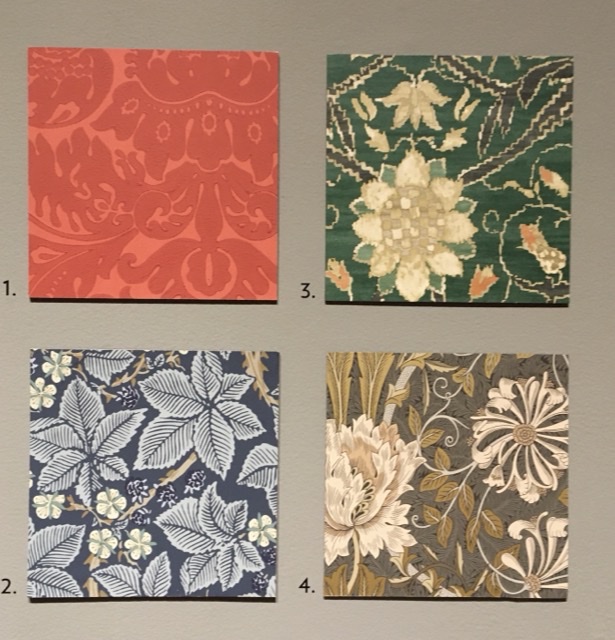
And it was no accident. The curators, Mary Weaver Chapin and Heather Lemonedes Brown, had done some art history sleuthing and found reproductions of historic wallpapers that looked very much like the rooms in the paintings.
Since so much of the mood of the display space is evoked by the wall coverings, using period wallpaper allowed us to see the paintings as they were intended to be seen: against vibrant colors and busy designs.
The music that was playing in the display area was fitting, as well, light and pleasant. The only way to have made it more cozy would have been to have a cushy sofa in front of each piece, but that may be a bit much to ask for.
As we headed out into the chilly wet afternoon, I felt as though I had spent an afternoon at a gracious, well decorated home.
There were four members of the group of artists who called themselves the Nabis. Pierre Bonnard was my favorite, but the other fellows did good work, as well.
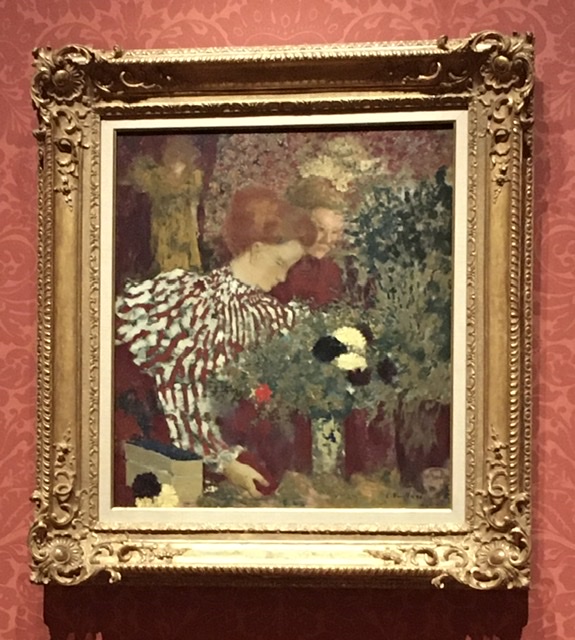
Edouard Vuillard did lusciously cozy scenes of family interiors, like his “The Striped Blouse”, showing a woman arranging flowers.
Maurice Denis did very softy colored scenes. So softly colored, in fact, that it is sometimes hard to make out the details. It is important to realize that these pictures are over a hundred years old, and many are just pencil on paper. Nothing lasts forever, after all.
Here is a painting by Denis that I really like, called “Washing the Baby”. The woman looks calmer than I ever felt while wrestling a slippery infant!
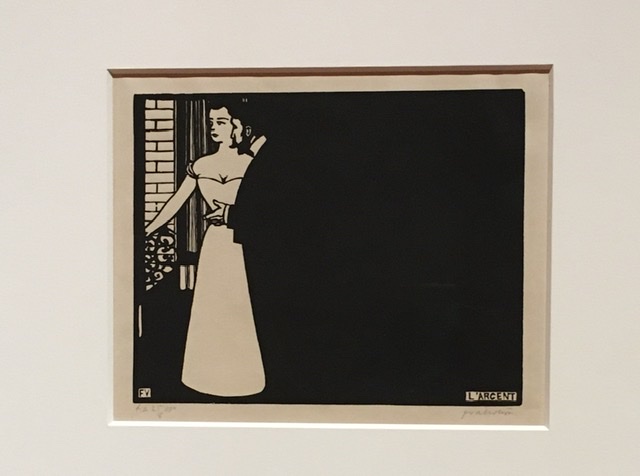
Felix Vallotton did paintings and prints of home interiors, but had a very different style from his fellow Nabis. Instead of showing private joys and comforts, his stark black and white prints often make us suspect that all was not right in the household.
This scene of an intimate conversation, for example, is entitled “Money”. Who was asking? Who was denying? Not all roses and champagne, for sure.
But Monsieur Vallotton wasn’t all dark suspicion. His series of prints showing family members playing music has style and fun, and shows what you can do with just black, white, and talent.
So, those are the Nabis, which means ”Prophets” in Hebrew. I really enjoyed the show and will probably go back soon, to have another look at everything.
We got to meet some new friends at the Portland Art Museum. The wonderful new show, called “Private Lives”, features the Nabis, a group of young French artists who worked from about 1880 until 1900. They were a generation or so after the Impressionists like Monet and Renoir, and their style had evolved.
The Impressionists tended to work outdoors, catching the effects of light and wind on their subjects. Monet’s breezy portrait of his wife with an umbrella is a perfect example.
The Nabis show mostly family members in their works, but the art was produced from memory, not life, and most of the scenes depicted are indoors. The feelings they evoke are more cozy than breezy.
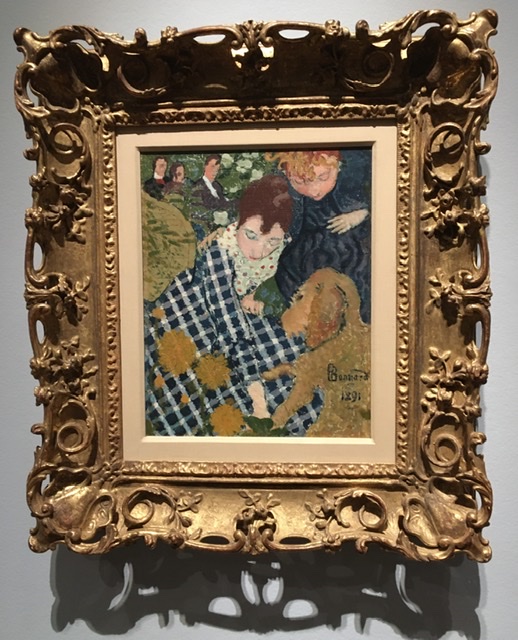
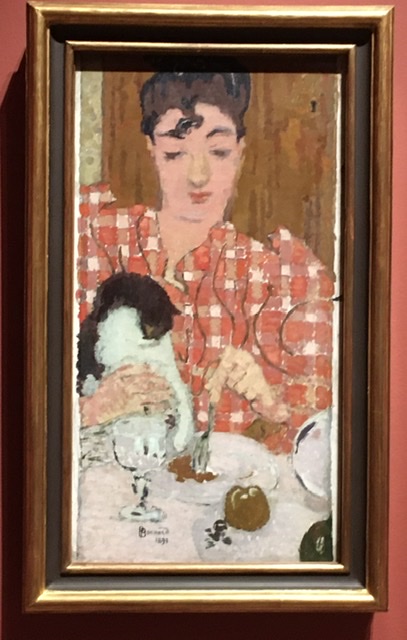
Pierre Bonnard is my favorite Nabi. His use of pattern and color of clothes and wallpaper and his subject choices of women, children, dogs and cats is just charming. “The Checkered Blouse”, showing a woman and her cat, is my favorite. His works show intimate, personal scenes that invite you into his family circle.
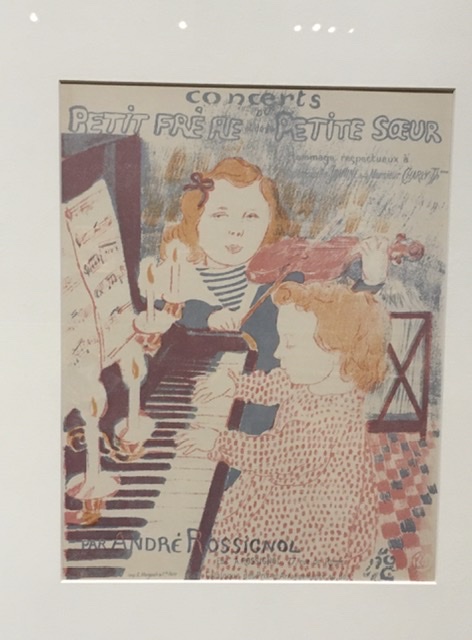
Another delightful set of works by Bonnard were drawings for a children’s music book that he worked on with his brother-in-law, musician Claude Terrasse. These show music as a loving part of the home, with generations learning and playing together.
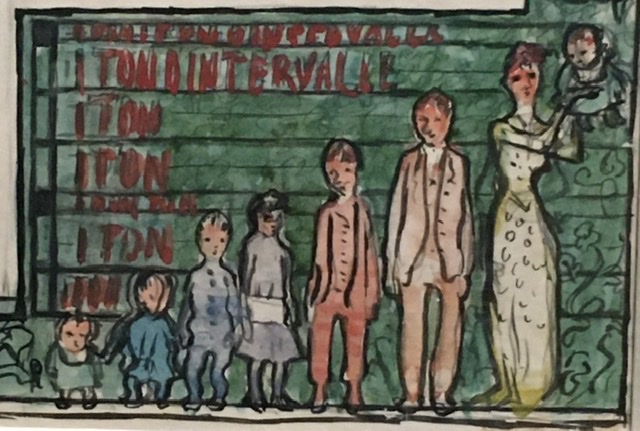
Bonnard even used the family to show music theory, as on this page where an octave is shown as taller and taller family members, until the top note is a small child held over the mother’s head.
I will show you some more about the Nabi tomorrow!
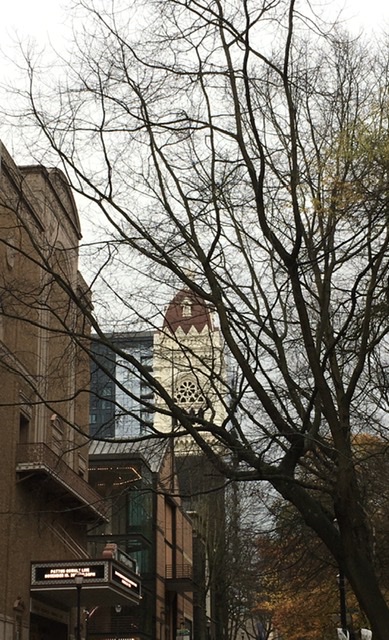
There is a new attraction in downtown Portland. I’ll give you the details later, but it involves France and Art, so of course, we went! Thursday was cold and rainy, but we caught the bus and headed downtown.
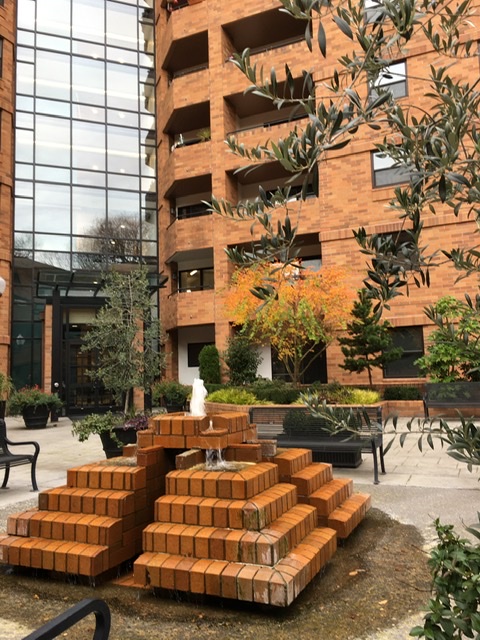
By the time the number 15 got us there, it was lunchtime. We know better than to start any adventure on empty stomachs, so we walked a few blocks further along to the McMenamin’s Market Street Pub. Set in the courtyard of a modern set if high-rise apartments, this is not one of their usual historic re-furbishments. But it is delightful, anyway.
We enjoyed our views of downtown passersby as we waited for the short-handed staff to bring us food. There was also some delightful art.
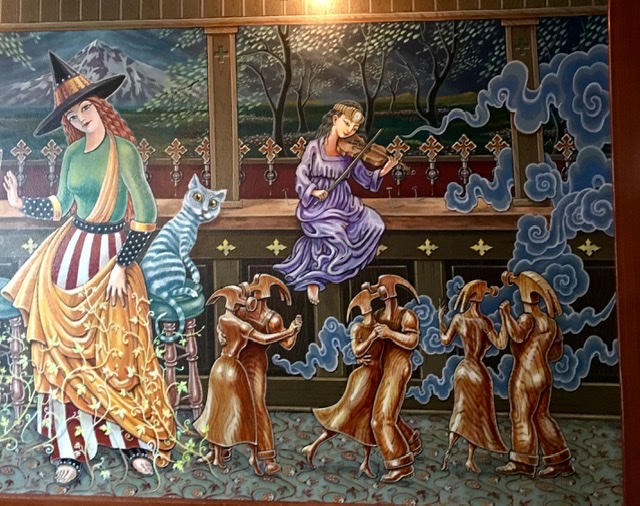
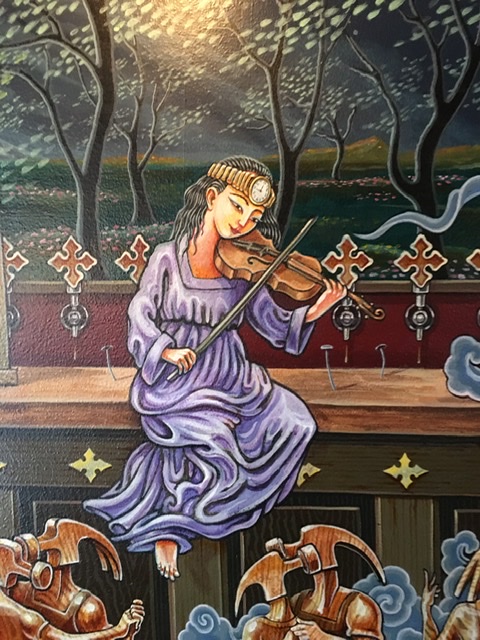
The McMenamins Company has a large staff of artists who give their establishments a unique look. Lyle Hehn is one of our favorites, and we saw his work here. His delightful surrealistic scenes pull you in, always showing you more. This one featured the McMenamin’s beer witch, Ruby, overseeing a dance party of wood carved Hammerheads.
When we were fed and ready, we headed off into the drizzle. After a tiny stop at Seasame Donuts (for Grandpa Nelson) we headed to ….Portland Museum of Art!
I love wandering around my neighborhood. I always see something unexpected.
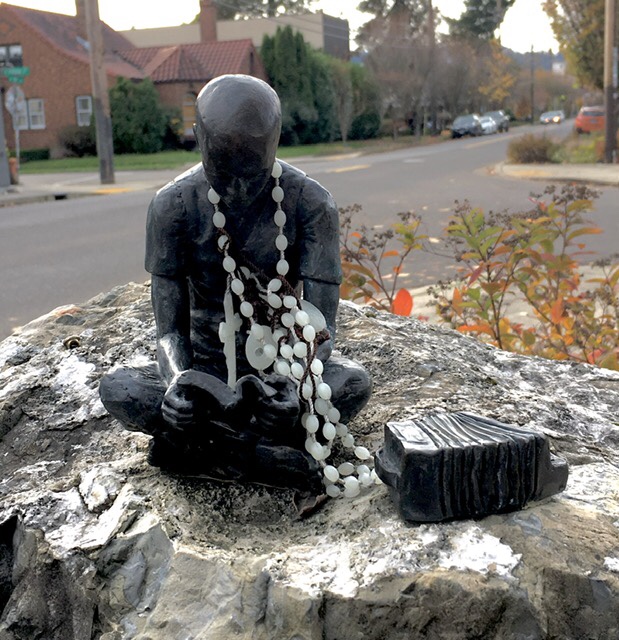
This little sculpture, only about 6 inches high, sits on a big boulder placed along the sidewalk of Division Street. Placed close to the Philip Neary Church, someone has decorated this accordion player with a rosary. This is one of 8 such sculptures created by Crystal Schenk and Shelby Davis and installed in 2014. Collectively called “This All Happened, More or Less”, these pieces represent ordinary people calmly going about their business, reading, resting, or chatting.
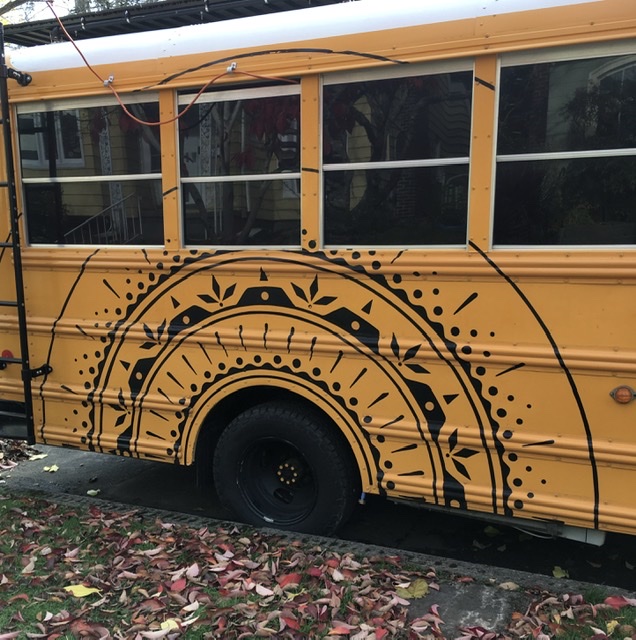
A different sort of unexpected beauty is this graphically painted re-purposed school bus. I haven’t been able to find out what it is being used for now, but it looks like fun!
These bright pyracantha berries, a perfect winter food source for local birds, seem to glow in the sunshine.
And as I walked along, i noticed that the blustery wind was playing with my scarf in a very photogenic fashion. So I played along.
This season is mostly a grey one, but every now and the clouds blow away and we have bright, cold, sunshine. That was today.
We did chores during the morning and then headed off through the neighborhood to Zach’s Hot Dog Shack. The noon sun was almost blinding, and made the still-changing leaves magical.
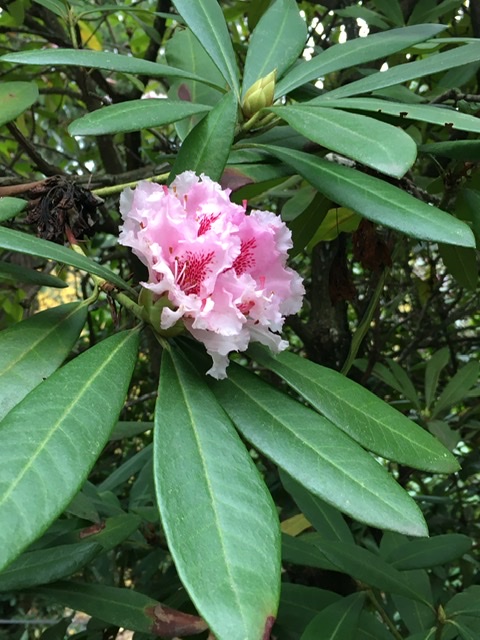
We found some rhododendrons, being a bit early even for them, (or late, it’s hard to know which) popping blooms open just as the rest of the plants have called it quits for the year.
We enjoyed a chilly lunch on Zach’s patio, since the inside was pretty crowded with folks watching football. Grandpa Nelson and I played ping pong, which warmed us up a bit.
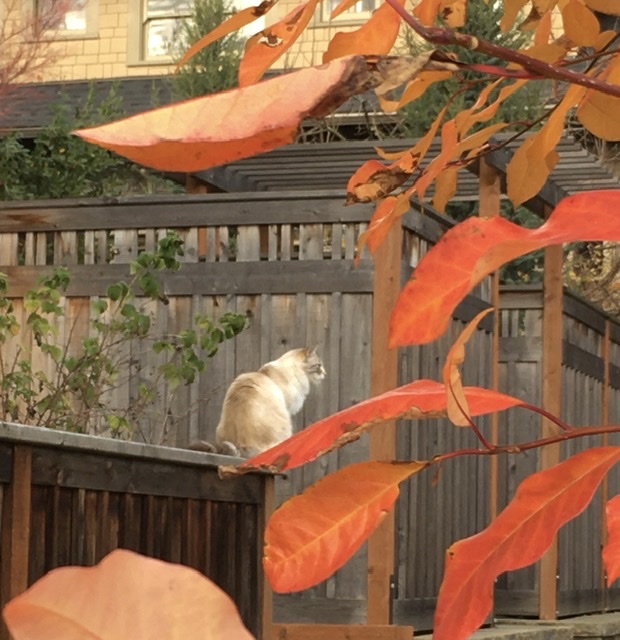
The walk home was lit with the warm afternoon light of Fall. This beautiful cat was just so fetching between the orange leaves.
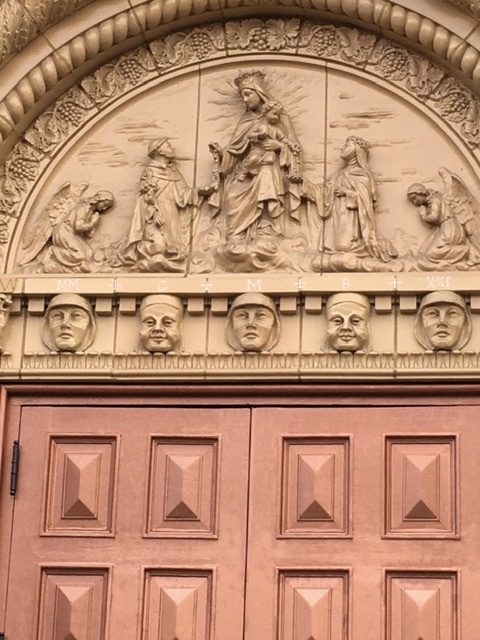
We walked by St. Stephen’s Church, which has been on this corner in a mostly residential area since 1924. It is built of bricks and is very pretty.
It has a large front entrance with doors topped by Mary and Jesus chatting with monks, along with with these delightfully glazed ceramic faces.
And that was our outing for the day. It never really got above 45 degrees, and was just too chilly to be out for long. We came home, read, made art, and cooked.















 Dear Liza