Halloween and Crafts

Dear Liza,

Jasper’s Goal

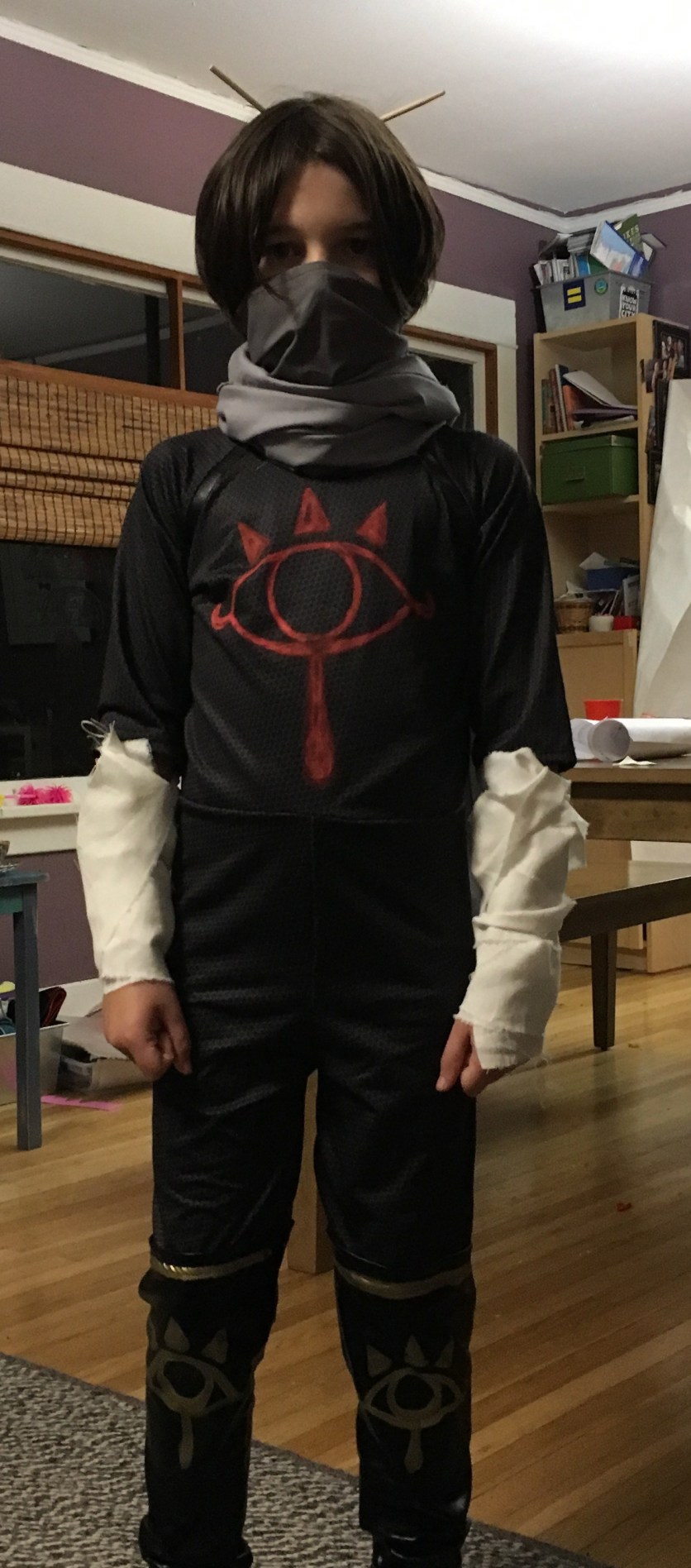
Today was predicted to be stormy and wet, with possible thunder storms. And that’s okay, because I was inside helping make Jasper’s Halloween costume.

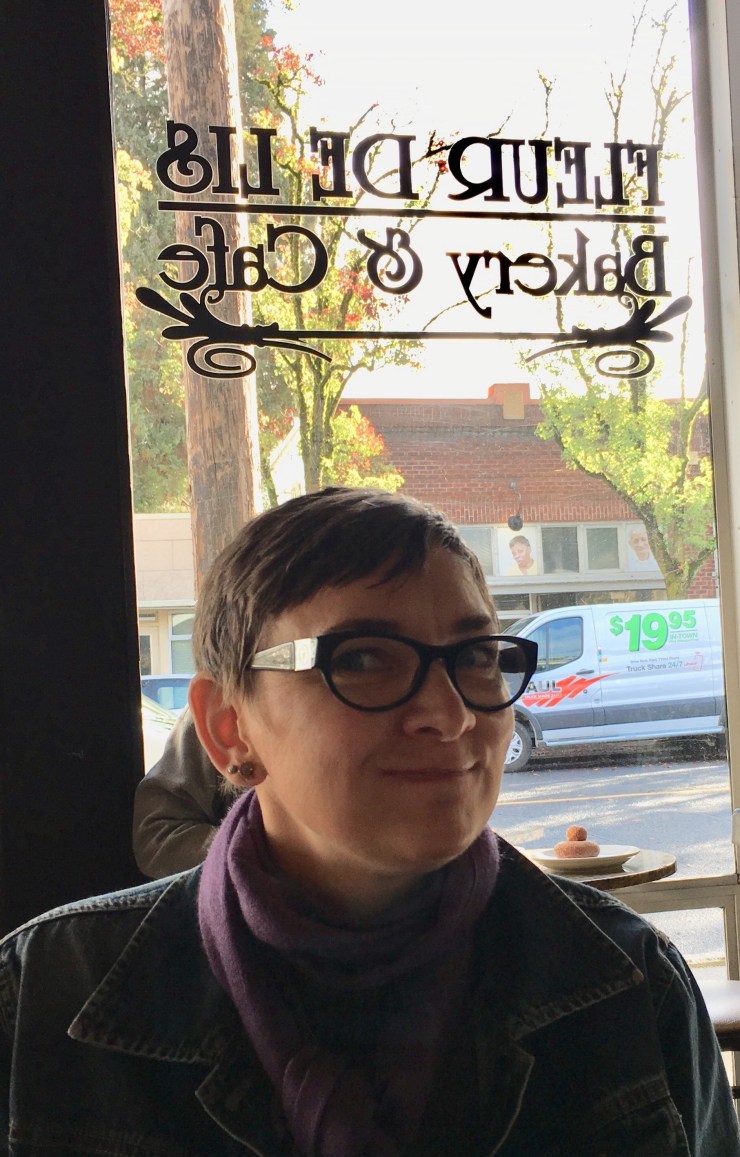
There were several detours along the way, however. Grandpa Nelson wanted to stop by Fleur de Lis Bakery for brunch. Yummy pastries and coffee? Not a problem!

img_1312.jpeg
A Yummy Distraction

Another errand took us to Home Depot, where we saw Halloween AND Christmas decorations! Holiday overlap…weird….


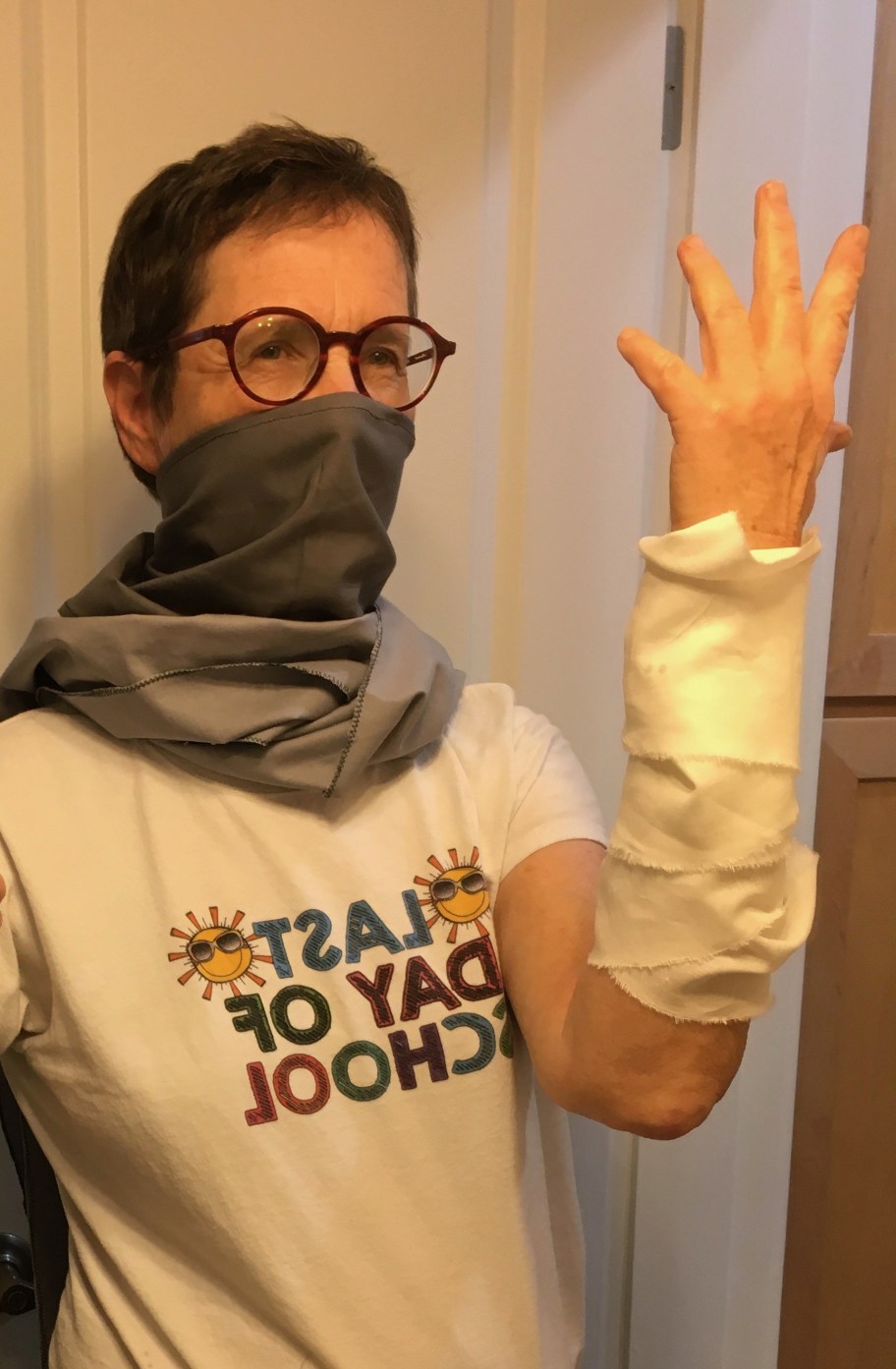
Finally, we got home and I got started. Each piece only took a little while….the light grey scarf and the dark grey bandanna needed an edge,  the arm wraps needed to be torn and safety pins located to attach them.

img_13226.jpeg
My Part

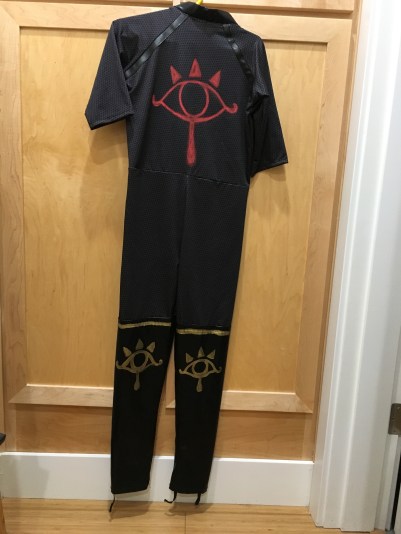
Auntie Bridgett also worked her magic on the piece. Jasper is being a Stealth Armor ninja, and Auntie Katie provided the dark grey body suit.

IMG_1323.jpeg
Bridgett’s Part

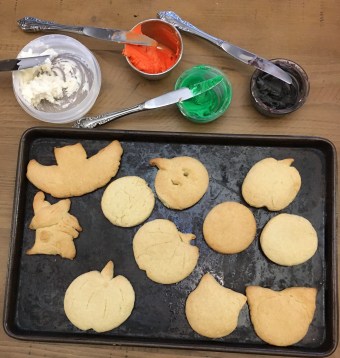
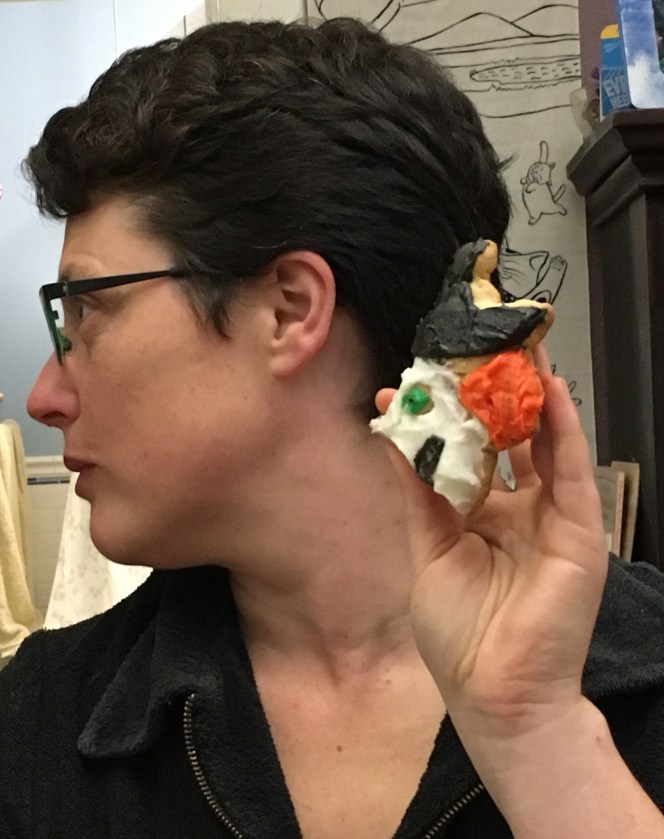
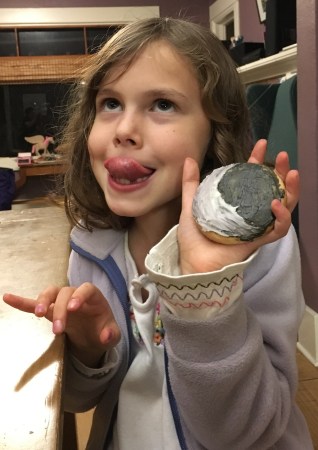
I also made cookies to decorate with Katie and the Cousins. I will try and remember to take pictures of the costumes and the cookies to show you!

I think this was a productive day. Happy Halloween!


Love,

Grandma Judy

Tanya Lyn March, Historian

Dear Liza,

IMG_1285.jpeg
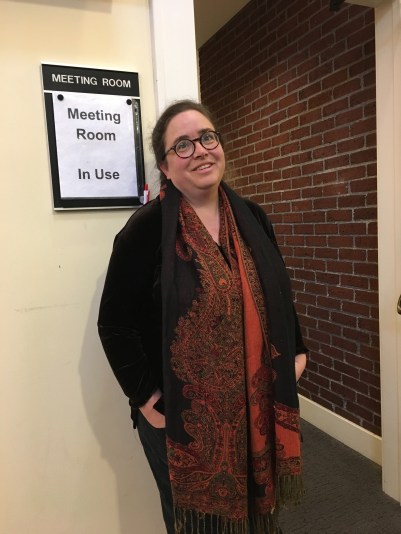
Tanya Lyn March, Ph.D

Last night, we walked to the Belmont Library to listen to local historian Tanya March, Ph.D, talk about “Ghosts, Criminals and Murders in Slabtown”. It being the Halloween season, the subject matter seemed fitting, and I am always looking for more Portland history.

The meeting room for the talk was decorated with a wonderful quilt made in 1988 to celebrate the centennial of the Sunnyside neighborhood, with embroidered squares showing local landmarks like the library itself and The Avalon, the neighborhood theater. It was a work of love, friendship, and considerable skill.

img_1287.jpeg
1988 Sunnyside Quilt

We were early for the talk, so got to visit with Tanya. She is a very energetic young woman who digs into history and ties it to current projects, like protecting old buildings or neighborhoods because of their history. I love that she uses her academia for social good.

Her rapid-fire talk, which included very helpful slides, ranged from stories of murders and hauntings in northwest Portland (called “Slabtown” because of the early use of slabwood for stoves) to the KKK, to reputing the tales of Shanghai Tunnels. She covered so much ground that I thought I would trip over my brain trying to take notes fast enough!

img_1289.jpeg
Pretty patch

Most interesting to me, however, was her mention of Mrs. Nina Larowe, who I had just learned about that morning while researching activities for the kids in my story.  Born in 1838, Mrs. Larowe had been a well-to-do lady and actress in New York, and had traveled to The Holy Land on the ship that Mark Twain wrote about in his book “The Innocents Abroad”.

According to Tanya, Twain wrote about Mrs. Larowe as one of the Pilgrims who would break into tombs and take ancient religious relics, then carelessly throw the precious artifacts overboard when their suitcases got full. This damaged her reputation in New York, she got divorced, and moved to Portland for a fresh start. Mrs. Larowe came to Portland in 1888 at the age of 50. She used her knowledge of the theater to open a dance hall called The Esquire, where she taught dancing, gymnastics, and elocution (public speaking).

Tanya included Mrs. Larowe in her talk because of her “criminal” status for defacing ancient tombs, but the lady was successful here in Portland, dying at the age of 83 and remembered in her obituary as a cultural icon and trainer of several generations of young men and women in the social graces.

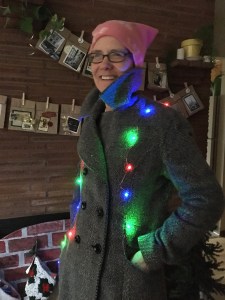
My brain felt like one of Mrs. Larowe’s overstuffed suitcases, full of wonderful new things that will take some sorting out. Exhausted but happy, we walked home through the dark neighborhood, realizing it is time to break out my well-lit winter coat again!

Love,

Grandma Judy

Real and Make Believe

Dear Liza,

Death gives us perspective.

IMG_1134.jpg
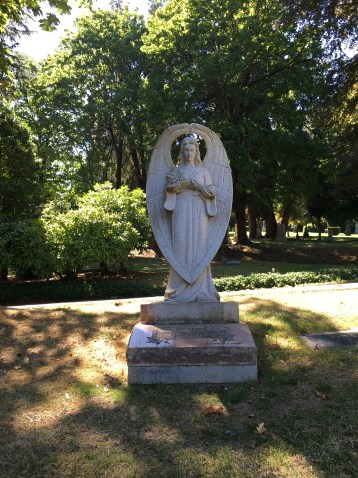
Make Believe

You and I have talked about Mr. John Steinbeck, how he was born in Salinas, lived a long and busy life, and then died, and is buried in the Garden of Memories. Knowing that there was a big part of the world that happened before us, and will be a long time after us, lets us see ourselves as a piece of the world.

This month at Barbara Kadden’s funeral, Death was right there with us, by her grave under the bright maple trees. It wasn’t dressed in a long black cloak, but silently standing up from its usual crouch in the dark corners of our minds, letting us see it clearly for a few hours.

And now it is Halloween, and pretend-Death is all around. Bony hands reach up from make believe graves in flower beds and grim reapers swing on sunny porches. They seem to say “See? It’s really okay. It’s all in fun.” IMG_0129.jpg

But the peaceful dead at Lone Fir, Home of Peace, Garden of Memories, and River View Cemeteries disagree. “Not in fun,” they say. “We really lived. Some of us for only a few months, some for over a hundred years, and then we died. Those we loved mourned us. It is not fun, but what is.”

I think people love Halloween because it lets us toy with Death. The Great Mystery becomes a costume to wear or a movie to watch, to make it small enough so it can be thought about safely. It is a way of thinking about the unthinkable.

And I’m okay with that.

Love,

Grandma Judy
Swinging Symphony

Dear Liza,

IMG_1262.jpg
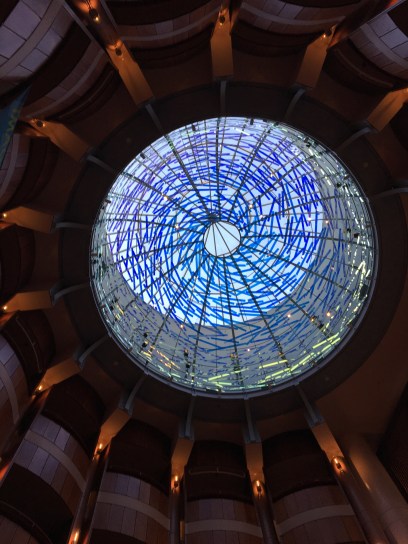
Ceiling of The Artbar

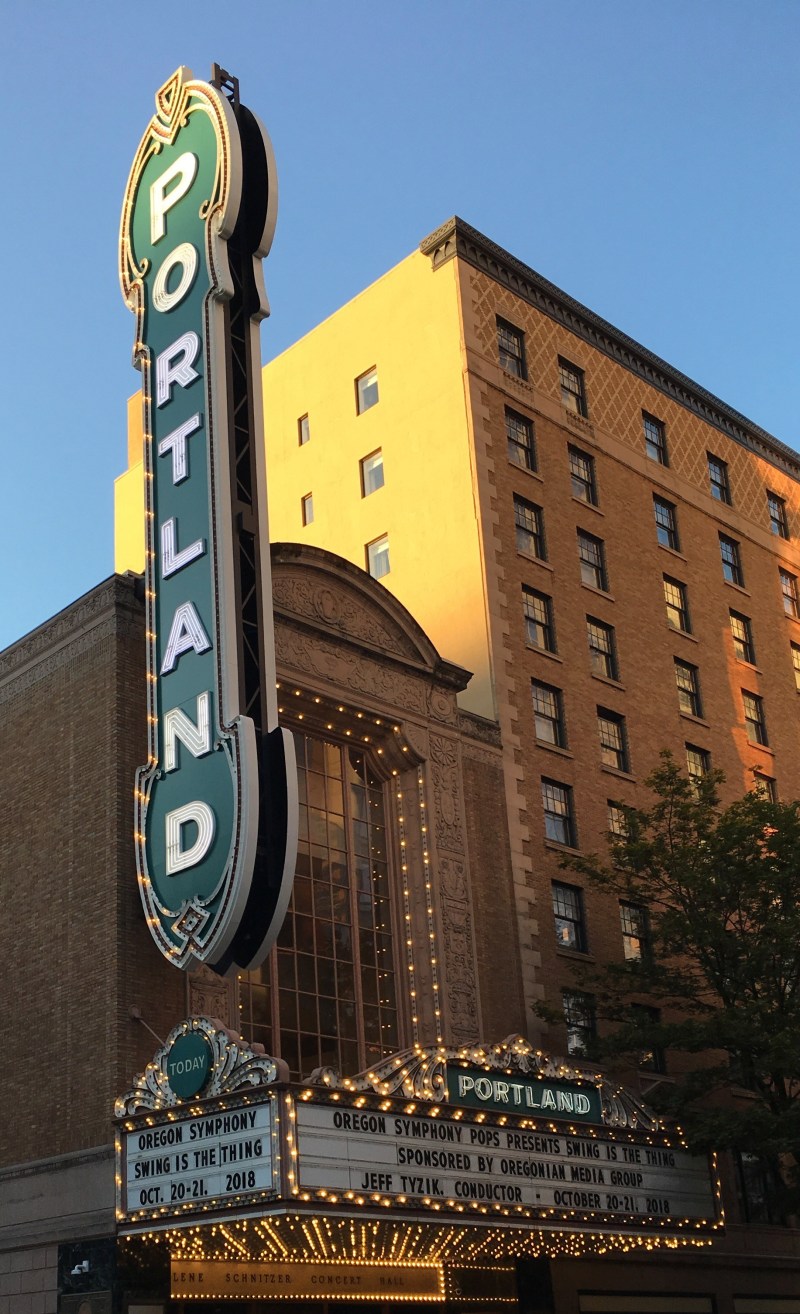
One of the many things I love about Portland is that theater and music are everywhere! Last night we took the number 15 to The Arlene Schnitzer Concert Hall downtown and enjoyed “Swing is the Thing”.

img_1260.jpg
The Schnitz

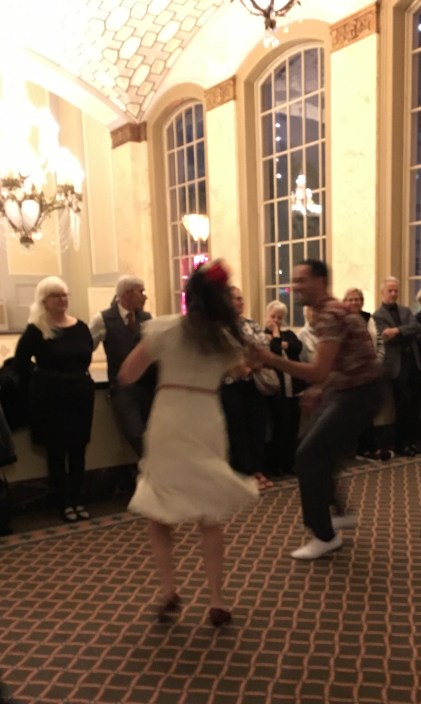
But first, dinner! The Artbar, a pretty restaurant in the same theater complex, fed us not-too-fancy quiches, fries, and nice local wines. As we entered the lobby of the theater, we heard applause coming from the balcony and went to investigate. Two pairs of dancers were jitterbugging to lively swing music, egged on by the well-dressed crowd. We could tell we were in for a good time.

“The Schnitz”, as it is sometimes called, was built in 1928 and has been restored to its historic voluptuousness. Ceiling decoration, lighting, and painted iron railings all let you know you are in a special place. The performance included the entire Oregon Symphony, directed by Jeff Tyzik and, at certain points, the theater took on the feeling of a opulent lecture hall, with Mr. Tyzik explaining the finer points of jazz and swing and how they morphed  into early rock and roll.

Mr. Tyzik and the Symphony were assisted by Julie Jo Hughes, a wonderful vocalist, and Dave Bennett, who plays clarinet and does vocals as well as a wicked Jerry Lee Lewis turn on the piano. Dancers Stephen Sayer, Chandrae Roettig, Hunter Krikac and Karine Hermes came on stage every now and then to stun us with gravity-defying moves and light footwork.

img_1265.jpg
Dancers put on a show before the show!

The first half of the program was dedicated to swing music, starting with “Boogie Woogie Bugle Boy”, “Pennsylvania 6-5000” and “Don’t Get Around Much Anymore”. There was also an original piece called “Harlem Street Scene”, written by director Tyzik. It had a swingy, jazzy dissonance that was easy on the ears but definitely not boring.

The second half was rock and roll, and not nearly as good as the swing portion. If it were not for Dave Bennett’s crazy acrobatics on the piano, the music selections would have felt disappointingly like a mother-daughter dance.

No, I take that back. A song that was not even listed on the program, Julie Jo Hughes singing Peggy Lee’s “Fever”and taking a turn dancing with Mr. Tyzik as he was conducting, was knock down gorgeous.

When the show was over, we crossed the street to catch the bus back home, along with some other music lovers and a violinist. Another lovely night in Portland!

img_1263.jpg
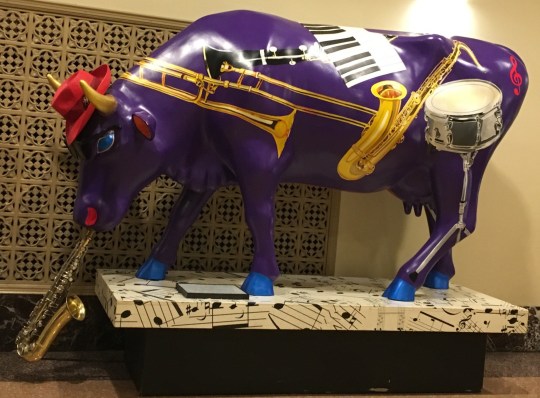
In the Mooooood at The Schnitz

Love,

Grandma Judy

Searching for Dinner

Dear Liza,

img_1200.jpg
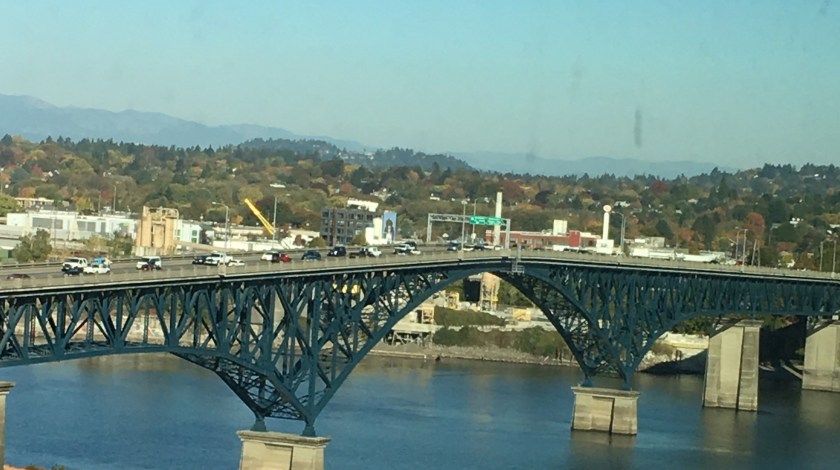
The Ross Island Bridge

First, the exciting news: We finally got to see one of Portland’s drawbridges, the Morrison, actually UP! Of course, we were trying to cross it at the time, so this meant that we waited in traffic for an extra 20 minutes, but it felt very Portland-ish.

This happened the other day while we were  heading to the traffic nightmare that is Portland’s South Waterfront. This part of the city is full of new construction, looming overhead freeways, labyrinthine detours, and part of the OHSU Medical Center. After 30 minutes finding a parking space and getting up to the tenth floor, we were rewarded with wonderful views of the Willamette River and the Ross Island, Tilikum, Marquam, and Hawthorne Bridges.

IMG_1196.jpg
View of four bridges from the tenth floor

We admired the view, had a short chat with the doctor, scheduled another appointment, and headed down to find our way out of the maze before the Minotaur found us.

IMG_1202.jpg
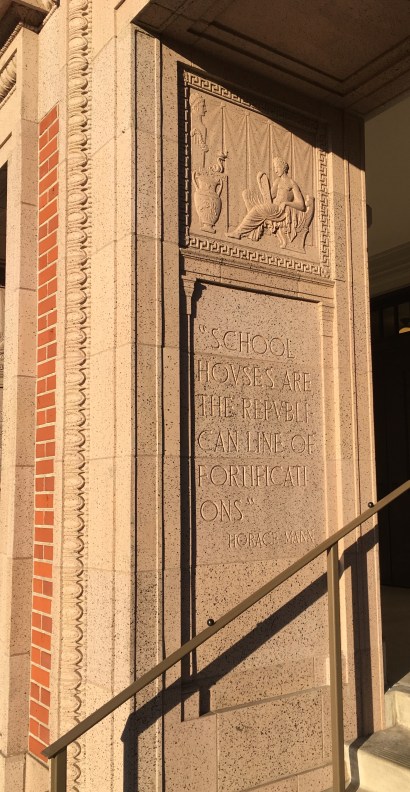
“Schoolhouses are the Republican Line of Fortifications” said Horace Mann

By then it was dinner time and we were brain dead and hungry. We headed for Revolution Hall on SE 12th, formerly Washington High School, now repurposed as offices. There is a restaurant called “Martha’s” on the first floor and a bar on the roof. This beautifully designed and preserved school from 1924 is the Alma Mater of Linus Pauling, a famous and controversial scientist, and there are several portraits of him in the foyer.

Portrait of Linus Pauling at Revolution Hall

Again, we hunted for parking and when we finally got in, “Martha’s” didn’t have what we wanted and the other place (which I have never been to but Grandpa Nelson and Auntie Bridgett love) was closed for redecorating.

Heavy sigh. Back to the car, around a newly arrived and hastily parked ambulance, and off again, hungrier than ever.

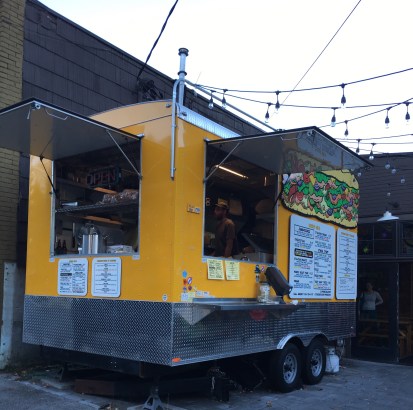
Auntie Bridgett remembered The Belmont Station on SE Stark. We entered through the cider and beer shop, through the bar, and out the back door to Monk’s Deli, a food truck that sells sandwiches and French fries. By combining everything, we were able to assemble a delicious meal and recharge in the lovely open patio, petting dogs and catching our breath.

Monk’s Deli Food Truck
IMG_1210.jpg
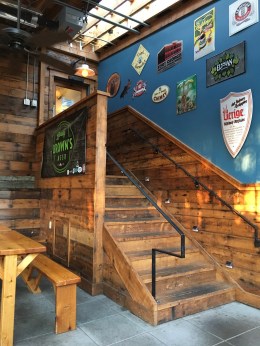
Monk’s shady, peaceful patio

Watching the light change from blazing afternoon white to mellow evening rose, we arrived home, happy to be out of traffic, fed, and together.

Love,

Grandma Judy

More Fall Beauty

Dear Liza,img_1184-21.jpg

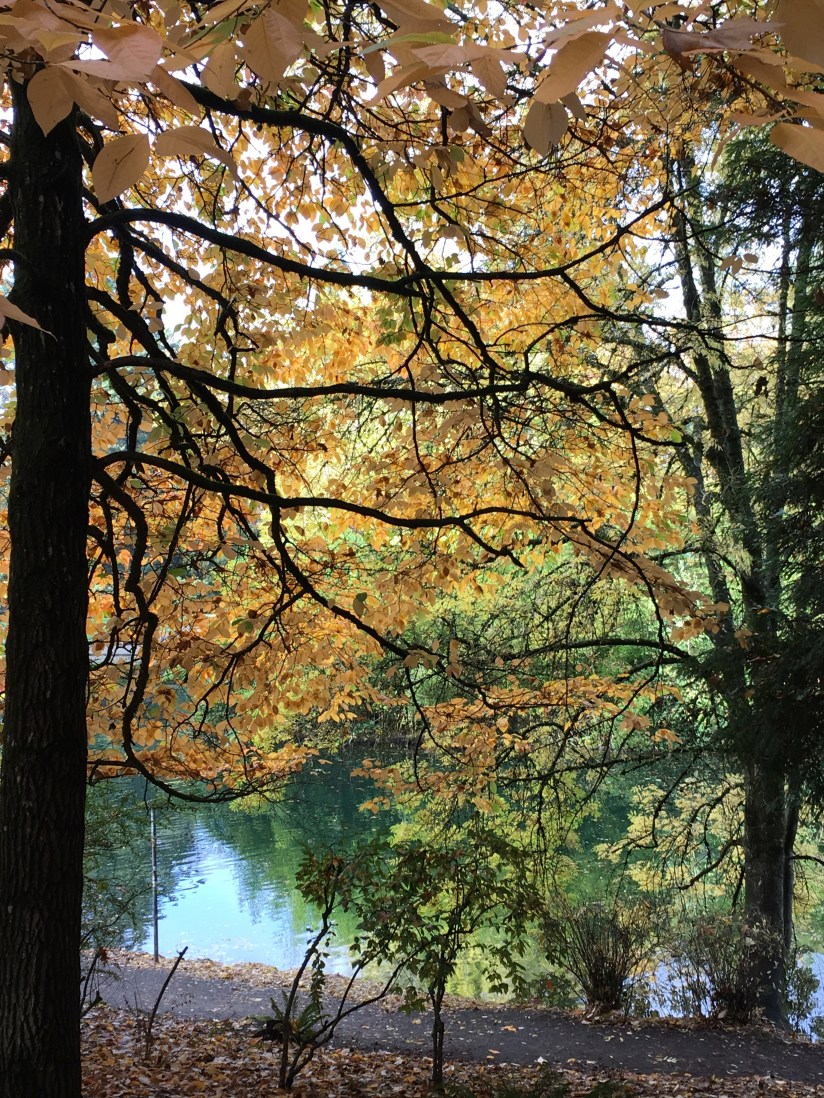
The sunshine has returned! I thought it was gone until Spring, but this week has been as bright and dry as August in Salinas.

I have pictures but no words, so I will borrow some from the English poet John Keats, who wrote it in the fall of 1819.

To Autumn

Season of mists and mellow fruitfullness

Close-bosomed friend of the maturing sun

Conspiring with him how to load and bless

With fruit the vines that round the thatch-eves run;IMG_1130.jpg

To bend with apples the moss’d cottage-trees,

And fill all fruit with ripeness to the core;

To swell the gourd, and plump the hazel-shells IMG_1187.jpg

With sweet kernal; to set budding more,

And still more, later flowers for the bees,

Until they think warm days will never cease,

For summer has o’er-brimm’d their clammy cells…

Where are the songs of Spring? Ay, where are they?

Think not of them, thou hast thy music too.

IMG_1129.jpg

North to Dixon Street

Dear Liza,

img_1163.jpg
Union Station Tower

I am still researching about Portland history, and I’m learning so much! Besides the history, I am learning about how to get around Portland without driving. Yesterday I needed to get to 501 North Dixon, a part of town I had never been in. That’s where the Portland Public Schools keep their archives.

Googlemaps told me there was no transit solution, and I should walk. Almost 4 miles, one way? Carrying research on my back? Um, nope. Thanks anyway, Google.

I chatted with Steven Hanks, the fellow at the District who was pulling files for me. He suggested the number 17 bus, which passes within a few blocks of the office. Grandpa Nelson suggested the Portland Streetcar. There were so many options, and the only way to see which was best was to do them. I chose the bus method first, taking the number 15 downtown, walking a few blocks, and catching the 17.

Downtown Portland always show me something new.  This time it was that a 13 block stretch of SW Stark Street was renamed Harvey Milk Street in June of this year. I am proud of my city for recognizing this important gay activist. Well, first I was confused, because I was looking for a bus stop on Stark. But then I was proud.

Catching the 17 took me through the Pearl District and old Chinatown, past the fabulously old Union Station, where people have been catching trains since 1896. Then over the Broadway Bridge and into Northeast Portland. Down in the second sub-basement was Steven, who had found all sorts of wonderful history for me.

getattachmentthumbnail.jpg
Couch School, 1882

As I learn more about schools of 1903, my story keeps adapting. I have been a teacher too long to play fast and loose with facts. So the walking field trip in my story had to get written out, because there were no ‘field trips’ in American elementary schools in the early 1900s. “Kids in school should stay in school”, was the thought. I had included a scene in the school cafeteria, but schools of that time didn’t have them. Kids ate lunches brought from home at their classroom desks. As it is often said, good stories are not written. They are re-written, and re-written…

Heading home, I decided to try Grandpa Nelson’s suggestion, because the Portland Streetcar was as close as the bus. The A Loop runs clockwise, the B Loop, counterclockwise, in a large oval from the Eastside to the Westside of the city. The A Loop would take me within a block of the number 15 for my trip home, so I waited in the Fall sunshine by a delightfully ‘retro’ shelter.

img_1173.jpg
Streetcar stop on NE Weidler

On the streetcar I chatted with folks visiting from Massachusetts and a potter who works at the Radius Community Art Studio, just under the Morrison Bridge. Another new place to explore!

Walking from the Streetcar to the bus stop, I realized I was fading fast and needed a snack. A perfect opportunity to try the NEW place that smells so good: Pufflewaffle! This pretty shop just opened last month. They sell Pufflewaffles, which are unique, cake-like made-to-order waffles which look like tiny round pillows sewn together. They are sweet and light, and rolled around ice cream. After that, I was ready to make my way home, where I rested and thought about how lucky I am to live here.img_1178.jpg

Love,

Grandma Judy

An Evening with Colonel Roosevelt

Dear Liza,

Joe Wiegand as Teddy Roosevelt

Yesterday was a good day. I got another draft of my story done, Auntie Bridgett made some very nifty art, and we got to take the bus downtown to spend time with Theodore Roosevelt.

Well, sort of. We went to the First Congregational Church to watch Joe Wiegand do his amazingly funny, historic and touching portrayal of our 26th president. We saw the show last October and enjoyed it very much. It was presented by the Oregon Historical Society and sponsored by Wells Fargo Bank, and admission was free! Just like last year, the church was full.

The Organ at First Congregational Church

Even before the show began, Mr. Wiegand was circulating in the crowd, shaking hands and chatting with friends old and new. I summoned my nerve and went over to ask for a photo, and we had a lovely conversation about wrestling with brothers and expanding one’s horizons. Mr. Wiegand, in his Teddy persona, has a way of making everyone feel like the most interesting person he has ever met.

In his introduction, Carey Timchik of The Oregon Historical Society let us know that this was Mr. Wiegand’s fifth performance of the day. He has been touring schools, libraries, and historical societies all over the state, sharing his love of Teddy and our history with kids. Mr. Timchik also told us the Wells Fargo Bank was the first bank to do business with Chinese Americans here in Portland, back in the early 20th century, when all the other banks shut them out.

Mr.Wiegand shared familiar stories of Teddy’s life; of being a sickly boy who had to build his body up by boxing and exercise, of raising his rowdy bunch of children in the White House, of losing his son Quentin in World War I.

He told us that last year, he (Mr. Wiegand) traveled to France with a young man who was portraying Theodore’s son Quentin. They visited Chamery, the small town where the real Quentin’s plane was shot down and Quentin died in 1918. That small town has re-named their elementary school from Ecole Premiere to Ecole Quentin Roosevelt, to remember the young American who died fighting for French freedom. This was so touching, we all choked up a bit.

But my favorite story of the evening came in response to a question. “What did you and John Muir talk about in your three day tour of The Yosemite in 1903?”

“If you must know, there around the campfire, John Muir scolded me about my love of hunting,” admitted Teddy. “Mr. President, he said, when will you get over this childish need to shoot everything?” The two men, though both conservationists, had very different ideas about what wilderness was for. Mr. Roosevelt wanted it used for the greatest good for the most people, and Mr. Muir wanted it protected from any touch of man. This is a debate that we are still having.

Me and Teddy!

When Mr. Wiegand had finished his talk, Mr. Timchik came out and raffled off an enormous Teddy Bear, earning a $500 donation to the Society. There was laughter, applause, smiles all around, and off we went. The evening was still warm enough to be comfortable in just light jackets while we waited for the bus home.

Love,

Grandma Judy

Gail Owen, Print Artist

Dear Liza,

img_1122.jpg
Gail Owen and her Flying Hearts

One of the artists that is showing at SideStreet Arts along with Auntie Bridgett is Gail Owen. Gail had her home studio open Saturday as part of Portland Open Studio Tour, and we went by to visit. I always love to see how artists make their magic, and print making, with its steps which must happen in reverse, has always fascinated me.

Gail came to print making after a career in aerospace, working for the Boeing Corporation. We talked about the different aircraft plants in California. My dad worked for Douglas Aircraft for many years and she had almost worked at ‘his’ Long Beach plant. Finding commonality with new people is always a treat. Her experience with parts and engineering gave her a leg-up on printmaking, she said. It made sense to her.

A self-taught printer, Gail began with small format prints with just a few colors, and worked her way up to much larger pieces, some of which are two by three feet. These larger pieces are made up of sections, each one designed and printed on its own and then sewn together, matted, and framed. The accuracy needed at every stage is amazing and intimidating.

img_1121-e1539544975944.jpg
Onion by Gail Owen

Gail walked us through her process, which starts with taking black and white photos of flowers in her neighborhood. Then she chooses her color palette, working with up to eight colors on one print. She cuts into linoleum sheets to make her pattern, cutting away each section as she gets it the way she likes it. Once she is finished, that piece of linoleum is a mess, with sections gouged away, and can never be used again.

img_1123.jpg
Hollyhocks by Gail Owen

When Gail only wants to use a few colors, or make many more prints, she uses a process where she has different stamps for each color. Each stamp has only the part of the picture that will be in that color. This process makes more sense to me, but is still incredibly precise.


Gail also uses her printing to decorate wooden toys worked with strings, such as her Flying Hearts and Climbing Bears. There is a simplicity and whimsy in all her work which is very endearing.

I am grateful that Gail took the time to show us her art and her process, and happy that I get to see her work at SideStreet Arts!

Love,

Grandma Judy


Spooky Jazz

Dear Liza,

IMG_7948.JPG
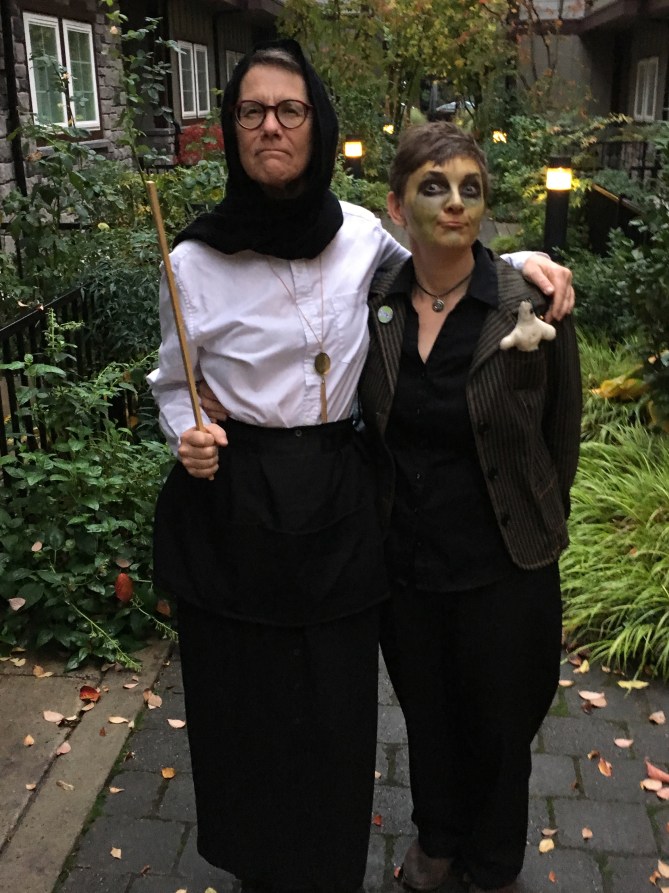
Auntie Bridgett looking Creeeepy

Portland is getting ready for Halloween! Houses are getting decorated, shops are selling costumes, and entertainment is taking on a decidedly eerie feel.

Last Friday, we all went down to the Clinton Street Theater, a movie house built in 1915 at SE Clinton and 26th, for a “Ghostly Gala” put on by the Ne Plus Ultra Jass Orchestra.

Before we even got into the show, we knew it was going to be fun. We had dressed up, and others had, as well. The poster was old-timey spooky and looked like someone with a sense of humor had designed it.

IMG_1102.jpg
A Fellow Costume wearer

The Ne Plus Ultra Jass Orchestra is a band of ten, plus a visiting violinist. There was a drummer, pianist, banjo, three reed players, a coronet, trumpet, and trombone. This group, with band leader Samuel Murray Hawkins, brought the creepy popular music from the early twentieth century to life. Hawkins was dressed as Gomez Addams, and brought that sense of style and irony to the whole show.

Some of the tunes were very old, such as “At the Devil’s Ball”, an early Irving Berlin tune from 1913, and “Spooky Spooks” from 1916.  But a common musical motif in the tunes was even older. Chopin’s “Funeral March”, written in 1839, has that ominous phrase that all cartoons play when Death enters the picture.

img_1113.jpg
Band Leader Samuel Murray Hawkins, with the Phantom of the Opera on piano

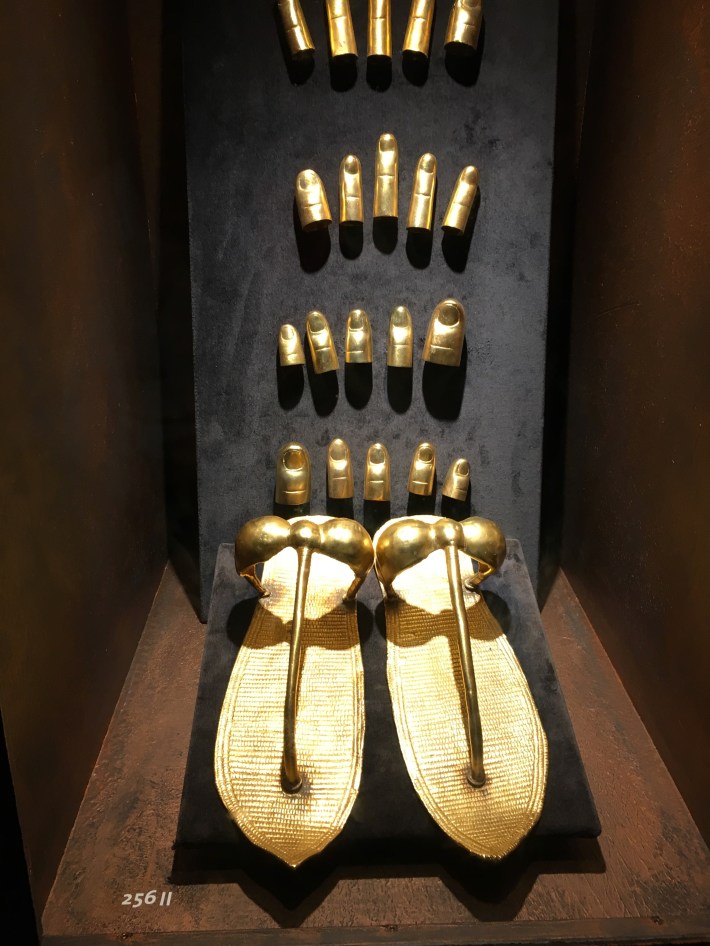
The show also featured dancers of the Washington Dance Collective, two young people who moved to the bouncy music while dressed as Pugsley and Wednesday Addams. During the evening there was a costume contest, where Grandpa Nelson, as Napoleon, stood between a flapper and Ra, the God of Egypt. Ra won, maybe because he was a tiny cute boy, and maybe because no one wants to irritate an ancient God.

The last song of the evening was one of Auntie Bridgett’s favorites, “Mysterious Mose”, so we left on a high note, caught a Lyft car home, and fell into bed. I wonder if I have energy for two and a half more weeks of pre-Halloween activities!

Love,

Grandma Judy